Table of Contents >> Show >> Hide
- What Is Microdosing MDMA?
- Why Are People Interested in It?
- What Does the Science Actually Say?
- How Microdosing MDMA May Feel in the Short Term
- The Real Risks of Microdosing MDMA
- MDMA-Assisted Therapy Is Not the Same as Microdosing
- Who Faces Higher Risk?
- Reported Experiences: What People Say, What They Mean, and What They Miss
- Final Thoughts
Microdosing has become one of those buzzy wellness words that can make almost anything sound smarter, cleaner, and somehow more enlightened. Add MDMA to the conversation, and suddenly the internet starts sounding like a chemistry set with a social media manager. But behind the hype, the reality is much less glamorous.
MDMA is not a harmless productivity sprinkle, a romance vitamin, or a shortcut to emotional clarity. It is a powerful psychoactive substance with stimulant-like and hallucinogenic properties, and even in smaller amounts, it can affect mood, body temperature, heart rate, hydration, and serotonin signaling. That matters because “microdosing MDMA” is often discussed online as if it were a neat, low-risk self-experiment. In practice, the science is thin, the purity is unpredictable, and the risks are much better documented than the benefits.
This guide breaks down what microdosing MDMA means, why some people are curious about it, what people report feeling, how it differs from clinical research, and the health concerns that deserve way more attention than the glossy testimonials. In other words: less internet folklore, more reality.
What Is Microdosing MDMA?
Microdosing MDMA generally refers to taking very small, repeated amounts of MDMA in hopes of getting subtle effects without a full “roll.” The idea is usually to chase tiny boosts in mood, empathy, focus, or emotional openness while avoiding intense intoxication. Sounds tidy. Human biology, however, rarely reads the marketing brochure.
Unlike standard recreational use, microdosing is usually framed as a gentler, more controlled practice. Supporters often describe it as a way to feel slightly brighter, more socially fluid, or less emotionally stuck. Critics, including many clinicians and researchers, point out a major problem: even low-dose repeated exposure can still affect the brain and body, and there is not strong clinical evidence showing that this practice is safe or effective.
Another important detail: MDMA is not the same thing as classic psychedelics like LSD or psilocybin. It works differently, carries different risks, and is often used in very different settings. So when people borrow the language of psychedelic microdosing and paste it onto MDMA, they are not making a neat apples-to-apples comparison. It is more like comparing herbal tea to a nightclub fog machine.
Why Are People Interested in It?
Curiosity around microdosing MDMA usually comes from a mix of anecdote, wellness culture, and news coverage about psychedelic medicine. Some people are drawn in by stories about feeling more connected, less socially anxious, more affectionate, or more emotionally available. Others wonder whether smaller amounts might offer some of the perceived benefits of MDMA without the crash, the chaos, or the regrettable 2 a.m. life advice.
There is also spillover from headlines about psychedelic-assisted therapy. Once people hear that researchers have studied MDMA in carefully controlled therapeutic settings, they sometimes assume that taking tiny amounts on their own must be a lower-risk version of the same idea. It is not.
Clinical research, when it exists, involves screening, medical oversight, carefully prepared sessions, monitoring, and structured psychotherapy. DIY microdosing, by contrast, usually happens without lab-verified purity, without standardized protocols, and without a clinician checking whether a person has heart issues, bipolar disorder, medication interactions, or a very bad habit of mistaking optimism for evidence.
What Does the Science Actually Say?
There is more hype than hard proof
The biggest truth here is also the least glamorous: there is not strong, high-quality evidence showing that microdosing MDMA reliably improves mental health, relationships, creativity, or daily functioning. Much of the enthusiasm comes from personal stories, online communities, and broad microdosing conversations that are often centered on other substances rather than MDMA itself.
That does not mean every person who talks about benefits is inventing things. It means anecdote is not the same as evidence. Placebo effects are powerful. Expectations shape experience. Mood changes can be real and still not prove a treatment works. A person may feel amazing for a weekend and still be making a decision that is medically risky, psychologically destabilizing, or both.
Low dose does not mean no effect
A common myth is that a smaller amount automatically makes a drug harmless. That is not how pharmacology works. With MDMA, even lower exposure may still affect serotonin, cardiovascular function, body temperature regulation, and sleep. Repeated use can also change the equation. Sometimes the problem is not one dramatic event. Sometimes it is the slow accumulation of strain that people notice only after mood, sleep, or concentration start getting weird.
Potential benefits are still mostly unproven
People who advocate for microdosing MDMA often talk about improved empathy, emotional openness, sociability, and better conversations. Those are understandable claims because MDMA is known for producing prosocial feelings at higher doses. But translating that into a safe, repeatable, evidence-based low-dose practice is another matter entirely. At this point, the promise is mostly speculative.
How Microdosing MDMA May Feel in the Short Term
Reported short-term effects vary widely. Some people describe a mild lift in mood, a softer emotional edge, increased talkativeness, or a subtle sense of closeness with others. Others report feeling overstimulated, restless, sweaty, wired, anxious, emotionally scattered, or unable to sleep. That split matters because the same substance can feel “helpful” to one person and chaotic to another.
Even when the experience feels positive at first, that does not automatically mean the body is having a great time. A person can feel more social while their heart rate is up, their blood pressure is elevated, and their thermoregulation is being pushed in the wrong direction. Human beings are excellent at confusing “I feel something pleasant” with “this is definitely good for me.” We also buy exercise equipment in January, so this should not surprise anyone.
The Real Risks of Microdosing MDMA
1. You may not actually know what you are taking
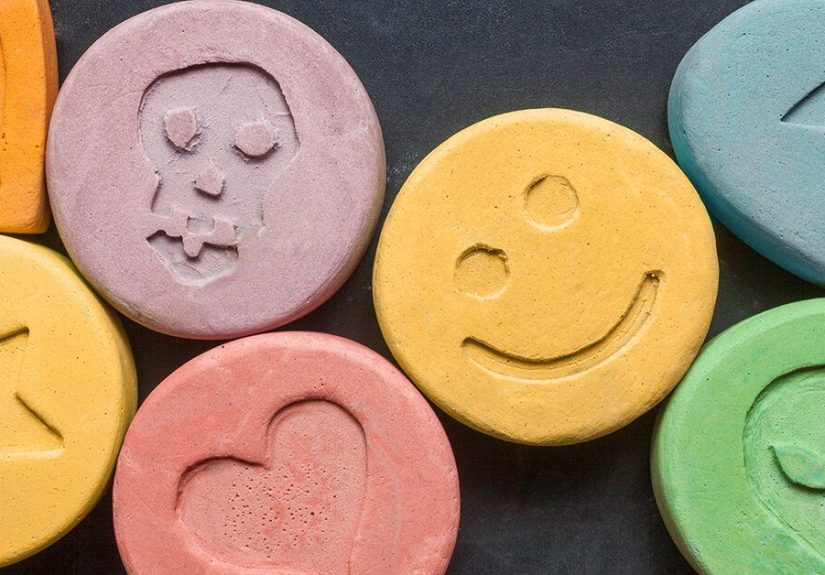
This is one of the biggest dangers. Street products sold as Ecstasy or Molly are not reliably pure MDMA. Powders, capsules, and pills may contain other stimulants, synthetic cathinones, caffeine, dextromethorphan, or unrelated adulterants. So even if someone thinks they are “microdosing MDMA,” they may be repeatedly taking a mixed and unpredictable drug product.
That unpredictability wrecks the whole fantasy of precision. You cannot call it a careful low-dose routine if the ingredient list is basically a mystery novel with missing pages.
2. Overheating, dehydration, and dangerous sodium imbalance
MDMA has been linked to overheating, dehydration, and hyponatremia, which is an unsafe drop in blood sodium. These problems can become especially dangerous in hot environments, during physical activity, or when a person drinks too much water in response to feeling overheated. Yes, the body is capable of being endangered by both too little water and the wrong response to too much heat. Biology loves a plot twist.
Severe cases can involve confusion, seizures, muscle breakdown, kidney injury, and medical emergencies. These are not rare enough to dismiss as urban legend material.
3. Heart and blood pressure strain
MDMA can raise heart rate and blood pressure. For people with underlying cardiovascular conditions, stimulant sensitivity, or other medical vulnerabilities, that is a real concern. Even in otherwise healthy people, repeated exposure may not be a casual matter. Researchers have also raised questions about potential long-term heart valve risk with chronic microdosing patterns, though more study is needed.
4. Serotonin-related complications and drug interactions
MDMA affects serotonin, which means it can become especially risky when combined with other substances that also influence serotonin. That includes some antidepressants, certain migraine drugs, some pain medications, some supplements, and other psychoactive substances. One concern is serotonin syndrome, a potentially serious reaction that can involve agitation, rapid heart rate, high blood pressure, sweating, tremor, fever, and in severe cases seizures or loss of consciousness.
This is one reason “but it was just a little” is not a serious safety plan.
5. Mood crashes, sleep problems, and mental health fallout
Even when a person initially feels brighter or more emotionally open, the aftereffects can include irritability, low mood, sleep disruption, fatigue, or emotional flatness. Some people feel edgy rather than uplifted. Others find that repeated use makes anxiety worse, not better.
Anyone with a history of bipolar disorder, psychosis, severe anxiety, panic episodes, or other serious mental health conditions should be especially cautious. A substance that seems socially lubricating in one setting can be destabilizing in another.
MDMA-Assisted Therapy Is Not the Same as Microdosing
This distinction is crucial. News coverage has made many readers aware of research into MDMA-assisted therapy, particularly for PTSD. But that is not the same thing as self-directed microdosing.
In therapeutic research, MDMA has been studied in structured clinical environments with screening, medical oversight, trained therapists, preparation, monitored sessions, and integration afterward. Even then, the regulatory picture remains unsettled. In 2024, the FDA did not approve the relevant MDMA application for PTSD, citing concerns about how the treatment would be used and whether the evidence sufficiently established durable benefit.
So, no, internet microdosing is not “basically what the clinics are doing, just in smaller amounts.” That is like saying flying a paper airplane is basically commercial aviation with fewer snacks.
Who Faces Higher Risk?
Microdosing MDMA may be especially risky for people who:
- take antidepressants or other serotonin-affecting medications
- have heart disease, high blood pressure, arrhythmias, or a stimulant sensitivity
- have bipolar disorder, psychosis, or a history of severe panic or paranoia
- use multiple substances, including alcohol or other stimulants
- assume that “Molly” is pure when it may contain something else entirely
If someone develops chest pain, high fever, seizures, fainting, severe agitation, extreme confusion, or trouble breathing after using a substance sold as MDMA or Molly, that is an emergency, not a “wait and see” moment.
Reported Experiences: What People Say, What They Mean, and What They Miss
Talk to people who have tried microdosing MDMA, and the stories tend to fall into a few familiar buckets. One person says they felt warmer, more conversational, and strangely patient during a tense social event. Another says music seemed richer, hugs felt more meaningful, and an ordinary afternoon suddenly got promoted to “deeply significant cinematic sequence.” Someone else reports that they felt almost nothing at first, then later crashed into irritability, poor sleep, and a brain fog that made basic tasks feel annoyingly dramatic.
Then there is the classic testimonial spiral: “I felt more open, so I assumed I was healing.” That is emotionally understandable, but not scientifically sturdy. Feeling more emotional is not identical to becoming emotionally healthier. Feeling less guarded for a few hours does not necessarily mean trauma is being processed, anxiety is being treated, or relationships are improving in any durable way. Sometimes it means a psychoactive drug is doing exactly what psychoactive drugs do: altering perception, lowering inhibition, and making the present moment feel unusually charged.
Some people also report a honeymoon phase. The first few experiences may feel subtle but positive: a lift in mood, more affection, easier conversation, slightly brighter colors in daily life. Then the pattern changes. Sleep gets shakier. Recovery feels less clean. Mood becomes less predictable. The person starts chasing the earlier version of the experience, insisting the method still works while quietly becoming more tired, more emotionally reactive, or more disappointed. That arc is not universal, but it shows up often enough to matter.
There are also stories from people who expected tiny benefits and got bigger problems. They felt jittery instead of calm, socially overexposed instead of connected, emotionally raw instead of clear. Some describe the odd experience of feeling both more affectionate and less grounded, as if the volume on emotion had been turned up while judgment wandered out for coffee.
And then there is the biggest issue with anecdotal experience: most people cannot verify what they actually took. If a capsule or powder sold as Molly contains other substances, the experience may reflect a drug mixture rather than MDMA itself. That makes the online discussion even murkier. One person’s “microdosing MDMA made me more creative” story may really be a story about a totally different compound, plus a good day, plus expectation, plus selective memory.
So yes, reported experiences are worth discussing because they explain why interest keeps growing. They show what people are hoping for: better connection, less fear, more ease, more softness, more meaning. But those same experiences also show the trap. Subjective improvement can feel persuasive even when the underlying practice is poorly studied, physically risky, psychologically inconsistent, and impossible to standardize in the real world. Personal stories can be honest and still not be reliable proof. In this topic, that distinction is everything.
Final Thoughts
Microdosing MDMA sits at the messy intersection of curiosity, self-experimentation, internet mythology, and legitimate scientific interest in psychedelic medicine. But if you strip away the hype, the picture becomes clearer. The evidence for benefits is weak, the evidence for risk is much stronger, and the biggest real-world variable is often the one users cannot control at all: what is actually in the product.
That does not make everyone who is curious reckless. It makes the topic worth discussing honestly. The honest version is this: microdosing MDMA is not a wellness shortcut, not a proven mental health tool, and not a safer clone of clinical therapy research. It is a poorly studied practice involving a substance with real physiological and psychological risks. That may not be the internet’s favorite answer, but it is a far more useful one.
If there is one takeaway to keep, make it this: when the benefits are mostly anecdotal and the dangers include adulteration, overheating, sodium imbalance, serotonin complications, and cardiovascular strain, “small amount” is not the same thing as “small risk.”