Table of Contents >> Show >> Hide
- The Big Idea Behind Looking the Wrong Way
- Why These Images Feel So Fresh
- Landmarks, Crowds, and the Theater of Modern Travel
- The Project Says Something Important About Overtourism
- Why Curtis’s “Wrong Way” Method Is Also a Better Way to See
- What Travelers Can Learn From These Photos
- Conclusion
- Extra Experiences: What It Feels Like to Look Away From the Main Attraction
Most people travel to a famous landmark with a simple mission: find the angle, snap the shot, prove they were there, and move on before the next tour group rolls in like a human tidal wave armed with iced coffee and selfie sticks. British photographer Oliver Curtis decided that this ritual was a little too predictable. So he did something wonderfully mischievous. He went to some of the world’s most famous places, turned around, and photographed everything people usually ignore.
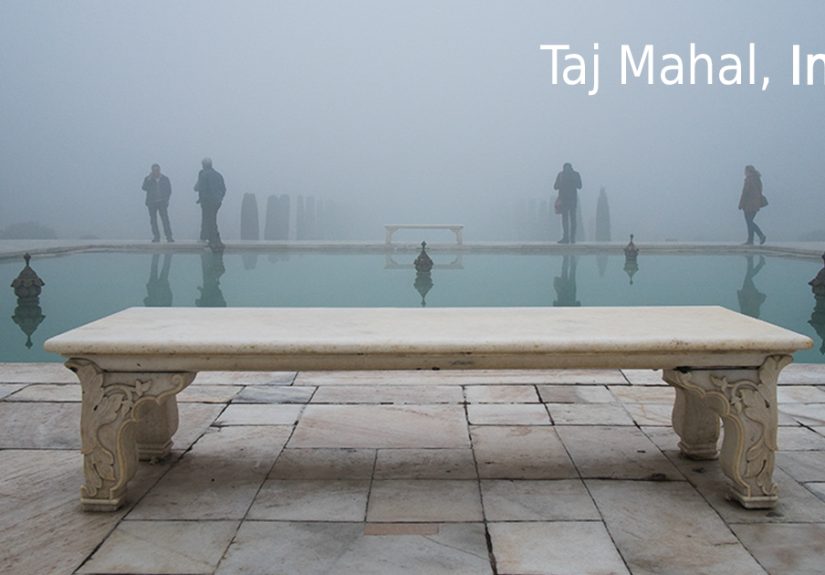
That one twist powers Volte-Face, the series that made viewers stop mid-scroll and ask the most useful travel question in years: What are we missing when we only photograph what we already expect to see? Instead of giving us another polished view of the Taj Mahal, the Mona Lisa, the Great Wall, or the Lincoln Memorial, Curtis shows the edges, the sidelines, the crowds, the workers, the souvenir clutter, the open space, and the odd little details that live just outside the postcard frame.
And that is exactly why the project works. It is clever, yes, but it is not just a gimmick. It is a quiet argument about travel photography, mass tourism, and how modern visitors often arrive at a place with the image already loaded in their minds. By pointing his camera the “wrong” way, Curtis reveals that the real story of a landmark is often happening behind the famous view, not in front of it.
The Big Idea Behind Looking the Wrong Way
The origin story of Volte-Face is almost comically simple. Curtis visited the Pyramids of Giza in 2012 and, instead of staying hypnotized by one of the most recognizable monuments on Earth, he turned around. What he saw was not a tidy, mythic scene pulled from a history textbook. It was the surrounding world: modern life, visual clutter, signs of tourism, and a setting far more complicated than the fantasy version people tend to carry in their heads.
That moment became the seed of a multi-year project. Over the following years, Curtis photographed the opposite-facing view at major landmarks across the globe. The result is a body of work that feels witty at first glance, then increasingly sharp the longer you look. His photos are not anti-travel, and they are not anti-beauty. They simply refuse to worship the obvious.
That refusal matters. Famous landmarks are among the most photographed subjects in the world. They are repeated so often that their images can start to feel less like discoveries and more like mandatory visual homework. Stand here. Shoot this. Smile. Upload. Repeat. Curtis breaks that loop by reminding viewers that every iconic place exists inside a larger environment: political, commercial, social, and deeply human.
Why These Images Feel So Fresh
The genius of Curtis’s approach is that it gives the eye a problem to solve. We know the landmark is there, but we cannot see it. We are forced to imagine its position based on context clues. A crowd staring upward. A rope line. A gift cart. A patch of open plaza that suddenly feels loaded with meaning because we know what stands just behind the photographer.
This visual game turns passive sightseeing into active seeing. It also strips away the monument’s celebrity status for a moment. Without the landmark itself dominating the frame, the rest of the environment gets promoted from background extra to lead actor. The side street, the queue, the maintenance worker, the overheated tourist, the lonely bench, the faded sign, the awkward emptiness between grandeur and reality; these are usually edited out. Curtis puts them center stage.
That is why the project lands with more force than a novelty concept should. It changes the hierarchy of attention. The incidental becomes important. The famous becomes implied. The image becomes less about conquest and more about observation.
Landmarks, Crowds, and the Theater of Modern Travel
Curtis’s work also arrives at a perfect cultural pressure point. Travel today is often filtered through proof-of-presence photography. For many visitors, especially at major attractions, the experience can become a race to acquire the shot everyone else already has. That pressure does not just shape behavior; it shapes memory. People can leave a place remembering the photo more clearly than the place itself.
Anyone who has stood in a crowded museum, shuffled through a famous plaza, or tried to glimpse an icon over a forest of raised phones knows the feeling. The landmark becomes a stage, and tourists become both audience and performers. Curtis photographs the offstage area. That is what makes the series feel slyly honest.
His images suggest that the infrastructure of fame is now part of the landmark itself. The waiting area is part of the monument. The crowd behavior is part of the monument. The souvenir economy is part of the monument. Even the boredom of people who work there every day is part of the monument. In some of Curtis’s most memorable frames, the famous site is almost less interesting than the ordinary life orbiting around it.
When the famous thing is not the only thing
Take the Mona Lisa example, one of the sharpest illustrations in the series. Instead of showing the world’s most discussed half-smile, Curtis turns toward the painting directly opposite it, Paolo Veronese’s The Wedding at Cana. It is a perfect visual joke with a serious point. One artwork gets the mob, the phones, the frenzy, and the myth. Another masterpiece hangs across the room, largely treated like furniture. Curtis exposes the economics of attention in one move.
At the Colosseum, the glory of ancient Rome gives way to the absurd retail reality nearby: replicas, trinkets, and tourist commerce wrapped in plastic. At Christ the Redeemer, the reverse view highlights workers and everyday routine, as if to say that even awe has a maintenance schedule. At Giza, the fantasy of eternal monumentality meets the modern mess of nearby development and visitor impact. Suddenly these sites are not frozen symbols. They are living places under pressure.
The Project Says Something Important About Overtourism
That pressure is not just aesthetic. Around the world, major attractions have had to respond to crowding, preservation challenges, and visitor behavior. Some sites now use timed entry systems. Others impose new rules about where people can stand, sit, or gather. This wider context makes Curtis’s work feel even more relevant now than when it first drew attention.
His photographs do not lecture, but they do gently expose what fame does to place. A landmark can become so successful as an image that the real environment around it starts to strain under the weight of endless repetition. The postcard view stays pristine in public imagination, while the lived reality becomes queues, barriers, noise, cleanup, regulation, and wear.
That tension gives Volte-Face surprising emotional depth. Some photos are funny. Some feel melancholy. Some are slightly absurd. But together they create a portrait of tourism in the age of image saturation. We are not just visiting places anymore. We are often visiting expectations.
Why Curtis’s “Wrong Way” Method Is Also a Better Way to See
There is a larger lesson here for photographers, travelers, and frankly anyone with a functioning neck capable of turning left or right. The most interesting image in a famous location is not always the one everyone came for. Sometimes the better frame is the one history did not pre-approve.
Curtis’s method works because it restores curiosity. It asks viewers to look at what habit ignores. That is a valuable discipline in photography. When a subject is heavily photographed, originality rarely comes from trying harder to copy the standard shot. It comes from changing the question. Instead of asking, “How can I photograph this landmark?” Curtis asks, “What does this landmark hide by being so famous?”
That shift opens everything up. The view behind a monument can reveal social class, urban development, tourism patterns, security culture, local labor, weather, infrastructure, boredom, reverence, and contradiction. In other words, it can reveal life.
Photography that resists autopilot
Good travel photography is not just about beauty. It is about attention. Curtis resists autopilot by refusing the script. His photos are well composed, but their real strength is conceptual discipline. He repeats one rule across many locations and lets the differences between those places tell the story. The consistency of the method makes the variety of the world more visible.
That is also why the series never feels like a cheap prank. The “wrong” direction is actually a disciplined way of forcing oneself to see. It turns photography into a form of noticing rather than collecting.
What Travelers Can Learn From These Photos
You do not need to be a professional photographer to borrow this mindset. The next time you visit a famous place, get the classic shot if you want it. Nobody is going to arrest you for photographing the Eiffel Tower like a normal person. But after that, turn around. Walk ten steps away from the approved angle. Notice who is working. Notice who is waiting. Notice what the gift shops look like, what the soundscape feels like, what the side streets smell like, what people do when they think the main attraction is not watching.
Those details are often what make a trip memorable. The official landmark may get you there, but the unofficial surroundings are what make the place real. That is the heart of Curtis’s project. He is not diminishing famous sites. He is returning context to them.
In an era of over-shared destinations and algorithm-approved viewpoints, that is almost rebellious. And maybe that is the sneaky brilliance of Volte-Face: it reminds us that wonder is still available, but it no longer lives only in the obvious frame. Sometimes wonder is standing behind you, quietly waiting for you to stop performing tourism and start paying attention.
Conclusion
This Photographer Points His Camera The “Wrong” Way At The World’s Most Visited Locations is more than a catchy premise. Oliver Curtis’s landmark photography project works because it dismantles the postcard view and replaces it with something messier, funnier, and more truthful. By turning away from the monument, he turns toward human behavior, visual overload, tourism culture, and the overlooked environments that give iconic places their real texture.
That is why these photographs continue to resonate. They challenge the reflex to consume a place as a prepackaged image. They invite slower looking, deeper noticing, and a more honest relationship with travel. In a world obsessed with the perfect shot, Curtis proves that the most revealing perspective may be the one everyone else leaves out of frame.
Extra Experiences: What It Feels Like to Look Away From the Main Attraction
There is a very specific sensation that comes from visiting a famous landmark and deliberately not giving it your full attention. At first, it feels wrong in the same way wearing sneakers to a black-tie event feels wrong. You sense that you are breaking an unwritten rule. Everyone else is facing one direction, so you instinctively feel you should too. The crowd creates its own magnetic pull. Cameras rise. Bodies angle forward. People jockey for position. And then, if you turn around anyway, something shifts.
The energy changes immediately. Instead of spectacle, you get atmosphere. Instead of the monument, you get the mood around the monument. The experience becomes less about confirmation and more about discovery. You notice a family negotiating snack choices. You notice a security guard scanning the line with the calm expression of someone who has seen this exact chaos a thousand times. You notice patches of worn pavement, overheard arguments about directions, tour guides rehearsing their timing, and the odd comedy of dozens of people trying to manufacture a spontaneous memory in exactly the same way.
That reverse view can feel strangely intimate. The main attraction is designed, curated, protected, and endlessly repeated. The other side is less polished. It often contains the evidence of real use: service doors, crowd barriers, maintenance paths, gift kiosks, benches, cleanup crews, exhausted parents, and visitors who have already taken their photo and are now studying the map like it personally betrayed them. These details are not glamorous, but they are truthful. They tell you how a famous place actually functions.
There is also a deeper emotional effect. Looking away can make a landmark feel bigger, not smaller. When you stop staring directly at the icon, you begin to understand its influence on the space around it. You see how it organizes movement, commerce, behavior, and expectation. You see how entire little ecosystems bloom in its shadow. The monument becomes less of a standalone object and more of a gravitational force.
For photographers, this experience is liberating. You no longer have to compete with the greatest hits image that has already been made ten million times. You can chase surprise instead. You can photograph the feeling of the place rather than its official face. And for travelers, it can be even better. Turning around interrupts the checklist mentality. It creates a pause. In that pause, the landmark stops being just a trophy and starts becoming part of a fuller story.
That is the quiet thrill behind Curtis’s idea. Looking the “wrong” way is not really wrong at all. It is simply a reminder that the world is larger than its most famous angles, and often far more interesting just outside the frame everyone else is fighting to keep.