Table of Contents >> Show >> Hide
- Who Is Hannah Neeleman, the Woman Behind Ballerina Farm?
- Why Did the Ballerina Farm Backlash Explode?
- What Does “Trad Wife” Mean?
- The Mormon Context: Faith, Family, and Public Assumptions
- Farm Chores, Marriage, and the “Pathetic Husband” Debate
- Hannah Neeleman’s Response: “I Couldn’t Love It More”
- Why Ballerina Farm Fascinates So Many People
- The Difference Between Choice and Aesthetic Pressure
- Why the Backlash Says as Much About Us as It Does About Her
- What Content Creators Can Learn From the Controversy
- Experiences and Reflections Related to the Ballerina Farm Debate
- Conclusion
Note: This article discusses a viral public controversy involving Hannah Neeleman of Ballerina Farm. The phrase “pathetic husband” reflects online backlash and social media criticism, not a verified description of any person’s character.
Some internet storms begin with a celebrity breakup, a red-carpet outfit, or a suspiciously expensive smoothie. This one began with farm chores, motherhood, religion, gender roles, social media aesthetics, and the most controversial thing a woman can apparently do online: say she likes her life.
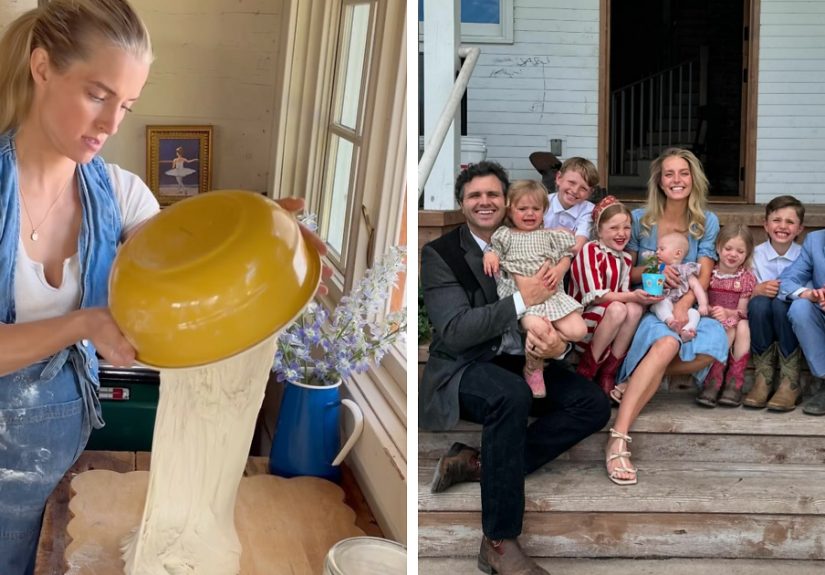
Hannah Neeleman, the Utah-based creator behind Ballerina Farm, became one of the internet’s most debated “trad wife” figures after a major profile painted her life as both dreamy and troubling. To fans, she is a Juilliard-trained ballerina turned mother, entrepreneur, farmer, cook, and beauty queen who built a rural family brand from scratch. To critics, her polished videos of kneading dough, milking cows, caring for children, and doing farm chores look less like freedom and more like a beautifully lit workload with sourdough on top.
The backlash intensified when viewers questioned her marriage dynamic with husband Daniel Neeleman, the couple’s division of labor, and whether the Ballerina Farm lifestyle sells an unrealistic fantasy of womanhood. Then Hannah responded publicly, saying she could not love her life more. Naturally, the internet reacted as if someone had thrown a cast-iron skillet into a group chat.
Who Is Hannah Neeleman, the Woman Behind Ballerina Farm?
Hannah Neeleman is widely known by her social media brand, Ballerina Farm. Her content blends homesteading, cooking, ranch work, motherhood, pageantry, and domestic life on a Utah farm. Before becoming a famous online figure, she trained as a dancer and attended Juilliard, a detail that has become central to the public fascination with her story. The contrast is irresistible to audiences: one chapter features ballet studios and New York ambition; another features cows, children, flour-dusted countertops, and mountain views.
Her brand is not just a casual family vlog. Ballerina Farm is also a business that sells meat, pantry goods, sourdough products, homewares, baked goods, and farm-inspired merchandise. That matters because much of the debate around Hannah is not simply about whether she enjoys homemaking. It is about how domestic labor becomes content, how content becomes commerce, and how commerce can be mistaken for “simple living.”
In other words, this is not merely a woman in an apron. This is an influencer-business ecosystem wearing an apron.
Why Did the Ballerina Farm Backlash Explode?
The controversy grew after a profile of Hannah and Daniel Neeleman described their life on a large rural property in Utah and framed Hannah as the “queen of the trad wives.” The article sparked enormous discussion because it included details that many readers interpreted as unsettling: Hannah’s demanding routine, the couple’s large family, her former ballet ambitions, comments about exhaustion, and moments where critics felt Daniel seemed too present in the interview.
For some readers, the profile appeared to reveal the hidden cost of a lifestyle that looks effortless online. A video of a woman making mozzarella from scratch while children orbit the kitchen can seem peaceful for 45 seconds. Stretch that scene into a full day, add homeschooling, business operations, pregnancy, farm work, cleaning, public scrutiny, and animal care, and suddenly the “slow life” looks like an Olympic event with chickens.
Others argued that the backlash was unfair, condescending, and even anti-family. They believed critics were projecting their own discomfort onto a woman who repeatedly says she values motherhood, faith, marriage, and rural life. In their view, Hannah is not trapped; she is choosing a demanding but meaningful path.
What Does “Trad Wife” Mean?
The term “trad wife” is short for “traditional wife.” Online, it usually refers to women who embrace domesticity, homemaking, child-rearing, modest femininity, and traditional gender roles. The content often features cooking from scratch, homeschooling, old-fashioned clothing, faith-based family values, and a rejection of hustle-culture feminism.
But the term is slippery. Some women use it proudly. Others reject it entirely, even when the internet puts the label on them like a sticky name tag at a conference. Hannah Neeleman has said she does not necessarily identify with the tradwife label, even though her content is frequently discussed as part of that movement.
That distinction matters. A woman can love motherhood, baking, farm life, and traditional family values without subscribing to every political or ideological meaning attached to “trad wife.” At the same time, critics argue that when influencers package those values for millions of viewers, the result can still shape cultural expectationsespecially for young women comparing their own messy kitchens to a cinematic loaf of bread rising beside a sunbeam.
The Mormon Context: Faith, Family, and Public Assumptions
Hannah and Daniel Neeleman are members of The Church of Jesus Christ of Latter-day Saints, often informally called the Mormon church. LDS teachings place strong emphasis on family life, marriage, children, faith, and parental responsibility. That context helps explain why many viewers connect Ballerina Farm with broader conversations about religious domestic ideals.
However, it is also easy for outsiders to flatten religious people into stereotypes. Not every Latter-day Saint woman lives the same way. Not every large family is a performance of submission. Not every mother who stays home is making an ideological statement. And not every apron is a manifesto, though the internet does occasionally treat gingham like a political document.
The better question is not, “Is this lifestyle good or bad?” The better question is, “What is being shown, what is being left out, and who benefits from the story being told?”
Farm Chores, Marriage, and the “Pathetic Husband” Debate
The phrase “pathetic husband” emerged from online criticism aimed at Daniel Neeleman after viewers debated whether Hannah appeared overworked or unsupported. Some critics saw her doing heavy domestic and farm labor and concluded that Daniel was not pulling his weight. Others pushed back, noting that social media clips and edited profiles do not provide a complete picture of a marriage, a household, or a business.
This is where the internet often turns into a courtroom with terrible lighting. People see a few videos, read a profile, absorb a few viral quotes, and suddenly everyone is cross-examining a relationship they have never been inside. Of course, public figures invite commentary by monetizing private life. But commentary can quickly turn from analysis into fan fiction with pitchforks.
Still, the reaction reveals something important: people are tired of seeing women’s labor romanticized without being named. Cooking from scratch is labor. Homeschooling is labor. Pregnancy is labor. Childcare is labor. Farm chores are labor. Content creation is labor. Emotional management is labor. If one woman appears to be carrying all of that while smiling softly into a camera, audiences are going to ask questions.
Hannah Neeleman’s Response: “I Couldn’t Love It More”
After the backlash, Hannah posted videos defending her family, marriage, and choices. She described the profile as an unfair attack and emphasized that she and Daniel prioritize God and family. She also shared that the world they created is one she loves deeply.
For supporters, her response was refreshing: a grown woman telling strangers that she knows her own life better than they do. For critics, it did not erase concerns about pressure, gender expectations, exhaustion, and the influencer economy. Both reactions can exist at once. A woman can sincerely love her life and still live within a system worth examining. Happiness and critique are not mutually exclusive. Human beings are annoyingly complicated that way.
Why Ballerina Farm Fascinates So Many People
Ballerina Farm sits at the intersection of several modern obsessions: rural nostalgia, motherhood content, religious curiosity, wealth, wellness, food purity, entrepreneurship, and gender politics. It offers viewers an escape from office burnout, processed food, daycare bills, dating-app fatigue, and the soul-crushing experience of paying $18 for a sad salad in a plastic bowl.
The fantasy is powerful. Imagine leaving the chaos of modern life for fresh eggs, homemade bread, a big family, open land, and purpose. The problem is that the fantasy often leaves out the cost: money, physical stamina, family support, land access, staff, business infrastructure, and the privilege of turning one’s life into a brand.
That does not mean the lifestyle is fake. It means it is curated. And curation is the native language of social media.
The Difference Between Choice and Aesthetic Pressure
The central debate around Hannah Neeleman is not really about one woman. It is about choice. If a woman freely chooses marriage, many children, religious devotion, domestic labor, and farm life, that choice deserves respect. Feminism, at its most practical, should include the freedom to leave the boardroom and churn butter if that is genuinely what someone wants to do.
But choice becomes more complicated when a lifestyle is packaged as morally superior, spiritually purer, or more feminine than other ways of living. That is where many critics get nervous. The tradwife aesthetic can imply that modern women are unhappy because they left the kitchen, not because housing is expensive, childcare is unaffordable, wages are stagnant, and everyone is one dental bill away from becoming a philosopher.
It is one thing to say, “This life fulfills me.” It is another to imply, “This life is the cure for womanhood.”
Why the Backlash Says as Much About Us as It Does About Her
The intensity of the Ballerina Farm conversation shows how emotionally loaded motherhood has become online. Mothers are judged for working too much, staying home too much, having too many children, having too few children, looking too tired, looking too polished, using childcare, not using childcare, making boxed mac and cheese, or making pasta from wheat they personally harvested under a full moon.
Hannah’s life became a screen onto which people projected their own fears. Some saw a trapped woman. Some saw an inspiring mother. Some saw a business genius. Some saw religious patriarchy. Some saw a wealthy family selling rustic struggle. Some simply saw excellent bread and wanted the recipe.
The truth may contain pieces of several interpretations. Public life is rarely as simple as the comment section wants it to be.
What Content Creators Can Learn From the Controversy
1. Beautiful content still needs context
If creators show a demanding lifestyle as effortless, audiences eventually ask what is hidden outside the frame. Transparency does not require revealing every private detail, but it does help build trust.
2. Domestic labor should not be minimized
Homemaking is real work. Farm chores are real work. Parenting is real work. When these tasks are presented as charming little hobbies, viewers may underestimate the physical and emotional load behind them.
3. Labels can helpand distort
Calling someone a “trad wife” may place them in a recognizable cultural category, but it can also flatten their actual beliefs, contradictions, ambitions, and agency.
4. Online audiences are not neutral
People bring their own family histories, religious experiences, political beliefs, and relationship wounds into every viral debate. That is why one woman milking a cow can somehow start a national argument about feminism.
Experiences and Reflections Related to the Ballerina Farm Debate
Anyone who has spent time around farm families knows that rural work has a way of humbling romantic ideas very quickly. Morning chores do not care if you are tired. Animals do not pause because you have emails. Bread dough does not rise faster because the baby is crying. The fantasy of farm life often looks golden online, but the daily rhythm can be repetitive, muddy, and physically relentless.
That is why the reaction to Hannah Neeleman feels so personal for many people. Some viewers recognize the exhaustion behind the beauty. They know what it is like to be praised for “doing it all” when what they really need is someone to do the dishes, hold the baby, or notice that they have not sat down since breakfast. Compliments can feel surprisingly useless when the laundry mountain is developing its own weather system.
Other viewers relate to the satisfaction Hannah describes. They understand the pride of feeding a family, caring for animals, building a home, and choosing a life that feels rooted instead of rushed. For them, farm chores are not oppression; they are participation in something tangible. In a digital world where many people spend eight hours moving rectangles around a screen, milking a cow can look refreshingly real.
The tension comes from the difference between lived experience and marketed experience. A mother making bread for her children is one thing. A mother making bread for her children while millions of strangers watch, judge, buy products, and debate her marriage is something else entirely. The camera changes the chore. It turns private labor into public symbolism.
Many women also see themselves in the conflict between ambition and family. Hannah’s ballet background is part of why the story resonates. People wonder what happens when a woman’s earlier dream gives way to marriage, motherhood, faith, and business. Was that loss? Growth? Sacrifice? Fulfillment? The honest answer may be yes to all of it. Adult life is rarely a clean swap between the dream you had at 20 and the life you love at 35.
For families considering a more traditional arrangement, the lesson is not to copy an influencer’s life. The lesson is to talk clearly about labor, money, rest, childcare, health, faith, and personal identity. Who wakes up at night with the baby? Who handles school planning? Who tracks groceries? Who gets time alone? Who has access to money? Who gets to change their mind? These questions matter more than whether the kitchen has copper pans.
For critics, the lesson is also humility. Concern can be valid, but strangers cannot diagnose a marriage from a profile or a reel. Public accountability is fair when a brand profits from selling an ideal. But reducing a woman to either “victim” or “villain” repeats the same mistake the internet claims to oppose: denying her complexity.
The Ballerina Farm debate endures because it touches a nerve. Many people want slower lives, stronger families, better food, deeper faith, and more meaning. Many also fear losing autonomy, economic independence, and honest recognition of women’s work. Hannah Neeleman’s story sits right in the middle of those desires and fears, wearing a dress, carrying a baby, and somehow also managing to sell sourdough starter.
Conclusion
The backlash over Hannah Neeleman, Ballerina Farm, and the “trad wife” label is not just gossip about one Mormon mother doing farm chores. It is a cultural argument about choice, labor, faith, feminism, wealth, motherhood, and the way social media turns ordinary domestic work into a public performance.
Hannah says she loves her life. Critics say the image deserves scrutiny. Both statements can be true. The healthiest takeaway is not to worship the lifestyle or mock it, but to look at it with clear eyes. A beautiful life can still be hard. A traditional life can still be chosen. A curated life can still be real. And a woman on a farm can be many things at once: mother, wife, entrepreneur, believer, performer, worker, and human beingnot just a symbol for everyone else’s argument.