Table of Contents >> Show >> Hide
- What Is the Gadget Everyone Loves?
- Why Portable Jump Starters Beat Jumper Cables for Everyday Drivers
- How a Portable Jump Starter Works
- How to Use a Portable Jump Starter Safely
- How to Choose the Right Portable Jump Starter
- Signs Your Battery Is Dying
- When a Jump Starter Is Not Enough
- How to Keep Your Jump Starter Ready for the Big Moment
- Should You Still Carry Jumper Cables?
- Real-World Experiences: Why Drivers End Up Loving This Gadget
- Final Thoughts
- SEO Tags
There are few sounds more humbling than turning your key, hearing a sad little click, and realizing your car has chosen this exact moment to become a decorative lawn chair. Maybe you left a dome light on. Maybe the weather turned icy. Maybe your battery simply woke up and said, “I’m retired.” Whatever the reason, a dead battery has a special talent for showing up when you are already late, under-caffeinated, or wearing clothes that were never meant for roadside problem-solving.
That is exactly why more drivers are tossing an expert-favorite gadget into the trunk: the portable jump starter. Unlike old-school jumper cables, this compact battery booster lets you jump-start your car without begging a stranger in a parking lot to pop their hood and trust you with electricity. It is faster, easier, and usually much less awkward. No waving at passing drivers. No parking-lot negotiations. No “Do you know which clamp goes where?” panic spiral.
If you want a practical car emergency tool that actually earns its keep, this is it. A portable jump starter can rescue a dead battery, charge your phone, light up the engine bay at night, and give you the comforting feeling that, for once, you might be the calm, capable person in the roadside emergency instead of the one googling “why is my car making a tiny haunted clicking noise?”
What Is the Gadget Everyone Loves?
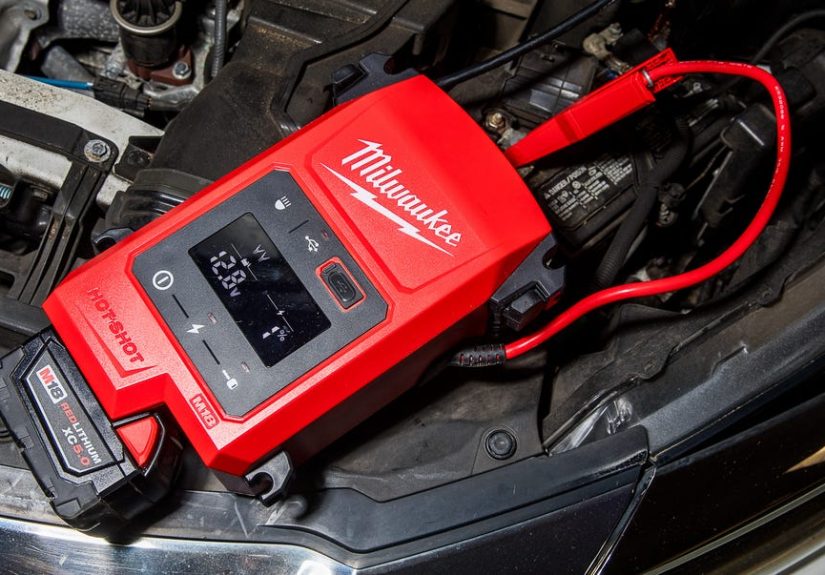
The gadget behind the hype is a portable jump starter, also called a jump box, battery booster, or portable car battery jumper. It is basically a self-contained power pack with clamps that connect to your vehicle’s 12-volt battery. Once attached properly, it delivers enough power to start the engine without needing another car.
That is the magic trick. Traditional jumper cables work, but only if you can find another working vehicle, position it correctly, and convince another human to participate in your impromptu electrical theater. A portable jump starter cuts out the middleman. It is the difference between solving your problem quietly and turning your breakdown into a community event.
Today’s best models are also far more refined than the bulky units of the past. Many are compact enough to fit in a glove box or trunk organizer, and some include USB charging ports, LED flashlights, air compressors, or display lights that help guide setup. In other words, it is not just a rescue tool. It is a tiny emergency sidekick with surprisingly good manners.
Why Portable Jump Starters Beat Jumper Cables for Everyday Drivers
You do not need another car
This is the biggest advantage, and it is not a small one. If your battery dies in a quiet parking garage, at a trailhead, at the airport after a weeklong trip, or in your own driveway at 6:12 a.m., a portable jump starter lets you handle the problem solo.
They are usually easier to use
Modern models are designed for ordinary drivers, not just mechanics. Many include indicator lights, built-in safety protections, and very simple controls. That means less second-guessing and less risk of turning a dead battery into a dramatic life lesson.
They often add a layer of safety
Many portable jump starters now include protections like reverse-polarity alerts, short-circuit protection, and spark-resistant connections. Translation: if you accidentally try to connect clamps the wrong way, the device may stop you before you make a costly mistake. That is the kind of feature that deserves a slow clap.
They belong in an emergency kit anyway
A portable jump starter fits naturally alongside the other heroes of a solid roadside kit: flashlight, tire gauge, gloves, water, first-aid supplies, and reflective triangles or LED flares. It is not a random gadget. It is one of those tools you hope you never need but feel wildly grateful for when you do.
How a Portable Jump Starter Works
Your car battery provides the burst of electricity needed to crank the engine and get things moving. When that battery is too weak or drained, the engine will not start. A portable jump starter temporarily supplies that missing boost.
You connect the red clamp to the positive terminal and the black clamp to the negative terminal or the approved grounding point specified by your vehicle. Then, depending on the model, you turn the unit on or wait for it to confirm a safe connection. After that, you try starting the car.
If the battery is only drained and there is not a bigger issue hiding behind the scenes, the engine starts, the alternator begins charging, and you are back in business. It feels weirdly satisfying, like performing a tiny miracle with cables.
How to Use a Portable Jump Starter Safely
Before doing anything, check your owner’s manual. Some vehicles have specific jump points, batteries hidden in odd places, or special instructions. Your car likes to be difficult in its own unique way.
- Park safely and turn everything off. Put the vehicle in park, set the parking brake, and switch off lights, radio, climate control, and accessories.
- Inspect the battery area. If the battery is cracked, leaking, or obviously damaged, stop and call for professional help. Do not try to jump a damaged battery.
- Identify the terminals. Positive is marked with a plus sign and usually covered in red. Negative is marked with a minus sign and is usually black.
- Connect the red clamp first. Attach it to the positive terminal on the dead battery.
- Connect the black clamp next. Depending on your vehicle and the jump starter instructions, connect it to the negative terminal or the recommended ground point.
- Keep the device clear of moving parts. Belts, fans, and pulleys do not care about your weekend plans.
- Turn on the jump starter if required. Some units power up automatically, while others need a button press.
- Start the vehicle. If it starts, great. If it does not, do not crank endlessly like you are trying to summon confidence from the starter motor. Pause, recheck connections, and follow the device instructions.
- Disconnect carefully. Remove the black clamp first, then the red clamp, unless your jump starter instructions say otherwise.
- Drive long enough to recharge somewhat. Then get the battery tested if the failure seemed unusual or repeat-related.
One important rule: if your car starts and then quickly dies again, the problem may not be the battery alone. A failing alternator or charging-system issue could be the real villain in this story.
How to Choose the Right Portable Jump Starter
1. Match the power to your vehicle
If you drive a typical sedan, hatchback, crossover, or smaller SUV, many experts say a unit in the several-hundred-amp range can be enough. Larger SUVs, trucks, vans, and vehicles used in very cold weather often need more starting power. Buying too little jump starter is like bringing a juice box to a lumberjack competition.
2. Look for safety protections
Reverse-polarity protection, short-circuit protection, overheat protection, and spark-resistant design are worth prioritizing. They make the device friendlier for beginners and add peace of mind for everyone else.
3. Check cable and clamp quality
Cheap-looking clamps and tiny cables are not confidence inspiring. Better units have sturdy clamps, durable cables, and enough length to reach awkward battery locations without forcing you into a yoga pose you did not agree to.
4. Think about weather and storage
Cold weather is brutal on batteries, and extreme heat is not exactly kind either. If you live somewhere with temperature swings, choose a model designed for broad operating conditions and check the storage recommendations. Your jump starter should be ready for winter, not emotionally overwhelmed by it.
5. Extra features are nice, but not the main point
USB ports, flashlights, screens, and air compressors are useful bonuses. Just do not let fancy extras distract you from the core job: reliably jump-starting your car. You are shopping for competence first, bells and whistles second.
6. Recharge habits matter
A jump starter only helps if it is charged. Some units hold power well for months, but smart owners still check them regularly. A dead jump starter helping a dead battery is the kind of irony nobody enjoys.
Signs Your Battery Is Dying
A portable jump starter is a fantastic fix for the moment, but it is not a magic wand for every starting problem. Watch for these warning signs that your battery may be nearing the end of its useful life:
- Slow engine cranking
- Rapid clicking or faint clicking when you try to start
- Dim headlights or weak interior lights
- Electrical accessories acting odd
- A battery warning light on the dash
- Repeated need for jump-starts
- A battery that is already around three to five years old
If a jump works once but the battery keeps failing, get it tested. If the car starts and then dies shortly after, ask for the charging system to be checked too. Sometimes the battery is innocent and the alternator is the one causing all the drama.
When a Jump Starter Is Not Enough
There are times when a jump-start is not the answer. If the battery case is swollen, leaking, or damaged, stop. If there is heavy corrosion, clean-up or service may be needed before any safe start attempt. If the starter motor, alternator, or ignition system is failing, a jump starter may not help at all.
Likewise, if you have a hybrid or electric vehicle, be very careful. These vehicles usually still have a 12-volt battery that can need a jump, but you should never attempt to jump the main high-voltage battery pack. Always follow the manufacturer’s instructions. This is one of those moments where “I watched a quick video” is not the same as “I have correct information.”
How to Keep Your Jump Starter Ready for the Big Moment
Buying the gadget is only half the battle. The other half is not forgetting it exists until the day you need it and discover it has the energy level of a nap-deprived sloth.
- Charge it right after purchase.
- Check the charge every month or every few months, depending on the model.
- Store it in a protective case or organizer.
- Keep the clamps clean and dry.
- Review the instructions before an emergency, not during one.
- Replace it if it no longer holds charge reliably.
A portable jump starter is one of those rare car tools that rewards tiny amounts of maintenance with a huge amount of convenience. Five minutes of upkeep now can save you a tow bill and a terrible morning later.
Should You Still Carry Jumper Cables?
Honestly, yes. Jumper cables are still useful and inexpensive, and there is no rule saying your emergency kit has to pick sides. Think of them as the backup singer. The portable jump starter is the star, but the cables still know the choreography.
If your jump starter loses charge or another driver needs help, cables can still be handy. Just remember that for most people, the self-sufficiency of a jump starter is what makes it such a favorite. It removes a lot of uncertainty from an already annoying situation.
Real-World Experiences: Why Drivers End Up Loving This Gadget
Ask around and you will notice a pattern. People do not get emotional about many car accessories. Nobody writes poetry about a windshield scraper. But portable jump starters? Those little boxes earn loyalty fast, mostly because they solve a problem that feels urgent, inconvenient, and just embarrassing enough to be memorable.
Take the classic grocery store scenario. A driver loads bags into the trunk, climbs in, turns the key, and gets nothing but a click. It is hot, the ice cream is melting, and suddenly life has become a race between battery chemistry and mint chocolate chip soup. In the old days, that meant waiting for roadside assistance or finding a Good Samaritan with cables. With a charged jump starter in the trunk, the story changes. Pop the hood, connect the clamps, start the car, return home with groceries and dignity mostly intact. That is the kind of win people remember.
Then there is the airport parking-lot experience, which deserves its own category of emotional damage. You get back from a trip, drag your suitcase across a giant garage, and discover your car has been sitting long enough to drain the battery. It is late, you are tired, and the nearest available helper is approximately three parking levels away and deeply uninterested in your situation. A portable jump starter turns that miserable ending into a ten-minute inconvenience instead of a full-blown travel epilogue.
Cold-weather drivers have their own stories. One frosty morning, a parent trying to get to school drop-off hears the engine crank slowly, then quit. Kids are in coats, everyone is late, and the windshield still looks like it is wearing chain mail made of ice. A jump starter can be the difference between “we salvaged the morning” and “well, I guess we live in the driveway now.” Cold temperatures hit batteries hard, so preparedness pays off fast.
Even weekend adventurers end up becoming portable jump starter evangelists. Campers, hikers, tailgaters, and beachgoers often park far from help. Maybe the hatch stayed open too long. Maybe someone charged too many devices. Maybe the car simply decided that scenic views are nicer when you cannot leave. A compact jump starter makes those situations feel manageable, not catastrophic.
What people love most is not the gadget itself. It is the feeling it creates. Instead of helplessness, you get options. Instead of waiting, you act. Instead of delivering the sentence “Do you happen to have jumper cables?” to a stranger while pretending this is all very normal, you solve the problem yourself. That is why this tool keeps ending up on expert lists and in real trunks. It earns its spot not because it is flashy, but because it works when life gets inconvenient in the most boring, believable way possible.
Final Thoughts
If you drive regularly, a portable jump starter is not overkill. It is practical insurance against one of the most common roadside hassles around. It helps you jump-start your car without another vehicle, reduces your dependence on luck, and adds confidence to your car emergency kit.
Pick one with the right power for your vehicle, charge it regularly, learn the basics before you need them, and treat it like the quiet hero it is. Because when your battery eventually decides to stage a protest, this expert-favorite gadget can turn a stranded, frustrating mess into a quick recovery and a pretty good story.