Table of Contents >> Show >> Hide
- What Is the Vipp524, Exactly?
- Specs Snapshot (The Useful Stuff You Actually Want)
- Design DNA: Why It Looks So “Simple” (In a Hard-to-Copy Way)
- How the Light Performs: Soft Where You Want It, Focused Where You Need It
- Where the Vipp Wall Spot Vipp524 Works Best (Room-by-Room)
- Installation: Plug-In Convenience vs. Hardwired Clean Look
- Bulb Choice, Dimming, and the E12 vs. E14 Plot Twist
- Styling Tips: Making the Vipp524 Look Like It Belongs (Not Like It’s Visiting)
- Pros, Cons, and Who Should Buy It
- Care and Maintenance (Because Dust Loves Perforations)
- Experience Section: What Living With the Vipp Wall Spot Vipp524 Actually Feels Like (About )
- Conclusion
Some lights scream for attention. The Vipp Wall Spot Vipp524 does the opposite: it quietly shows up,
does its job beautifully, and somehow makes the rest of the room look like it got a raise.
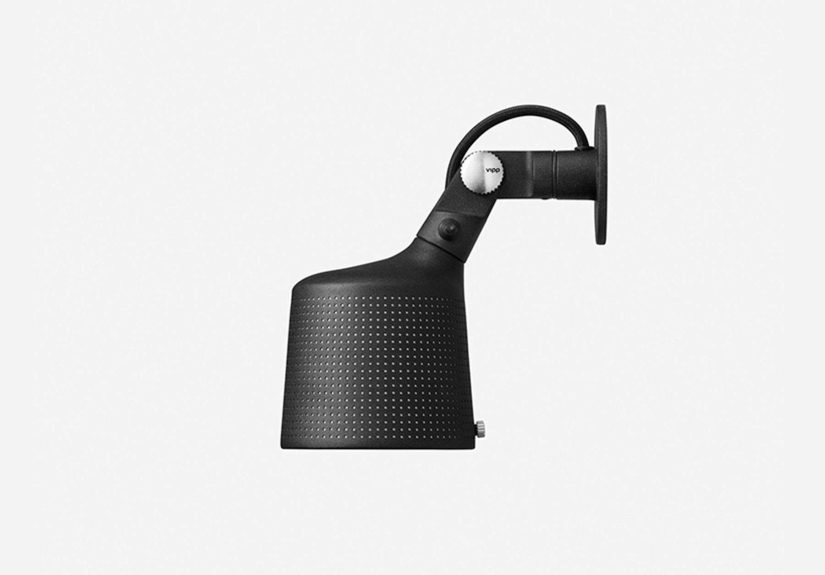
It’s a compact, adjustable wall light with Vipp’s signature perforated metal shade and a matte glass diffuser
basically, a wall spotlight that’s polite enough to soften the beam before it hits your eyeballs.
If you’ve ever wanted lighting that feels intentional (without looking like you tried too hard), the Vipp524 is in that sweet spot.
It’s small, functional, design-forward, and surprisingly flexiblelike the friend who can do math and pick a good restaurant.
What Is the Vipp524, Exactly?
The Vipp Wall Spot Vipp524 is a wall-mounted spotlight-style fixture designed for focused, directional light with a softer edge.
Vipp positions it as a versatile option for spaces like hallways, kitchens, and living roomsand, yes, even bathrooms,
as long as placement and local safety requirements make sense for a dry-rated fixture.
The visual “tell” is the perforated shade: tiny holes that let light leak out in a subtle pattern while the matte glass diffuser
keeps the main beam from turning your wall into an interrogation room. The head pivots so you can aim the light where you actually
need itreading nook, artwork, mirror, countertop, you name it.
Specs Snapshot (The Useful Stuff You Actually Want)
Here’s a quick overview of commonly listed specifications for the Vipp524 wall spot. Details can vary by region
(especially the socket type), so treat this as a “know what to look for” checklist.
- Dimensions: approx. 18.5 cm (L) × 11.0 cm (Ø) × 19.5 cm (H) / about 7.3″ × 4.3″ × 7.7″
- Cord: 2 m / about 78.7″ (fabric-covered cord)
- Materials: powder-coated aluminum and steel, stainless steel, silicone, glass
- Light source: bulb not included; commonly listed as E14 max 15W in many markets
- Recommended bulb style: small globe (often referenced as P45), around 470 lumens, 2700K for warm light
- Dimming: not dimmable “out of the box,” but can be dimmed with a dimmable LED bulb + compatible switch setup
- IP rating: IP20 (dry locations)
- Warranty: often listed as 5 years by the manufacturer
- Colors: typically black, warm grey, and white (varies by retailer/region)
Important U.S. note: Vipp also references that some installationsparticularly for U.S. customersmay require a
wall mount adapter. And some U.S. retailers list an E12 socket rather than E14, which matters because it changes
which bulbs fit. The practical takeaway: confirm the socket type on your exact listing before you buy bulbs.
Design DNA: Why It Looks So “Simple” (In a Hard-to-Copy Way)
Vipp has a long reputation for industrial-leaning Danish designfunctional objects refined until they feel inevitable.
When the brand expanded into lighting, it carried that same logic forward: durable finishes, replaceable bulbs, and shapes
that look calm even when the room isn’t.
The Vipp524 in particular is a lesson in restraint: a clean mounting base, a short arm, and a compact head that feels more “tool”
than “ornament.” But the perforations and diffuser add a layer of softness, which is why it doesn’t read as harsh or overly technical.
It’s the lighting equivalent of a perfectly pressed T-shirt: basic in concept, elite in execution.
How the Light Performs: Soft Where You Want It, Focused Where You Need It
The Vipp524 is best thought of as a task-and-accent hybrid. Aim it at a surface (a backsplash, a piece of art, a shelf),
and you get a focused pool of light. Meanwhile, the perforated shade leaks a subtle glow, adding ambiance without turning the fixture
into a bare-bulb spotlight.
Lumens and Color Temperature: Don’t GuessPick on Purpose
Vipp often references a warm bulb around 2700K and roughly 470 lumens for a cozy, residential feel.
Lumens are your brightness measure (more lumens = brighter), while color temperature (Kelvin) sets the mood: 2700K typically reads warm,
relaxed, and “evening-friendly.”
The reason this matters for the Vipp524 is simple: it’s compact, and compact fixtures can feel intense if you overload them with brightness
or choose a cooler color temperature. If you want it for a reading chair, you can go brighter; if it’s for ambiance or bedside glow, stay warm
and moderate.
Where the Vipp Wall Spot Vipp524 Works Best (Room-by-Room)
1) Bedside Reading Light (Without the Hotel Vibes)
The Vipp524 is a strong bedside choice because it’s aimable and visually tidy. Mount it so the beam hits your book, not your face.
If you’re using it as a reading light, consider bulb brightness that’s comfortable for textthen add dimming if you want “wind-down mode.”
A common placement approach is to position the fixture so the head sits a bit above shoulder level when seated in bed.
Practically, many guides land in the zone of roughly 48–60 inches from the floor for sconces near a headboard,
but your headboard height and mattress thickness can shift the “right” number. The goal: comfortable reach, no glare.
2) Kitchen Helper: Corners, Counters, and “Why Is This Area Always Dark?”
Kitchens benefit from layered lightingambient for the room, task for work surfaces, and accent for depth.
The Vipp524 can act as a targeted boost where overhead lighting misses: a shadowy prep corner, a coffee station, or open shelving.
If you’re using it near food prep areas, aim the head so the light lands on the counter surface rather than straight out into the room.
That gives you usefulness without blinding anyone who walks in for a snack at midnight (aka the most honest time of day).
3) Hallway or Entry: Small Fixture, Big Impact
Hallways are often under-loved lighting zones. A pair of Vipp524 spots can add rhythm along a wall while also highlighting artwork or
architectural details. Because the fixture is compact, it doesn’t visually crowd narrow spacesan underrated superpower.
4) Bathroom Placement: Know the Rating, Respect the Water
The Vipp524 is typically listed as IP20 (dry locations). That doesn’t automatically ban bathrooms, but it does mean
you need to be smart about placement and follow local electrical codes. In plain English: keep it away from direct water exposure,
and don’t treat it like an outdoor fixture wearing an indoor costume.
For vanity-area lighting, many installers aim for the center of the light source to land roughly 60–70 inches from the floor,
depending on mirror height and ceiling height. If you’re flanking a mirror, focus on even, face-friendly lightno harsh shadows,
no spotlight effect that makes you look like you’re auditioning to be a lighthouse.
Installation: Plug-In Convenience vs. Hardwired Clean Look
Many versions of the Vipp524 are sold with a fabric cord, which makes it a practical option when you want a designer wall light
but don’t want to open up drywall (or your soul) to a full rewire.
If you’re installing it on an existing junction box, pay attention to the mounting details. Vipp also notes that a
wall mount adapter may be needed when direct installation isn’t possibleand specifically flags this as required for
some U.S. customer installations. The adapter is basically the “translator” that helps the fixture meet the wall conditions it expects.
Safety moment (quick and non-preachy): if you’re not comfortable with electrical work, hire a licensed electrician.
Good design should not come with the bonus feature of “mystery sparks.”
Bulb Choice, Dimming, and the E12 vs. E14 Plot Twist
The Vipp524 is often specified as E14 max 15W in many markets, but some U.S. listings show E12.
These bases are not interchangeable, and the wrong bulb will not magically “kind of fit” (unless you enjoy disappointment as a hobby).
A practical bulb strategy
- Confirm the socket type (E12 or E14) from your exact retailer listing or product documentation.
- Pick brightness by function: moderate lumens for ambiance; higher lumens if it’s true task lighting.
- Stay warm for living spaces: ~2700K is a safe “cozy” default; go cooler only if you want a crisper look.
- If you want dimming: use a dimmable LED bulb and a compatible control (inline switch or wall dimmer where appropriate).
LEDs are the obvious choice here: they use far less energy and last much longer than older incandescent bulbs.
Plus, modern LEDs come in warm tones that don’t feel like an office supply aisle.
Styling Tips: Making the Vipp524 Look Like It Belongs (Not Like It’s Visiting)
Because the Vipp524 is visually restrained, it plays nicely with a lot of interiorsScandinavian minimalism, modern farmhouse,
industrial, even more traditional rooms that need a crisp counterpoint.
Match by material, not by “theme”
- Black finish: pairs well with matte black hardware, dark-framed art, concrete, walnut, and warm neutrals.
- Warm grey: great when you want softnessstone, plaster, oak, beige, and “quiet luxury” palettes.
- White: makes the fixture fade into the wall so the light effect becomes the star.
The best styling trick is also the most boring one (which is how you know it works): use the Vipp524 as part of a layered lighting plan.
One fixture rarely does everything. Combine ambient lighting with targeted task light and a little accent glow, and the room suddenly feels
intentional instead of accidental.
Pros, Cons, and Who Should Buy It
Pros
- Design that stays relevant: minimal, functional, and not trend-chasing.
- Soft diffusion: perforated shade + matte glass helps reduce harsh glare.
- Adjustable head: aim it for reading, art, shelving, or work zones.
- Replaceable bulb: no “sealed LED panic” when the light eventually fails.
- Strong build materials: powder-coated metals and durable components.
Cons
- Price: you’re paying for design, materials, and brand quality.
- Socket confusion: E12 vs E14 can be a real-world annoyance if you don’t confirm before buying bulbs.
- Not inherently wet-rated: IP20 typically means dry locations, so bathrooms require careful placement and code compliance.
- Dimming requires retrofit: it’s not factory-dimmable; you build that feature with the right bulb and controls.
Best for: people who like understated Scandinavian lighting, want a compact adjustable wall light, and care about
longevity (including the option to choose better bulbs over time).
Care and Maintenance (Because Dust Loves Perforations)
The Vipp524 is low-maintenance, but the perforated shade will collect dust because… physics. A soft microfiber cloth or gentle brush
attachment (on a low-suction vacuum) can keep the holes clean. For the matte glass diffuser, a lightly damp cloth is usually enough;
avoid abrasive cleaners that can scratch or haze the surface.
If you’re using it in a kitchen, wipe it down occasionally to prevent cooking oils from building upespecially on lighter finishes.
In general: gentle cleaning, no harsh chemicals, and you’ll keep that powder-coated finish looking sharp.
Experience Section: What Living With the Vipp Wall Spot Vipp524 Actually Feels Like (About )
Let’s talk about the part product pages rarely capture: the day-to-day reality of using the Vipp524. Not the “I installed it and became
a better person” fantasyjust the honest, lived-in experience of a small wall spot doing its job in a normal home with normal chaos.
In a bedroom, the Vipp524 quickly becomes the light you reach for without thinking. That’s the highest compliment a light
can receive. It’s easy to aim, and because the head is compact, it doesn’t visually dominate the wall the way bigger swing-arm lamps can.
The glow through the perforations is subtlemore “soft halo” than “projector show”so the room stays calm even when the light is on.
The real win is glare control: when you pick a warm bulb and aim it down toward a book, you get useful illumination without waking up the
other person in the bed (or your own brain, which was finally ready to sleep).
In a hallway, it behaves like an interior designer’s cheat code. You mount it, aim it at a picture or textured wall,
and suddenly the hallway looks curated instead of forgotten. Because it’s small, it doesn’t feel like a hotel corridor fixture.
It feels intentionallike someone thought about the space as more than a path between rooms. If you install two or three in a line,
you also get a rhythm: little pools of light that make the home feel warmer when you’re walking around at night.
In a kitchen, the Vipp524 earns its keep by solving a very specific problem: the dark corner that overhead lights refuse
to reach. Aim it at your coffee setup or a prep zone, and you’ll notice how much more pleasant the routine becomes. Not because it’s
dramatically brighter, but because it’s targeted. That’s the difference between “lighting” and “illumination.”
It’s also the kind of fixture that makes open shelving look bettermugs and bowls get a gentle highlight, and the perforated shade adds
a soft sparkle without turning the kitchen into a stage set.
The only ongoing ‘quirks’ are the ones you can predict upfront. First, you’ll care more about bulb selection than you would
with a generic sconce, because this fixture is designed to show light in a refined way. A too-bright or too-cool bulb can make it feel sharp.
Second, you’ll want to confirm socket type early, especially in the U.S. market, so you don’t end up with a handful of bulbs that belong to a
different universe. Third, those little perforations will collect dustnothing tragic, just a reminder that even premium design lives in a real
house where lint exists.
Overall, the Vipp524 experience is less about “wow” and more about “of course.” It becomes part of the home’s lighting language:
quietly functional, visually calm, and flexible enough to move from task lighting to mood lighting depending on where you aim it and which bulb
you choose. If you like design that earns its place, that’s the point.
Conclusion
The Vipp Wall Spot Vipp524 is a small fixture with a big advantage: it’s designed to be both useful and livable.
The adjustable head makes it practical, the perforated shade and matte glass keep the light comfortable, and the replaceable-bulb approach
supports long-term ownership. The main “homework” is confirming the socket type for your region and respecting the dry-location rating when
planning placementespecially in bathrooms.
If you want a Scandinavian wall light that feels timeless, performs like a tool, and still manages to look elegant while doing it,
the Vipp524 is a strong contender. It won’t shout. It will simply make the room feel better litand, weirdly, more put together.