Table of Contents >> Show >> Hide
- What “Hey Pandas, Redraw My Art In Your Style” Really Means
- The Golden Rule: Redraw ≠ Trace (Unless You’re Studying Privately)
- How to Do a Redraw in Your Style (Step-by-Step)
- “But I Don’t Have a Style…” (Yes You Do. It’s Just Wearing Camouflage.)
- Digital Tools vs. Traditional Tools (Both Count, No Gatekeeping Allowed)
- Where AI Fits In (Without Setting Your Comment Section on Fire)
- Copyright & Credit: The Not-Fun Part That Protects You
- Concrete Examples: What Counts as “In Your Style”?
- Posting Checklist (So You Don’t Accidentally Commit Internet Crimes)
- Common Problems (And Fixes That Don’t Involve Crying)
- Conclusion
- Experiences From the “Redraw My Art” Trenches ()
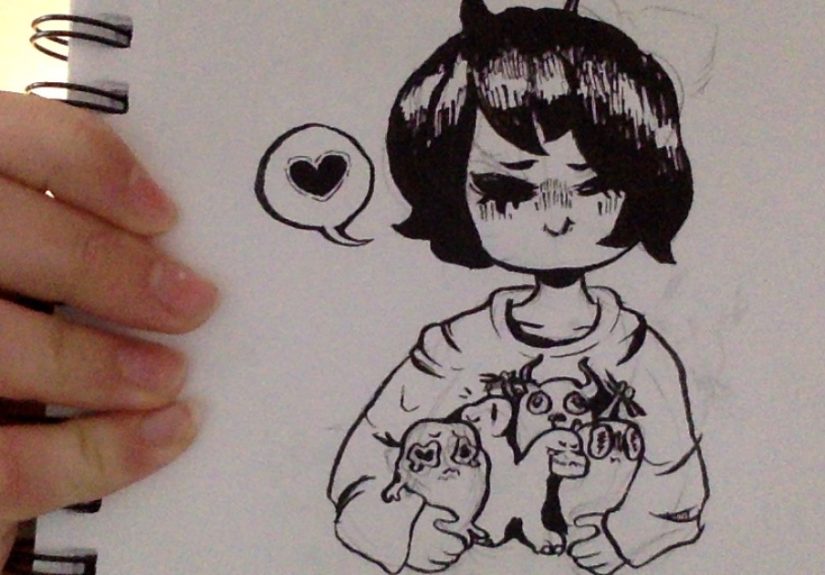
Somewhere on the internet, an artist posts a drawing and basically says: “Alright, strangers, hit me with your best shot.” And the internetbeing the internetresponds with everything from museum-worthy masterpieces to a stick figure wearing confidence like a cape. That spirit is exactly what “Hey Pandas, Redraw My Art In Your Style” is all about: a playful redraw challenge where you take someone’s original artwork and reinterpret it through your creative lens.
This guide is your friendly, no-judgment roadmap to doing the redraw wellwhether you’re working with pencil, Procreate, Photoshop, or (carefully, ethically) using AI tools as a helper. We’ll cover how the challenge works, how to develop a recognizable style, and how to keep everything respectful so you don’t accidentally become the villain in someone’s art TikTok.
What “Hey Pandas, Redraw My Art In Your Style” Really Means
At its core, this prompt is a creative invitation: take my art and remake it as if you drew it. That can mean changing linework, simplifying shapes, exaggerating expressions, shifting the color palette, or turning a realistic portrait into a cartoon, a watercolor wash, a pixel sprite, or even a bold graphic poster.
The magic isn’t in copying. It’s in translating. Think of it like covering a song: the melody is recognizable, but the performance is unmistakably yours. The best redraws feel like they come from the same “idea,” yet arrive wearing different shoes.
Why this prompt is oddly addictive
- It’s structured freedom: you don’t start from a blank page, but you still get to make creative choices.
- It’s style practice with training wheels: you can focus on your brushwork, shapes, and rendering instead of inventing everything from scratch.
- It’s community-friendly: everyone is building off the same seed, so comparing approaches is half the fun.
The Golden Rule: Redraw ≠ Trace (Unless You’re Studying Privately)
Let’s clear up a common confusion: a redraw challenge is meant to be a reinterpretation, not a stealth mission to replicate every line. If you’re tracing as a private study to understand anatomy or construction, that can be a valid learning method. But if you plan to post it publicly as your “redraw,” tracing can land badlyeven if your intentions were wholesome and your cat is very proud of you.
A good public redraw typically involves:
- Rebuilding the drawing with your own construction lines and proportions
- Making decisions about shapes, lighting, texture, and mood
- Changing at least some elements (styling, rendering, design details, palette, background, or framing)
How to Do a Redraw in Your Style (Step-by-Step)
1) Get permission (or choose challenges that already invite redraws)
If the original artist explicitly asked for redrawsgreat. If not, ask first. A quick, polite message goes a long way, and “no” is a complete sentence. (It also saves you from finishing a 10-hour piece only to realize you can’t post it.)
2) Save references like a professional raccoon
Create a small reference board: the original artwork, plus 2–5 examples of your own work that represent the style you want to use. This keeps your redraw consistent instead of drifting into “I started as anime and somehow ended as Pixar.”
3) Identify the “style knobs” you’ll turn
Before you draw, pick 3–5 style decisions. For example:
- Line: thick outline vs. thin sketch; smooth vs. scratchy texture
- Shapes: angular vs. round; realistic anatomy vs. stylized proportions
- Color: muted palette, neon pop, limited 3-color scheme, or monochrome
- Rendering: flat cel shading, painterly blend, stippling, watercolor, or collage
- Mood: comedic exaggeration, dreamy softness, horror twist, cozy warmth
4) Do a quick thumbnail pass
Make 3 tiny versions (seriouslytiny). This is where you can experiment without emotional attachment. Try shifting the crop, silhouette, or gesture. If the original pose is stiff, loosen it. If the composition is centered, push it off-center.
5) Build your redraw from scratch
Start with your own construction: gesture → forms → anatomy/clothing → clean shapes/lines. If you’re digital, keep layers simple: sketch, line (optional), flats, shadows, highlights, texture, effects.
6) Make it unmistakably “you”
Add your signature elements: your favorite brush texture, your go-to facial style, your typical edge control, the way you draw hair clumps, your preferred shadow shape, your background motifswhatever people recognize in your work.
7) Credit clearly when you post
Basic posting etiquette (that keeps friendships intact):
- Write: “Redraw of [Artist Name]’s original”
- Tag the artist (if they’re comfortable with tags)
- Don’t crop out signatures or watermarks
- Don’t imply the original idea is yours
“But I Don’t Have a Style…” (Yes You Do. It’s Just Wearing Camouflage.)
People say “I don’t have a style” the way they say “I can’t cook”while holding a perfectly good grilled cheese. Style isn’t a single magical brush. It’s the sum of your habits: the shapes you default to, the palettes you like, the way you simplify details, and what you emphasize.
Style-building exercises that don’t feel like homework
- Palette roulette: pick a limited palette (3–5 colors) and redraw using only those.
- Shape translation: redraw the same face in three ways: round, angular, and exaggerated.
- Brush identity test: use one brush for the whole piece (yes, even shadows). Limitations reveal style fast.
- “Two changes minimum” rule: every redraw must change at least two of these: line, palette, rendering, proportions, mood, background.
Digital Tools vs. Traditional Tools (Both Count, No Gatekeeping Allowed)
Traditional redraw tips
- Use a light under-sketch and commit with confident lines afterward.
- Try different paper texturestexture can become part of your style.
- Photograph in indirect daylight to avoid glare and weird shadows.
Digital redraw tips
- Set your canvas larger than you think you need (future-you will thank you at export time).
- Keep a “style brush set” so your textures stay consistent across pieces.
- Use reference layers or side-by-side view to compare proportions without tracing.
Where AI Fits In (Without Setting Your Comment Section on Fire)
AI tools can be used in a spectrumfrom “help me generate ideas for a background” to “fully generate the image.” If your goal is “redraw in your style,” the safest approach is to use AI as a support tool, not the main author. Think: color exploration, composition thumbnails, texture experiments, or quick lighting studies.
Ethical best practices when AI touches the process
- Get explicit permission if you’re using someone else’s art as an input image for a model.
- Be transparent about the workflow (“AI-assisted background,” “AI for color comps,” etc.).
- Don’t claim “in the style of” living artists as a shortcut. If you admire an artist, learn from them the old-fashioned way: studies.
- Respect platform rules and community preferencessome spaces welcome AI, some don’t.
A simple, respectful “AI-assisted redraw” workflow
- Redraw the subject yourself (sketch + clean drawing).
- Use AI only for optional experiments (background ideas, palette suggestions, lighting references).
- Paint/render the final in your own hand.
- Disclose clearly if AI played any meaningful role.
Copyright & Credit: The Not-Fun Part That Protects You
A redraw is usually a derivative workmeaning it’s based on an existing work. Derivative works can raise copyright issues, especially if the original artist didn’t consent or if the redraw is used commercially. And when AI enters the mix, copyright questions get even messier.
Here’s the practical, creator-friendly takeaway:
- Personal practice: generally low drama if it stays private.
- Posting publicly: ask permission or use prompts that explicitly invite redraws.
- Commercial use: get written permission (and when in doubt, talk to a qualified attorney).
- AI-generated-only outputs: may not receive the same copyright protection in the U.S. as fully human-authored works.
Fair use (a quick reality check)
“Fair use” exists, but it’s not a magic shield you can wave at angry DMs. It’s a legal defense evaluated case-by-case. If your redraw competes with the original artist’s market, copies too much, or is used commercially, risk goes up.
Concrete Examples: What Counts as “In Your Style”?
Example 1: Same pose, different visual language
You keep the character’s pose and outfit, but you convert the rendering into flat shapes with bold outlines, a limited palette, and graphic shadows. The silhouette reads similarly, but the finish screams “your brand.”
Example 2: Same idea, new mood
The original is cheerful. You redraw it as a rainy-night scene with muted blues and soft lighting. Same concept, different emotional temperature.
Example 3: Same subject, different design decisions
You redesign the hair shapes, simplify accessories, adjust proportions, and add your favorite background motifs. The redraw feels like a cousin, not a clone.
Posting Checklist (So You Don’t Accidentally Commit Internet Crimes)
- I have permission, or the prompt explicitly invited redraws.
- I credited the original artist clearly and respectfully.
- I did not remove watermarks or signatures.
- I’m not selling it (unless I have explicit permission).
- If AI helped, I disclosed how.
- I’m prepared to take it down if the original artist requests it.
Common Problems (And Fixes That Don’t Involve Crying)
“My redraw looks like a worse version of the original.”
Change two style knobs: switch the palette and the rendering approach. If you keep everything else identical, your brain will compare your line quality to theirs and declare you “illegal.” Don’t feed the inner critic.
“It doesn’t look like my style at all.”
Pull 3 of your older pieces and list what they share (brush texture, eye shape, shadow shape, palette tendencies). Then deliberately apply those habits to the redraw. Style is often intentional repetition.
“I’m scared to post.”
Start with a small community challenge and write a humble caption. Most artists appreciate respectful participation. And if you’re worried about criticism, remember: someone out there is confidently posting a blurry photo of a microwave manual. You’ll be fine.
Conclusion
“Hey Pandas, Redraw My Art In Your Style” works because it turns art-making into a conversation. You’re not just producing an imageyou’re responding, remixing, learning, and building community. Do it with intention, keep credit crystal clear, and treat the original artist like a collaborator, not raw material.
Whether you’re a traditional sketcher, a digital painter, or someone experimenting with AI-assisted workflows, the real win is the same: you practice decisions that make your work look more like you. And that’s the whole point.
Experiences From the “Redraw My Art” Trenches ()
If you hang around redraw challenges long enough, you’ll notice a pattern: the first attempt is usually a love letter to the original, and the second attempt is where people start sounding like themselves. Creators often begin with the nervous energy of someone trying to assemble IKEA furniture without the picturecarefully matching angles, checking proportions, and whispering, “Please don’t look weird.” Then, halfway through, something clicks. The redraw stops being a “rebuild” and starts being a “translation.”
A common experience is the “style drift.” You start with your favorite brush, your favorite line weight, your favorite way of drawing eyes… and suddenly you’re halfway into the piece and realize you’ve been unconsciously mimicking the original artist’s decisions. The fix is surprisingly simple: pause and make one bold choice. Swap the palette. Push the shapes more cartoony. Change the lighting direction. Add a background you’d normally draw. As soon as you introduce an intentional difference, your redraw feels less like a comparison test and more like your own work.
Another classic moment is discovering what you actually care about visually. Some artists find they’re obsessed with fabric folds. Others realize they love drawing hands (rare, but these people exist and should be studied by science). Redraw prompts are like creative mirrors: they reflect the parts of the process you lean into naturally. Over time, those repeated preferences become your stylequietly, without fireworks, like a plant you forgot you watered suddenly thriving.
Posting the redraw can be its own emotional mini-quest. Many creators report feeling weirdly vulnerable: “What if the original artist hates it?” “What if people think I copied?” “What if my shading looks like I rubbed it with a tortilla?” The healthiest community interactions tend to come from clear credit, a respectful tone, and zero ego. When you caption your post like, “Here’s my takethank you for the awesome original,” it frames the redraw as appreciation, not competition. And if the original artist responds positively, it can feel like getting a gold star from the universe.
Finally, there’s the sneaky long-term benefit: redraws teach speed and decision-making. Because you’re not inventing everything from scratch, you get more reps on the parts that matterline confidence, value grouping, edge control, color harmony, and simplification. After a few redraw challenges, many artists notice their original work improves too. It’s like cross-training for your art brain: you build skills in a playful context, and those skills quietly follow you back into your own ideas.