Table of Contents >> Show >> Hide
- Why This Discovery Made So Much Noise
- How Scientists “Saw” the Possible Lake
- What the Original Discovery Suggested
- The Scientific Pushback: Is It Really Water?
- Why the Debate Still Matters
- Mars, Water, and the Bigger Story
- What Happens Next?
- Conclusion
- Extended Reflection: The Human Experience Behind a Possible Martian Lake
Mars has a talent for making scientists look twice. One day it is a dry, rusty desert with the charm of a giant brick. The next day, radar data hints that beneath its frozen south pole, there may be a hidden reservoir of liquid water. Naturally, that got everyone’s attention. Water is the celebrity ingredient in the recipe for life, and when astronomers hear the phrase liquid water on Mars, nobody calmly shrugs and goes back to lunch.
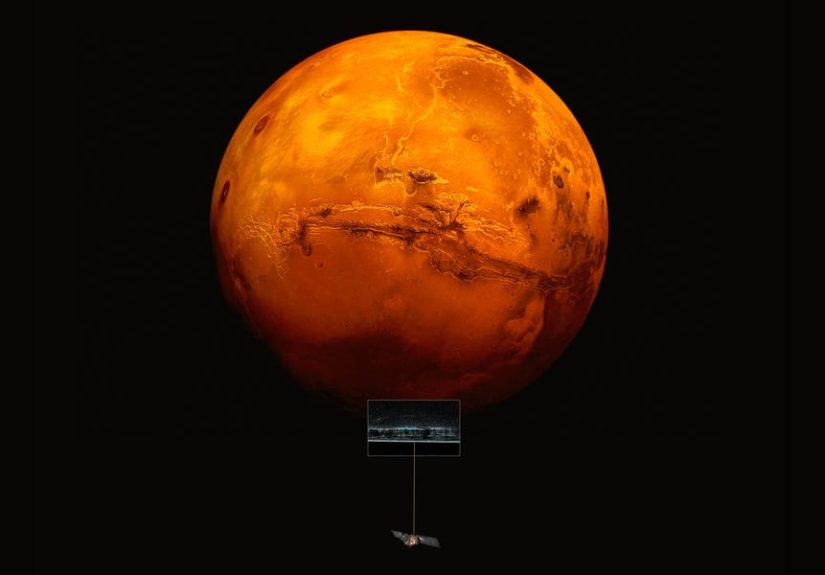
The excitement started in 2018, when researchers using radar data from the European Space Agency’s Mars Express mission reported evidence of a buried lake beneath layers of ice and dust near Mars’ south pole. The suspected reservoir was described as a stable body of salty liquid water, roughly 12 miles across and buried nearly a mile below the surface. That was a huge deal. Not a “mildly interesting rock with personality” kind of deal. A genuinely big one.
Since then, the story has become more complicated in the best scientific way possible: exciting claim, follow-up studies, fierce debate, improved methods, and a lot of smart people politely disagreeing in journals. Some later work supported the idea that liquid water may still exist beneath the south polar ice cap. Other studies argued the bright radar reflections could be explained by clay, rock, dust, or unusual ice layers instead. In other words, Mars has not exactly handed over a giant sign reading, “Yep, lake’s this way.”
That tension is exactly what makes this story so fascinating. It is not just about whether Mars has an underground lake. It is about how science works when the evidence is real, the stakes are high, and the planet in question is inconveniently far away.
Why This Discovery Made So Much Noise
Water changes everything in planetary science. Scientists already know ancient Mars had rivers, lakes, deltas, and wetter environments billions of years ago. NASA’s Curiosity and Perseverance rovers have both collected evidence showing that long-lived lake systems once existed on the planet. Mars was not always the freeze-dried world we see today. It had a wetter past, and that past may have been friendly to microbial life.
But present-day Mars is another story. Modern Mars is brutally cold, has a thin atmosphere, and does not allow stable liquid water to hang around on the surface for long. Ice is common. Frost happens. Water altered rocks are everywhere. But stable liquid water today? That is much harder to prove. So when scientists reported radar signals consistent with a buried liquid reservoir under the south polar layered deposits, the finding landed like a drumroll in the search for habitable niches beyond Earth.
The logic was simple: if water can remain liquid under the Martian ice, then Mars may still have environments where chemistry stays active. That matters for astrobiology, climate history, and future exploration. Even a hypersaline, brutally cold brine would be more than just another science headline. It would be a clue that Mars is not geologically and hydrologically as dead as it looks from a distance.
How Scientists “Saw” the Possible Lake
No, nobody sent a submarine to Mars. The suspected lake was detected using radar. The key instrument was MARSIS, short for Mars Advanced Radar for Subsurface and Ionosphere Sounding, aboard ESA’s Mars Express orbiter. Radar waves were beamed down through the south polar ice cap, and the reflected signals were measured as they bounced back.
Certain materials reflect radar in distinctive ways. Liquid water, especially salty water, can produce strong reflections. In the 2018 study, scientists identified an area beneath the south polar layered deposits where the radar signal was unusually bright compared with surrounding regions. That bright patch sat beneath thick ice, which led researchers to interpret it as a subglacial lake or a body of briny water trapped below the cap.
The setting matters here. The south polar layered deposits are made up of alternating layers of water ice, frozen carbon dioxide, and dust laid down over long periods of Martian climate change. Think of them as a frozen archive with attitude. Each layer records shifts in Mars’ tilt, weather, and polar conditions over time. If liquid water truly exists at the base of that stack, it would mean the planet still has enough local heat and salt to keep water from freezing solid.
What the Original Discovery Suggested
The original interpretation was bold but grounded. Scientists proposed that the bright radar reflector represented a stable body of liquid water beneath the ice. Because temperatures there are extremely low, the water would almost certainly have to be very salty, likely rich in perchlorates or other salts that can depress the freezing point. This would not be a warm, sparkling underground lake with scenic views and a gift shop. It would be a dark, frigid, chemically intense brine pocket.
Even so, that possibility electrified the field. Similar subglacial lakes exist on Earth beneath Antarctic ice, and some of them host microbial ecosystems in harsh, isolated environments. Mars is colder and rougher, but the comparison was impossible to ignore. If there is a buried watery system there, it becomes one of the most compelling modern habitats to investigate remotely.
In 2020, follow-up work suggested the original feature might not be alone. Researchers analyzing additional MARSIS data reported evidence for multiple nearby wet patches or smaller bodies surrounding the main reflector. That helped build the picture of a broader system rather than a one-off anomaly. At the time, it looked increasingly plausible that Mars’ south pole might be hiding more than a single watery secret.
The Scientific Pushback: Is It Really Water?
Here comes the plot twist, because Mars apparently enjoys them.
Almost as soon as the lake interpretation made headlines, other researchers started testing alternative explanations. The biggest problem was temperature. The base of the south polar ice cap is extremely cold, cold enough that many scientists questioned whether even very salty water could remain liquid without extra heat. If there really is liquid water there, some studies argued, Mars may need an additional geothermal heat source, perhaps linked to relatively recent magmatic activity beneath the surface.
That is a serious claim, and serious claims attract serious scrutiny. In 2021, NASA-affiliated researchers reported that bright radar reflections similar to the original “lake” signal appeared in many places around the south pole, including areas that seemed too cold for liquid water to survive. That opened the door to a less watery explanation: maybe the radar was picking up something widespread in the geology rather than rare underground pools.
One alternative pointed to clay minerals. Another suggested combinations of rock, dust, or unusual interfaces in the layered ice itself. Then came an important update in late 2025, when a new JPL-linked radar reassessment concluded that the original suspected underground lake is more likely explained by a layer of rock and dust than by present-day liquid water. That does not erase the original discovery from the record, but it does shift the balance of evidence toward caution.
So where does that leave us? In a very scientific place: the data are intriguing, the original claim was reasonable, some independent work still supports the possibility of subglacial liquid water, but the current picture is far from settled. Mars has not given us a courtroom confession. It has given us a mystery file.
Why the Debate Still Matters
This is not just academic nitpicking over a blurry radar signature. The answer affects how we think about Martian habitability, planetary heat flow, and the logistics of future missions.
1. It shapes the search for life
If liquid water exists beneath the south polar cap today, even in tiny or hypersaline form, Mars may still have pockets where microbial life could potentially survive. That would not prove life exists, but it would sharpen the map of where to look.
2. It changes how scientists view modern Mars
A stable subglacial lake would imply Mars is more active below the surface than many models predicted. Heat, salts, ice flow, and subsurface structure would all need a closer look. A world that seems frozen shut might still be quietly dynamic underground.
3. It matters for future astronauts
Water is not just a science target. It is a practical resource. NASA and USGS research continues to map buried ice across Mars because future explorers will need water for drinking, oxygen production, and fuel manufacturing. A deep south polar lake is probably not easy-to-reach astronaut plumbing, but every water-related discovery improves the bigger resource picture.
4. It demonstrates how planetary science actually works
Headlines love certainty. Science usually hands us probability, revision, and better instruments. The Mars lake story is a perfect example. An exciting signal appears. Teams test it. Other teams challenge it. New datasets arrive. Interpretations shift. That is not failure. That is the process doing its job.
Mars, Water, and the Bigger Story
Even if the south polar “lake” ends up being rock and dust wearing a very convincing disguise, the broader water story on Mars remains extraordinary. Ancient rivers carved channels across the planet. Long-lived lakes once pooled in craters. Deltas formed where flowing water met standing basins. Rovers have found ripples, sediments, minerals, and textures that make it increasingly hard to deny that Mars was once much wetter than it is today.
On top of that, researchers have found widespread water ice near the surface in many regions and deeper evidence suggesting that large quantities of water may still be stored in the crust. Mars is not waterless. It is water-hidden. That distinction matters.
In some ways, the buried lake debate is really a debate about the last chapter of Martian water. Did some of that ancient water retreat underground and remain liquid in isolated refuges? Or are we mostly seeing frozen leftovers, mineral fingerprints, and radar tricks produced by the polar geology? The answer will help determine whether present-day Mars is merely a cold archive of a wet past or still a world with active watery niches beneath the surface.
What Happens Next?
The next steps will come from better radar analysis, improved modeling, comparisons between different instruments, and eventually missions designed to probe the subsurface more directly. Nobody is likely to drill into the Martian south pole anytime soon; that would be technically difficult, wildly expensive, and the kind of project that makes mission planners reach for strong coffee. But better orbital methods can still refine the case.
Future missions aimed at mapping Martian ice and subsurface structure may help separate true liquid reservoirs from deceptive reflections. The more scientists compare radar data with topography, thermal models, mineralogy, and climate simulations, the better they can tell whether the signal means “briny lake” or “nice try, geology.”
Conclusion
The phrase “Underground Lake of Liquid Water Detected on Mars” captures one of the most exciting and contested ideas in modern planetary science. In 2018, radar observations beneath Mars’ south polar ice cap appeared to reveal a buried lake of salty liquid water, a finding that stirred hopes about present-day habitability on the Red Planet. Later studies added possible supporting clues, including evidence of additional wet patches and topographic effects that might fit a subglacial reservoir. But other analyses pushed back, arguing that the same signals could be produced by clays, rock, dust, or complex ice structures. Most recently, a 2025 JPL-linked reassessment suggested the original target is more likely rock and dust than an active underground lake.
So the most accurate takeaway is not that scientists have definitively found a Martian lake and moved on. It is that they found a compelling signal that opened a major scientific debate. And honestly, that may be even better. Mars is still forcing us to ask harder questions, build better tools, and rethink what a cold desert planet can hide under its skin. Not bad for a world that many people still think is just red dirt and robot selfies.
Extended Reflection: The Human Experience Behind a Possible Martian Lake
There is also a more personal side to this story, and it is part of why it captured so many people beyond the scientific community. News about an underground lake on Mars does something unusual to the imagination. It takes a planet that often feels distant, harsh, and almost abstract, and suddenly makes it feel physical. Hidden. Layered. Alive with possibility. You stop picturing a lifeless red ball in space and start picturing a frozen world with secrets under the ice.
For scientists, discoveries like this are rarely one dramatic movie moment followed by instant certainty. The real experience is more like years of careful work, repeated checks, long debates, and the constant tension between hope and skepticism. Imagine staring at radar maps for months, trying to decide whether a bright signal is the most exciting evidence of present-day water on Mars or just a brilliant geological fake-out. That emotional mix is part of science too. Curiosity pulls forward. Doubt holds the line. Both are necessary.
For readers and space fans, the experience is different but just as powerful. A headline about liquid water on Mars taps into something very old and very human: the desire to know whether we are alone. Water is familiar. Water means environments, chemistry, change, maybe even biology. The idea that liquid water could still exist beneath Martian ice makes the planet feel less like a dead museum and more like an unfinished story.
There is also a strange beauty in the setting itself. Picture a reservoir buried beneath a mile of polar ice, in darkness, under temperatures that would make Earth look cozy. It sounds like science fiction, yet the evidence being argued over comes from real instruments, real missions, and real measurements made across millions of miles. That contrast is thrilling. The story feels cinematic, but the method is rigorously technical.
Even the uncertainty has its own emotional pull. In everyday life, uncertainty is annoying. In space science, it can be irresistible. A debated signal on Mars becomes a kind of invitation. It tells the public, students, engineers, and future scientists that there are still major questions hanging in the air. There are still mysteries that have not been flattened into textbook answers. A teenager reading about this today might be part of the team that settles it twenty years from now.
And maybe that is the deepest experience tied to this topic: wonder mixed with patience. Mars does not give up its secrets quickly. Every discovery arrives with caveats, revisions, and new layers of complexity. But that does not make the story weaker. It makes it richer. Whether the south polar signal proves to be a real briny refuge or a spectacular geological illusion, it has already done something valuable. It reminded us that exploration is not about collecting simple answers. It is about learning how to ask better questions of worlds we have barely begun to understand.