Table of Contents >> Show >> Hide
- What Is an Electroplated 3D Printed Sword?
- Why 3D Printing and Electroplating Work So Well Together
- The Science Behind the Shine
- Why Resin Prints Often Look So Good When Plated
- What Makes the Sword Look “Real”?
- Electroplating vs. Metallic Paint: Which Looks Better?
- Common Uses for Electroplated 3D Printed Sword Props
- What to Know Before Commissioning One
- SEO Spotlight: Why This Topic Gets Attention
- Experience Notes: What a Shiny 3D Printed Sword Teaches You
- Conclusion: A Prop That Proves Plastic Can Wear Metal Well
There are ordinary 3D printed props, and then there are props that make people stop mid-scroll and say, “Wait… is that actually metal?” An electroplated 3D printed sword belongs firmly in the second category. It begins as a lightweight printed display piece, often made from resin or plastic, and ends with a reflective metallic skin that can look like something pulled from a fantasy armoryminus the dragon, the royal bloodline, and the questionable decision to swing it indoors.
The magic word is electroplating. In simple terms, electroplating uses an electrical process to deposit a thin layer of metal onto another surface. In manufacturing, it is used for appearance, conductivity, wear resistance, and corrosion protection. In the maker world, it has become a fascinating bridge between 3D printing and metal finishing. A plastic prop can gain the visual drama of polished metal while keeping the creative freedom of additive manufacturing.
For clarity, this article discusses electroplated 3D printed swords as non-functional display, cosplay, photography, and collector props. They should be blunt, decorative, and handled responsibly. The shine is the pointnot combat, not sharpening, and definitely not becoming the reason someone bans props at the next convention.
What Is an Electroplated 3D Printed Sword?
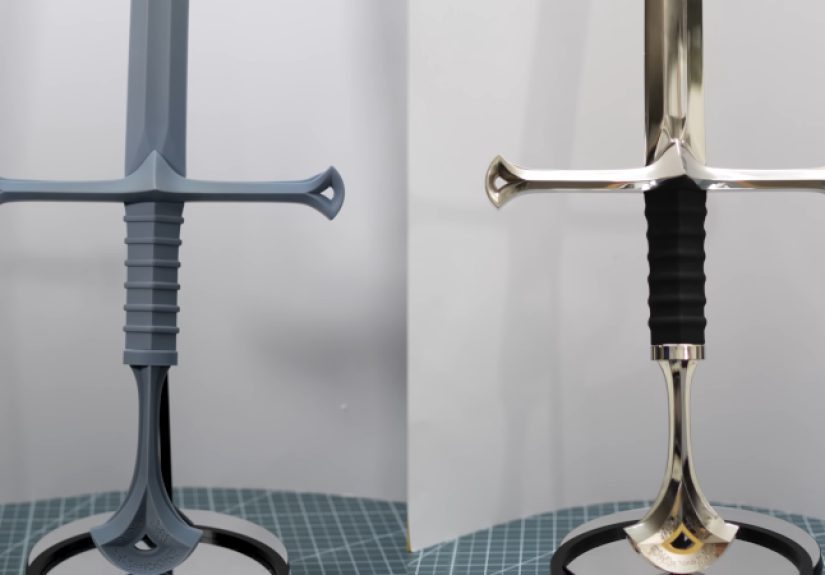
An electroplated 3D printed sword is a decorative prop that starts as a 3D model, becomes a printed object, and receives a metallic outer coating. The result can look surprisingly close to cast, forged, or polished metal, especially when the print is carefully finished before plating. The inner structure remains a printed material, but the outer surface catches light like metal because it really is metaljust in a thin deposited layer.
This hybrid approach is popular because full metal 3D printing remains expensive, specialized, and far beyond the average hobby desk. Printing a large decorative sword in metal would be costly and impractical for most makers. By contrast, printing a lightweight prop and giving it a metallic finish creates a similar visual effect at a more accessible scale. It is not the same as a solid metal object, but for display, cosplay, video, photography, and themed decor, it can be more than convincing.
The appeal is easy to understand. A fantasy sword usually has dramatic geometry: raised runes, beveled surfaces, ornate guards, gem-like decorations, sculpted pommels, and exaggerated silhouettes. These details are exactly where 3D printing shines. Electroplating then adds the second layer of charm: the reflective, cold-looking surface that tells your eyes, “This belongs in a legend,” while the object itself remains a decorative prop.
Why 3D Printing and Electroplating Work So Well Together
3D printing is excellent at shaping complex forms. Electroplating is excellent at transforming surfaces. Put them together, and you get a process that feels almost unfairly fun: design freedom plus metallic drama. The sword can have curves, symbols, textures, and layered details that would be difficult to make by traditional methods. After finishing, the metal coating can visually unify those details into one premium-looking object.
Design Freedom Without Metal-Shop Complexity
A 3D printed display sword can be modeled digitally before anything physical exists. That means the maker can test proportions, add decorative details, split the model for printing, and adjust balance for display. Digital design also makes it easier to create replicas inspired by games, films, mythology, or original fantasy concepts. The object does not need to be a practical sword; it can be a storytelling object.
That storytelling matters. A clean sci-fi sword might use smooth planes and sharp-looking but blunt visual edges. A fantasy relic might include weathered patterns, ornamental grooves, and an aged finish. A heroic wall-hanger might lean into mirror polish and bold symmetry. With 3D printing, each of these styles can begin as a different design file instead of a new tooling process.
Metallic Finish Without Solid Metal Weight
Solid metal props can be heavy, expensive, and inconvenient. For a display piece, weight is not always a virtue. A lighter object is easier to mount, carry briefly for photos, or transport to a convention where prop rules allow safe replicas. Electroplating adds a real metallic surface, but the core can remain lightweight. That is one reason plated 3D prints are attractive for props, prototypes, and visual models.
The phrase “metal-coated plastic” may sound less exciting than “legendary blade,” but the practical advantage is huge. A decorative sword can look impressive without behaving like a hazardous object. For web creators, photographers, cosplayers, and makers, that balance is the sweet spot: big visual payoff, manageable handling, and enough sparkle to make a camera lens feel underdressed.
The Science Behind the Shine
Electroplating relies on electrochemical deposition. A surface receives metal from a solution through an electrical process, creating a thin metallic layer. Since most common 3D printed plastics and resins do not naturally conduct electricity, they cannot be plated directly in the same way as metal parts. The surface must first become suitable for the coating process, usually through professional preparation or a conductive intermediate layer.
For a prop sword, the visible quality depends heavily on the surface underneath. Electroplating does not magically erase every flaw. If layer lines, scratches, pits, or uneven spots remain, the shiny coating may highlight them like a spotlight at a school talent show. This is why experienced makers often say the final finish is won or lost before the object ever looks metallic.
That does not mean every sword must be mirror-smooth. Sometimes texture is part of the design. A battle-worn relic, ancient ceremonial sword, or weathered fantasy artifact may actually benefit from subtle surface variation. The key is intention. Random print artifacts look accidental; designed texture looks artistic.
Why Resin Prints Often Look So Good When Plated
Resin 3D printing is commonly associated with fine detail and smooth surfaces, which makes it appealing for display props and miniatures. Compared with many filament prints, resin prints can capture crisp decorative features with less visible stepping. For an electroplated sword, that can translate into sharper ornaments, cleaner bevels, and a more convincing metallic finish.
Filament printing can still produce impressive props, especially for large forms, but it usually requires more attention to surface finishing if the goal is a polished metal look. Resin printing, meanwhile, can be excellent for smaller decorative components, guards, emblems, jewels, and detailed pommels. Many advanced props combine different printed sections, materials, and finishing styles to create the final illusion.
However, resin printing also comes with safety and handling responsibilities. Uncured resin and cleaning solvents should be treated seriously, and makers should follow material safety documentation, ventilation recommendations, and proper protective practices. A shiny prop is not worth sloppy chemistry. Glamour is good; mystery fumes are not.
What Makes the Sword Look “Real”?
The most convincing electroplated 3D printed sword props usually have three things in common: strong design, clean finishing, and believable contrast. The metal surface gets attention, but the whole object sells the illusion.
1. Smooth Surfaces Where Shine Matters
Reflective finishes are unforgiving. A mirror-like area will reveal waves, scratches, seams, and uneven surfaces. For a decorative sword, broad flat sections and raised borders often need the cleanest visual treatment. If the design has a central ridge, decorative groove, or polished guard, those areas become light-catching features. The smoother they are, the more premium the prop appears.
2. Decorative Detail That Survives the Finish
Electroplating can make details pop, but overly tiny details can become visually crowded. Good prop design balances bold shapes with fine accents. Raised symbols, engraved-looking panels, and clean edge transitions often read better than extremely delicate patterns. A sword that looks great from six feet away and still rewards close-up inspection is usually more successful than one overloaded with tiny decorations.
3. Color and Finish Choices
Different metallic looks create different moods. A bright silver-tone finish suggests polished steel or ceremonial fantasy metal. Copper brings warmth and a handcrafted feel. A darker aged finish can make the piece look ancient, mysterious, or battle-worn without turning it into a functional object. Gold accents can work beautifully on guards, pommels, and decorative panels, though too much gold can quickly move from “royal artifact” to “luxury bathroom faucet with ambition.”
Electroplating vs. Metallic Paint: Which Looks Better?
Metallic paint has improved dramatically. A careful paint job with primer, metallic layers, washes, dry brushing, and clear coat can look excellent in photos. It is also generally simpler and more accessible than electroplating. For many cosplay props, paint is the practical choice.
Electroplating, however, has a different character. Because the surface layer is actual metal, it reflects light in a way paint often struggles to duplicate. Highlights can look sharper. Edges can catch light more naturally. The object may feel cooler and more substantial to the touch. For close-up photography, collector display, or a centerpiece prop, electroplating can deliver a special “wait, what?” factor.
That said, electroplating is not automatically better for every project. It can be more expensive, more technical, and less forgiving. It may require professional services, careful safety controls, and thoughtful waste handling. Metallic paint wins when speed, budget, and simplicity matter. Electroplating wins when realism, reflectivity, and premium finish are the main goals.
Common Uses for Electroplated 3D Printed Sword Props
A shiny printed sword is not just a maker flex, although yes, it absolutely is that too. It has several practical creative uses when kept decorative and blunt.
Cosplay and Convention Displays
Cosplayers often need props that look impressive but remain safe, lightweight, and compliant with event rules. A plated display sword can provide a metallic look for staged photos, booth displays, or controlled presentations. Because conventions vary widely in prop policies, creators should always check rules before bringing any sword-shaped object to an event.
Photography and Video Production
Reflective props can add drama to fantasy portraits, product-style shoots, short films, and social media reels. A plated surface responds beautifully to controlled lighting. With the right angle, even a simple prop can look like an artifact from a mythical vault. With the wrong angle, it may mostly reflect your ceiling fan. Lighting, as always, is the unpaid actor that steals the scene.
Wall Art and Collector Decor
A decorative sword can become a display object for game rooms, studios, maker spaces, or themed interiors. Electroplating gives it a more premium presence than raw plastic. Mounted safely, it can function like sculpture: part engineering experiment, part fandom object, part conversation starter.
Prototype and Concept Modeling
Beyond fantasy props, electroplated 3D prints are useful in design and prototyping because they allow teams to evaluate shapes with metallic surfaces before committing to more expensive manufacturing. A sword-shaped prop is a flashy example, but the same concept applies to awards, badges, product mockups, handles, fixtures, and decorative hardware.
What to Know Before Commissioning One
If someone wants an electroplated 3D printed sword as a display prop, the safest and most reliable path is usually to work with experienced makers, prop studios, or professional finishing services. This is especially true because plating involves chemistry, electricity, ventilation considerations, and waste management. A professional can also help choose finishes that match the intended use: display, photography, convention-safe cosplay, or collector presentation.
When discussing a commission, the most useful questions are design-focused rather than process-focused. What size will the prop be? Does it need to hang on a wall? Will it be photographed under bright lights? Should it look new, aged, magical, ceremonial, or weathered? Should the finish be mirror-like or satin? Does it need a safe carrying case? These questions shape the final result without turning the project into a risky garage experiment.
It is also wise to ask about durability expectations. Electroplated surfaces can be beautiful, but display props should still be treated with care. Dropping, bending, scraping, or flexing the underlying print can damage the finish. Think of it less like a tool and more like a fancy collectible that happens to look ready for a boss fight.
SEO Spotlight: Why This Topic Gets Attention
The phrase electroplated 3D printed sword pulls together several search-friendly interests: 3D printing, cosplay props, electroplating, metallic finishes, fantasy replicas, resin printing, and maker projects. That gives the topic broad appeal. Hobbyists want to know what is possible. Cosplayers want better-looking props. Designers want surface-finish inspiration. Casual readers just want to see something shiny and impressive.
From a content perspective, the topic also has a strong visual hook. A sword is instantly recognizable, and a metallic finish is easy to appreciate even for readers who know nothing about additive manufacturing. The article can introduce technical ideassurface preparation, conductive coatings, plating, resin prints, post-processingthrough an object people already understand. In other words, the sword is the doorway; the real story is the transformation of plastic into a metal-looking showpiece.
Experience Notes: What a Shiny 3D Printed Sword Teaches You
Spending time around electroplated 3D printed props teaches one lesson very quickly: shine is honest. Paint can sometimes hide a small flaw. A matte finish can forgive a slightly uneven surface. But a reflective metallic finish? It remembers everything. It remembers the seam you thought nobody would notice. It remembers the tiny ridge near the guard. It remembers the spot you said was “good enough” at midnight. Shiny finishes are basically tiny mirrors with excellent memory.
That is why the best prop makers develop patience. The impressive final reveal may be the part everyone sees online, but the quieter work happens earlier: evaluating the model, thinking about how light will travel across the surface, deciding which details should be raised and which should stay subtle, and making sure the object is designed as a safe display piece from the start. The glamour arrives late. The discipline arrives first.
Another experience lesson is that scale changes everything. A small plated emblem may look perfect with minimal visual drama, while a long sword-shaped prop has broad surfaces that catch light across a much larger area. Long forms reveal alignment, symmetry, and finish quality. Even a decorative fantasy sword needs visual balance. If the guard is too bulky, the blade too plain, or the pommel too small, the finish cannot save the design. Metal shine enhances good proportions; it does not rescue awkward ones.
Photography also becomes part of the experience. A shiny sword prop rarely looks the same in two rooms. Under soft light, it may appear elegant and smooth. Under harsh direct light, every tiny imperfection becomes a headline. Against a dark background, the silhouette can look dramatic. Against a cluttered desk, it may reflect a coffee mug, a charging cable, and the maker’s quiet regret. Anyone displaying or photographing a plated prop should think about lighting as carefully as the object itself.
Handling expectations matter too. People often assume that a metallic surface means the whole object is metal. With electroplated prints, that is not the case. The prop may look like polished steel, but its heart is still printed material. That is a feature, not a flaw, when the goal is a lightweight decorative piece. The trick is explaining it correctly: it is not fake metal, because the surface can be real metal; it is not solid metal, because the core is printed. It lives in the fascinating middle ground between illusion and engineering.
One of the most satisfying parts of this topic is how it turns post-processing into an art form. Many people think 3D printing ends when the printer stops. In reality, for display pieces, the print is often just the beginning. The finishing stage determines whether the object looks like a draft, a toy, a prototype, or a premium collectible. Electroplating raises the stakes because the final surface can look spectacular, but only if the earlier design and finishing choices support it.
There is also a practical lesson about restraint. Not every part of a sword prop needs maximum shine. A fully mirror-polished object can look impressive, but contrast often looks better. A satin grip, darker recessed details, aged accents, or selective highlights can make the prop feel more believable. Real objects usually have visual hierarchy. The eye needs places to rest. If everything screams “look at me,” the final result can become noisy. Good design knows when to sparkle and when to behave.
For makers, the emotional payoff is huge. Watching a printed object transform from dull resin or plastic into something that looks metallic can feel almost like alchemy. The first time the surface catches light properly, the project stops looking like a file that escaped a printer and starts looking like an artifact. That moment is why people love this niche. It combines digital modeling, physical craft, chemistry, design, photography, and a little theatrical flair.
Still, the smartest creators keep the project grounded. A decorative electroplated sword should be made, displayed, transported, and discussed as a prop. It should be safe, blunt, and clearly intended for art, cosplay, or display. The goal is not danger; the goal is wonder. When done responsibly, an electroplated 3D printed sword is less about making a weapon and more about making an object that tells a story every time it catches the light.
Conclusion: A Prop That Proves Plastic Can Wear Metal Well
An electroplated 3D printed sword is a perfect example of modern maker culture at its most theatrical. It blends digital design, additive manufacturing, surface finishing, and old-school metallic beauty into one dramatic display object. It is shiny, yesbut the shine is only the final chapter. The real achievement is the transformation: a lightweight printed form becoming a convincing metal-coated prop through careful design and finishing.
For cosplay, photography, collector displays, and creative prototyping, electroplating opens exciting possibilities. It lets makers create objects that look premium without requiring solid metal fabrication. It rewards patience, planning, and respect for safety. Most importantly, it reminds us that 3D printing is not just about producing shapes. It is about turning ideas into objects that feel surprising, expressive, and sometimes just gloriously shiny.