Table of Contents >> Show >> Hide
- Do Dragonflies Bite? The Truth Behind the Myth
- Dragonfly Life Span: Why Their Lives Feel Short and Long at the Same Time
- How the Dragonfly Life Cycle Works
- Dragonfly Migration: Yes, Some of Them Really Travel
- Environmental Benefits of Dragonflies
- How to Support Dragonflies in Your Yard or Community
- Why Dragonflies Fascinate People So Much
- Experiences People Commonly Have with Dragonflies
- Conclusion
- SEO Tags
Dragonflies have the kind of reputation usually reserved for tiny action heroes. They zip, hover, pivot, patrol ponds like airborne security guards, and occasionally make people ask, “Wait… do those things bite?” Fair question. With their huge eyes, long bodies, and fast, darting flight, dragonflies can look a little intense. But once you get past the dramatic entrance, these insects turn out to be more helpful than horrifying.
If you have ever watched one skim over a pond or cruise through a backyard at sunset, you have already seen one of nature’s most efficient predators at work. Dragonflies help control mosquitoes and other flying insects, spend most of their lives underwater as nymphs, and in some species even migrate long distances across North America. On top of that, scientists often treat dragonflies as environmental clues with wings, because healthy dragonfly populations can signal healthy wetlands and cleaner water.
In other words, dragonflies are not just pretty. They are useful, weird, ancient, and surprisingly complicated. This guide breaks down the truth about dragonfly bites, how long dragonflies live, why some migrate, and the environmental benefits that make them worth rooting for.
Do Dragonflies Bite? The Truth Behind the Myth
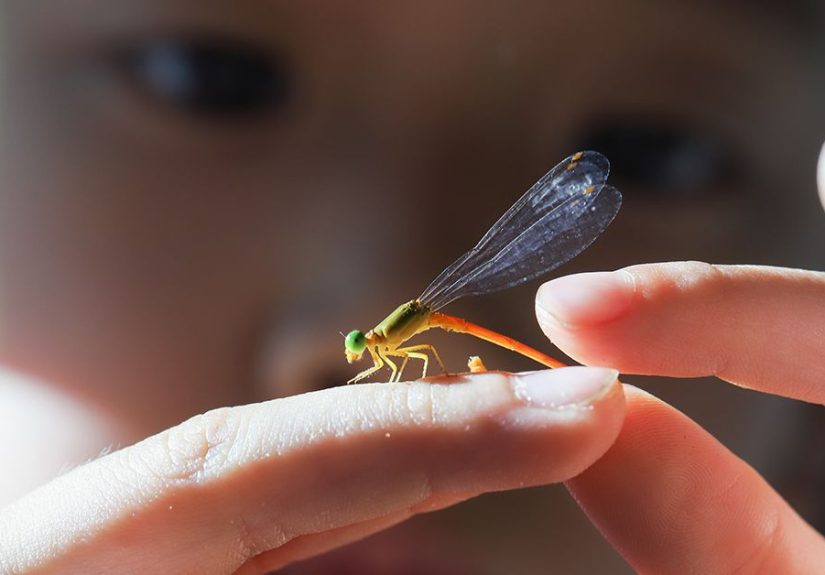
Let’s start with the question that sends plenty of people down an internet rabbit hole: do dragonflies bite humans? Technically, a large dragonfly can pinch or nip with its jaws if you grab it or handle it roughly. But that is not the same thing as being an aggressive biting pest. Dragonflies do not hunt people, do not sting, and do not buzz around plotting revenge because you wore a floral shirt.
Most of the old folklore is wildly overdramatic. Nicknames like “devil’s darning needle” and “horse stinger” sound like rejected fantasy villains, but they do not reflect reality. Dragonflies have strong jaws for catching prey such as mosquitoes, gnats, flies, and other small insects. Those jaws are built for insect hunting, not for attacking humans at the neighborhood barbecue.
What a dragonfly bite usually feels like
If a bite happens at all, it is usually defensive and brief. A larger species may give a sharp pinch if it feels trapped. Smaller species often cannot break human skin. Even when a large dragonfly does manage a nip, it is generally harmless and does not require special treatment beyond basic cleaning if the skin is broken.
So, if a dragonfly lands near you, there is no need for dramatic swatting, interpretive screaming, or announcing your retirement from outdoor life. The smarter move is to leave it alone and enjoy the show.
Dragonfly Life Span: Why Their Lives Feel Short and Long at the Same Time
The dragonfly life span is one of those fun biological plot twists. Adult dragonflies often seem like creatures of summer, appearing suddenly, flashing jewel-like colors, and then vanishing before you have even identified them properly. That short adult phase is real. But it is only the final chapter of a much longer story.
The egg stage
Female dragonflies lay eggs in or near freshwater. Depending on the species, they may place eggs directly into water, on aquatic plants, or in muddy areas near ponds, marshes, streams, and lakes. After hatching, the young dragonfly enters the nymph stage, also called the naiad stage.
The nymph stage: the long underwater chapter
This is where dragonflies spend most of their lives. Nymphs live underwater and are serious predators from the beginning. They eat mosquito larvae, other aquatic insects, and in some cases even tiny fish or tadpoles. If adult dragonflies are the fighter jets, nymphs are the stealth submarines.
Depending on the species and environmental conditions, dragonfly nymphs may live underwater for one to three years, up to two years in many common cases, and in some species even longer. Cooler water, food availability, and habitat quality all affect how quickly they develop. During this stage, they molt multiple times before finally emerging as adults.
The adult stage: short, flashy, and busy
Once the nymph crawls out of the water and transforms, the adult dragonfly begins its above-water life. Adults often live only a few weeks, though some may survive for a couple of months and a few species can last longer under the right conditions. That means the dragonfly you admire on a garden stake may be living its entire glamorous adult life on an extremely tight schedule.
And what does it do with that time? Mostly eat, mate, patrol territory, avoid predators, and keep the dragonfly family line rolling. It is a surprisingly intense calendar for an insect with no planner app.
How the Dragonfly Life Cycle Works
The dragonfly life cycle is a great example of incomplete metamorphosis. Unlike butterflies, dragonflies do not go through a caterpillar and chrysalis stage. Instead, they hatch into aquatic nymphs that gradually develop through repeated molts.
When the nymph is ready, it climbs out of the water onto a plant stem, log, rock, or other surface. Then the exoskeleton splits, and the adult dragonfly slowly emerges. Its wings expand, harden, and dry before the insect is ready for flight. It is one of the coolest transformations in nature, and it looks like something between a sci-fi reboot and a very determined yoga class.
This dependence on water explains why dragonflies are so closely tied to ponds, marshes, streams, lakeshores, and wetlands. No water, no nymph habitat. No nymph habitat, no next generation of dragonflies.
Dragonfly Migration: Yes, Some of Them Really Travel
Many people do not realize dragonflies migrate at all. Butterflies get the publicity, geese get the dramatic sky formations, and dragonflies quietly keep doing astonishing things with very little fanfare. But some dragonfly species are legitimate long-distance travelers.
The common green darner is a standout migrant
One of North America’s best-known migratory dragonflies is the common green darner. These dragonflies move south in late summer and fall, often from Canada and the northern United States toward the Gulf Coast, Mexico, and other southern regions. Then, through a multi-generation cycle, their descendants move north again in spring.
That means the dragonflies heading north are not usually the same individuals that traveled south months earlier. It is more like a relay race than a round-trip vacation. One generation lays the groundwork for the next, and the migration continues across seasons.
What triggers migration?
Like many migratory animals, dragonflies respond to environmental cues. Temperature changes, daylight shifts, weather fronts, wind direction, and the availability of breeding habitat all play a role. Cold fronts can help push fall migrants south, while warmer conditions support northbound movement in spring.
Large dragonfly movements can be dramatic along coastlines, wetlands, and open landscapes. Observers sometimes see swarms or steady directional flights that feel almost bird-like. If you ever notice a stream of dragonflies moving in one direction on a late-summer day, congratulations: you may be standing in the path of one of the most underrated migrations in nature.
Other migratory dragonflies
The green darner is not alone. Species such as wandering gliders and black saddlebags are also known for migratory behavior. These insects are built for efficient flight, and their mobility helps them take advantage of seasonal habitat, temporary pools, and favorable weather conditions.
Environmental Benefits of Dragonflies
If dragonflies were applying for a public relations makeover, this section would be their best material. They are not just harmless; they are genuinely useful in ecosystems and around human spaces.
1. Natural mosquito control
This is the crowd favorite. Dragonflies eat mosquitoes as both nymphs and adults. Nymphs feed on mosquito larvae in water, while adults catch flying mosquitoes in the air. They also eat gnats, midges, flies, and other small insects. That does not mean dragonflies will single-handedly erase every mosquito from your yard, but they absolutely help reduce nuisance insect numbers as part of a balanced ecosystem.
2. A key role in the food web
Dragonflies are predators, but they are also prey. Nymphs feed on aquatic life and are eaten by fish, frogs, and other animals. Adults are hunted by birds, spiders, and other predators. That makes dragonflies an important link between aquatic and terrestrial food webs. They help move energy through ecosystems in ways that are easy to overlook until something disappears.
3. Signs of wetland and water health
Dragonflies are often considered indicator species. Because their young develop in freshwater and many species need relatively healthy aquatic habitat, their presence can tell scientists something about ecosystem condition. A pond with a good mix of dragonflies is often a sign that the habitat is doing at least a few things right.
This does not mean every dragonfly-rich habitat is perfect or every dragonfly-poor habitat is doomed. Nature loves nuance. But dragonflies are useful biological clues, which is why museums, conservation groups, and researchers often highlight them in conversations about wetland quality and habitat health.
4. They help scientists track pollution
Dragonfly larvae are valuable in environmental research because they can accumulate contaminants from the food they eat in water. In the United States, the Dragonfly Mercury Project has used dragonfly larvae in parks and protected areas to help scientists understand mercury contamination and environmental risk. That turns dragonflies into more than backyard beauties; they become tiny data collectors in the world’s most elegant field uniforms.
5. Support for biodiversity
Where dragonflies thrive, you often find a richer community of wetland plants and animals. Protecting habitat for dragonflies can also support amphibians, native aquatic plants, birds, and beneficial insects. In that sense, helping dragonflies is often another way of helping a whole neighborhood of wildlife.
How to Support Dragonflies in Your Yard or Community
If you want more dragonflies around, the answer is not buying plastic dragonfly lawn ornaments and hoping for the best. Habitat matters.
Create better dragonfly habitat
- Add or protect a pond, rain garden, wetland edge, or other water feature where safe and practical.
- Use native shoreline and emergent plants that give nymphs places to develop and adults places to perch.
- Avoid unnecessary pesticide use, especially near water.
- Protect clean water and healthy vegetation in local wetlands, streams, and ponds.
- Leave some natural structure in the landscape, such as reeds, stems, and pond-edge plants.
Dragonflies do not need a luxury resort. They need water, plants, prey, and a habitat that is not constantly being chemically blasted into submission.
Why Dragonflies Fascinate People So Much
Part of the appeal is visual. Dragonflies look like living stained glass with wings. Part of it is behavioral. They can hover, zip backward, pivot midair, and patrol the same stretch of pond like tiny helicopter pilots with a caffeine budget. And part of it is symbolic. Across different cultures, dragonflies have been linked to water, change, clarity, and transformation.
Scientifically, they are just as impressive. They have ancient roots, remarkable vision, efficient predatory skills, and a life cycle that ties water and land together in a way that feels almost poetic. Not bad for an insect many people initially misjudge as a scary bite machine.
Experiences People Commonly Have with Dragonflies
Spend enough time near a pond, lake, marsh, or even a weedy backyard after summer rain, and you start to understand why people remember dragonflies so vividly. They do not just pass through a scene. They seem to own it.
One of the most common experiences people describe is surprise. A dragonfly suddenly appears at eye level, hovers for a second as if evaluating your life choices, then shoots away before you can point it out to anyone else. For many people, that first close encounter is when fear and fascination collide. The insect looks fierce, but it behaves more like an acrobat than a threat.
Another common experience is relief. Anyone who has sat outdoors during mosquito season knows the special level of disrespect that mosquitoes bring to the human experience. Then a dragonfly arrives and starts patrolling the area, swooping and darting with obvious purpose. You may not see every insect it catches, but you notice the atmosphere change. The yard feels less buggy, less whiny, less like a buffet where you are the special of the day.
People who live near ponds often notice the life-span contrast firsthand. For most of the year, the water looks ordinary. Then, during warm weather, adult dragonflies seem to appear almost overnight. Suddenly fence posts, reeds, tomato cages, and shepherd’s hooks become dragonfly runways. It can feel like a seasonal event that starts quietly and then takes over the landscape in the best possible way.
Watching emergence is another unforgettable experience. If you ever spot a dragonfly nymph clinging to a stem with a split shell beside it, you are seeing the end of a long underwater childhood and the beginning of adult life. The new dragonfly looks soft, pale, and almost unfinished at first. Then the wings expand, the body firms up, and eventually it launches into the air like a tiny miracle that forgot to be subtle.
Migration sightings can be especially memorable. People near coastlines, fields, and wetlands sometimes see dozens or even hundreds moving in a shared direction. The first instinct is usually confusion. “Why are there so many dragonflies?” The second is awe. Once you realize you may be witnessing migration, the scene changes from random insect activity to one of nature’s big seasonal movements.
And yes, some people have the classic “I picked one up and it pinched me” story. Those experiences usually end with the same conclusion: the dragonfly was not evil, just annoyed. Fair enough. Most of us would react similarly if a giant creature grabbed us during lunch.
In gardens, parks, campgrounds, and fishing spots, dragonflies often become part of the emotional texture of summer. They signal water nearby. They suggest a living, breathing habitat. They turn a quiet patch of landscape into something more animated. You may forget the exact species name, but you remember the flash of wings, the hovering pause, and the feeling that the place was healthier because they were there.
Conclusion
Dragonflies are a perfect example of why first impressions in nature can be hilariously wrong. They look intense, but they are not dangerous to people. They may give a defensive pinch if handled, yet they are far more interested in hunting mosquitoes than bothering humans. Their adult life may be brief, but their full life cycle can stretch across years underwater. Some species migrate across regions and generations, following seasonal opportunity with impressive precision. And environmentally, they are more than pretty visitors; they are predators, prey, indicators, and scientific allies.
So the next time a dragonfly zips past your face like it has somewhere extremely important to be, do not panic. Consider it a reminder that a healthy landscape is full of motion, mystery, and a few very skilled mosquito hunters.