Table of Contents >> Show >> Hide
- Definition: The Law of Demand in Plain English
- Why the Law of Demand Works
- Law of Demand vs. Demand vs. Quantity Demanded
- What Causes Demand to Shift?
- Examples of the Law of Demand in Everyday Life
- How Elasticity Connects to the Law of Demand
- Are There Exceptions to the Law of Demand?
- Why the Law of Demand Matters
- The Bottom Line
- Real-Life Experiences Related to the Law of Demand
Economics has a few superstar ideas, and the law of demand is definitely one of them. It is the concept that quietly explains why shoppers swarm a clearance rack, why people think twice before ordering the extra-guacamole burrito after a price hike, and why businesses obsess over pricing like it is a competitive sport. In plain English, the law of demand says that when the price of something rises, people usually buy less of it. When the price falls, people usually buy more. Simple? Yes. Powerful? Also yes.
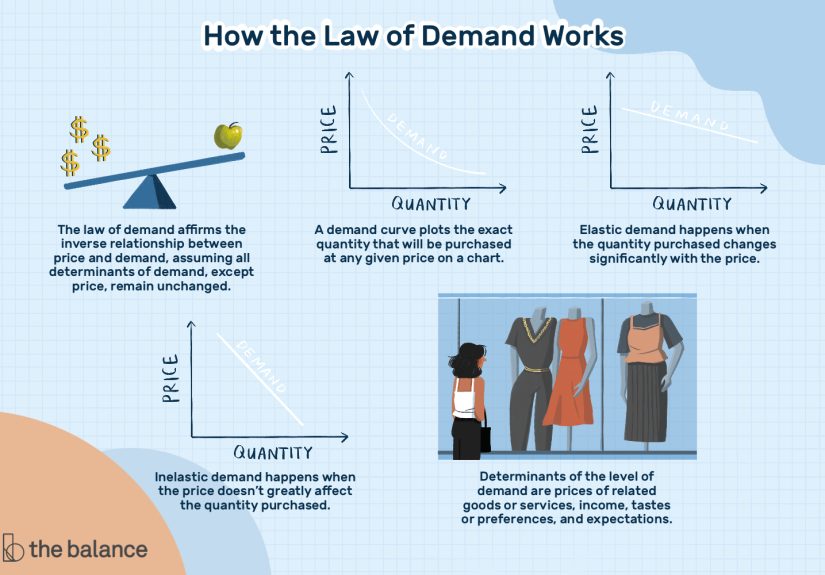
But like most things in economics, the magic is in the fine print. The law of demand does not claim that people are robots or that every purchase can be explained by a spreadsheet and a furrowed brow. It works ceteris paribus, which is the economist’s elegant way of saying, “Hold the other stuff steady for a second.” If income, tastes, expectations, and the prices of related goods stay the same, then price and quantity demanded usually move in opposite directions.
That one relationship forms the backbone of the demand curve, pricing strategy, consumer behavior analysis, and much of everyday market life. So let’s unpack what the law of demand really means, why it works, when it gets messy, and why it matters far beyond the classroom.
Definition: The Law of Demand in Plain English
The law of demand states that, all else being equal, the quantity demanded of a good or service falls when its price rises and rises when its price falls. That is the core idea. If movie tickets become more expensive, some people will go less often. If strawberries go on sale, more shoppers will toss them into the cart. If airline fares drop enough, even people who were “just browsing” suddenly become amateur travel agents.
The phrase quantity demanded matters here. Economists use it to describe the amount of a product consumers are willing and able to buy at a particular price. The law of demand is not saying people stop wanting things altogether when prices rise. It is saying that at a higher price, fewer units are typically purchased.
This inverse relationship between price and quantity demanded is what gives the demand curve its familiar downward slope. On a graph, price sits on the vertical axis and quantity demanded sits on the horizontal axis. As you move down the graph to a lower price, quantity demanded tends to move to the right. It is one of economics’ most recognizable pictures, and for good reason: it captures a pattern that shows up in real life over and over again.
Why the Law of Demand Works
1. The substitution effect
When the price of a product rises, consumers often look for alternatives. If beef gets pricey, some households buy more chicken. If one streaming service raises its monthly fee, subscribers may downgrade, cancel, or wander off to a rival platform with a cheaper plan and a decent crime documentary selection. Consumers compare options, and higher prices make substitutes look more attractive.
2. The income effect
A higher price effectively reduces a buyer’s purchasing power. Even if your paycheck does not change, more expensive groceries, gas, or rent make your money stretch less. That can lead people to buy less of the now-more-expensive product, especially when the item takes up a noticeable part of the household budget. In other words, a price increase can make consumers feel poorer, even if technically their income did not change by a dime.
3. Diminishing marginal utility
This phrase sounds like something a villain mutters while adjusting a monocle, but the idea is straightforward. The first unit of a product often gives more satisfaction than the next one. Your first slice of pizza on a Friday night can feel like a gift from the universe. Slice five? Less thrilling. Because each additional unit tends to provide less extra satisfaction, consumers are generally willing to buy more only if the price drops.
Law of Demand vs. Demand vs. Quantity Demanded
This is where many beginners trip over the vocabulary, so let’s make it painless.
Quantity demanded
Quantity demanded refers to how much consumers buy at a specific price. If a coffee shop lowers the price of lattes from $6 to $4 and sells more cups, that is a change in quantity demanded. On a graph, this is shown as a movement along the same demand curve.
Demand
Demand is broader. It describes the full relationship between prices and the quantities buyers would purchase at each price. When economists say demand has increased or decreased, they usually mean the entire curve has shifted, not that the product’s own price changed.
Why this distinction matters
If the price of sneakers drops and people buy more sneakers, that is the law of demand in action. But if a celebrity makes those sneakers wildly fashionable and people want more of them at every price, that is not a movement along the curve. That is a shift in demand. Same shoes, different cause, very different graph.
What Causes Demand to Shift?
The law of demand deals with changes in a product’s own price. But real markets are full of other factors that can shift demand right or left.
Income
When consumers have more income, demand for many goods increases. These are called normal goods. Think restaurant meals, vacations, better electronics, or higher-quality furniture. If income falls, demand for these items may weaken.
Some goods behave differently. For certain inferior goods, demand may rise when income drops because consumers trade down to more affordable options. Instant noodles and budget transit passes often enter the chat when the economy gets rough.
Preferences and tastes
Consumer tastes change all the time. A new health trend can increase demand for Greek yogurt. A viral social media moment can send demand for a skincare product into orbit. A reputational scandal can push demand the other way at impressive speed.
Prices of related goods
Substitutes are products that can replace one another, like tea and coffee or butter and margarine. If the price of coffee jumps, some consumers may buy more tea. Complements are products used together, like printers and ink, or hot dogs and hot dog buns. If the price of printers falls, demand for ink may rise because more printers are being purchased.
Expectations
What people think will happen in the future matters. If consumers expect gas prices to rise next week, they may fill up today. If shoppers expect a laptop to go on sale next month, they may wait. Markets are full of people reacting not just to current prices, but also to tomorrow’s rumors.
Number of buyers
More buyers usually means more demand. Population growth, tourism, migration, or expanding market access can all increase demand at various price points.
Examples of the Law of Demand in Everyday Life
Grocery store sales
When avocados are expensive, some shoppers buy fewer of them or skip the homemade guacamole dream entirely. When avocados are on sale, demand rises fast. Suddenly everybody is one lime away from hosting taco night.
Airfare and hotels
Lower airfare usually encourages more travel. Discounted hotel rooms can increase bookings, especially among leisure travelers who are flexible about dates. Businesses in travel watch demand closely because even modest price changes can influence consumer decisions in noticeable ways.
Gasoline
Gas is a classic example because the law of demand applies, but the response can be limited in the short run. If prices spike, people may drive less, combine errands, or rethink road trips. Still, many commuters must buy gas anyway, which helps explain why demand for some necessities is relatively inelastic.
Streaming subscriptions
When a streaming service raises prices, some subscribers stay. Others downgrade, share passwords less heroically, or cancel altogether. That illustrates not only the law of demand, but also how competition and substitutes shape real consumer choices.
How Elasticity Connects to the Law of Demand
The law of demand tells us the direction of the relationship between price and quantity demanded. Price elasticity of demand tells us the strength of that relationship.
If demand is elastic, a small change in price leads to a relatively large change in quantity demanded. Think restaurant dining, branded snacks, or leisure travel. If demand is inelastic, a price change leads to a smaller response. Think prescription medicine, electricity, or gas for someone with a long commute and no practical alternative.
This matters enormously for businesses. A company selling elastic products may lose customers quickly after a price increase. A company selling inelastic products may raise prices with less immediate damage, though that does not mean consumers will be thrilled about it. Nobody throws a parade for a utility bill.
Are There Exceptions to the Law of Demand?
Yes, but they are usually treated as rare special cases, not evidence that the whole law falls apart.
Giffen goods
A Giffen good is an inferior good for which demand may rise as the price rises, usually because the good makes up a large portion of a low-income household’s budget and there are few close substitutes. This is a famous theoretical exception, but real-world examples are uncommon and heavily debated.
Veblen goods
Veblen goods are luxury goods for which higher prices may actually increase desirability because the high price itself signals status, exclusivity, or prestige. Designer handbags, limited luxury watches, or elite-brand items can sometimes fit this pattern. In these cases, consumers may see the price tag not as a warning, but as part of the appeal.
Speculation and expectations
Sometimes people buy more as prices rise because they believe prices will rise even further. That can happen in asset markets, collectibles, or trendy products. Even then, economists usually treat this as a case where expectations are changing, not a clean contradiction of the law of demand under stable conditions.
Why the Law of Demand Matters
For consumers
Understanding the law of demand helps buyers recognize how price influences their own choices. It can make you more aware of sales tactics, substitution options, and spending behavior. Sometimes the “limited-time offer” really is a deal. Sometimes it is just a flashy sign yelling at your impulse control.
For businesses
Companies use the law of demand when setting prices, planning promotions, forecasting sales, and designing product bundles. A business that misunderstands demand can misprice a product and either leave money on the table or scare away customers.
For policymakers
Taxes, subsidies, price controls, and regulation all affect price and demand. Policymakers need to understand how buyers are likely to respond. If a tax raises the price of cigarettes, lawmakers may expect lower quantity demanded. If a subsidy lowers the price of electric vehicles, demand may rise. The law of demand is not just theory; it influences how public policy is designed and evaluated.
The Bottom Line
The law of demand is one of the most important ideas in economics because it captures a pattern that shows up everywhere: when prices rise, people usually buy less; when prices fall, they usually buy more, all else being equal. It explains why demand curves slope downward, why discounts work, why price hikes can backfire, and why some products are more sensitive to price than others.
It is not a magic trick, and it is not absolute in every strange corner of the marketplace. But as a general rule, it is remarkably durable. Whether you are studying economics, running a business, shaping policy, or just wondering why your cart suddenly looks smaller after prices jump, the law of demand gives you a clear framework for understanding what is happening.
Economics can sometimes sound abstract, but this principle is delightfully human. People respond to trade-offs. They compare options. They adjust to limits. They chase value. And every time they do, the law of demand quietly nods in the background like a professor who has seen this movie before.
Real-Life Experiences Related to the Law of Demand
If you want to see the law of demand outside a textbook, you do not need a laboratory. You need a grocery cart, a phone, and maybe a little patience. Everyday life is full of examples. One of the clearest is shopping for food. Many people walk into a store planning to buy berries, yogurt, snacks, and coffee without much drama. Then they spot the prices. Blueberries that seemed reasonable last week suddenly look like luxury jewels. The shopper buys one package instead of three, or skips them entirely. Meanwhile, bananas are cheap, so the banana section becomes the winner of the day. That is the law of demand in action, plain and simple.
The same thing happens online. Someone browsing for headphones may happily stare at a $199 pair, read reviews, compare features, and then close the tab with the quiet dignity of a person refusing to be financially reckless on a Tuesday. A week later, the same headphones go on sale for $129, and now the purchase feels “smart,” “timely,” and “absolutely necessary for productivity.” The shopper did not transform into a different person. The price changed, and the quantity demanded responded.
Travel gives another great example. Families often dream about vacations year-round, but the final decision usually comes down to price. When airfare and hotel rates are high, many travelers shorten the trip, switch destinations, or stay home. Once prices drop, demand rebounds fast. Suddenly people who were “probably not traveling this month” are comparing beach towns with intense professional energy. The desire may have existed all along, but the lower price helped turn interest into action.
Students and young workers experience this too. When ride-share prices surge, some people wait, walk, take public transportation, or text a friend with suspicious enthusiasm. When the price returns to normal, convenience wins again. The demand did not disappear during the surge, but quantity demanded fell because the higher price changed the decision.
Even entertainment follows the pattern. A person may ignore a movie at full ticket price, then rush to see it on discount night. Gamers hold off on a new release until the seasonal sale arrives. Readers borrow e-books from the library when book prices feel steep, then buy more titles during a digital promotion. These are not weird exceptions. They are normal human responses to limited budgets and competing wants.
What makes these experiences useful is that they reveal something bigger: the law of demand is really about behavior under trade-offs. People do not buy in a vacuum. They compare what something costs with what else that money could buy. Sometimes the answer is “yes, I need this now.” Sometimes it is “absolutely not, I choose groceries and peace.” That daily balancing act is exactly why the law of demand remains one of economics’ most useful and realistic ideas.