Table of Contents >> Show >> Hide
- What a Pillow Can Actually Do for Migraine
- Why the Right Pillow Matters So Much
- Best Pillows for People with Migraine: Top Types and Standout Picks
- Best Overall: Contoured Cervical Pillows
- Best for Combination Sleepers: Adjustable Fill Pillows
- Best for Hot Sleepers: Latex or Breathable Cooling Pillows
- Best for Side Sleepers: Higher-Loft Supportive Pillows
- Best for Back Sleepers: Medium-Loft, Medium-Firm Support
- Best for Stomach Sleepers: Low-Loft and Soft
- Best Adjustable Feel: Water Pillows
- Best for Allergy-Prone Sleepers: Washable, Hypoallergenic Designs
- Features to Look for Before You Buy
- Common Pillow Mistakes That Can Make Migraine Mornings Worse
- How to Choose the Best Pillow for Your Specific Migraine Pattern
- Final Thoughts
- Longer Real-World Experiences: What Living With the Wrong Pillow Often Feels Like
- SEO Tags
If you live with migraine, you already know sleep can feel like a dramatic coworker: absolutely essential, occasionally helpful, and somehow still capable of ruining everything. One bad night can leave you waking up with a pounding head, a cranky neck, and the kind of mood that says, “Please do not email me, speak to me, or exist loudly near me.”
That is exactly why the right pillow matters. A pillow will not cure migraine. It is not a magical marshmallow of neurological peace. But the best pillow for people with migraine can support better sleep, reduce overnight neck strain, keep you cooler, and make your bed feel less like a trap. And when poor sleep, neck tension, overheating, allergies, or awkward sleep posture are part of your trigger mix, a better pillow can become one small change that pulls real weight.
This guide breaks down what to look for in a migraine pillow, which pillow types work best for different sleep positions, and which product styles are most often recommended for people dealing with migraine, neck pain, or both. The goal is not to sell you the fluffiest cloud in the bedding aisle. The goal is to help you wake up feeling a little less like your head fought a raccoon overnight.
What a Pillow Can Actually Do for Migraine
Let’s keep this realistic. A pillow does not treat the neurological root of migraine. If you have frequent migraine attacks, a clinician, neurologist, or headache specialist should be part of the plan. But a pillow can absolutely influence the things that make nights worse and mornings meaner.
A good pillow can help keep your head and neck in a more neutral position, which may reduce muscle strain and that “why does my neck feel like a rusty hinge?” sensation. It can also improve comfort if you are a side sleeper, back sleeper, combination sleeper, or someone who somehow ends up in a human pretzel position by 3 a.m. If heat is one of your triggers, breathable materials may help you sleep cooler. If allergies or dust bother you, a washable hypoallergenic pillow may help keep your sleep environment calmer.
In other words, the best pillow for migraine sufferers is really the best pillow for your trigger profile. That might mean contour support, adjustable loft, cooling materials, or a shape that stops your neck from doing interpretive dance while you sleep.
Why the Right Pillow Matters So Much
1. Poor sleep and migraine are close frenemies
Too much sleep, too little sleep, inconsistent sleep, and low-quality sleep can all make migraine more likely for many people. If your pillow causes frequent tossing, overheating, neck stiffness, or repeated wakeups, it can quietly sabotage your entire bedtime routine.
2. Neck pain and headache often travel together
Many people with migraine also deal with neck pain or tension. Sometimes the neck discomfort comes first. Sometimes it tags along with the migraine. Either way, a pillow that supports the natural curve of your neck can help reduce the mechanical stress that turns a rough morning into a brutal one.
3. Heat, pressure, and sensory comfort matter
Some migraine sufferers are extra sensitive to heat and pressure. A pillow that traps warmth, collapses under your head, or feels oddly lumpy can become a nightly annoyance. Breathable latex, adjustable fill, and well-designed contour shapes tend to be better options than saggy, flat, overheated fluff pancakes.
Best Pillows for People with Migraine: Top Types and Standout Picks
Best Overall: Contoured Cervical Pillows
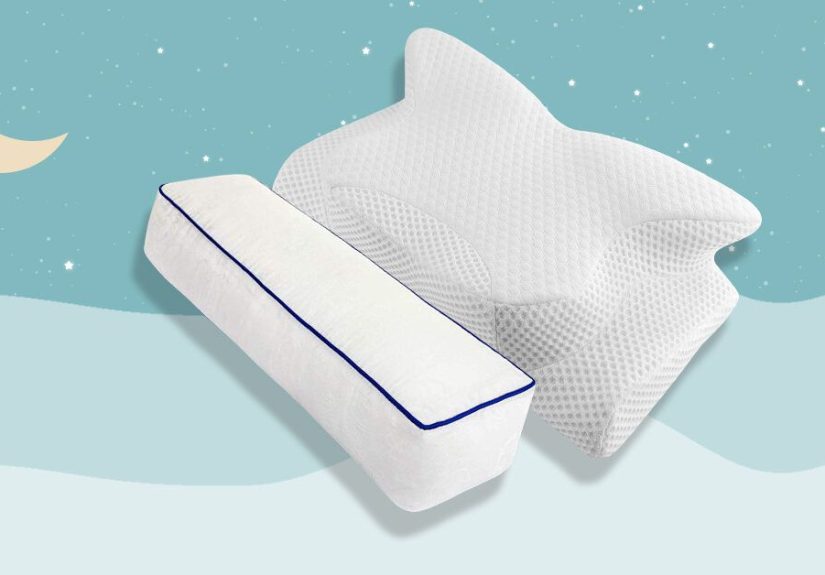
If your migraine tends to come with neck tension, a contoured cervical pillow is usually the smartest starting point. These pillows are designed with a curve or dip that cradles the head while supporting the neck. The shape is meant to keep your spine better aligned, especially if you sleep on your back or side.
A classic example is the Tempur-Pedic TEMPUR-Neck Pillow, which is frequently recommended in neck-pain pillow roundups. It is firmer than the average pillow and not especially cuddly in a “fall into it like a bakery croissant” way, but that is the point. It offers structure. For people who like a stable, supportive feel, that can be a win.
Best for: back sleepers, side sleepers, people with migraine plus neck stiffness, and anyone who wants a pillow with a clear shape instead of a vague personality.
Best for Combination Sleepers: Adjustable Fill Pillows
If you shift from side to back to something unrecognizable during the night, an adjustable pillow makes life easier. These pillows let you add or remove fill so the loft and firmness match your body, mattress, and sleep style. That flexibility matters because the “perfect” pillow height for one person can feel terrible for another.
The Coop Home Goods Original Adjustable Pillow is one of the most commonly recommended examples in recent review roundups. Adjustable-fill pillows work well because you can fine-tune them instead of gambling on a one-size-fits-all design. For migraine sufferers, that can mean less trial-and-error misery.
Best for: combination sleepers, people with changing sleep positions, and anyone who has ever bought three pillows in a row and muttered, “Absolutely not,” at all of them.
Best for Hot Sleepers: Latex or Breathable Cooling Pillows
If overheating makes your sleep worse, prioritize airflow. Latex pillows tend to sleep cooler than dense solid memory foam, and some cooling pillows combine breathable covers with ventilated fill. The trick is not to chase flashy “ice-cold” marketing. It is to choose a pillow that genuinely allows heat to escape.
The Saatva Latex Pillow and other breathable latex designs are often recommended for sleepers who want support without the heat trap effect. Another option is a buckwheat pillow like the Hullo Buckwheat Pillow, which allows airflow and molds well to the head and neck. Buckwheat can be wonderfully supportive, but it is also heavier and noisier. Great for some people, mildly barn-adjacent for others.
Best for: hot sleepers, people sensitive to warm bedding, and migraine sufferers who do better in a cool, quiet room.
Best for Side Sleepers: Higher-Loft Supportive Pillows
Side sleepers usually need more pillow height than back sleepers. Why? Because there is a bigger gap between the mattress and the head when you are lying on your side. A pillow that is too flat lets your head tip downward, which can strain the neck. A pillow that is too tall pushes your head upward. Neither is charming.
That is why side-sleeper designs like the Pillow Cube Side Cube or supportive adjustable pillows get so much attention. The goal is straight alignment from head to neck to spine. If you are a side sleeper with migraine, this is one of the biggest buying decisions you will make.
Best for: side sleepers, broad-shouldered sleepers, and anyone who wakes up with one shoulder feeling personally offended.
Best for Back Sleepers: Medium-Loft, Medium-Firm Support
Back sleepers generally do best with a pillow that supports the neck without forcing the chin toward the chest. Medium loft usually works best, especially when paired with a contour shape or responsive foam or latex fill. You want your head supported, not launched forward like a turtle peeking out of its shell.
Many back sleepers do well with contoured memory foam or cervical pillows. A back sleeper who hates firm foam may prefer an adjustable pillow filled to a medium height. The sweet spot is support with just enough give.
Best for: back sleepers, people with mild neck tension, and those who want structure without feeling pinned into place.
Best for Stomach Sleepers: Low-Loft and Soft
Stomach sleeping is often the hardest position on the neck because your head stays turned to one side for long stretches. If you cannot fall asleep any other way, keep the pillow loft as low as possible. Thin and soft is usually better than tall and plush. A bulky pillow can crank the neck into a sharper angle and make morning pain worse.
For stomach sleepers with migraine, the goal is damage control: less neck twist, less pressure, less strain. Some people do better gradually training themselves to sleep on their side with a body pillow for support, but if stomach sleeping is still your default, choose a low-profile pillow and do not let the bedding industry talk you into a fluffy mountain.
Best for: committed stomach sleepers and people trying to reduce morning neck tension.
Best Adjustable Feel: Water Pillows
Water pillows are not the most common pick, but they are a quietly interesting option. They combine a fiber layer with a water chamber, allowing you to customize support and loft. That adjustability can be helpful if you are picky about pressure and neck feel.
The Mediflow Water Pillow has been cited for exactly this reason, and older clinical research on water-based pillows found improved sleep quality and reduced morning neck pain compared with standard pillows. That does not make it a migraine treatment, but it does make it a clever option for people whose migraine is aggravated by waking neck discomfort.
Best for: people who want fine control over firmness and those who have not gotten along with foam, latex, or down-alternative fills.
Best for Allergy-Prone Sleepers: Washable, Hypoallergenic Designs
If allergies are part of your sleep problem, look for a pillow with a removable washable cover and hypoallergenic materials. Latex can work well for some people, unless you have a latex allergy. Down-alternative and certain shredded foam pillows can also be good choices. Feather pillows are often less supportive and may be a poor match if dander sensitivity is part of the equation.
A hypoallergenic pillow will not solve every trigger, but cleaner, calmer sleep can help. The less your body has to fight at night, the better your odds of a decent morning.
Features to Look for Before You Buy
Loft
Loft means pillow height. Side sleepers usually need a higher loft, back sleepers usually need a medium loft, and stomach sleepers usually need a low loft. This single factor matters more than most fancy marketing claims.
Firmness
Too soft, and your head sinks. Too firm, and it can feel like sleeping on a folded yoga mat. Most migraine sufferers do best with medium to medium-firm support, especially if neck pain is part of the picture.
Material
Memory foam offers contouring but may trap heat. Latex is supportive and typically more breathable. Buckwheat molds well and stays cool but can be noisy. Down alternative feels softer but may lack structure if you need cervical support. Adjustable blends give you the most room to experiment.
Shape
Standard pillows are fine if the loft is right. But if you wake up with neck stiffness, a contoured cervical pillow is often worth a try. Shape matters because your neck is not a decorative afterthought. It is part of the problem and, ideally, part of the solution.
Washability
Migraine and poor sleep already bring enough drama. You do not need a pillow that cannot survive basic cleaning. A removable washable cover is a big plus, especially for allergy-prone sleepers.
Common Pillow Mistakes That Can Make Migraine Mornings Worse
The first mistake is buying for softness instead of support. A pillow can feel amazing for five seconds in a store and still be a neck-wrecking disaster by dawn. The second mistake is ignoring sleep position. The best pillow for a side sleeper is rarely the best pillow for a stomach sleeper. The third mistake is keeping a dead pillow for years because “it still looks okay.” If it is flat, lumpy, or folded like a taco to feel usable, it is probably done.
Another common mistake is expecting a pillow to fix everything overnight. A new pillow often needs several nights of adjustment. The better test is this: after one to two weeks, are you waking up with less neck tension, fewer pressure points, and more comfortable sleep? That is the measure that matters.
How to Choose the Best Pillow for Your Specific Migraine Pattern
If your migraine is strongly linked to neck pain, start with a contoured cervical pillow or a supportive adjustable pillow.
If your migraine is linked to sleep disruption, prioritize comfort, loft, and pressure relief over gimmicks.
If heat is a problem, go for latex, buckwheat, or a genuinely breathable cooling design.
If you often wake up feeling stuffy or irritated, choose hypoallergenic materials and a washable cover.
If your sleep position changes all night, buy an adjustable pillow before you buy a trendy one.
And if you wake with headaches often, snore loudly, grind your teeth, or feel unrested no matter what pillow you use, it is worth talking with a healthcare professional. Sometimes the real culprit is sleep apnea, bruxism, or another sleep issue hiding in plain sight.
Final Thoughts
The best pillows for people with migraine are not always the fanciest, the fluffiest, or the most aggressively advertised. They are the ones that support your neck, match your sleep position, regulate heat, and help you sleep more consistently. For many people, that means a cervical contour pillow, an adjustable-fill pillow, or a breathable latex design. For others, a buckwheat or water pillow turns out to be the unexpected hero.
If you want the simplest buying advice possible, here it is: choose support over squish, match the loft to your sleep position, and do not ignore neck comfort just because the pain shows up in your head. Migraine may be complicated, but your pillow decision does not have to be. Your future morning self would like a word, and ideally, that word is not “ow.”
Longer Real-World Experiences: What Living With the Wrong Pillow Often Feels Like
One of the most common experiences people describe is the “I slept eight hours and still woke up feeling wrecked” problem. On paper, the night looked fine. In reality, the pillow was too high, too flat, too hot, or too unsupportive, and the body spent the whole night trying to compensate. The head drifted forward. The neck muscles kept working. The shoulders tightened. By morning, the pain felt less like a surprise and more like a scheduled event.
Another familiar experience is the hot-head situation. Some people with migraine notice that once they get too warm at night, their sleep becomes lighter and more broken. They flip the pillow over searching for the cool side like it is buried treasure, only to find that the cool side lasts approximately seven seconds. A more breathable pillow often changes that experience. Not dramatically. Not with fireworks. Just enough that sleep becomes steadier, and mornings stop feeling like a punishment.
Then there is the side sleeper struggle. Many side sleepers do not realize how much pillow height matters until they try a better one. With a too-flat pillow, the shoulder takes the hit first, then the neck joins the argument, and eventually the head decides to get involved too. When the loft is finally right, the change can feel weirdly underwhelming at first. You do not necessarily wake up singing. You just notice that your neck is less angry, your jaw is less tight, and the morning starts at a three instead of an eight on the misery scale.
Combination sleepers often describe a different problem: one position feels good, but the next one does not. A pillow that works on the back suddenly feels wrong on the side. That is why adjustable pillows get so much love from people who move around. Being able to remove fill or add it back can feel like finally getting permission to stop pretending that your body should adapt to a random pillow instead of the pillow adapting to your body.
People who switch from old feather or worn-out pillows to something more supportive also tend to notice a delayed kind of relief. The first night may not be magical. Sometimes there is even a short adjustment period. But after a week or two, they notice fewer wakeups, less neck stiffness, and less of that heavy, pre-headache feeling that used to greet them before coffee had a fighting chance.
That may be the most honest experience of all: a better pillow usually does not feel like a miracle. It feels like one less thing going wrong. And when you live with migraine, one less trigger, one less bad night, and one less painful morning can feel pretty close to luxury.