Table of Contents >> Show >> Hide
- A quick recap: what happened in this blended family?
- Why “it’s no big deal” lands like a slap
- What research says: bullying, rejection, and long-term impact
- Blended family dynamics: why this goes off the rails so often
- If you’re the 20-year-old: boundaries that don’t require a courtroom
- If you’re the dad: what accountability actually looks like
- If you’re the stepsiblings or stepmom: repair means effort, not denial
- Can reconciliation happen? Yesbut not the way your dad is picturing it
- What this story teaches (even if you’ve never had a stepfamily)
- Real-life experiences related to stepfamily rejection
- Conclusion
Family dinner is supposed to be a low-stakes event: a little food, a little catching up, maybe a little harmless arguing about whether pineapple belongs on pizza. But sometimes “come over and eat” is actually code for “please pretend the last decade didn’t happen.”
That’s the emotional setup behind this viral story: a 20-year-old declines a “family” dinner invite after years of being treated like a spare part in his dad’s blended household. His dad insists it’s no big deal (aka “NBD”). The 20-year-old hears something else: “Your pain is inconvenient, so please mute it.”
Let’s break down what’s going on beneath the surfacewhy rejection by stepsiblings can sting for years, why minimizing it makes everything worse, and what healthier next steps look like for everyone involved.
A quick recap: what happened in this blended family?
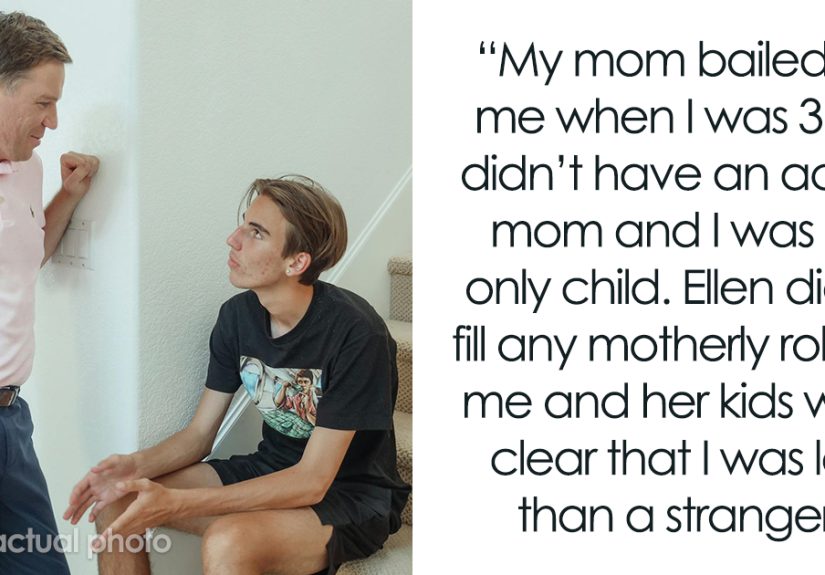
According to the story, the young man’s biological mother left when he was very small. A couple years later, his father remarried. His stepmom came into the picture with multiple children of her ownsome already teenagers or young adultsand one younger child closer to the poster’s age.
Instead of gaining instant siblings, the young man describes being ignored, excluded, and bullied. The stepsiblings reportedly doted on their biological brother while treating the newcomer like he was permanently “not part of the set.” The father’s response wasn’t strong protection or firm accountability; it was more like “compensation parenting”buying items and trying to smooth it over materially.
At 18, the young man moved out. Two years later, his dad invited him back for a “family dinner,” arguing that despite the rough patches, they’re still family. The young man declined and pushed back on the label: if you spend years showing someone they don’t belong, you don’t get to rebrand it as “family” when it becomes socially awkward.
Why “it’s no big deal” lands like a slap
“NBD” sounds calm. Mature. Efficient. Like a person who doesn’t let drama ruin dessert. But when someone says “no big deal” about years of rejection, it doesn’t de-escalate. It rewrites historywithout the consent of the person who lived it.
Rejection isn’t a “rough patch.” It’s a pattern.
Blended families often have tensionconflicting rules, loyalty conflicts, awkward transitions, grief over the old family structure. But ongoing exclusion is different. It trains a kid’s nervous system to expect social punishment in what should be the safest room in the world: home.
And because it’s a family system, the rejection isn’t just peer-to-peer. The child also receives a secondary message from the adults: “This is allowed.” When the adults don’t intervene effectively, kids don’t just feel unloved by stepsiblings. They feel unprotected by the parent who should have been their biggest advocate.
Buying stuff doesn’t buy safety
Gifts can be kind. Gifts can also be a way to avoid the harder job: naming the behavior, setting house rules, enforcing consequences, and protecting a child’s dignity.
In family conflict stories like this, “I bought you things” often translates to “I knew something was wrong, but I didn’t want to confront the people causing it.” That’s not generosity. That’s guilt with receipts.
What research says: bullying, rejection, and long-term impact
It’s tempting to treat childhood conflict like a sitcom subplot: kids are mean, they grow up, cue the heartfelt montage, everyone hugs by the season finale. Real life is less tidy.
Multiple public health and clinical resources connect bullying and chronic rejection with higher risks of later mental health struggles. That doesn’t mean every targeted kid will develop anxiety or depression. It means the risk profile changesespecially when the bullying happens in a place the child can’t easily escape.
Rejection inside a blended family also stacks stressors: loss (or absence) of a biological parent, household change, shifting loyalties, and an “outsider” identity that gets reinforced repeatedly. The CDC’s work on adverse childhood experiences (ACEs) emphasizes how early instability and traumatic stress can shape long-term well-being.
Bottom line: calling it “no big deal” doesn’t make it smaller. It just makes the injured person feel smaller for still caring.
Blended family dynamics: why this goes off the rails so often
Stepfamilies can thrive. But they don’t “blend” because a wedding happened and someone hung a cute sign that says Gather.
Unrealistic expectations are gasoline on a match
Family therapists frequently note that stepfamilies need timesometimes yearsto feel cohesive. Adults often want the new household to function like an instant nuclear family. Kids often want proof that they’re not being replaced. Those goals collide.
When older stepkids are already teens or young adults, the odds of instant bonding drop even more. They may feel territorial, resentful, or protective of their original sibling bonds. That doesn’t excuse cruelty. It explains why adults must lead with structure and empathy, not wishful thinking.
The “insider vs. outsider” trap
In many stepfamilies, the biological siblings have shared history, inside jokes, traditions, and a sense of “we came from the same place.” A new child can be treated like a guest who overstayed their welcome.
Healthy blended families address this head-on with rituals and fairness: shared activities that aren’t forced intimacy, consistent rules, and a clear message from the biological parent: “My child belongs here, fully.”
If you’re the 20-year-old: boundaries that don’t require a courtroom
Declining a dinner invite isn’t a crime. It’s data. It’s you noticing your body’s reaction and choosing not to walk back into a situation that historically harmed you.
Try a “clear, kind, firm” boundary
Boundaries work best when they’re specific and enforceable. You don’t need a 40-slide deck to justify them. You need a sentence you can repeat without rewriting your life story every time.
Example: “I’m not comfortable attending family dinners right now. I’m open to seeing you one-on-one. If you want a relationship with me, it has to start with acknowledging what happened.”
This does three things:
- Names the boundary (no group dinner right now).
- Offers a realistic alternative (one-on-one with dad).
- States the condition for progress (accountability before reunion).
Decide what “contact” looks like on purpose
Not everyone needs to go fully no-contact. Sometimes the healthiest move is limited contact: calls but no holidays, lunches with dad but not the whole household, or attending major events with an exit plan.
Think of it like controlling the volume rather than smashing the speaker. You’re allowed to protect your peace while you figure out what you actually want.
If you’re the dad: what accountability actually looks like
Let’s be blunt: the dad’s job wasn’t to keep the household looking polite from the outside. His job was to protect his kid on the inside.
Step 1: Stop arguing with the feeling
When your adult child says, “They rejected me,” arguing the details (“It wasn’t that bad,” “They were kids,” “You’re sensitive”) is like putting a fire out with gasoline. A better first response is validationwithout theatrics.
Better: “I hear you. I missed what was happening, or I didn’t act strongly enough. That hurt you. I’m sorry.”
Step 2: Own the part that’s yours
Accountability isn’t “I’m sorry you feel that way.” It’s “I’m sorry I didn’t protect you the way you needed.” If the dad wants reconciliation, he needs to accept that his inaction (or ineffective action) mattered.
Step 3: Don’t force a group reunion as the first move
“Let’s all have dinner” is a classic mistake because it tries to skip the repair stage and jump straight to the photo-op stage. Start smaller. Build trust with the person who’s actually willing to show up: your kid.
Then, if the adult child ever wants it, move toward carefully planned contactideally with a therapist or mediator involved if the history is intense.
If you’re the stepsiblings or stepmom: repair means effort, not denial
Sometimes people grow up and realize, “Wow, we were awful.” Great. That’s the beginning of maturity. The next step is repairwithout demanding instant forgiveness.
If you were part of the rejection, a real apology has three parts:
- Specificity: “I ignored you and made you feel unwelcome.”
- Ownership: “That was wrong, and it wasn’t your fault.”
- Change: “I won’t minimize it, and I won’t pressure you to be close.”
And then comes the hardest part: you may still not get the relationship you want. Repair is offered. It’s not owed back.
Can reconciliation happen? Yesbut not the way your dad is picturing it
When people imagine reconciliation, they usually imagine a scene: everyone laughing at a table, the past neatly tucked away like a folded napkin. Real reconciliation is less like a scene and more like a process: slow, awkward, and honest.
A realistic roadmap (if the 20-year-old wants it)
- One-on-one relationship first: Dad and son rebuild trust privately.
- Clear goals: “I want you to stop minimizing and acknowledge what happened.”
- Boundaries in writing: Yes, it can be as simple as a text: “No group dinners for now.”
- Small test moments: A coffee meet-up with one stepsibling (only if desired), or a short visit with an agreed-upon exit time.
- New rituals, not forced nostalgia: If family dinners were historically painful, create something newbrunch, a hike, a neutral public event. You’re building a new system, not reenacting the old one.
And if none of that feels right? That’s also information. Sometimes the healthiest outcome is distance, not closenessespecially while healing is still in progress.
What this story teaches (even if you’ve never had a stepfamily)
This isn’t only a stepfamily story. It’s a story about what happens when someone’s pain gets minimized for convenience. It’s also a reminder that adulthood doesn’t erase childhood experiencesit just gives you the steering wheel.
A dinner invitation is not a repair plan. If you want family closeness, you build it the same way you build anything sturdy: with honesty, accountability, and time. “NBD” is not one of the building materials.
Real-life experiences related to stepfamily rejection
Stories like this go viral because, underneath the dramatic headline, a lot of people recognize the emotional pattern. Not everyone has stepsiblings, but many people have experienced the “outsider” feeling in a family systemwhether it came from remarriage, favoritism, adoption dynamics, a parent’s new partner, or even extended family politics.
One common experience people describe is the slow drip of exclusion: nobody says, “We hate you.” Instead, you’re simply not included. Photos happen without you. Inside jokes fly over your head. Plans get made in front of you like you’re invisible. When you finally speak up, you’re told you’re being dramatic. That’s the part that really sticks. The exclusion hurts, but the denial can make you question your reality: “Did it happen? Am I overreacting?”
Another common theme is what some adult children call the performance invite. That’s the invitation that arrives not because the relationship is safe, but because someone wants the family to look whole. It often shows up around holidays, birthdays, or milestone eventsexactly when saying “no” will make you look like the villain. The invite comes with pressure disguised as positivity: “Let’s put it behind us,” “Be the bigger person,” “We’re family.” For someone who spent years being treated as “not family,” those phrases don’t feel warm. They feel like a trap.
People also describe the weird emotional whiplash of a parent who tries to compensate with gifts, money, or favors. On paper, it looks like love. In the body, it can feel like a payoff: “Here’s something niceplease don’t bring up the hard thing.” As adults, many people realize they would have traded every gift for one moment of protection: a parent stepping in and saying, “That stops now. In this house, nobody gets to bully my child.”
Then there’s the “late remorse” phase, where stepsiblings or parents suddenly want closeness years later. Sometimes it’s genuine growth. Sometimes it’s loneliness. Sometimes it’s guilt. Sometimes it’s a life eventa divorce, a death in the family, a new babythat makes people want the comfort of connection. The tricky part is that the person who was rejected doesn’t automatically feel safe just because others are ready now. Trust is not a light switch. It’s more like a dimmer that moves slowly and only when the person holding it feels secure.
In healthier outcomes, people often describe micro-repairs rather than grand reunions. A parent finally says, “I should have done better.” A stepsibling says, “I was cruel, and I’m sorry.” The rejected person sets a boundary and watches it get respected. Those moments can be surprisingly powerful because they rewrite the original message. The original message was: “You don’t matter enough to protect.” The repaired message becomes: “You matter enough to tell the truth and change.”
And sometimes, the best “experience” people share is simple: choosing peace. Not every family conflict gets resolved into a happy group photo. Some get resolved into a quiet life where you build your own traditions with friends, partners, roommates, mentorspeople who show up consistently. That’s not bitterness. That’s maturity. Family can be biology, yes. But it can also be the people who treat you like you belong without making you earn it.
Conclusion
If you’ve ever wondered why someone would skip a “simple” family dinner, this story is your answer: the meal isn’t the issue. The history is. When someone has been rejected for years, refusing to participate in a forced reunion isn’t pettyit’s protective.
And for parents (especially in blended families): if you want closeness later, you have to show protection earlier. You can’t outsource safety to time, and you can’t bribe healing with shopping bags. Accountability, boundaries, and patience are the real comfort food here.