Table of Contents >> Show >> Hide
- Why Containers Help (And Why They’re Not a Force Field)
- What “Deer-Resistant” and “Rabbit-Resistant” Actually Mean
- Container Basics That Keep “Resistant” Plants Strong
- The Main Event: 19 Rabbit and Deer-Resistant Container Plants
- 1) Lavender (Lavandula)
- 2) Rosemary (Salvia rosmarinus)
- 3) Culinary Sage (Salvia officinalis, including ‘Tricolor’)
- 4) Thyme (Thymus)
- 5) Oregano (Origanum vulgare)
- 6) Catmint (Nepeta)
- 7) Ornamental Salvia (Salvia spp.)
- 8) Lavender Cotton (Santolina)
- 9) Scented Geranium (Pelargonium, scented-leaf types)
- 10) Lamb’s Ear (Stachys byzantina)
- 11) Dusty Miller (Centaurea cineraria)
- 12) Euphorbia (Spurge, e.g., airy white-flowering types)
- 13) Yarrow (Achillea)
- 14) Sedum / Stonecrop (Sedum, Hylotelephium)
- 15) Hens & Chicks (Sempervivum)
- 16) Yucca (Yucca spp. / “Red Yucca” Hesperaloe)
- 17) Ornamental Allium (Allium spp.)
- 18) Daffodil (Narcissus)
- 19) Hellebore (Helleborus, “Lenten Rose”)
- Three Container “Recipes” That Look Good and Get Left Alone
- Extra Tactics to Discourage Browsing (Without Turning Your Patio Into Fort Knox)
- FAQ
- of Real-World Container Gardening “Experience” (The Stuff People Learn the Hard Way)
- Conclusion
Deer and rabbits have one job: locate the exact plant you paid the most for and sample it like they’re filming a food review. If you’re tired of playing “Guess Who Ate My Petunias,” container gardening can tilt the odds in your favorespecially when you pick plants that browsing critters typically consider “hard pass.”
This guide walks you through 19 rabbit- and deer-resistant container plants (plus how to keep them thriving in pots), with practical tips, design ideas, and a reality check: “resistant” does not mean “magically invisible to wildlife.” It means you’re planting things that usually don’t taste like salad.
Why Containers Help (And Why They’re Not a Force Field)
Pots raise plants off the ground, which can make it harder for rabbits to reach tender stems and leavesespecially if you place containers on steps, a deck, or plant stands. Containers also let you move your “best stuff” closer to the house, into brighter sun, or away from the woodland edge where deer like to cruise.
The not-so-fun truth: deer are tall, curious, and athletic. If they can reach it, they might try it. And rabbits can still hop onto low planters, especially in winter when the buffet is limited. Containers help, but plant choice and smart placement do most of the heavy lifting.
What “Deer-Resistant” and “Rabbit-Resistant” Actually Mean
The best wildlife-resistant plants share a few common “please don’t eat me” traits: strong fragrance, bitter taste, fuzzy or tough leaves, spines, or toxins/irritating sap. Deer and rabbits generally avoid these, but their taste changes with region, season, and hunger.
Think of resistance like a restaurant’s “chef recommends” label. Most customers follow it. Some absolutely do not. If deer pressure is high or winter food is scarce, nearly anything can become “available.”
Container Basics That Keep “Resistant” Plants Strong
Pick the right pot (it’s not just aesthetics)
- Drainage matters. Most of these plants hate soggy roots. Choose containers with drainage holes.
- Skip the gravel layer. It doesn’t improve drainage the way people think; it can keep water in the soil above it.
- Use a quality potting mix. Garden soil is heavy and holds too much water in containers.
- Size up when in doubt. Bigger pots buffer heat, wind, and dryingespecially on sunny patios.
Water like a pro (without hovering like a nervous helicopter parent)
Most container plants fail from inconsistent watering: either bone-dry for days, then flooded like a monsoon. Water deeply until you see drainage, then let the top inch or two of mix dry (exact timing depends on sun, heat, wind, and pot size).
Placement is part of pest control
- Put the most tempting pots closest to the house and away from deer “travel lanes.”
- Lift rabbit targets on stands or steps when possible.
- Cluster containers tightlywildlife prefers easy, low-effort browsing.
The Main Event: 19 Rabbit and Deer-Resistant Container Plants
Below are plants that are commonly reported as less palatable to deer and rabbits because of scent, texture, taste, or natural defenses. For each one, you’ll get quick container tips and a design nudge so your pots look intentionalnot like you panic-bought whatever was left at the garden center.
1) Lavender (Lavandula)
Lavender’s fragrance is dreamy to humans and suspicious to wildlife. Deer and rabbits often avoid aromatic foliage, and lavender’s essential oils don’t exactly scream “snack time.”
- Container tip: Go heavy on drainage. Use a gritty potting mix and don’t overwater.
- Style move: Pair with silver foliage (dusty miller) or bold purple salvia for a Mediterranean vibe.
2) Rosemary (Salvia rosmarinus)
Rosemary is basically lavender’s more intense cousin: woodier, more pungent, and just as uninterested in being eaten. Bonus: your containers smell like a fancy kitchen.
- Container tip: Full sun and fast drainage. In colder areas, treat as seasonal or overwinter indoors.
- Style move: Use upright rosemary as a living “thriller” centerpiece in a large pot.
3) Culinary Sage (Salvia officinalis, including ‘Tricolor’)
Sage leaves are fragrant, slightly fuzzy, and not what most rabbits or deer are looking for when they’re in “fresh greens” mode. ‘Tricolor’ also brings instant color without needing flowers to do the work.
- Container tip: Give it sun and let it dry slightly between waterings.
- Style move: Combine with thyme and lavender for a soft, gray-green palette that looks expensive.
4) Thyme (Thymus)
Thyme stays low, smells fantastic, and is often ignored by browsers. It’s also great for filling edges of pots without turning into a tangled mess.
- Container tip: Loves sun and lean soil. Don’t pamper it with constant moisture.
- Style move: Let it spill over a pot rim like a fragrant green waterfall.
5) Oregano (Origanum vulgare)
Oregano is another aromatic herb that wildlife often skips. It’s tough, forgiving, and happy in containersespecially if you like snipping for the kitchen.
- Container tip: Pinch back to keep it bushy and prevent it from going leggy.
- Style move: Use it as a “soft filler” around upright rosemary or sage.
6) Catmint (Nepeta)
Catmint has that mint-family fragrance deer and rabbits tend to avoid. It also blooms like it’s trying to win an award for “most improved container plant.” (Your neighborhood cats may disagree with the “avoid” part.)
- Container tip: Full sun, good drainage, and a midseason trim can trigger a fresh flush of blooms.
- Style move: Pair with roses in containers for a cottage look that doesn’t double as a deer buffet.
7) Ornamental Salvia (Salvia spp.)
Salvias are workhorses: fragrant foliage, long bloom time, and hummingbird appeal. Many varieties are also considered rabbit-resistant, and deer typically don’t prefer them.
- Container tip: Sun + drainage = happy salvia. Choose compact varieties for pots.
- Style move: Mix scarlet salvia with silver foliage for high contrast that pops from the street.
8) Lavender Cotton (Santolina)
If a plant could roll its eyes at deer, it would be santolina. Aromatic, silvery, and a little tough-looking, it’s a strong option when you want foliage that reads “intentional design” all season.
- Container tip: Keep it on the dry side. Too much water makes it sulk.
- Style move: Use it as a silver “anchor” with purple flowers (lavender, salvia) for a classic combo.
9) Scented Geranium (Pelargonium, scented-leaf types)
Not all geraniums are created equal in the fragrance department. Scented geraniums bring strong aroma (think lemon, rose, mint), which can make them less appealing to wildlifeand more interesting to you.
- Container tip: Bright light and moderate watering. Let the top layer dry before watering again.
- Style move: Use with trailing thyme for a pot that smells like a spa with better parking.
10) Lamb’s Ear (Stachys byzantina)
Lamb’s ear is soft and fuzzyexactly the texture many animals don’t enjoy eating. It’s also a foliage superstar that makes other colors look better.
- Container tip: Full sun and well-drained mix. Avoid constantly wet conditions.
- Style move: Pair with deep purple flowers for a “silver + jewel tone” look.
11) Dusty Miller (Centaurea cineraria)
Another silver-leaf champion, dusty miller has fuzzy foliage and a bitter taste profile that typically keeps browsing to a minimum. It also plays well with basically every color.
- Container tip: Sun to part sun, moderate water, and it’ll look crisp for months.
- Style move: Use it to calm down loud flowers (you know which ones) and make the arrangement look designed.
12) Euphorbia (Spurge, e.g., airy white-flowering types)
Euphorbia often contains milky sap that can irritate skin and is generally unappealing to wildlife. The delicate, cloud-like blooms are perfect if you want “soft” without “easy snack.”
- Container tip: Wear gloves when pruning; sap can irritate. Give it sun and consistent, not excessive, moisture.
- Style move: Use euphorbia to knit together bright colors in a mixed planter.
13) Yarrow (Achillea)
Yarrow is tough, drought-tolerant, and often rabbit-resistant. Its flat flower clusters (in whites, yellows, pinks, and reds) give containers a wildflower-meets-polished vibe.
- Container tip: Full sun and lean soil. Too much fertilizer makes it floppy.
- Style move: Great with grasses or succulents for a modern prairie look in a pot.
14) Sedum / Stonecrop (Sedum, Hylotelephium)
Many sedums have thick, water-storing leavesless tasty to nibblers and more forgiving to busy humans. They also bring late-season flowers that pollinators appreciate.
- Container tip: Use a fast-draining mix. Overwatering is the main villain here.
- Style move: Combine with lavender and dusty miller for a drought-smart container trio.
15) Hens & Chicks (Sempervivum)
Succulents aren’t usually high on the deer-and-rabbit menu, and hens & chicks are among the easiest. They’re basically tiny rosettes with excellent self-esteem.
- Container tip: Full sun for best color; gritty soil; water sparingly.
- Style move: Perfect for shallow bowls, troughs, and “tiny landscape” arrangements.
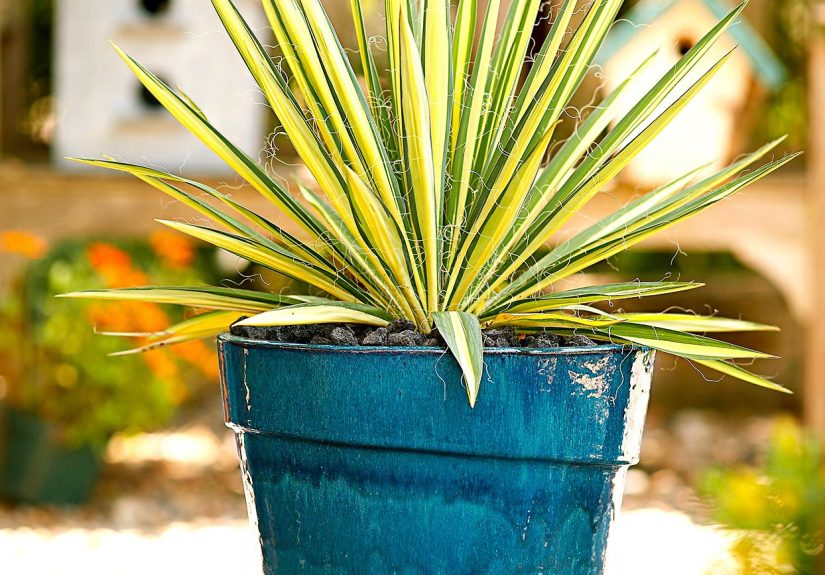
16) Yucca (Yucca spp. / “Red Yucca” Hesperaloe)
Spiky, architectural, and not exactly a soft chew, yucca is often left alone. In containers, it delivers structure year-round and laughs at heat.
- Container tip: Give it a sturdy, heavy pot so it doesn’t tip in wind. Excellent drainage is a must.
- Style move: Use yucca as a bold focal point with lower sedums and trailing thyme.
17) Ornamental Allium (Allium spp.)
Alliums are ornamental onionsso yes, they come with a natural “don’t eat me” scent. They’re also easy to use in containers as spring fireworks (those globe blooms are hard to ignore).
- Container tip: Plant bulbs in fall; provide winter chilling if your climate normally delivers it.
- Style move: Pair with low thyme or lamb’s ear for a neat spring container that isn’t a bunny magnet.
18) Daffodil (Narcissus)
Daffodils are famous for being avoided by many critters. They’re among the most reliable “spring bulbs that don’t get instantly erased.” Great in pots by the front doorwhere you actually get to see them.
- Container tip: Use deep pots for better root insulation; keep slightly moist, not soggy.
- Style move: Layer bulbs (“lasagna planting”) for waves of spring color.
19) Hellebore (Helleborus, “Lenten Rose”)
Hellebores bring early-season blooms and evergreen-ish structure in many climates. They’re commonly considered deer-resistant, and their toughness makes them excellent for a shade container that doesn’t turn into wildlife lunch.
- Container tip: Part shade is ideal. Use a rich but well-draining mix and keep evenly moist.
- Style move: Pair with ferns or heuchera (coral bells) for a shade pot that looks curated all year.
Three Container “Recipes” That Look Good and Get Left Alone
Recipe 1: The Mediterranean “No Trespassing” Pot (Full Sun)
- Center: Upright rosemary
- Mid-layer: Lavender + tricolor sage
- Edge/spill: Creeping thyme
This combo smells incredible, handles heat, and leans hard into aromatic foliageone of the most common reasons deer pass on a plant.
Recipe 2: Silver + Purple = Instant Designer Planter (Sun to Part Sun)
- Structure: Compact salvia
- Foliage contrast: Dusty miller + lamb’s ear
- Softener: Euphorbia (airy white flowers)
You get long bloom, strong texture, and a color scheme that looks like you hired help (you didn’t; you’re just strategic).
Recipe 3: Shade That Doesn’t Become a Salad Bar (Part Shade)
- Anchor: Hellebore
- Filler: Coral bells (heuchera) or a compact fern
- Accent: A small pot of mint kept contained (mint is aromatic, but keep it from running wild)
Shade containers can be tricky because many “pretty shade plants” are also “wildlife favorites.” Start with tough foliage and build from there.
Extra Tactics to Discourage Browsing (Without Turning Your Patio Into Fort Knox)
- Go for height: Put rabbit-vulnerable pots on stands or steps.
- Cluster containers: Tight groups are harder to navigate for casual nibbling.
- Use temporary barriers: Decorative wire cloches or a short ring of hardware cloth can protect new plants while they establish.
- Don’t over-fertilize: Very lush, nitrogen-heavy growth can be more tempting to deer.
- Try repellents strategically: They can help, but need reapplication and aren’t foolproof, especially when food is scarce.
FAQ
Are there truly deer-proof or rabbit-proof container plants?
Not reliably. Wildlife pressure, season, and local preferences matter. Your goal is “less likely to be eaten,” not “guaranteed invisible.” Combine plant selection with placement for the best results.
What if deer still sample my “resistant” plants?
Sampling happensespecially with young deer learning what’s edible. If you notice repeated damage, move the container closer to the house, elevate it, and consider a short-term barrier or repellent while the plant rebounds.
Are any of these plants unsafe around kids or pets?
Some are irritating or toxic if ingested (daffodils, hellebores, foxglove if you grow it, euphorbia sap). If curious pets or small kids are part of your household, place those containers out of reach and handle pruning with care.
of Real-World Container Gardening “Experience” (The Stuff People Learn the Hard Way)
Container gardeners quickly discover that wildlife doesn’t follow rulesespecially rules printed on plant tags. One neighborhood might have deer that politely ignore rosemary forever, while another has a bold doe that treats your herb pot like an all-you-can-eat bar. That’s why the most useful “experience” isn’t a single magic plant; it’s a pattern: the more layers of deterrence you stack, the fewer surprise salads you’ll lose.
The first lesson people report is that new growth is the danger zone. Even plants that deer and rabbits typically avoid can be tempting when they’re freshly planted, watered, and producing soft new leaves. In practice, many gardeners protect newly planted containers for the first couple of weekseither by putting them on a higher surface, clustering them close to the house, or using a temporary wire cover. Once plants toughen up, browsing often drops off.
Second: your watering routine can accidentally invite nibblers. Frequent light watering encourages shallow roots and tender foliage. Deep, less frequent watering (appropriate for the plant) builds sturdier growth. You’re not just keeping the plant alive; you’re helping it develop the kind of texture and aroma that makes wildlife less interested. Aromatic herbs are a great example: when grown in bright light and not over-fertilized, they tend to smell strongerexactly what browsing animals dislike.
Third: placement beats wishful thinking. Gardeners with the best luck treat container placement like basic home security: don’t leave valuables on the curb. Pots placed along a deer’s easy walking pathespecially at the edge of a yard or near shrubs that provide cover are more likely to be investigated. Containers tucked into bright, open areas near human activity get fewer “drive-by tastings.” Rabbits follow similar logic: if a pot is easy to reach and offers cover nearby, they’ll visit more often.
Fourth: season changes everything. In spring and early summer, there’s usually plenty of wild forage, so “resistant” plants do better. In late summer drought, deer may roam more widely for moisture-rich greens. In winter, rabbits can be especially persistent, and even plants they ignored in July may look more appealing when options are limited. In many areas, gardeners shift tactics by season: elevate pots in winter, use short-term barriers during scarcity, and keep the most critical containers closest to the house.
Finally: expect a learning curveand use it. If something gets nibbled, take notes. Was it in shade where aroma stayed mild? Did you fertilize heavily? Was the container near cover? Adjust one variable at a time. The “experience” that pays off is simple: containers let you experiment fast. You’re not stuck with a bad placement decision for years. Move the pot, tweak the mix, swap a plant, and keep going. Wildlife may be persistent, but so are gardeners (and we have better tools).
Conclusion
You don’t need to surrender your patio to deer and rabbitsor give up on containers entirely. Start with plants that have built-in defenses (aroma, texture, sap, or toughness), pot them correctly, and place them like you actually want to keep them. The result is a container garden that looks great, smells amazing, and stays mostly intactno nightly “who ate my plants?” mystery required.