Table of Contents >> Show >> Hide
- What Makes a Monster Truly Dread-Inspiring?
- 10. Cockatrice — The Staring Contest You Can’t Win
- 9. Manticore — The All-You-Can-Eat Nightmare
- 8. Kelpie — The Beautiful Horse That Drowns You
- 7. Soucouyant — Grandma, But Make It Nightmare Fuel
- 6. Umibōzu — The Ocean Itself, Personified in Terror
- 5. Hidebehind — The Monster You Can’t Ever Quite See
- 4. Bakeneko — When Your Cat Levels Up into a Demon
- 3. Draugr — The Viking Dead Who Don’t Stay Put
- 2. Monstrous Races — The Terrifying “People” at the Edge of the Map
- 1. Tiamat — Chaos, Dragons, and the Birth of the World
- Monsters, Dread, and What They Say About Us
- Experiences and Reflections: Living with Monsters in Your Head
Some monsters just make you jump. Others burrow into your brain, set up a long-term lease,
and haunt you whenever the lights go out or your feet dangle off the side of the bed.
This list is dedicated to that second group—the monsters that inspire real,
bone-deep dread. Drawn from folklore, mythology, and old-school campfire tales,
these creatures prove that human imagination has always been very, very good at
scaring itself silly.
Below, we’ll meet 10 terrifying beings from around the world, each with their own
nightmare-inducing specialty: shape-shifting cats, undead Vikings, blood-sucking fireballs,
and an ancient chaos dragon who basically invented multitasking horror. Think of this as a
guided tour through humanity’s collective nightmares—with a flashlight, some
analysis, and a few nervous jokes along the way.
What Makes a Monster Truly Dread-Inspiring?
Before we count down our horrors, it helps to ask: what separates a
simple jump scare from a monster that inspires lingering dread? Horror scholars
and fans often point to a few shared traits:
- Uncertainty: You can’t quite predict what the creature is or how it will attack.
- Violation of normal rules: These monsters break natural, moral, or religious boundaries.
- Inescapability: They can find you at home, at sea, in your dreams, or even after death.
- Cultural resonance: They reflect real-world fears—about death, nature, strangers, or the unknown.
The monsters on this list aren’t just scary-looking. They embody deep anxieties:
about the ocean we can’t control, the forests we can’t see through, the dead that
maybe don’t stay dead, and the things hiding in our own communities.
10. Cockatrice — The Staring Contest You Can’t Win
The Cockatrice is what happens when medieval people play monster mash-up:
take a rooster, give it a serpent’s tail, flavor with a dragon, and garnish with the
ability to kill you by looking at you. According to legend, a cockatrice is born when a
rooster lays an egg (yes, that’s already unsettling) and a serpent or toad broods it
into existence during a full moon.
The Cockatrice can supposedly:
- Turn victims to stone with a glance.
- Poison with its breath or saliva.
- Roam around like a chicken that skipped straight to the final boss form.
Fortunately, even dread-inspiring monsters have weaknesses. Mirrors can reflect its deadly gaze
back on itself, and the crowing of an ordinary rooster is said to kill it. There’s something
wonderfully ironic about a legendary nightmare being undone by what is essentially an angry alarm clock
with feathers.
9. Manticore — The All-You-Can-Eat Nightmare
The Manticore comes from Persian lore and later spread into Greek and medieval
European writings. Imagine a lion’s body, a human-like face with rows of shark-style teeth, and
a deadly tail that might end in a scorpion stinger or a battery of venomous spines. Now imagine that
whole package being extremely hungry and not picky.
The Manticore is infamous for:
- Devouring victims whole—no bones, no clothes, no evidence.
- Sometimes launching poisonous spines like living artillery.
- Luring prey by passing as a man at a distance, then attacking up close.
The dread here comes from the combination of intelligence and brutality. This isn’t just a wild animal;
it’s a calculated predator that erases traces of your existence. In a world before forensic science,
that was the ultimate horror story: someone leaves the village and simply never comes back.
8. Kelpie — The Beautiful Horse That Drowns You
Around the misty lochs and rivers of Scotland, folklore warns about the Kelpie, a
supernatural water horse with a sleek, dripping coat and an unnerving habit of appearing lost and harmless.
Children and travelers might see a gorgeous pony by the shore and think, “Free ride!”—only
to discover too late that its skin becomes adhesive the moment they climb on.
Once mounted, victims can’t let go. The Kelpie charges into deep water, diving and dragging riders beneath
the surface, where it devours everything but perhaps a heart or liver. In some stories, the Kelpie can also
transform into an attractive human to lure adults, making it a shape-shifting stranger-danger PSA centuries
before social media.
The dread of the Kelpie lies in its betrayal of beauty. It weaponizes our trust in gentle animals and in the
serene surface of water, reminding us that what looks calm can hide a deadly undertow.
7. Soucouyant — Grandma, But Make It Nightmare Fuel
From Caribbean folklore comes the Soucouyant, an apparently harmless old woman by day and a
horrifying, shape-shifting vampire by night. When darkness falls, she sheds her wrinkled skin, stuffs it into
a mortar, and becomes a blazing fireball streaking across the sky in search of victims.
The Soucouyant:
- Enters homes through keyholes and cracks.
- Sucks blood from arms, legs, and soft flesh while victims sleep.
- Can drain so much blood that the victim dies or becomes a Soucouyant in turn.
This monster is terrifying because it violates the safety of the home and the trust of community elders.
Your sweet neighbor might literally be the thing that leaves scorch marks on your window frame and unexplained
bruises on your arms. That blend of domestic familiarity and supernatural horror gives the Soucouyant a very
modern, almost psychological flavor of dread.
6. Umibōzu — The Ocean Itself, Personified in Terror
The Umibōzu is a spectral sea spirit from Japanese folklore that specializes in terrorizing
sailors. Usually described as a towering, shadowy figure with a smooth, bald head rising from the waves, it
appears on calm nights before wrecking ships and drowning crews.
Legends say:
- It may be the spirit of a drowned priest or monk.
- It capsizes ships if spoken to or disrespected.
- Sometimes it demands barrels from sailors, then uses them to flood the ship.
Ocean monsters always hit a little harder. Humans are small, the sea is huge, and at night it becomes a black
void where anything might rise from below. The Umibōzu is basically the ocean saying, “I heard you were
feeling safe. That ends now.”
5. Hidebehind — The Monster You Can’t Ever Quite See
Deep in North American logging lore lurks the Hidebehind, a “fearsome critter”
blamed for the disappearances of woodsmen who never returned to camp. True to its name, the Hidebehind is
almost impossible to look at directly; whenever you turn, it swiftly ducks behind trees or even behind you.
Folklore describes it as:
- Thin and flexible enough to flatten itself behind any tree trunk.
- Nocturnal and extremely stealthy.
- Fond of human intestines for dinner.
The Hidebehind is a masterpiece of psychological horror. It doesn’t need a detailed design, because the
whole fear comes from not seeing it. It personifies the feeling of being watched in the woods, of
hearing twigs snap just out of view. Your brain supplies the rest of the terror, and trust me, your brain is
very good at that.
4. Bakeneko — When Your Cat Levels Up into a Demon
Cats already have a reputation for staring into corners like they see things you don’t. Japanese folklore
takes that vibe and cranks it up to eleven with the Bakeneko, a “monster cat” that
develops supernatural powers after growing old, large, or simply well-fed and spoiled.
Once transformed, a Bakeneko might:
- Walk on its hind legs like a person.
- Spit ghostly fire or conjure will-o'-the-wisps.
- Shape-shift into a human, sometimes replacing its own owner.
- Manipulate corpses or even reanimate them by jumping over them.
Bakeneko stories often carry moral themes—warnings about mistreating animals, ignoring strange behavior,
or letting resentment fester in the household. But at a gut level, the dread comes from the idea that the
familiar, beloved pet quietly watching you sleep might, at any moment, decide it’s done pretending to be
harmless.
3. Draugr — The Viking Dead Who Don’t Stay Put
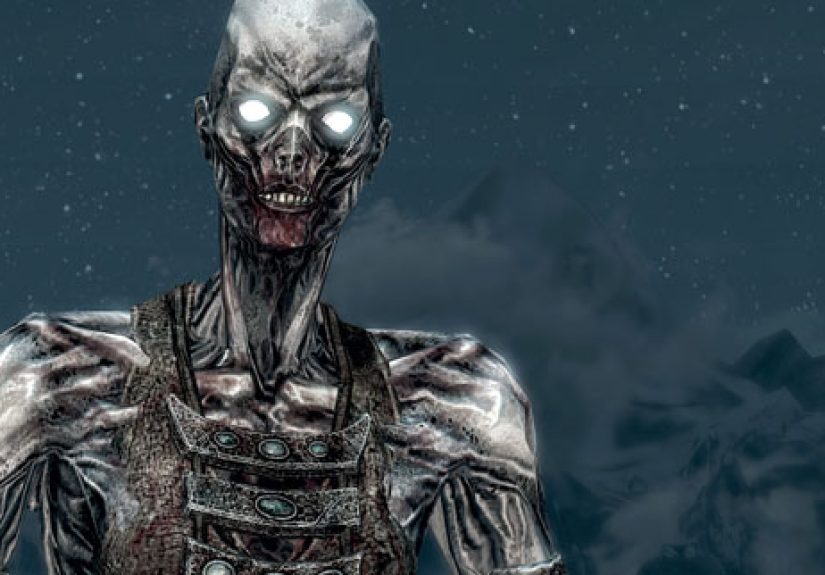
In Norse mythology, the Draugr is what happens when a warrior’s body decides it has more
rampaging to do. These undead beings inhabit their own graves, jealously guarding buried treasure and
occasionally rising to terrorize the living.
Draugar are known for:
- Superhuman strength and the ability to grow in size.
- A corpse-like stench and grotesquely swollen, darkened flesh.
- Attacking victims by crushing, devouring, or driving them mad.
Dread here comes from the breakdown of one of the oldest human expectations: that the dead stay dead. In sagas,
heroes don’t just face a spooky ghost; they battle a physically overwhelming corpse that keeps all its
earthly grudges. It’s an early template for the “unrestful dead” still used in horror movies today.
2. Monstrous Races — The Terrifying “People” at the Edge of the Map
Roman and medieval writers often filled unknown lands with so-called Monstrous Races —
strange humanoid beings like dog-headed men (cynocephali), people whose faces are on their chests, or one-legged
giants who shade themselves with their enormous foot.
These beings:
- Blended human and animal features into uncanny hybrids.
- Often lived at the margins of maps and empires, just beyond “civilized” territory.
- Reflected cultural anxieties about foreigners and the unknown world.
While some accounts are more weird than horrifying, many portray these creatures as cannibalistic, violent, or
existing only to terrify travelers. The dread they inspire isn’t just physical; it comes from confronting
beings that are almost human but not quite. That same uncanny discomfort threads through modern
monsters, from movie aliens to mutated supervillains.
1. Tiamat — Chaos, Dragons, and the Birth of the World
At the top of our list sits Tiamat, the primordial chaos being from Babylonian mythology.
Often associated with monstrous seas, dragons, or a fusion of many animal and human parts, Tiamat is less a
simple creature and more an entire concept of cosmic disorder made flesh.
In myth, Tiamat:
- Gives birth to legions of horrors, including dragons and scorpion-men.
- Embodies the wild, untamed forces of nature and chaos.
- Is eventually slain by the god Marduk, who uses her divided body to form heaven and earth.
Why does Tiamat inspire such deep dread? Because she represents the fear that the universe itself is hostile and
unstable. This isn’t a local bogeyman you can outsmart with a mirror or a bag of salt; it’s a reminder
that existence may be built on the corpse of something enormous, angry, and only barely contained.
Monsters, Dread, and What They Say About Us
From chaotic dragons to stalkers in the woods, these monsters that inspire dread aren’t just random nightmare
fuel. Each one encodes real human worries:
- Nature’s danger: Kelpies and Umibōzu turn water and sea travel into existential threats.
- Social and domestic fears: Soucouyants and Bakeneko twist our trust in neighbors and pets.
- Fear of outsiders: Monstrous races project Anxiety onto distant lands and unfamiliar peoples.
- Fear of death and the unknown: Draugar and Tiamat challenge our assumptions about what happens when we die or how the world began.
Modern horror still borrows from these ideas. Cosmic horror leans into Tiamat-style chaos, zombie stories echo the
Draugr, and shapeshifters and “hidden monsters” follow in the footsteps of Soucouyants and Hidebehinds.
The costumes change, but the dread stays strangely familiar.
Experiences and Reflections: Living with Monsters in Your Head
You don’t need to run into a Draugr in a Viking burial mound to feel the influence of these monsters.
For most of us, dread shows up in quieter, more personal ways. Maybe it’s the memory of a childhood story
about something lurking under the bed, or that one piece of folklore your grandparents swore was real.
These tales leave impressions that stick around long after we’ve outgrown our glow-in-the-dark nightlight.
Take the Hidebehind, for instance. Even if you’ve never heard its name before, the feeling
it represents is instantly recognizable. Walking alone through the woods, you start to notice how the trees seem
to close in and every sound suddenly matters. You glance behind you, see nothing, but feel watched anyway.
The folklore gives that feeling a shape, a name, and a personality—and in doing so, makes it weirdly easier
to talk about. You’re not just nervous in the forest; you’re being stalked by a creature that can always
hide behind the next trunk. It’s scary, but also strangely satisfying: dread with a label.
Or consider the Kelpie. Anyone who has ever underestimated nature—swimming out too far,
ignoring warning signs at the beach, stepping onto ice that doesn’t look that thin—has brushed up
against the same kind of fear. The Kelpie myth condenses all that into one image: a gorgeous horse by the water
that seems eager to help, right up until it drags you under. In modern life, that might be the beautiful social
media photo spot that’s actually near a dangerous cliff, or the scenic overlook with no railings. The monster
is a metaphor, but the risk is very real.
Even the Bakeneko fits into everyday experience. Anyone who has ever owned a pet knows how
easily we project personality and intention onto their behavior. A cat stares at an empty doorway, and suddenly
you’re wondering what it sees. A dog growls at a corner of the room, and the atmosphere shifts from cozy to
unnerving. Folklore like the Bakeneko story takes those tiny moments and builds a whole mythology of resentful,
shape-shifting animals who might decide they’ve had enough of playing the harmless companion. It exaggerates
reality, sure, but the emotional core is familiar: What if I don’t fully understand the beings I live with?
On a larger scale, creatures like Tiamat and the Monstrous Races tap into a more philosophical
kind of dread. We don’t have sea dragons dividing the sky and earth anymore, but we do have black holes,
deep-sea trenches, and the vastness of space. The idea that the world might be built on chaos or that there are
strange forms of life beyond our borders hasn’t gone away; it’s just been translated into scientific and
speculative language. Cosmic horror authors, game designers, and filmmakers regularly recycle these themes,
presenting new “monsters that inspire dread” for a modern audience, but the emotional blueprint
is ancient.
One of the most interesting things about these monsters is how they create a kind of shared emotional
experience. Tell someone a good monster story in the right setting—around a campfire, during a
stormy night, or on a long drive down a dark road—and you can almost feel the dread spread through the
group. People lean in, shiver, laugh nervously, and then share their own versions: a local ghost, a family legend,
a strange encounter they still can’t explain. In that sense, monsters are social glue. They help us talk about
danger, morality, and the unknown in a safe, ritualized way.
And of course, there’s a strange pleasure in being scared on purpose. Reading about the Soucouyant or
Umibōzu from the safety of your couch offers a controlled dose of fear. You get the adrenaline spike, the chill,
the urge to check the hallway one more time—without actually having to dodge blood-sucking fireballs or
colossal sea spirits. The monsters let us rehearse worst-case scenarios in our imagination, then close the book,
pause the movie, or scroll to something funny when we’ve had enough.
In the end, the monsters that inspire the most dread aren’t just the biggest or ugliest. They’re the ones
that feel like they might follow you home—into your house, your dreams, and your private thoughts.
The Cockatrice, Manticore, Kelpie, Soucouyant, Umibōzu, Hidebehind, Bakeneko, Draugr, Monstrous Races, and Tiamat
all do that in their own way. They haunt thresholds: between land and water, life and death, human and animal,
known and unknown. And as long as we’re still fascinated by those boundaries, these monsters—and new
ones inspired by them—will keep slithering and stomping through our stories.
Just maybe don’t read this list right before bed. Or if you do, at least keep an eye on your cat.
SEO JSON METADATA