Table of Contents >> Show >> Hide
- Why 3 AM Happens So Often (The Unmystical, Very Human Explanation)
- Common “Real-Life” Reasons You Wake Up at 3 AM
- 1) Stress, anxiety, and the midnight mental to-do list
- 2) Sleep maintenance insomnia (aka: waking up and struggling to fall back asleep)
- 3) A too-warm room, a too-noisy room, or a too-bright room
- 4) Bathroom breaks and late fluids
- 5) Alcohol: sleepy at first, disruptive later
- 6) Caffeine timing (the “it was only one latte” trap)
- 7) Late meals, reflux, or blood sugar swings
- 8) Sleep disorders and health conditions
- 9) Mood changes, depression, and early-morning awakening
- So… Is Waking Up at 3 AM a Spiritual Sign?
- Spiritual Meaning #1: A “quiet hour” invitation to reflect
- Spiritual Meaning #2: The “witching hour” (folklore, not a medical category)
- Spiritual Meaning #3: “Your intuition is louder when the world is quiet”
- Spiritual Meaning #4: Numerology and “3” energy (creativity, communication, support)
- Spiritual Meaning #5: The “Chinese body clock” interpretation (traditional belief)
- How to Tell if Your 3 AM Wake-Up Is More “Body” or More “Meaning”
- What to Do When You Wake Up at 3 AM (Without Making It Worse)
- When to Talk to a Doctor or Sleep Specialist
- Bottom Line
- Extra: 3 AM Wake-Up Experiences ( of Real-World Patterns)
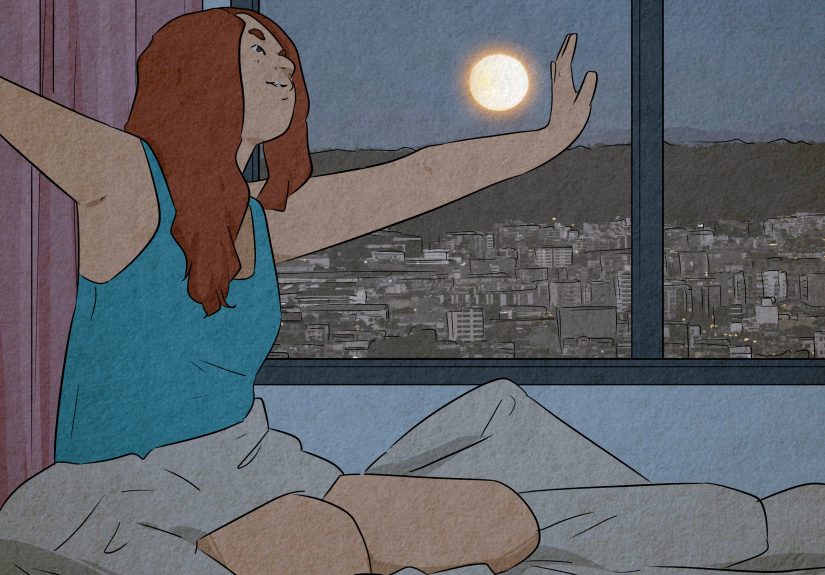
If you keep snapping awake at 3 a.m., you’re not brokenand you’re definitely not alone. That specific time can feel oddly personal,
like the universe is tapping you on the shoulder and whispering, “Hey. You up?” Meanwhile your brain is like, “No, and I’d like to file a formal complaint.”
Here’s the truth: waking up around 3 a.m. can have very normal sleep-and-body explanations and meaningful spiritual interpretations.
Sometimes it’s one. Sometimes it’s both. This article breaks down the most common reasons people wake up at 3 a.m., what spiritual traditions
often say about it, and what to do so your nights don’t turn into a recurring “3 a.m. thoughts” series.
Why 3 AM Happens So Often (The Unmystical, Very Human Explanation)
Your sleep gets lighter in the second half of the night
Sleep isn’t one long, smooth blackout. It moves in repeating cycles (often around 90 minutes), shifting between deeper stages and lighter stages.
As the night goes on, deep sleep tends to decrease and lighter sleep (including more REM/dream time) tends to increase. Translation: later in the night,
you’re easier to wakeby noise, temperature changes, a full bladder, a random dream about being late to class, or absolutely nothing at all.
Your internal clock starts “warming up” for morning
Around the early morning hours, your body begins preparing for wake-up time: hormones, body temperature, and your circadian rhythm start trending toward “day mode.”
If stress is high, that ramp-up can feel like a sudden alarm instead of a gentle sunrise.
Stress and cortisol can hit like an invisible espresso shot
Cortisol (often called the “stress hormone”) naturally rises as morning approaches. Under chronic stress, anxiety, or burnout, that rise can feel exaggeratedlike your
nervous system is practicing for a fire drill. You wake up alert, your mind starts scanning for problems, and your pillow becomes a surprisingly good stage for
catastrophic overthinking.
Common “Real-Life” Reasons You Wake Up at 3 AM
1) Stress, anxiety, and the midnight mental to-do list
If you wake up at 3 a.m. and immediately start thinking about emails, relationships, money, school, health, or that mildly awkward comment you made in 2019,
you’re seeing a classic pattern: the brain is awake, the world is quiet, and there are no distractionsso your thoughts get the microphone.
Example: You’ve been “fine” all day, but at night your brain replays tomorrow’s meeting, your unfinished tasks, and every possible outcome.
The wake-up isn’t the mysteryyour nervous system is simply using the quietest hour to process the loudest worries.
2) Sleep maintenance insomnia (aka: waking up and struggling to fall back asleep)
Many people wake briefly during the night and fall back asleep without remembering. The issue becomes a problem when you wake up and can’t return to sleep
(or you start dreading bedtime because you expect the 3 a.m. wake-up). Over time, your brain can “learn” the pattern and repeat itlike a playlist you never asked for.
3) A too-warm room, a too-noisy room, or a too-bright room
Sleep is picky. Temperature, light, and noise matter more than we like to admit. A room that heats up at night, a neighbor’s door slam, a flashing router light,
or a partner/pet doing Olympic-level tossing can pull you out of light sleepright when your sleep is naturally lighter.
4) Bathroom breaks and late fluids
If you wake up and immediately have to pee, that’s not a spiritual callingit’s plumbing. Drinking lots of fluid late in the evening can cause mid-night awakenings.
So can alcohol (more on that next), and certain health issues or medications.
5) Alcohol: sleepy at first, disruptive later
Alcohol can make you drowsy initially, but it’s famous for breaking up sleep later in the night. It may reduce sleep quality, disrupt REM, and increase the chances you
wake up and feel restless. In other words: it can turn your night into a “fall asleep fast, wake up weird” situation.
6) Caffeine timing (the “it was only one latte” trap)
Caffeine can linger longer than people expect. If you’re sensitiveor if you drink caffeine later in the dayit can make your sleep lighter and your wake-ups more frequent.
That 3 p.m. coffee might be living its best life at 3 a.m.
7) Late meals, reflux, or blood sugar swings
Heavy, spicy, or late dinners can cause discomfort or reflux that disrupts sleep. Some people also wake when blood sugar dips or digestion feels “busy.”
If your 3 a.m. wake-ups cluster after late-night snacks, sugary desserts, or big meals, your body may be sending a simple message:
“I would like to digest in peace.”
8) Sleep disorders and health conditions
Persistent nighttime waking can be related to conditions like sleep apnea (breathing interruptions), restless legs syndrome, chronic pain, or medication effects.
Some people with sleep apnea wake repeatedly without realizing why, and may feel unrefreshed even after a full night in bed.
9) Mood changes, depression, and early-morning awakening
Sleep and mental health are tightly linked. Depression can show up as trouble sleeping, waking too early, or poor sleep quality. If your 3 a.m. wake-ups come with
low mood, loss of interest, appetite changes, or persistent hopelessness, it’s worth talking to a healthcare professional.
So… Is Waking Up at 3 AM a Spiritual Sign?
Sometimes people experience a 3 a.m. wake-up as more than biologyespecially when it feels emotionally charged, recurring, or oddly specific.
The key is to treat spiritual meanings as interpretations, not diagnoses. Think of them as a “lens” you can look throughnot a verdict.
Spiritual Meaning #1: A “quiet hour” invitation to reflect
Many spiritual and contemplative traditions emphasize stillness. If your life is loudconstant notifications, nonstop responsibilities3 a.m. may be the only time
your mind gets true silence. Some people interpret that as an invitation: pray, meditate, breathe, journal, or listen inward.
Spiritual Meaning #2: The “witching hour” (folklore, not a medical category)
In Western folklore, the “witching hour” or “devil’s hour” is sometimes described as a window when supernatural energy is strongeroften placed around 3 a.m.
In certain Christian-influenced explanations, 3 a.m. is framed as a symbolic “opposite” of 3 p.m. (a time associated with religious significance),
and that inversion became part of the story.
Whether you treat this as meaningful or just a spooky cultural footnote is up to you. But it can explain why 3 a.m. feels loaded even before you’ve had your first thought.
Culture plants ideas, and sleepy brains are very suggestible.
Spiritual Meaning #3: “Your intuition is louder when the world is quiet”
A common spiritual interpretation is that waking at 3 a.m. happens when your subconscious is trying to surface something importantan emotion you’ve ignored,
a decision you’ve delayed, a relationship dynamic you’ve minimized, or a truth you’ve been too busy to hear.
Try this: Ask, “What feels unfinished?” Not in a panicky waymore like you’re gently opening a door and seeing what’s there.
Spiritual Meaning #4: Numerology and “3” energy (creativity, communication, support)
In numerology-inspired communities, “3” is often linked with creativity, expression, growth, and connection. If you wake at 3 a.m. and your mind instantly starts
generating ideassong lyrics, business plans, heartfelt texts you’ll never sendsome people interpret that as a creative signal.
Keep it grounded: you don’t need to start a new life at 3:07 a.m. You can jot a note and return to sleep.
Spiritual Meaning #5: The “Chinese body clock” interpretation (traditional belief)
Traditional Chinese Medicine includes the idea of an “organ clock,” where different time windows correspond to organ systems and types of energy.
In that framework, 1–3 a.m. is often associated with the liver, and waking in that window is sometimes linked (symbolically) with anger, stress, or “stuck” emotion.
Important note: this is a traditional model and not the same thing as modern medical diagnosis. Still, some people find it helpful as a reflective prompt:
“What am I holding onto that I need to release?”
How to Tell if Your 3 AM Wake-Up Is More “Body” or More “Meaning”
You don’t have to pick one lane forever. Try these three quick checks:
- The Body Check: Is the room hot/cold? Do you need the bathroom? Did you drink alcohol or caffeine late? Did you eat heavy or spicy food?
- The Mind Check: Are you stressed, grieving, anxious, or mentally overloaded? Are you dreading something tomorrow?
- The Meaning Check: Does a specific feeling, memory, or insight show up repeatedly at 3 a.m. (not just random worry)?
If the pattern is clearly tied to habits (late caffeine, alcohol, late meals, screen time), it’s probably biology. If it’s tied to a repeating emotional theme
(a relationship, a decision, a sense of purpose), you can explore it spiritually or psychologicallywhile still supporting your sleep.
What to Do When You Wake Up at 3 AM (Without Making It Worse)
1) Don’t check the clock like it owes you money
Clock-watching tells your brain, “This is a problem.” And your brain loves being helpful by releasing more alertness. If possible, turn your clock away
or keep your phone facedown (and far enough away that you can’t accidentally start scrolling into sunrise).
2) Give yourself a 20-minute rule
If you can’t fall back asleep within about 20 minutes, get out of bed and do something calm in dim light: read a boring book, listen to a soft podcast,
stretch gently, or do slow breathing. Then return to bed when you feel sleepy.
3) Use a “brain dump” to unload the mental tabs
Keep a notepad nearby. Write the thought downshort and simple. You’re not solving your life at 3 a.m.; you’re telling your brain, “I won’t forget this.”
That reassurance alone can reduce the urge to stay alert.
4) Try a spiritual practice that’s sleepy-friendly
If waking at 3 a.m. feels meaningful, choose a practice that guides you back toward rest:
- One short prayer or mantra (not a 45-minute existential debate with the universe)
- Five slow breaths with a hand on your chest
- A gentle gratitude list of three things
- A brief visualization: exhale tension, inhale calm
5) Protect tomorrow’s sleep schedule
If you had a rough night, the temptation is to sleep in, nap long, or go to bed super early. But dramatic schedule swings can keep the pattern going.
Aim to keep your wake time consistent, keep naps short (if you nap at all), and build sleep pressure naturally for the next night.
When to Talk to a Doctor or Sleep Specialist
It’s time to get extra support if:
- You wake up at 3 a.m. (or similar times) at least 3 nights a week for a month or more
- You feel exhausted, irritable, or foggy during the day
- You snore loudly, gasp, or wake up with headaches (possible sleep apnea)
- You have ongoing pain, reflux, frequent nighttime urination, or medication side effects
- You notice symptoms of anxiety or depression alongside sleep disruption
Treatments can include sleep hygiene changes, addressing medical issues, and evidence-based therapies like CBT-I (cognitive behavioral therapy for insomnia),
which helps retrain sleep patterns and reduce the “learned” cycle of waking and worrying.
Bottom Line
Waking up at 3 a.m. can be your body doing normal sleep-cycle things, your nervous system reacting to stress, or your environment (and lifestyle) nudging you into
lighter sleep. Spiritually, it can also be a meaningful mirroran invitation to pay attention, release something, or reconnect with inner stillness.
The smartest approach is a both/and: support your biology and explore the meaning gently. You can honor your inner life without sacrificing your rest.
Your future selfawake at a reasonable hourwill be grateful.
Extra: 3 AM Wake-Up Experiences ( of Real-World Patterns)
Below are common 3 a.m. wake-up experiences described by many people. Think of these as realistic “case patterns” rather than one-size-fits-all truths.
If you see yourself in one, you’ve got a cluenot a curse.
Experience #1: The “Everything Is Fine Until 3:01” Stress Spike
A person goes to bed feeling okay, even proud of themselves for turning off the lights on time. Then3 a.m.eyes open wide. The body feels alert for no obvious reason.
Within seconds, the brain starts listing responsibilities: the deadline, the conversation that needs to happen, the bill, the family issue. The more they try to force sleep,
the more awake they feel. Once they start leaving a notebook by the bed and writing a quick “tomorrow list,” the wake-ups become less intense. The moment the brain
trusts the thought won’t be lost, it stops clinging to it like a lifeboat.
Experience #2: The “Late Dinner + Spicy Regret” Wake-Up
Another person notices a pattern: 3 a.m. wake-ups happen most on nights with late takeout, dessert, or a big meal close to bedtime. They wake feeling uncomfortable,
sometimes with a dry throat or mild heartburn, and they can’t find the “right position.” Once they move dinner earlier, lighten the late snack, and keep water nearby,
the wake-ups decrease. The spiritual takeaway they choose isn’t “the universe is mad”it’s “my body is honest.” Their nightly ritual becomes a calmer dinner and a
short wind-down, which feels surprisingly sacred.
Experience #3: The “Creative Download” Moment
Some people wake at 3 a.m. with a clear ideaan image, a sentence, a solution to a problem. It feels different from anxiety: more like a quiet “yes,” not a loud “oh no.”
The trap is getting up and fully starting the project. A better strategy is keeping a dim light and writing one or two linesjust enough to capture the ideathen returning
to sleep. Over time, they begin treating 3 a.m. like a suggestion box, not an appointment. The meaning stays. The exhaustion doesn’t.
Experience #4: The “Witching Hour” Fear Loop
Another person grew up hearing that 3 a.m. is spooky. So when they wake then, their body reacts with instant dread. They scan the room, listen for sounds, and
imagine worst-case scenarios. The fear itself becomes the fuel keeping them awake. When they learn how common night waking isand replace the scary story with a neutral
one (“my sleep is lighter right now”)the fear decreases. Their spiritual practice becomes grounding: a short prayer, slow breathing, and the reminder that the mind can
tell ghost stories when it’s half asleep.
Experience #5: The “Message From My Life” Wake-Up
Sometimes the wake-up is tied to an emotional theme. A person wakes at 3 a.m. thinking about the same relationship, the same decision, the same unanswered question.
It’s not random: it’s repetitive. They start journaling for five minutes a day (not just at night), and the 3 a.m. wake-up softens. The message wasn’t “stay awake and
suffer.” It was “pay attention in daylight.” Once the feeling gets space during the day, it doesn’t need to break into the night as often.