Table of Contents >> Show >> Hide
- First: What Exactly Is a Foxtail, and Why Is It Such a Problem?
- Quick Reality Check: When This Is an Emergency
- How to Remove a Foxtail from a Dog’s Nose: 11 Steps
- Recognize the classic “nose foxtail” signs
- Remove your dog from the grassy areaimmediately
- Keep your dog calm (and stop the “face pawing”)
- Do a quick, safe “outer-nose only” inspection
- Decide: Is this a “go now” situation?
- If (and only if) the foxtail is clearly visible at the nostril entrance, attempt gentle removal
- Do not flush the nose, “probe,” or play surgeon
- Call your veterinarian (or an emergency clinic) the same day
- Prevent your dog from eating, drinking heavily, or running around on the way
- Know what the vet may do (so it’s less scary)
- Monitor closely afterwardespecially for “it moved deeper” signs
- Why You Shouldn’t Wait It Out (Even If the Sneezing Stops)
- What a Vet Visit Might Look Like
- Aftercare: What to Watch for at Home
- Prevention: How to Keep Foxtails from Becoming Your Summer Villain
- FAQ: The Questions Everyone Asks at 2 A.M.
- Real-World Experiences (Plus the Lessons Owners Wish They’d Heard)
- Conclusion
- SEO Tags
Your dog was having the time of their lifecharging through tall grass like they’re auditioning for an action movieuntil suddenly:
sneeze-sneeze-sneeze, pawing at the face, maybe a little nosebleed, and now you’re Googling “foxtail dog nose” with the intensity of a NASA launch.
You’re not overreacting. A foxtail (also called a grass awn) can be a genuine emergency when it gets inhaled into a dog’s nasal passages.
The tricky part is that foxtails aren’t like a crumb you can just shake loose. They’re built like tiny botanical arrows, with barbs designed to keep moving
forwardoften deeperrather than backing out.
This guide gives you a safe, realistic, vet-aligned plan: what to watch for, what you can do without making things worse, and when the correct move is
“get in the car, we’re going to the vet.”
First: What Exactly Is a Foxtail, and Why Is It Such a Problem?
Foxtails are seed heads from certain grasses. They’re not considered poisonousbut they can cause big trouble because their shape and barbs let them
embed and migrate through tissue. When a dog inhales one, it can lodge in the nasal cavity or even travel farther, triggering inflammation,
infection, and persistent respiratory signs.
Translation: a foxtail in the nose is not “wait and see” in the same way a harmless sniffle might be. Even if the dramatic sneezing calms down,
the foxtail may not be goneit may have shifted.
Quick Reality Check: When This Is an Emergency
Skip the internet deep-dive and seek urgent veterinary care immediately if you notice:
- Difficulty breathing, open-mouth breathing, or noisy/labored breathing
- Heavy or ongoing nosebleeds
- Relentless sneezing fits that won’t settle
- Severe distress: frantic pawing at the face, panic, or inability to settle
- Sudden lethargy, collapse, or signs your dog “just isn’t right” after inhaling something
If your dog is struggling to breathe, treat it like a true emergency. Foxtails can create swelling and irritation that can escalate quickly.
How to Remove a Foxtail from a Dog’s Nose: 11 Steps
These steps are designed to help you act fast without turning your dog’s nose into a DIY project. The goal is safe removal
only when it’s clearly accessible, and fast veterinary care when it’s not.
-
Recognize the classic “nose foxtail” signs
The most common pattern is sudden, intense sneezing after being in tall grass or dry, weedy areas. You may also see one-sided nasal discharge
(clear, cloudy, or bloody), snorting, head shaking, gagging, or pawing at the nose. -
Remove your dog from the grassy areaimmediately
Don’t let them keep sniffing, snorting, or bulldozing through the same patch. More time in foxtail territory = more chances for more awns to hitch a ride.
Move to a calm, well-lit spot. -
Keep your dog calm (and stop the “face pawing”)
Excitement and frantic rubbing can increase irritation and make sneezing worse. If your dog is pawing hard at the face, consider using an e-collar
(cone) if you have one. If you don’t, gentle restraint and calm reassurance helpthink “spa day,” not “wrestling match.” -
Do a quick, safe “outer-nose only” inspection
Use a bright flashlight and look at the entrance of each nostril. You’re checking for anything clearly visible at the rim.
Do not insert cotton swabs, fingers, tweezers, or tools into the nostril. If it’s deeper than the entrance, it’s vet territory. -
Decide: Is this a “go now” situation?
If there’s breathing difficulty, heavy bleeding, extreme distress, or symptoms that won’t easestop here and head to urgent or emergency veterinary care.
Also choose “go now” if your dog is in a high-risk group (short-nosed breeds, very young dogs, seniors, dogs with existing airway issues). -
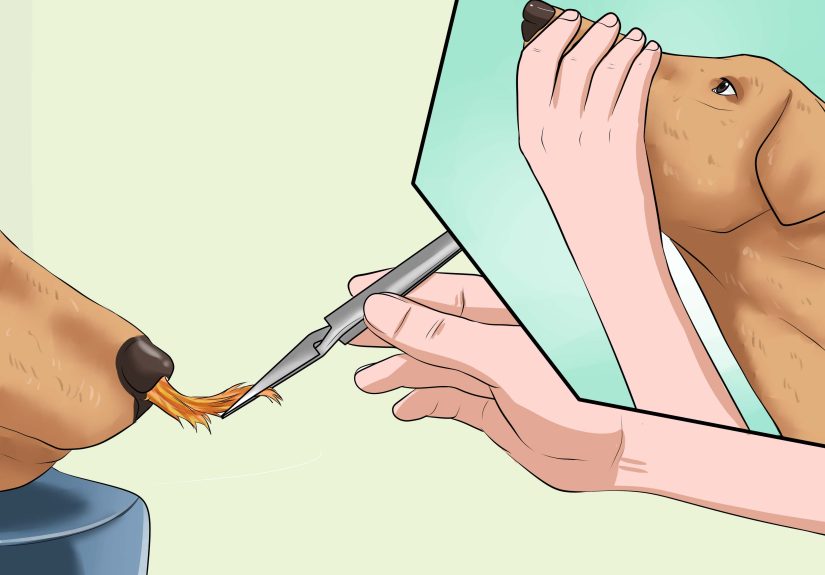
If (and only if) the foxtail is clearly visible at the nostril entrance, attempt gentle removal
This is the only scenario where at-home removal may be reasonable: you can plainly see the foxtail tip at the edge of the nostril,
and it appears easy to grasp without pushing it farther in.With a calm helper holding your dog steady, you may try to grasp the visible portion at the surface and pull it out smoothly.
If your dog jerks, resists, or you feel any “stuck” sensationstop. Forcing it can break the awn or drive it deeper. -
Do not flush the nose, “probe,” or play surgeon
It’s tempting to think rinsing will wash it out, but blind flushing and probing can irritate delicate tissue, increase bleeding, or push the foxtail
deeper. Foxtails are barbedthis isn’t a smooth pebble that slides out with a little water. -
Call your veterinarian (or an emergency clinic) the same day
Even if sneezing settles, a foxtail may remain lodged or may have migrated. Call and describe: when it started, what your dog was doing,
whether there’s discharge or bleeding, and whether signs are one-sided.If your regular vet can’t see you quickly, go to urgent or emergency caretiming matters because retrieval is often easier earlier on.
-
Prevent your dog from eating, drinking heavily, or running around on the way
If your dog needs sedation for removal (which is common), your clinic may prefer an emptier stomach. Follow the clinic’s instructions, but as a general
rule: keep activity low, and avoid big meals until you get guidance. Bring your dog on a leash, and keep the trip calm and controlled. -
Know what the vet may do (so it’s less scary)
Many nasal foxtails require sedation so the veterinarian can safely examine the nasal passage and remove the awn without causing trauma.
Removal may involve specialized instruments and visualization techniques such as rhinoscopy/endoscopy, and sometimes imaging if the situation is complicated.Your dog may also receive pain relief and, depending on findings, treatment for inflammation or infection.
-
Monitor closely afterwardespecially for “it moved deeper” signs
After suspected inhalation (whether or not you think it came out), watch for persistent or returning sneezing, one-sided discharge, foul odor,
nosebleeds, lethargy, coughing/gagging, or ongoing pawing at the face. If symptoms persist or recur, return to the vet promptly.
Why You Shouldn’t Wait It Out (Even If the Sneezing Stops)
A common trap is this: your dog sneezes like crazy for 10–20 minutes, then suddenly… stops. It’s tempting to declare victory and go back to your day.
But with foxtails, a sudden “calm” can sometimes mean the awn has shifted position rather than exited.
Because foxtails can migrate, delays may lead to ongoing inflammation (rhinitis), infection, or more complicated retrieval. Veterinary teams emphasize early
detection and removal to reduce the risk of longer-term problems.
What a Vet Visit Might Look Like
If you’ve never dealt with a nasal foreign body before, here’s the typical flow:
- History + exam: What happened, when, and what signs you noticed (especially one-sided discharge/bleeding).
- Airway assessment: Making sure breathing is stable.
- Sedation: Often used so your dog holds still and doesn’t fight the exam (safer for everyone, including your dog’s nose).
- Visualization + removal: Tools and techniques to find and extract the foxtail without breaking it.
- Aftercare: Guidance on monitoring, follow-up, and treating inflammation or infection if needed.
The “best-case scenario” is quick removal before tissue gets too irritated. The “still very manageable scenario” is removal with sedation and proper tools.
The “please don’t try this at home” scenario is a foxtail that has migrated and needs advanced diagnostics.
Aftercare: What to Watch for at Home
For the next few days, keep an eye out for:
- Recurring sneezing, snorting, reverse-sneezing episodes, or nasal noise
- One-sided discharge (clear, cloudy, yellow/green, or bloody)
- Bad breath that appears suddenly
- Nose rubbing or pawing at the face
- Coughing, gagging, or reduced appetite
If any of these persist, worsen, or return after a brief improvement, follow up with your veterinarian quickly. With nasal foreign bodies, “second acts”
aren’t charmingthey’re usually a clue.
Prevention: How to Keep Foxtails from Becoming Your Summer Villain
Prevention is mostly about reducing exposure and catching hitchhikers early:
- Avoid foxtail zones: Dry fields, weedy trails, overgrown lotsespecially in late spring through summer.
- Yard control: Mow and remove foxtail grasses before they seed.
- Post-walk checks: Look at paws, between toes, ears, eyes, armpits, groin, and around the muzzle.
- Grooming strategy: Trim long fur in high-risk seasons so awns have fewer places to hide.
- Leash management: If your dog is a “face-first botanist,” keep them out of tall grass entirely.
FAQ: The Questions Everyone Asks at 2 A.M.
Can a dog sneeze out a foxtail?
Sometimes a dog may expel an irritant, but foxtails are barbed and designed to move forward. If you suspect inhalation, it’s safest to treat it seriously and
seek veterinary guidanceeven if the sneezing calms down.
Is a foxtail in the nose always a vet visit?
In practice, yesunless the foxtail is clearly visible at the nostril entrance and can be gently removed without resistance. If it’s not obviously accessible,
or signs are significant, veterinary removal is the safest path.
Why does my dog “reverse sneeze” after sniffing grass?
Reverse sneezing can be triggered by irritation in the nose or back of the throatforeign material, pollen, or other irritants. If it’s new, intense,
or paired with discharge/bleeding, it deserves a vet call.
Real-World Experiences (Plus the Lessons Owners Wish They’d Heard)
Here’s the part nobody tells you until you’ve lived it: foxtail incidents often happen on a perfectly normal day. No thunderstorm. No dramatic soundtrack.
Just a quick potty break in an overgrown corner lot or a “short walk” that turns into your dog plunging into tall grass like it’s a salad bar.
Many owners describe the moment the same way: a sudden switch flips. One second the dog is fine, the next they’re sneezing hard and repeatedly, shaking their
head, and pawing at their nose with a look that says, “Excuse me, my face is broken.” Some owners assume it’s allergiesuntil they notice the symptoms are
mostly on one side, or they spot a little blood. That’s usually when the urgency clicks into place.
One common experience is the “false finish.” The dog sneezes nonstop for 15 minutes, then abruptly stops and seems okay. Owners feel relieved and decide to
monitor. Later that nightor the next daythe sneezing returns, now with discharge, nose rubbing, and a dog who can’t settle. The lesson learned (often the
hard way) is that a pause in symptoms doesn’t always mean the foxtail is gone. Sometimes it just means it changed position.
Another frequent theme: well-intended but risky home attempts. Owners may try to use tweezers “just a little,” or they consider flushing the nose, or they
try to look deeper with a cotton swab. In hindsight, people often say the same thing: “I didn’t want to spend money at the emergency vet… but I also didn’t
realize how easily a foxtail can migrate.” The most helpful mindset shift is this: your dog’s nose is delicate, and foxtails are engineered to stick and move
forward. That combination is why professionals use sedation and specialized toolsbecause precision matters.
There are also owners who did everything “right” and still ended up at urgent care, because the foxtail wasn’t visible and the dog’s signs were escalating.
Those owners often report the vet visit was reassuring: the team explained what they were looking for, why sedation helps, and how removal works. Even when
it’s stressful, there’s comfort in knowing you didn’t gamble with your dog’s airway.
And yes, some people do get lucky: they see a foxtail tip right at the nostril edge, gently remove it without resistance, and symptoms quickly improve.
The key difference in those success stories is that the foxtail was clearly at the surfaceno probing, no “digging,” no force.
The big takeaway from real-life foxtail stories is simple: act quickly, stay calm, keep your interventions shallow and safe, and let your veterinarian handle
anything that’s not obviously accessible. That’s not “being dramatic.” That’s being the responsible adult in the relationshipbecause your dog would 100%
choose to sprint into a field of suspicious grass again tomorrow.
Conclusion
If you think your dog inhaled a foxtail, treat it like the urgent problem it can be. Your safest strategy is to avoid probing, avoid flushing,
attempt removal only if the foxtail is clearly visible at the nostril entrance, and get veterinary help quicklyespecially if there’s bleeding,
one-sided discharge, persistent sneezing, or any breathing trouble.
Foxtails may look harmless, but they’re the tiny, barbed overachievers of the weed world. With fast action and the right care, most dogs recover welland you
can get back to enjoying the outdoors (preferably the parts that don’t try to stab your dog in the face).