Table of Contents >> Show >> Hide
- From Chicago Ditches to Hollywood Icon
- What Michael Clarke Duncan Said About John Coffey in The Green Mile
- What He Said About Bear, Bruce Willis, and Michael Bay
- What He Said About Playing Kingpin in Daredevil
- What He Said About The Rock and The Scorpion King
- What He Said About Leo Knox in The Finder
- What He Said About Comedy: Talladega Nights and Beyond
- What His Words Reveal About His Approach to Acting and Life
- Experiences and Reflections Inspired by Michael Clarke Duncan’s Roles
- Conclusion
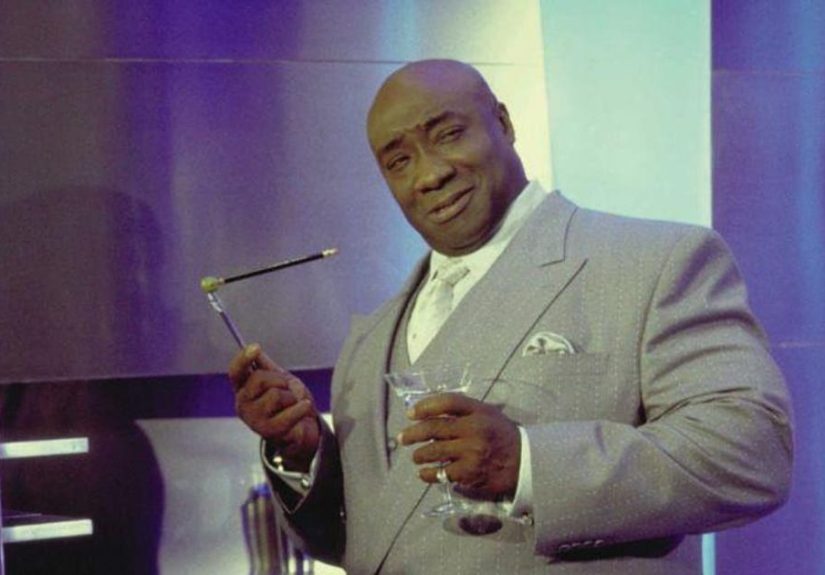
Michael Clarke Duncan looked like the guy you absolutely did not want to annoy in a dark alley – and then he’d open his mouth and you’d realize he was a soft–spoken, hilarious “gentle giant.”
From John Coffey in The Green Mile to Bear in Armageddon and Kingpin in Daredevil, Duncan’s characters were big, bold, and unforgettable.
Off camera, he talked often about the roles that made him famous – how they stretched him, scared him, and sometimes made him eat far more than he wanted.
Drawing on interviews and features from outlets like CNN, The New York Times, the Los Angeles Times, the Chicago Tribune, The Hollywood Reporter, Entertainment Weekly, and curated quote collections such as Ranker’s “What Michael Clarke Duncan Said About Some Of His Best-Known Roles,” we can piece together what Duncan himself thought about the work that defined his career.
From Chicago Ditches to Hollywood Icon
Duncan didn’t come into Hollywood as a legacy nepo-baby. He grew up on Chicago’s South Side, worked physical jobs – including digging ditches – and did security work for celebrities before finally landing small acting roles in the 1990s.
His breakthrough came in 1998 as the lovable roughneck Bear in Armageddon, which led directly to his Oscar-nominated performance as John Coffey in The Green Mile.
From there, he became one of those faces (and voices) you instantly recognized: Kingpin in Daredevil, Attar in Planet of the Apes, Manute in Sin City, Lucius Washington in Talladega Nights, and later Leo Knox on TV’s The Finder.
He wasn’t just happy to be there – he thought deeply about each role, what it meant, and what it took out of him.
What Michael Clarke Duncan Said About John Coffey in The Green Mile
Coffey as a Symbol of Everything Good
Duncan knew John Coffey wasn’t just another prisoner character. In one interview, he described Coffey as standing “for everything that is right in the world,” explaining that any simple act of kindness – like helping an older person cross the street – was a little bit of John Coffey in real life.
For him, Coffey wasn’t a stereotype; he was a living embodiment of innocence and empathy dropped into the harshest possible environment.
That outlook shaped how Duncan approached the role. He leaned into Coffey’s vulnerability – his fear of the dark, his gentle way of speaking, his confusion about human cruelty – to emphasize the contrast between Coffey’s spiritual goodness and the brutality of death row.
The Toughest Scene He Ever Filmed
Duncan repeatedly said that the hardest thing he ever filmed was the sequence involving the two murdered girls – the crime Coffey is accused of.
He talked about having to cry and howl for an extended period and said it left him completely drained emotionally.
The scene felt so real to him that he remembered the posse charging at Coffey as genuinely terrifying, to the point that he admitted he got nervous every time the director called “Roll” on that moment.
It wasn’t just acting for Duncan – it was excavation. He worked with an acting coach to get past the “muscular” image people saw and dig down to what he called “Little Mike,” the emotional, sensitive person underneath.
He later said that every tear you see in the movie is his own, not something he faked or forced.
Gaining Weight for Coffey – And Hating It
Director Frank Darabont wanted Coffey to look big in a natural, 1930s way, not like a guy who lived at the gym. That meant Duncan had to stop weight training and pack on about 30 pounds with the help of a studio-provided nutritionist – which sounds fun until you realize he said they brought so much food he started giving it away.
Duncan joked about disliking the process, but later admitted that when he saw the finished film, he knew Darabont had been right. The softer, heavier look made Coffey feel more like a real man from that era, not a modern action figure dropped into a period drama.
What He Learned from Tom Hanks
Ask Duncan about Tom Hanks, and he basically turned into a walking LinkedIn post about professionalism – but sincerely.
In one interview, he said the biggest lesson Hanks taught him was to be prepared, patient, and focused on the movie above everything else. He claimed he never saw Hanks have a bad day on set.
Duncan once compared working with Hanks to playing basketball with Michael Jordan – you show up better because you’re standing next to greatness.
That level of respect clearly went both ways; Hanks later spoke warmly about Duncan as one of the kindest people he’d worked with.
What He Said About Bear, Bruce Willis, and Michael Bay
Being Bear in Armageddon – And Avoiding Bruce Willis
Armageddon might not be subtle cinema, but it gave Duncan his break – and it gave us Bear, the larger-than-life oil driller with a surprisingly sweet side.
Off screen, Bear also changed Duncan’s real life. He told Larry King that at first, he actually avoided Bruce Willis on set because people warned him Willis wasn’t nice.
Eventually Willis confronted him and basically asked, “Have I ever treated you that way?” Duncan admitted he’d been keeping his distance to “save his job.” From there, the two became close friends.
Duncan later described Willis as one of his dearest friends and credited him with recommending him to Darabont for The Green Mile – a career-changing favor.
Being Directed by Michael Bay – Like a Boot Camp
Duncan eventually reunited with director Michael Bay not just on Armageddon, but again in The Island. He said his two-day shoot on The Island felt like “hell,” describing Bay as a drill sergeant who never eased up and pushed for take after take.
But this wasn’t a complaint so much as a kind of respect. Duncan said Bay was intense, but he also told him he’d always be willing to come back for another Bay action movie.
Translation: it was rough, but he appreciated a director who cared enough to demand everything from him.
What He Said About Playing Kingpin in Daredevil
“You Know the Guy Is White, Right?”
Duncan loved comic books, and Kingpin was one of his favorite villains. So when director Mark Steven Johnson offered him the role of Wilson Fisk in 2003’s Daredevil, Duncan’s first reaction was to point out the obvious: “You know the guy is white, right?”
Johnson and the studio told him they wanted the best actor for the part, not someone who simply matched the ink on the page. Once Duncan heard that, he was all in.
He later said he hoped comic-book purists would get past the race issue and just see his work – “see me for what I am – an actor,” as he put it.
Using Kingpin to Break the “Gentle Giant” Mold
In an Entertainment Weekly interview, Duncan explained that one of the reasons he wanted to play Kingpin was to get away from being typecast as the saintly John Coffey type.
He joked that Kingpin would probably have John Coffey killed, and he loved that the part let him explore a much darker, ruthless side of his range.
He treated Kingpin like a thought experiment: “How would I act if I was running New York, untouchable, with millions of dollars, and everyone cringed at the sight of me?” That mindset gave his Kingpin a swaggering, decadent arrogance that fans still remember.
Teasing Ben Affleck and Crushing (Politely) on Jennifer Garner
Duncan had no problem clowning around about his co-stars. After Ben Affleck was named “Sexiest Man Alive,” Duncan joked in one interview that he’d seen Affleck naked in Armageddon and “was not impressed,” wondering how that body represented the “sexiest” human on the planet.
It was obviously all in fun – the two worked together more than once.
He also admitted a very healthy admiration for Jennifer Garner, praising her looks and athleticism in Daredevil, and joking that watching her flip around in person was, let’s say, energizing.
What He Said About The Rock and The Scorpion King
Duncan’s friendship with Dwayne “The Rock” Johnson started with classic fan energy. Duncan said he used to buy his own ticket to WWE events, and one night he spotted The Rock in a restaurant after a match.
He debated whether to bother him, then finally walked over and introduced himself as “that guy from Armageddon.”
The Rock recognized him, they exchanged numbers, and that chance encounter eventually paid off: Johnson personally called Duncan to offer him a role in The Scorpion King. Duncan agreed before even reading the script – that’s how much he respected Johnson and trusted that they’d have fun together on screen.
What He Said About Leo Knox in The Finder
Later in his career, Duncan moved into television with The Finder, a Bones spin-off where he played Leo Knox. Duncan called Leo an “enforcer-slash-poet-slash-bodyguard-slash-lawyer,” basically a Swiss Army knife of a character.
He loved that Leo was layered: a tough guy who could also offer wisdom, legal advice, and emotional support.
Duncan said the role let him break out of the “just the big guy” lane. He joked that Leo is “mean when he has to be, just like in real life,” which is funny if you remember how consistently people described Duncan himself as gentle and kind.
It was his way of winking at the audience while still taking the work seriously.
What He Said About Comedy: Talladega Nights and Beyond
Duncan’s deep voice and intimidating size made him perfect for drama, but he loved comedy. In Talladega Nights: The Ballad of Ricky Bobby, he played Lucius Washington opposite Will Ferrell and John C. Reilly and discovered that improv-heavy comedy is a completely different sport.
He admitted that for the first few takes, he mostly just stood there watching Ferrell and Reilly riff, thinking, “These guys are really good,” before realizing he was supposed to jump in, too. The director told him he had to “learn to cut in there” instead of politely waiting for people to finish their lines.
For a guy raised on traditional, hit-your-mark acting, it was like being tossed into a verbal NASCAR race.
In School for Scoundrels, he wore a blond wig and said it helped him tap into his “feminine side” and poke fun at himself. He joked that the wig actually made him feel kind of sexy, though he firmly drew the line at lipstick and heels.
According to him, he got plenty of catcalls and whistles in that look – which, let’s be honest, he probably enjoyed more than he let on.
What His Words Reveal About His Approach to Acting and Life
Put all these quotes and stories together, and a clear picture emerges: Duncan approached his work with humility, curiosity, and a willingness to be uncomfortable.
He gained weight he hated because it served the character. He let himself crack open emotionally on camera, even when it exhausted him. He jumped into improv with comedy heavyweights even when he felt out of his depth.
At the same time, he never lost sight of who he was. In one oft-quoted line, he said he didn’t care about being a huge star – he just wanted to be remembered.
Judging by how often people still bring up John Coffey, Bear, Kingpin, Lucius Washington, and Leo Knox, that wish has absolutely come true.
Experiences and Reflections Inspired by Michael Clarke Duncan’s Roles
Think about the first time someone sits down to watch The Green Mile without knowing much about it. At the start, John Coffey looks like the archetypal “dangerous prisoner” – huge, silent, led in chains.
But as the movie unfolds, viewers realize they’re watching something completely different: a man who cries over suffering, who’s terrified of the dark, who gently cradles a mouse as if it were made of glass.
When people later hear Duncan talk about Coffey representing everything that’s right with the world, that emotional reaction suddenly makes sense – he built the character to embody quiet goodness in the loudest, harshest setting possible.
For audiences, knowing how hard those scenes were for him changes the experience of rewatching the film.
When Coffey breaks down over the murdered girls or faces the electric chair with a heartbreaking combination of fear and acceptance, viewers aren’t just seeing technique – they’re seeing the result of an actor who let himself be painfully vulnerable in front of a camera for hours at a time.
Duncan’s own comments about being “drained” by those moments give fans permission to admit the movie drains them, too, and that’s part of why it lingers so strongly.
His lighter roles create another kind of shared experience. In Armageddon, Bear is that guy everyone knows – loud, funny, all bravado until something genuinely scary happens.
When people later discover that Duncan initially avoided Bruce Willis out of fear of getting fired, only to end up calling him one of his closest friends, it feels strangely relatable.
Most people have had a boss or authority figure they were nervous around, only to realize later that the person was supportive and on their side. His story turns a behind-the-scenes anecdote into a small lesson about not letting rumors dictate how you treat people.
Fans of superhero movies have their own version of this with Daredevil.
A lot of viewers initially raised an eyebrow at a Black Kingpin, not because Duncan wasn’t capable, but because the comics had burned the image of a white Wilson Fisk into their minds.
Hearing Duncan calmly talk about that – about how he reminded the director that “the guy is white” and then decided to trust that they’d chosen him for his talent – invites viewers to re-examine how attached they are to the idea that a character must look a certain way to be “authentic.”
Comedy fans get another layer of appreciation when they learn how overwhelmed Duncan felt on the set of Talladega Nights.
Knowing that he spent early takes just watching Will Ferrell and John C. Reilly riff, forgetting to jump in, makes his scenes even more endearing – because most people have been in a room where everyone seems faster, wittier, or more experienced.
Duncan’s honesty about having to “learn to cut in” shows that even confident, physically imposing actors feel intimidated sometimes; the difference is that he stayed, learned, and adjusted.
For aspiring actors, his comments about working with Tom Hanks and Michael Bay read like miniature masterclasses in professionalism.
From Hanks, he took away the importance of preparation, patience, and leaving ego at the door. From Bay, he absorbed the idea that a director’s intensity can be a sign of commitment, not hostility – even if it feels like boot camp in the moment.
Those experiences remind performers and creatives in any field that growth often happens in the spaces that feel the most uncomfortable.
And then there’s The Finder and his other smaller projects, which reveal his desire not to get stuck playing the same “big guy” over and over.
Viewers who discover his interviews after watching the show often say they see Leo Knox differently – not just as comic relief or muscle, but as a chance for Duncan to bring his own intelligence, humor, and life experience to a character who can be wise, tough, and introspective all at once.
Ultimately, what Duncan said about his roles transforms how audiences experience them.
His words peel back the curtain on what it took to bring John Coffey, Bear, Kingpin, Lucius Washington, and Leo Knox to life.
They also reinforce the core impression so many people had of him: a man who worked incredibly hard, approached his craft with humility and heart, and genuinely cared less about fame than about being remembered for the impact he made on people – on and off the screen.
Conclusion
Michael Clarke Duncan’s filmography is impressive on its own, but hearing him talk about his roles takes that admiration to another level.
He saw John Coffey as a symbol of goodness, Bear as a gateway to deeper opportunities, Kingpin as a chance to shatter expectations, and Leo Knox as a way to stretch beyond the “big guy” archetype.
He respected his co-stars, embraced tough directors, and never hesitated to make fun of himself (or Ben Affleck) when the moment called for it.
For fans, his quotes are more than trivia – they’re windows into how a hardworking actor turned physical presence, emotional vulnerability, and a wicked sense of humor into a legacy that still resonates years after his passing.
He got what he wanted: people remember him. And the more we revisit what he said about his best-known roles, the more that memory deepens and sticks.