Table of Contents >> Show >> Hide
- What Actually Got “Canceled,” and When
- The Clip That Made Everyone Say, “Wait… What?”
- The Real Reason for the Googly Eyes: The Joke Was Out of Sequence
- Why That Kind of Comedy Works (Even When the News Is Brutal)
- The Bigger Backdrop: Why Late-Night TV Keeps Feeling Like It’s on the Chopping Block
- How to Watch Viral Late-Night Clips Without Getting Tricked by the Edit
- Audience Experiences: What This Moment Felt Like (and Why People Couldn’t Stop Sharing It)
- Conclusion: The Hand Wasn’t RandomIt Was Colbert Being Colbert
If you only saw the viral clip, it looked like late-night TV had finally reached its final form:
a serious announcement, a dramatic pause… and then two googly eyes stuck to a hand that suddenly became a tiny, chaotic co-host.
The internet reacted the way the internet always reacts to anything confusing: with memes, conspiracy theories, and at least one person insisting it was “deep symbolism.”
But the real explanation is much funnier (and way more practical): the googly-eyed hand wasn’t some surreal breakdown.
It was a setup-and-payoff joke that got chopped up by the teaser edit, making the punchline arrive before the context.
In other words, the hand wasn’t random. The clip was.
What Actually Got “Canceled,” and When
In mid-July 2025, CBS announced that The Late Show with Stephen Colbert would end in May 2026, and that the network would
retire the Late Show franchise rather than install a new host.
CBS described the decision as a financial call tied to the tough economics of late-night television, not a ratings collapse or creative reboot.
Colbert then addressed the news on-air and in front of a live audience, acknowledging the weird emotional whiplash of doing comedy with a very real countdown clock suddenly hanging over the studio.
He also thanked the staff and the audiencebecause if you’re going to deliver bad news, you may as well do it like a professional… and then immediately do something deeply unprofessional with your hand.
A quick timeline (because the internet loves receipts)
- July 17–18, 2025: CBS publicly confirms the show will end in May 2026 and the franchise will be retired.
- That same day: Colbert tells the audience he learned the news the night before and confirms there won’t be a replacement host.
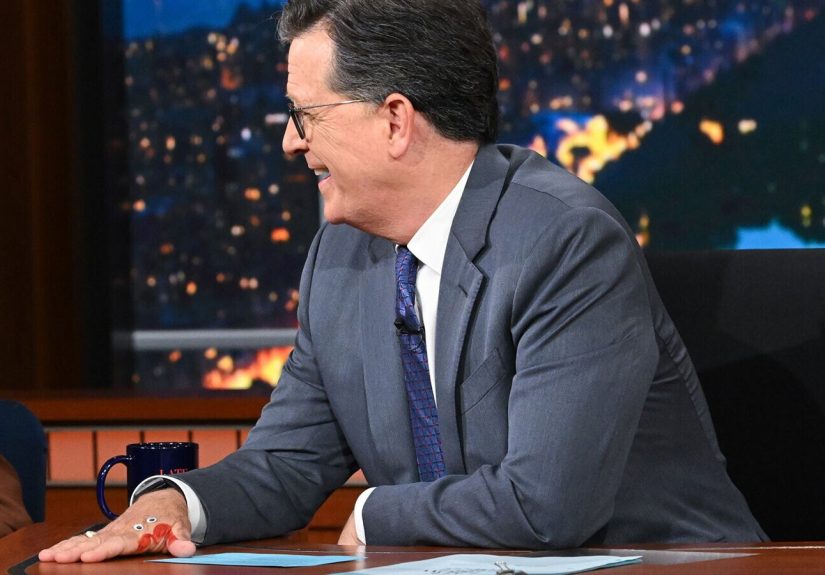
- Shortly after: A teaser clip circulates that ends with a close-up of Colbert’s handnow a googly-eyed “character”saying nonsense like it’s auditioning for a jazz scat competition.
The Clip That Made Everyone Say, “Wait… What?”
The teaser was built like a miniature suspense film:
Colbert speaks calmly, the moment feels heavy, and thencut to a close-uphis right hand appears with a cartoon face:
googly eyes stuck to the forefinger, lips drawn near the thumb, and the energy of a tiny puppet that absolutely refuses to read the room.
If you’re a casual viewer, that ending feels like a hard left turn into a ditch.
People assumed it had to mean something: a secret message, a protest, a coded reference, a comedic “I’m fine” that actually means “I’m not fine,” or maybe just proof that all of ussociety includedneed a nap.
Here’s the twist: it did mean something.
It just didn’t mean something in that exact momentbecause the teaser had yanked it out of its original order.
The Real Reason for the Googly Eyes: The Joke Was Out of Sequence
The hand puppet wasn’t created specifically to “soften” the cancellation announcement.
It was a callback bit connected to the episode’s monologueone that became confusing only because the teaser made it look like the puppet was the final word on the show ending.
Step 1: The setupColbert’s monologue pivots to… a hand
On the same night the cancellation news was addressed, Colbert’s monologue also included commentary about news and photos circulating at the time involving
makeup and concealer seen on President Donald Trump’s hand, plus broader discussion sparked by the White House’s public statements about Trump’s health.
The White House disclosed Trump had been diagnosed with chronic venous insufficiency, a common condition that can cause leg swelling,
and said the visible bruising on his hand was consistent with irritation from frequent handshaking and aspirin use.
That context matters because Colbert’s “hand character” was built as a joke about
hands being on camera, hands being covered with makeup, and
the general awkwardness of suddenly realizing the world is staring at your knuckles like they’re the Zapruder film.
Step 2: The punchline“I wear makeup too… sometimes on my hand”
Colbert’s comedic pivot was essentially: “Hey, I’m on TV every day too. I wear makeup too.”
Then he takes it one absurd step furtherbecause this is late-night comedy, and subtlety is not paying the billsby implying he sometimes wears makeup on his hand.
That’s when he brings out the puppet version of his hand: googly eyes, drawn lips, and a voice that immediately starts hyping him up.
The puppet becomes a silly “yes-man,” complimenting him in an exaggerated way.
It’s a classic Colbert move: take a real news hook, twist it, then build a tiny theatrical moment out of it.
Step 3: Why the teaser made it look random
The teaser clip that circulated focused on the cancellation announcement and then ended with the puppet close-up.
To anyone watching the clip alone, the puppet looked like a bizarre emotional coping mechanism.
But in the full episode flow, it was simply the payoff to a joke that happened moments later in the monologue.
Think of it like watching a mystery movie where the editor accidentally posts the “reveal” first.
Sure, you’ll still see what happened. You’ll just be deeply confused about why it happened and whether your Wi-Fi is haunted.
Why That Kind of Comedy Works (Even When the News Is Brutal)
Once you understand the sequence, the googly eyes stop being weird and start being… almost comforting?
Not because a hand puppet fixes corporate decisions, but because comedy is often a pressure valve.
1) It keeps the show’s promise: “We do jokes here.”
Late-night shows are built on a contract with the audience:
the world is messy, the headlines are loud, but we’ll process it togetherwith humor.
When a show is told it has an end date, the temptation is to become a eulogy.
A dumb little puppet is a stubborn refusal to do that.
2) It’s a low-budget bit with high emotional impact
A suit-and-tie desk set costs money.
A pair of googly eyes costs the price of a fancy coffee (or one streaming subscription you forgot to cancel).
And yet that tiny visual gag cuts through doomscrolling like a confetti cannon.
3) It’s also a nod to showbiz history
Colbert’s show tapes in the historic Ed Sullivan Theater.
Turning a hand into a character echoes old-school variety traditionsventriloquism, physical bits, vaudeville-style sillinessupdated for the “clip economy”
where people may only watch 45 seconds of anything before switching apps.
The Bigger Backdrop: Why Late-Night TV Keeps Feeling Like It’s on the Chopping Block
The cancellation news landed in a moment when late-night economics have been under heavy strain:
audiences are fragmented, ad dollars have shifted, and more viewers consume monologues as next-day clips instead of appointment television.
CBS emphasized financial reasons for ending the franchise even while the show remained a major player in the ratings conversation.
The timing also sparked plenty of debate because it arrived soon after corporate and political controversies involving Paramount (CBS’s parent company),
including high-profile legal and regulatory headlines that commentators and politicians argued deserved transparency.
CBS publicly denied the decision was about content or politics, framing it as business reality in a changing media landscape.
No matter where you land on the “why,” the viewer experience was the same:
a late-night institution suddenly looked less permanent than a group chat named “Besties Forever” that hasn’t pinged since 2021.
How to Watch Viral Late-Night Clips Without Getting Tricked by the Edit
The googly eyes saga is a perfect example of how modern TV is consumed now:
not as full episodes, but as puzzle pieces floating around the internet without the picture on the box.
Practical tips for not being fooled by context collapse
- Assume the clip is a highlight reel, not the whole story. Teasers exist to hook you, not to provide emotional continuity.
- Look for the setup. If a moment feels random, it probably has a lead-in that got cut.
- Remember the show’s rhythm. Late-night is built on quick pivots; what feels jarring in isolation often makes sense in sequence.
- Don’t over-symbolize the craft store aisle. Sometimes googly eyes are just googly eyes doing their honest work.
Audience Experiences: What This Moment Felt Like (and Why People Couldn’t Stop Sharing It)
Even after the “real reason” was clear, the clip kept circulating because it captured something super relatable:
the experience of getting serious news in a world that refuses to stop being weird for even five seconds.
If you watched it live, you probably felt that split-second shift in the roomthe audience processing the announcement, the pause, the realization that something big was changing.
Then the hand shows up and the mood flips, not because the news isn’t real, but because laughter is how humans metabolize shock.
If you watched it online, the experience was different but just as familiar.
You scroll past headlines that are heavy, complicated, and honestly exhausting, and then suddenly there’s a grown man in a suit introducing his hand like it’s a beloved coworker.
You laugh, then you rewind, then you send it to a friend with a message like, “I don’t know what’s happening, but it feels historically important.”
That’s modern culture: we communicate emotions through clips, and we translate confusion into “LOL” because it’s faster than writing, “I am experiencing existential dread but would like to keep things chill.”
There’s also the behind-the-scenes imagination factor.
Viewers immediately picture the most sitcom version of the moment: a producer sprinting to the craft drawer,
a stagehand carefully placing googly eyes with the seriousness of a bomb technician,
and Colbert doing the kind of calm-professional hosting that says, “Yes, this is heartbreaking,” while his hand says, “Jazz cowboy!”
The contrast is exactly why it works. Comedy doesn’t erase disappointment; it just gives it a shape you can hold for a second without dropping it on your foot.
And let’s be honest: people share moments like this because they feel like inside jokes with the whole country.
Even if you don’t watch late-night every night, you understand the language of “a bit.”
You understand that sometimes the only sane response to unsettling news is to do something tiny and absurdlike putting googly eyes on your handjust to prove you still control one thing.
In a media world that can feel corporate, strategic, and overly polished, a goofy hand puppet is refreshingly human.
It says: “This is happening. We’re here. We’re making the show anyway.”
So yes, we now know why the googly eyes appeared. The edit made it look like a non sequitur, but it was a planned joke with a setup.
Still, the reason it stuck wasn’t just timingit was emotional accuracy.
It perfectly captured what it’s like to live through a serious moment in public:
you deliver the news, you feel the weight, and then you crack a joke because you need the room to breathe.
Conclusion: The Hand Wasn’t RandomIt Was Colbert Being Colbert
The googly eyes weren’t a secret protest code or a sudden descent into nonsense.
They were a callback, a bit of showbiz tradition, and a reminder that late-night comedy runs on timing
and sometimes the internet grabs the timing by the collar and drags it into chaos.
In the full context, the puppet hand is exactly what it looks like: a silly prop used to land a joke.
In the cultural context, it became something bigger: a perfectly meme-able snapshot of how we process change
with sincerity, with humor, and occasionally with a pair of googly eyes that refuse to be ignored.