Table of Contents >> Show >> Hide
- What happened at Y-12 on February 22, 2023
- Why a “uranium fire” sounds apocalyptic (and usually isn’t)
- How a high-hazard facility responds to a fire
- The bigger picture: Building 9212 is old, and the replacement is taking time
- What the 2023 Y-12 uranium fire teaches about risk communication
- FAQ: quick answers people asked in 2023 (and still ask now)
- Conclusion: scary words, controlled outcome, bigger lessons
- Experiences: what it feels like when “uranium fire” hits your world
Two things can be true at once: (1) any headline that pairs “uranium” with “fire” will make your brain cue the dramatic soundtrack, and (2) the real-world version can be far less Hollywood than it sounds. On February 22, 2023, that headline became reality at the Y-12 National Security Complex in Oak Ridge, Tennesseetriggering an emergency response, evacuations, and a lot of very reasonable questions.
Below is a clear, plain-English breakdown of what happened, what officials reported, why “uranium fire” is a very specific kind of industrial hazard, and what this incident reveals about operating high-consequence work inside aging facilities while long-term modernization projects keep marching forward. No fearmongering, no mystery-meat sciencejust the facts, the context, and a little humor (because sometimes that’s how humans cope with stressful news).
What happened at Y-12 on February 22, 2023
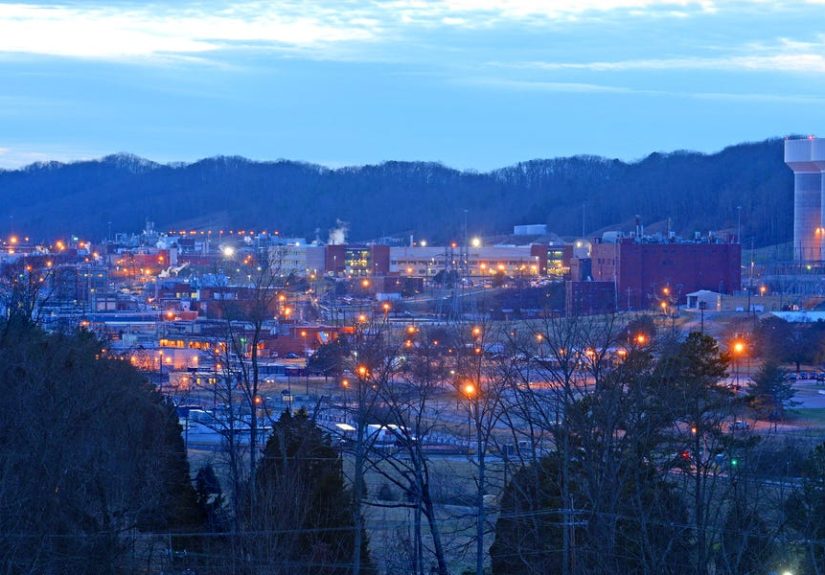
Public reporting based on statements from Y-12 and the National Nuclear Security Administration (NNSA) said a fire broke out shortly after 9 a.m. inside Building 9212, a production building where uranium is processed. Roughly 200 employees were evacuated from the building, and some adjacent areas were also cleared as a precaution. Officials emphasized that the building’s air monitors did not alarm, a key point used to support the conclusion that there was no release of radioactive material impacting the public.
In other words: the event was serious enough to activate emergency protocols, but the publicly reported outcome was controlledno injuries, no offsite impact, and operations returning to normal after the response.
A quick timeline (as reported)
- ~9:14–9:15 a.m.: Fire starts in a hood or other controlled work area inside Building 9212.
- Immediately after: Emergency response activates; personnel in affected areas evacuate and/or shelter in place according to procedure.
- Late morning / afternoon: Officials report the fire is contained, all personnel are accounted for, and monitoring indicates no offsite impact.
- Weeks later: Follow-up reporting describes the likely mechanism as uranium metal “chips” undergoing rapid oxidation, a known hazard when fine uranium material heats up and meets oxygen.
That covers the “what.” The “why it matters” is where the story gets interestingbecause uranium fires aren’t like warehouse fires, kitchen fires, or even your neighbor’s “I swear the grill was off” fires.
Why a “uranium fire” sounds apocalyptic (and usually isn’t)
Let’s reset the mental image. Uranium is both chemically hazardous and radiologically hazardous, but the risk depends heavily on the uranium’s form (metal, powder, compound, solution), its containment (hood, glovebox, sealed system), and what exposure pathways exist (smoke, dust, surfaces, airflow).
Uranium isn’t gasoline
Most people hear “uranium” and immediately picture nuclear detonationbecause history did an excellent job branding that word. But a uranium-processing fire is typically an industrial event, not a nuclear chain reaction. The practical concerns are more down-to-earth: heat, smoke control, preventing particle spread, protecting workers, and verifying with monitoring that contamination stayed where it’s supposed to stay.
So what actually burns?
Follow-up coverage described the February 22 incident as involving uranium in a small, controlled work area (often called a hood). Later reporting said the initiating factor was uranium metal “chips,” which can heat quickly and ignite more readily than bulk material. That ignition is often described as a rapid oxidation reaction: uranium reacting with oxygen in air and releasing energy as heat and light.
If you need an analogy, think of it like this: a solid cast-iron skillet doesn’t burst into flames, but a handful of fine metal shavings can flare when conditions line up. The hazard isn’t that uranium turns into a nuclear bomb. The hazard is that a hot, reactive material can burn intensely and requires specific containment and response tactics to prevent smoke or particles from creating a wider problem.
“It was tiny” and “it was a big deal” can both be true
One of the most unintuitive parts of this story is that follow-up reporting described the burned area as extremely small, yet hundreds of people still evacuated and the site activated a major response. That’s not overreaction; it’s the logic of high-consequence work. When hazardous material is involved and the initial details are uncertain, the safest default is to assume a worse scenario until measurements and conditions prove otherwise.
How a high-hazard facility responds to a fire
At a site like Y-12, the response isn’t “someone grab an extinguisher and hope for the best.” It’s an engineered, rehearsed system layered on top of a trained emergency organization. The goal isn’t just to put out flames; it’s to keep the event from expanding into smoke spread, particle dispersion, contamination, or disruption to critical safety systems.
Evacuate vs. shelter-in-place: why both can happen
Some people near the incident evacuated, while others were directed to shelter in place. That mix can look contradictory from the outside, but it’s a common approach in complex facilities. Evacuation removes people from the immediate hazard zone. Shelter-in-place limits unnecessary movement through corridors where smoke control, access restrictions, or response traffic matters. In short: “move” and “don’t move” can both be correct depending on where you are relative to the hazard.
Air monitors and what “no offsite impact” really means
When officials say air monitors did not alarm, they’re pointing to detection systems designed to flag abnormal conditions. That doesn’t mean “nothing happened.” It means the event did not cross the thresholds those systems are built to catch. Pair that with the reported lack of injuries and contamination, and the public takeaway is that the safety layers did what they’re intended to do: contain the hazard and verify that it stayed contained.
The bigger picture: Building 9212 is old, and the replacement is taking time
Here’s where the story stops being only about one morning in 2023 and becomes a broader infrastructure lesson. Building 9212 is a World War II–era facility (completed in 1945) that has been updated over decades, but it still reflects older layouts and legacy systems. In 2025, the Government Accountability Office (GAO) noted that NNSA expects the new Uranium Processing Facility (UPF) to be fully operational in 2034. That schedule means legacy facilities like Building 9212 must remain in service longer than earlier plans envisioned.
Why that matters for “normal” industrial events
Any industrial site can have a fire. But as buildings age, you manage more variables at once: older equipment, aging utilities, legacy ventilation configurations, and the constant challenge of maintaining safety margins while performing mission-critical work. The GAO has urged NNSA to maintain a comprehensive plan for safely operating Building 9212 until new capacity is readybecause delays don’t eliminate the mission; they extend the time the older infrastructure must carry it.
Modernization isn’t a single ribbon-cutting
It’s easy to imagine UPF as one giant building that magically solves all problems. In reality, modernization is a long chain: new process-support structures, upgraded utilities, new emergency response capacity, demolition of outdated facilities, and ongoing work to maintain public warning systems. Public updates from Y-12 in recent years have covered preventive maintenance on public warning sirens and large-scale demolition projects tied to the site’s modernization.
What the 2023 Y-12 uranium fire teaches about risk communication
Incidents at secure nuclear sites will always have information limits. Still, the 2023 fire illustrates a few principles that apply to any high-stakes industrial environment.
1) “Contained” isn’t a vibeit’s a technical outcome
Containment means the event stayed within engineered boundaries and operational controls. In this case, public reporting consistently emphasized no offsite impact and monitoring that did not indicate a radiological release. That’s the difference between “a bad day inside the fence line” and “a community-wide emergency.”
2) Small events can justify large responses
Evacuating hundreds of people for a fire that later appears small is not dramait’s caution. Early in an incident, responders don’t get to assume it’s small; they have to prove it’s small. In high-hazard work, the safest early response is intentionally conservative, because the consequences of being wrong are high.
3) Headlines can be accurate and still create the wrong mental picture
“Uranium fire” is accurate. It also tempts the public to imagine runaway nuclear reactions. The most helpful communication closes that gap: explain the form of material involved, the controls in place, what the monitors showed, and what “no offsite impact” actually means in everyday terms.
FAQ: quick answers people asked in 2023 (and still ask now)
Was there a radioactive release?
Officials said air monitors did not alarm, and multiple reports described no offsite impact. Based on publicly available reporting, the incident did not result in a release affecting the surrounding community.
Were people hurt?
Public reporting said there were no injuries and no contamination impacts reported.
What caused it?
Initial reports said the cause was under investigation. Follow-up reporting later described uranium metal chips and rapid oxidation as the likely mechanismessentially a known hazard of fine uranium material when conditions allow it to heat up and react with oxygen.
Does this mean Y-12 is unsafe?
A fire does not automatically equal “unsafe.” It means a hazard occurred and the safety system had to perform. The key questions are whether the event was contained, whether protective actions worked, whether monitoring supported the public safety claims, and whether the site learned from the event. The public record for this incident points to a controlled outcome: rapid response, no offsite impact, and follow-up information on the cause.
Conclusion: scary words, controlled outcome, bigger lessons
The February 22, 2023 uranium-related fire at Y-12 is a reminder that high-hazard work can produce high-anxiety headlineseven when the underlying event is contained quickly and monitored closely. It also highlights a deeper challenge: safely operating legacy infrastructure while large modernization projects stretch across decades. For Oak Ridge and the broader nuclear security enterprise, the lasting story is less about drama and more about discipline: engineering controls, emergency response readiness, real-time monitoring, and continuous improvement.
Experiences: what it feels like when “uranium fire” hits your world
Note: The vignettes below are composite, experience-based scenarios drawn from common patterns in emergency communications and community response around major industrial sites. They’re meant to capture what people often experience during events like thisnot to claim any single person’s exact story.
1) The nearby resident: the siren you don’t want to hear
If you live near Oak Ridge, you learn two parallel skills: ignoring routine noise and paying attention to unusual signals. On an ordinary morning, the first clue isn’t a plume in the skyit’s your phone buzzing with a local alert that uses the phrase “major response.” Then comes the internal debate: Do I refresh the feed or do I make coffee first? (Answer: both, but coffee wins by a narrow margin.)
Next comes uncertainty. The words “Y-12” and “uranium” carry historical weight in East Tennessee. Even if you know intellectually that most incidents are contained, your nervous system doesn’t care about your intellectual résumé. You text a friend who works in Oak Ridge. You call a family member who lives closer to the perimeter. You check the wind direction like the wind is about to politely explain itself.
When officials say “no offsite impact,” it lands like a deep exhale. People still want detailswhat started it, what burned, what’s nextbut the immediate fear shifts into something calmer: watchful curiosity. By evening, the dinner-table conversation isn’t “Are we in danger?” so much as “What does ‘in a hood’ actually mean?”
2) The worker: drills turning into real life
For employees, the experience is less cinematic and more procedural. You’re doing your job, and suddenly the routine changes. An alarm triggers, a supervisor gives direction, and the training you half-joked about last month becomes the only thing that matters. There’s a strange comfort in that: the steps are known. You follow the route. You check in. You wait for accountability to complete.
In the staging area, time stretches. People trade tiny pieces of information in the way humans do when they’re trying to reduce uncertainty: “I heard it was in 9212,” “I saw emergency vehicles,” “They told us to stay put.” Nobody is writing poetry; everyone is watching the people with radios. When the all-clear comes, relief doesn’t look like cheering. It looks like a quiet return to normaland later, a sober debrief about what worked, what surprised people, and what procedures should be tightened the next time an alarm interrupts the day.
3) The responder: a different playbook when special materials are involved
Firefighters and hazmat teams train for “ordinary” fires and “special” fires. Uranium is a special firenot because it’s magical, but because it changes the tactics. You’re thinking about heat, oxygen, containment, and the risk of spreading particles. You’re thinking about the building: ventilation pathways, access control, and where the incident sits relative to other operations that may have their own hazards.
The adrenaline is real, but so is the discipline. Information comes in fragments, decisions get updated as measurements come in, and the response stays methodical. When it’s donewhen monitoring looks clean, the scene is stable, and the hazard is truly containedthe feeling isn’t triumph. It’s more like: Good. That’s what the system is supposed to do.
4) The community after the event: “So… what now?”
After the immediate news cycle fades, the longer experience is about trust. People remember whether updates were timely, whether agencies coordinated, whether officials explained what “no offsite impact” actually means, and whether follow-up questions were taken seriously. Over time, communities near high-consequence facilities develop a pragmatic literacy: they learn the difference between an incident, an emergency response, and a broader public hazard.
And then life continues. Kids go to school. Work shifts rotate. The facility keeps operating. Modernization projects keep grinding forward. But the next time a headline uses “uranium” and “fire” in the same sentence, the community doesn’t start from zerothey start from lived experience: calm enough to ask better questions, and alert enough to listen closely to the answers.