Table of Contents >> Show >> Hide
- What Is Kryptos, Exactly?
- Why Kryptos Became the Puzzle That Wouldn’t Die
- The Final Clues Change the Story
- So Has Kryptos Actually Been Solved?
- Why the Mystery Still Matters
- K5 Means the Ending Is Probably Not the Ending
- What the 35-Year Chase Reveals About Us
- The Experience of Living With a 35-Year Puzzle
- Conclusion
- SEO Tags
There are ordinary puzzles, and then there are the kind that quietly move into the attic of the public imagination, drag up a folding chair, and refuse to leave. Kryptos is one of those. Installed at CIA headquarters in 1990, the copper-and-stone sculpture by artist Jim Sanborn has spent more than three decades taunting cryptographers, hobbyists, intelligence professionals, and the occasional insomniac with a taste for impossible riddles.
For years, the story of Kryptos sounded almost too perfect to be real: a sculpture full of encrypted messages sitting outside the CIA, three sections cracked, one final section stubbornly resisting every attempt to decode it. It had all the right ingredientssecret writing, government mystique, elegant design, and enough frustration to fuel a thousand conspiracy-thread comment sections. But recently, the mystery changed shape. We now have the strongest clues yet about what the final passage is connected to, what themes it draws on, and why the last piece of Kryptos may be more than a cipher. It may be the artist’s final statement on secrecy itself.
And that is what makes this story so irresistible. Kryptos is not just a puzzle. It is a puzzle about hidden knowledge, about the power of messages, and about the weirdly human truth that even the toughest code can be threatened by the oldest weakness in history: paperwork.
What Is Kryptos, Exactly?
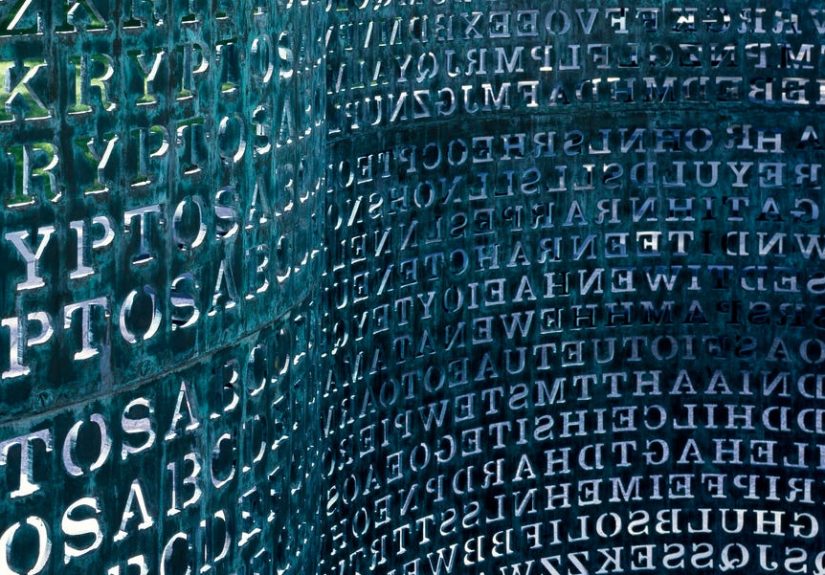
Kryptos is a large sculptural installation created by Jim Sanborn for the CIA’s headquarters in Langley, Virginia. It combines a curved copper screen, stone, water, wood, and other materials into a work that feels part monument, part message, part dare. The name comes from the Greek word for “hidden,” which is not exactly subtle, but to be fair, subtlety was never the point. The point was mystery.
Sanborn did not build the piece as a decorative oddity. He designed it as a layered meditation on intelligence, secrecy, the movement of information, and the way meaning can be concealed in plain sight. To build the coded elements, he worked with retired CIA cryptographer Ed Scheidt. The result was a work of public art that behaves like a locked box.
The sculpture contains four encrypted sections, commonly called K1, K2, K3, and K4. The first three were solved in the 1990s by different codebreakers, including a CIA analyst, a computer scientist, and an NSA team. But the fourth section, K4, remained the nightmare sequencethe final boss battle of art-meets-cryptography. It is only 97 characters long, begins with the letters “OBKR,” and has resisted decades of intense scrutiny.
Why Kryptos Became the Puzzle That Wouldn’t Die
Part of the reason Kryptos became legendary is simple: it lives at the CIA. If the same code had been tucked into a sculpture outside a suburban fountain next to a frozen yogurt shop, it probably would not have inspired decades of obsession. Location matters. A mysterious code at an intelligence agency feels less like decoration and more like a wink.
But location alone does not explain the endurance of the mystery. Kryptos also survived because the first three passages rewarded attention without exhausting the larger story. They showed that the sculpture was solvable, but they did not make it simple. K1 and K2 used variants of the Vigenère cipher, while K3 used transposition. In other words, the puzzle was hard enough to feel serious and solvable enough to keep hope alive. That is the perfect recipe for obsession.
The decoded early passages helped deepen the legend. They touched on themes of shadow, hidden truth, buried location, and historical discovery. One section points toward geographic coordinates near the CIA grounds. Another echoes the tone of Howard Carter opening Tutankhamun’s tomb, that immortal moment of discovery in which history itself seemed to inhale. The first three passages did not merely reveal answers. They suggested that the sculpture was building a narrative about concealment and revelation.
The first three sections were clues, not just victories
This matters because Jim Sanborn has long maintained that the early sections contain hints relevant to K4. That means the solved parts of Kryptos are not just a prelude; they are the instruction manual, or at least a very rude version of one. The message is effectively: congratulations, you opened the first three doors, now use what you learned and stop asking me for more help every five minutes.
And people did keep asking. A lot. Over the years, Kryptos became a magnet for amateur and professional solvers who sent theories, partial decryptions, and full-blown confidence-fueled declarations to Sanborn. The attention became so relentless that he reportedly began charging a fee for submissions. When a puzzle drives that level of fixation, it stops being a static artwork and starts becoming a living cultural event.
The Final Clues Change the Story
The phrase “final clues” is not just headline glitter here. Sanborn really did release a new set of clues in 2025, and they were substantial. Earlier hints had already established that parts of K4 decode to “BERLIN,” “CLOCK,” and “NORTHEAST.” Those clues alone were enough to keep puzzle forums buzzing like caffeinated beehives. But the newer clues pushed the interpretation much further.
Sanborn explained that two real-world events mattered while he was writing the plaintext for Kryptos in 1988: his second trip to Egypt in late 1986 and the fall of the Berlin Wall. He also clarified that the “Berlin Clock” referenced in K4 is the World Clock in Berlin, a public landmark associated with crowds who gathered during the wall’s collapse. Then came the most thematic clue of all: the codes of Kryptos, from the Morse code at the beginning through K5, are about delivering a message.
That single statement reframes everything. Kryptos is not just about hiding. It is about transmission. It is about what it means to send information, protect it, misdirect it, and eventually reveal it. Suddenly, the sculpture looks less like a cold technical exercise and more like a philosophical machine built out of copper, history, and nerve.
Berlin is not random scenery
The Berlin connection matters because Berlin is one of the defining cities of the 20th century when it comes to secrecy, surveillance, espionage, division, and the public collapse of hidden systems. The fall of the Berlin Wall was not just a geopolitical event. It was the visible failure of enforced separation. It was history turning secrecy inside out in public.
So when K4 points toward Berlin and a specific clock in Berlin, the clue is doing more than naming a place. It appears to be pointing toward a symbolic geography: time, division, public assembly, and a message carried across a broken barrier. That does not magically solve the cipher, but it does tell us the answer likely lives at the intersection of history and communication.
Egypt adds another layer of buried meaning
Egypt is equally rich as a clue. It evokes archaeology, ancient writing, hidden chambers, and the romance of discovery. It also connects naturally to the earlier Kryptos sections, especially the passage linked to Howard Carter and the opening of Tutankhamun’s tomb. If Berlin represents political history and public revelation, Egypt represents deep time, buried knowledge, and messages preserved across centuries.
Taken together, the Berlin and Egypt clues suggest that K4 may not be one neat answer but the culmination of the sculpture’s full symbolic vocabulary. Inference is required here, of course, but it is a grounded one: Kryptos seems increasingly like a carefully staged conversation between intelligence work, archaeology, public memory, and the long human habit of hiding meaning where someone else will one day dig for it.
So Has Kryptos Actually Been Solved?
This is where the story gets deliciously messy. In 2025, two researchers found K4’s plaintext in materials at the Smithsonian’s Archives of American Art. In other words, they discovered the decrypted text through archival investigation rather than by mathematically breaking the cipher in the traditional sense. Sanborn acknowledged the plaintext was authentic, but he also argued that K4 had not truly been “solved” because the decryption method was not publicly derived from the ciphertext itself.
And honestly, he has a point. In cryptography, method matters. Finding a secret written down somewhere is not the same thing as cracking the system. If you guess your friend’s password because they wrote it on a sticky note, you did access the account, but you did not suddenly become a cryptographic legend. You became a witness to very human security flaws.
That distinction is one of the reasons Kryptos remains fascinating even after the archival discovery. The public still does not have the full plaintext. The public also does not have the complete encoding method behind K4. And since the solution archive was auctioned, the aura of secrecy has not disappeared. If anything, it has become even stranger: this is now a puzzle that is simultaneously known, unknown, and artistically unfinished.
Why the Mystery Still Matters
At first glance, Kryptos can look like a niche fascination for puzzle nerds and cipher hobbyists. But that undersells it. The sculpture matters because it sits at the crossroads of multiple American obsessions: intelligence, art, hidden history, technology, archives, and the fantasy that one brilliant insight can suddenly reorder a mystery decades in the making.
It also captures a truth about modern security that feels almost painfully contemporary. For decades, top-tier minds attacked K4 directly. Then the plaintext surfaced because it had been accidentally tucked into archival material. That is not a failure of mathematics. It is a failure of process. And if that sounds familiar in the age of leaks, misconfigurations, accidental disclosures, and “whoops, that file was public,” that is because Kryptos now reads like a metaphor for the information age.
The sculpture also illustrates the difference between data and meaning. Even if someone hands you a decrypted sentence, you may still not understand its significance. Sanborn has always suggested that Kryptos contains a riddle inside a riddle. That is why the work keeps breathing. It is not just a locked message; it is a locked interpretation.
K5 Means the Ending Is Probably Not the Ending
Just when the story threatened to become tidy, Sanborn complicated it again by confirming K5. According to his 2025 remarks, K5 will have a more global reach, will be publicly accessible, and will echo structural elements from K4. That means the long-running Kryptos mystery is not simply winding down. It may be mutating.
This is a clever move artistically. A lot of great puzzles die the moment they are fully explained. Once the rabbit comes out of the hat, the room changes. By tying K4 to K5, Sanborn preserves the idea that the real subject of Kryptos is not merely a hidden sentence but the continuing human act of seeking, decoding, and transmitting meaning. The puzzle is not just the object. The puzzle is the relationship between the object and the people who cannot stop circling it.
So yes, there are final clues. But Kryptos, being Kryptos, seems determined to treat the phrase “final clues” the way a magician treats the phrase “last trick.”
What the 35-Year Chase Reveals About Us
The long life of Kryptos tells us something uncomfortably flattering about ourselves: we love the idea that there is still something out there worth not knowing yet. In a culture addicted to instant answers, the sculpture has offered stubborn resistance. It has made smart people wait. It has made confident people doubt themselves. It has made experts and amateurs sit at the same table and squint at the same letters.
That is rare. Most modern mysteries are flattened quickly by search engines, leaked documents, or crowdsourced analysis. Kryptos held on. It became a kind of secular shrine for curiosity. Not because the answer promised treasure or national security relevance, but because the act of trying was meaningful in itself.
And maybe that is the quiet genius of the whole thing. Sanborn made a puzzle about intelligence, but he also made a puzzle about patience. In the end, Kryptos is not merely asking, “Can you decode this?” It is also asking, “What kind of person do you become when you keep trying?”
The Experience of Living With a 35-Year Puzzle
To understand why Kryptos has lasted so long, you have to think beyond the code itself and into the experience of chasing it. An unsolved puzzle of this scale does something unusual to the people around it. It creates a strange emotional weather system. There is curiosity at the beginning, then confidence, then irritation, then obsession, then a kind of grudging affection. Somewhere along the way, the puzzle stops being a problem and starts becoming a companion.
For many solvers, the experience begins innocently enough. You read a short article, see a picture of the sculpture, learn that three sections have been cracked and one has not, and your brain immediately decides that you might be the special exception to history. This is a classic human move. We see three decades of failure and think, “Yes, but perhaps those people did not have my spreadsheet.” It is adorable. It is also how a lot of puzzle addictions begin.
Then comes the second stage: immersion. You start reading about Vigenère ciphers, transposition methods, clue positions, Berlin landmarks, and Sanborn’s old comments. You begin to notice that Kryptos is not just difficult; it is theatrical. Every clue seems to open another door instead of closing one. A word like “Berlin” is not a finish line. It is a trapdoor into history, geography, symbolism, and artistic intent. That creates a very particular experience for the solver: the sense that you are not simply decoding text, but wandering through a maze designed by someone who enjoys watching people carry flashlights.
There is also the communal side of the experience. Few people solve big mysteries entirely alone, and even those who try end up in conversation with a wider world of theories, archives, arguments, and corrections. Kryptos has inspired communities precisely because it rewards collective thinking. One person spots a linguistic pattern. Another knows Cold War history. Another recognizes a reference to clocks, coordinates, or Egypt. The puzzle becomes social, even when the people involved are staring at screens in different states while drinking coffee that has gone cold.
Frustration, of course, is part of the package. A 35-year puzzle is not charming every day. There are stretches where it just feels rude. You revisit the same characters. You build a theory that sounds brilliant at 1:12 a.m. and embarrassingly fragile at 8:40 a.m. The code refuses to care about your optimism. Yet that resistance is exactly what keeps the experience meaningful. Easy puzzles flatter you. Enduring puzzles change you. They teach humility, patience, and the deeply humbling skill of saying, “I may be wrong, but this is interesting anyway.”
And then there is the emotional twist that makes Kryptos more than a brain teaser: the puzzle reflects back a bigger human story. Secrecy, memory, archives, lost papers, historical trauma, public monuments, private meaningsthese are not abstract ideas. They are the texture of real life. That is why the experience of following Kryptos can feel so oddly personal. The sculpture is about hidden messages, yes, but so is every family archive, every state record, every buried letter, every box in an attic that turns out to contain the one sentence that changes everything.
In that sense, the experience of living with Kryptos is not only about solving. It is about staying in conversation with mystery long enough to realize that mystery has a personality. It can frustrate you, inspire you, embarrass you, and keep you company. Very few works of art pull that off. Kryptos did. For 35 years, it has asked people to think harder, look deeper, and accept that the last clue is sometimes not an ending at all. Sometimes it is an invitation to keep going.
Conclusion
Kryptos remains one of the most compelling unsolved puzzle stories in America because it refuses to fit into a single category. It is art, code, history, theater, obsession, and now archival drama. The final clues released by Jim Sanborn do not hand the public a tidy answer wrapped in a bow. They do something more interesting: they reveal the deeper architecture of the mystery.
Berlin. Egypt. Delivery of a message. A public clock. A hidden method. A future K5. The picture is sharper now, even if it is not fully complete. And that may be the most Kryptos outcome possible. After 35 years, the puzzle is still teaching us that information is never just about what is hidden. It is also about who holds it, how it travels, what it costs to keep, and why we keep chasing it anyway.
Some mysteries end with a bang. Kryptos prefers a smirk.