Table of Contents >> Show >> Hide
- What Exactly Are the Male and Female Symbols?
- Before Biology: The Symbols Were Cosmic Shortcuts
- Alchemy Joins the Group Chat: Metals, Not Gender
- So Where Did the Shapes Come From? Two Origin Stories
- The Big Career Change: How the Symbols Became “Male” and “Female”
- From Textbooks to Everyday Life: Why These Icons Took Over
- A Quick, Useful Distinction: Sex, Gender, and Symbol Shortcuts
- Fun Examples of Where You’ll Spot ♂ and ♀ Today
- of Real-Life “Experience” With These Symbols
- Conclusion: Small Symbols, Wild History
You’ve seen them everywhere: on biology worksheets, medical forms, dating apps, bathroom doors, and that one
chart your teacher swore you’d “use in real life someday.” The male symbol (♂) and the female symbol (♀)
feel so basic that it’s easy to assume they were invented specifically for “male” and “female.”
Plot twist: they weren’t. These icons started out with a totally different job descriptionone that involved
planets, gods, metals, and a surprising amount of scribbling by scientists who were trying to save space in
their notes. In other words, the origin story is less “modern design committee” and more “ancient symbol
crossover episode.”
What Exactly Are the Male and Female Symbols?
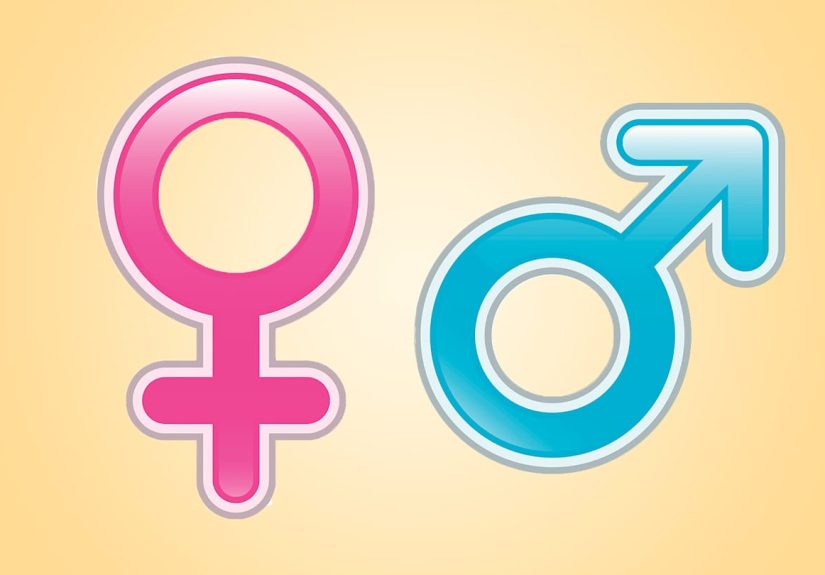
In their modern, everyday use:
- ♂ typically indicates male.
- ♀ typically indicates female.
But historically, these were planetary symbols: ♂ represented Mars and ♀ represented
Venus. Their “gender” meaning came later, like a celebrity who starts as a musician and then
becomes a movie star and then somehow launches a skincare line.
Before Biology: The Symbols Were Cosmic Shortcuts
Long before the symbols showed up next to “Sex: ___” on a form, they lived in the worlds of
astronomy and astrologyfields that needed quick, recognizable marks for celestial bodies.
Instead of writing “Mars” and “Venus” repeatedly, scholars used compact glyphs.
Mars and Venus: Mythology Made the Planets Personal
Mars and Venus weren’t just bright dots in the sky; they were named for major Roman deities.
Mars was associated with war and aggression, while Venus was associated with love, beauty, and fertility.
That mythic “personality branding” helped the symbols become sticky and memorable.
Even today, the associations linger in language. We still use “martial” to mean “related to war,” and
“Venus” still pops up as shorthand for romance and beauty. The symbols are basically ancient nicknames
that survived into the emoji age.
Alchemy Joins the Group Chat: Metals, Not Gender
Here’s where it gets delightfully weird: those same planetary symbols also became
alchemical symbols. In alchemy (the historical predecessor to modern chemistry), the “classical planets”
were linked to the metals known at the time. So the symbols weren’t only about the skythey were about
the stuff you could hold, melt, hammer, and accidentally poison yourself with.
Why Mars = Iron and Venus = Copper
In traditional alchemical and astrological correspondences:
- Mars (♂) was tied to ironhard, weapon-ready, and very on-brand for a war god.
- Venus (♀) was tied to copperassociated with beauty, shine, and (later) mirrors and adornment.
So if you were an alchemist jotting down a recipe for a “martial” compound, you might use ♂ the same way
a modern chemist writes Fe. These glyphs were practical shorthandless “identity label” and more “lab notes
before lab safety posters existed.”
So Where Did the Shapes Come From? Two Origin Stories
The shapes look simple, but their exact visual origins have more than one explanation. Think of it as a
historical “choose your favorite theory” momentexcept both theories can be useful, depending on what you’re
trying to explain.
The Popular Explanation: Spear, Shield, and a Hand Mirror
One widely repeated interpretation says:
- ♂ (Mars) resembles a shield with a speara compact symbol for a war deity.
- ♀ (Venus) resembles a hand mirrora classic attribute of Venus as a goddess of beauty.
This explanation is easy to remember, visually satisfying, and frankly has the storytelling advantage of
sounding like a myth you’d hear in a museum gift shop (said affectionately).
The Scholarly Explanation: Greek Letter Contractions
A more scholarly argument suggests the symbols developed from abbreviations or contractions of Greek names
for the planets/deities, gradually stylized over centuries into the forms we recognize today. In this view,
the “mirror” and “shield/spear” ideas are later interpretationsmemorable, yes, but not necessarily the true
origin of the glyph shapes.
The important point for readers: the symbols are old, and their forms likely evolved through repeated
copying, abbreviation habits, and shifting writing styles. Ancient symbol history is often less like a single
invention and more like a long game of telephoneexcept the telephone is a quill pen and the stakes are “can
people still read this 400 years later?”
The Big Career Change: How the Symbols Became “Male” and “Female”
The real turning pointthe moment ♂ and ♀ started meaning “male” and “female” in sciencecame in the
18th century. Enter Carl Linnaeus, the Swedish botanist whose classification system basically
reshaped how biology organizes life.
Linnaeus: The Original “Let’s Save Space” Innovator
Linnaeus used the planetary symbols in his scientific work to mark sex in plants and reproductive roles.
He also used other celestial/alchemical symbols (including Mercury) in botanical contexts. One reason was
brilliantly practical: symbols are compact. They save space in notes, tables, and diagramsand scientists
love anything that makes a chart less crowded.
Once the symbols proved convenient in botany, they spread. Over time, ♂ and ♀ became standard shorthand
across biology, medicine, and later popular culture. What began as “Mars” and “Venus” became “male” and
“female”not because the universe issued a memo, but because people kept copying what worked.
From Textbooks to Everyday Life: Why These Icons Took Over
Plenty of symbols exist, but not many become universal. ♂ and ♀ won the cultural Olympics for a few reasons:
- They’re simple: circle + arrow, circle + cross. Easy to draw, even badly.
- They’re distinctive: you won’t confuse them with a math operator (usually).
- They arrived with scientific credibility: once used in biology/medicine, they felt “official.”
- They carry a story: Mars and Venus are memorable characters, not random labels.
And then modern life did what modern life does: it copy-pasted them onto everything.
They show up in data visualizations, social media bios, product labeling, and signage.
Even when people don’t know the origin, the shapes signal meaning quicklyexactly what symbols are supposed to do.
A Quick, Useful Distinction: Sex, Gender, and Symbol Shortcuts
In scientific and medical contexts, ♂ and ♀ are often used as shorthand for biological sex.
In everyday culture, people also use them to imply gender. Those aren’t always the same thing, and
real human identity is more complex than two pictograms.
That complexity is one reason modern design sometimes adds new symbols (like combined signs or additional
markers). Still, the classic ♂ and ♀ remain culturally dominant because they’re old, familiar, and instantly recognized.
Fun Examples of Where You’ll Spot ♂ and ♀ Today
If you want to turn your next week into a scavenger hunt, watch for these symbols in:
- Biology diagrams (plants, insects, mammalseverybody gets a label).
- Medical charts (patient records and lab forms still love compact notation).
- Genealogy and family trees (simple, quick markers in pedigree charts).
- Jewelry and fashion (because symbols with mythic backstories are basically accessories waiting to happen).
- Pop culture jokes (“Men are from Mars…” never truly left the chat).
And yes, sometimes people mix them upoccasionally in very public wayswhich only proves how widely recognized
they are. A symbol you can’t accidentally use wrong is not a symbol that’s gotten famous enough.
of Real-Life “Experience” With These Symbols
Once you learn that ♂ and ♀ started as planet symbols, it’s hard not to see them differently in everyday life.
You stop thinking, “Oh, that’s the male icon,” and start thinking, “That’s Mars doing side quests.”
And honestly, it makes the world a little more entertaining.
Take the classic school experience: you’re handed a biology worksheet with a bunch of circles, arrows, and crosses.
At first it feels like a secret codelike your teacher joined an ancient guild and decided your homework needed
more mysticism. Then you realize the symbols are just shorthand, meant to keep diagrams readable. Still, it’s funny
that a symbol once used by astronomers and alchemists ends up next to a drawing of a frog.
“Behold,” says history, “I contain multitudes.”
Or think about medical forms. You’re standing at a clinic reception desk, holding a clipboard, and there it is:
a tiny ♂ or ♀ box, printed in the corner like it’s no big deal. But now you know you’re looking at a symbol with a
resume that includes: planet, god, metal, botany, zoology, and modern administration. That’s not just a checkbox.
That’s a 2,000-year-old graphic design survivor doing paperwork.
The most relatable moment might be signageespecially anywhere you’re tired and just trying to find the right door.
You’re not in the mood for philosophy; you want clarity. Symbols deliver, because your brain processes them faster
than words. And yet, once you know their origin, you can’t un-know it. The arrow isn’t just “male,” it’s Mars’s
energy: movement, direction, outward motion. The cross isn’t just “female,” it’s Venus’s heritage: the planet that
inspired poets, astrologers, and chemists long before it inspired bathroom icons.
Even online, these symbols have a second life. They show up in bios, filters, charts, and emojis because they’re
compact and internationally legible. But digital life also makes their limits obviouspeople don’t always fit neatly
into two buckets, and symbols that feel “universal” can still be blunt tools. That’s why you’ll sometimes see new,
combined, or alternative symbols used alongside (or instead of) ♂ and ♀. It’s culture updating its icon set in real time.
The best “experience” you can have with these symbols is noticing how they connect worlds that usually don’t sit at
the same table: mythology and science, astrology and medicine, ancient scribbles and modern UX. Once you spot that,
the symbols stop being boring. They become tiny time machinesproof that a simple shape can carry a ridiculously long story.
Conclusion: Small Symbols, Wild History
The male and female symbols look like simple doodles, but they’re the result of centuries of human storytelling and
practical problem-solving. They began as signs for Mars and Venus, traveled through alchemy as shorthand for iron and
copper, then got repurposed by scienceespecially after Linnaeus popularized them in biological notation.
So the next time you see ♂ or ♀, you’re not just looking at “male” or “female.” You’re looking at a compact artifact
of how humans connect the sky to the lab, the myth to the memo, and the planet to the clipboard.