Table of Contents >> Show >> Hide
- What “Nests of Creatives” Really Means (And Why It Works)
- The Creative Nest Formula: Comfort + Friction (In the Right Places)
- Steal These “Nesting” Details from Real Creative Homes
- Small-Space Creative Nesting: A Mini Playbook
- Personal Style Without the “Perfect Home” Pressure
- How to Build Your Own “Nests of Creatives” Checklist
- Experiences from Creative Nests ()
- Conclusion: Build a Nest, Not a Showroom
There are homes that look good on camera, and there are homes that do something to you. You walk in and your shoulders drop.
Your brain stops doom-scrolling for dopamine and starts quietly whispering, “What if we finally finished that novel / painting / playlist / sourdough starter?”
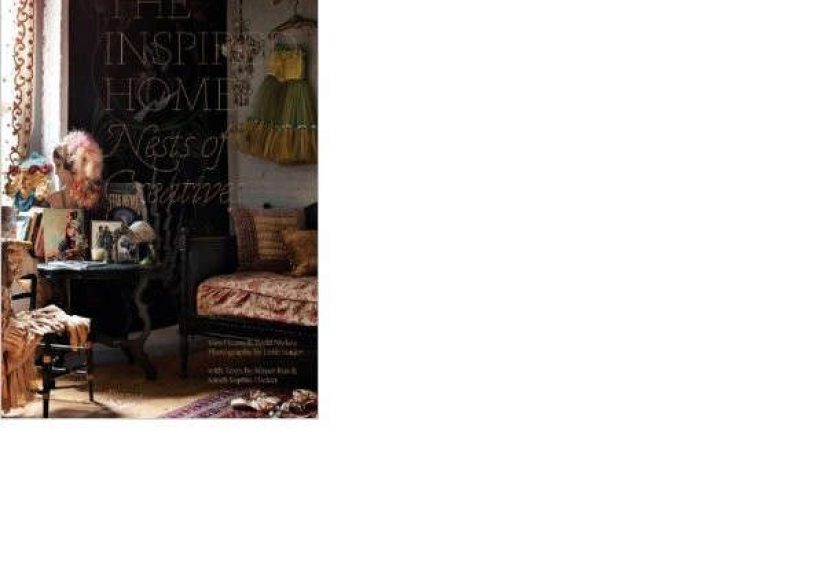
That’s the promise behind The Inspired Home: Nests of Creatives: not a single “right” style, but a collection of lived-in spaces where creativity has a place to land.
The core idea is simple: a house is where you store your stuff; a home is where you store your self. And for creative people, “self”
includes unfinished sketches, reference books, thrifted ceramics, fabric swatches, cords of mysterious origin, and at least one chair that exists solely
to hold “clothes that are not dirty enough to wash but not clean enough to fold.” (That chair is basically a roommate at this point.)
What “Nests of Creatives” Really Means (And Why It Works)
Nests of Creatives is a helpful phrase because it doesn’t demand perfection. A nest is functional. It protects, comforts, and supports daily rituals.
The book approachprofiling a range of creative homes rather than pushing one decorating aesthetichighlights an important truth:
inspiration comes from environments that feel personal, not performative.
One of the smartest moves is how the collection frames homes like “nest types,” using playful bird references as a way to categorize different approaches to
living. That’s more than a cute organizing trick. It gives you permission to stop trying to decorate like someone else’s Pinterest board and start designing
for your actual habits: how you wake up, where you dump your bag, what you reach for when you’re stuck, and how you reset your space when life gets noisy.
The Creative Nest Formula: Comfort + Friction (In the Right Places)
The best creative homes tend to balance two forces:
- Comfort: the space feels safe enough to experiment (soft textures, warm lighting, familiar objects, a sense of ease).
- Productive friction: the space gently nudges you to make things (tools visible, projects accessible, surfaces ready to use).
Too much comfort and you’ll nap forever. Too much friction and you’ll avoid the room like it’s a gym membership with judgmental lighting.
A creative nest gets the mix right: it’s welcoming, but it also makes the next step easy.
Rule #1: Design Around Light Like It’s a Daily Ingredient
If creativity had a favorite snack, it would be good lighting. Natural light makes spaces feel alive, and many creatives instinctively gravitate toward windows:
desks near daylight, work tables angled toward the brightest wall, reading chairs placed where afternoon sun hits like a free therapy session.
When natural light isn’t possible, the goal becomes consistent, flattering illuminationenough to reduce eye strain and make the room feel usable at night.
Try this: stand in your home at three timesmorning, late afternoon, eveningand notice where you naturally want to sit. That’s your “creative gravity.”
Put your most common creative activity there: journaling, sketching, editing photos, practicing guitar, planning content, whatever you do most.
Rule #2: Make Zones by Activity, Not by Room Labels
Creative people rarely do one thing at a time. You research, then you sketch, then you pace, then you pin references, then you make tea, then you return to
the project with new eyes. The most useful homes reflect that workflow by creating activity zoneseven in small spaces.
In a studio apartment or multipurpose room, zones can be subtle:
- A “thinking perch”: a chair + small table + lamp (for reading, ideation, and strategic staring).
- A “making surface”: a table that can take a little mess (writing, sewing, collage, packaging orders).
- A “reset station”: hooks, trays, and bins near the entry so clutter doesn’t migrate like it pays rent.
- A “show-and-tell wall”: art, mood boards, works-in-progress, and rotating inspiration.
If your home is small, borrow the classic small-space moves: bookcases as dividers, curtains that hide a bed or a work corner, and rugs that visually “claim”
separate areas without building a single wall.
Rule #3: Hide the Ugly, Display the Soul
Creative nests aren’t minimalist by defaultthey’re edited. The trick is choosing what deserves visual attention.
A home that sparks ideas usually does two things at once:
- Hides visual noise: cords, piles, packaging, duplicates, random paper stacks.
- Highlights meaning: objects with storytravel finds, inherited pieces, your own work, tools you actually use.
Think of it like a gallery wall: the impact isn’t from buying everything at once, but from collecting over time and letting your history show.
That’s why creative homes often feel warm even when they’re simplebecause the “decor” is a record of living.
Rule #4: Keep Tools Close, Keep Chaos Contained
A common misconception is that creative people thrive in chaos. Some dountil the chaos starts stealing attention.
Research on attention and visual processing suggests that cluttered visual fields can make it harder to focus, because your brain is constantly filtering distractions.
The goal isn’t sterile perfection; it’s controlled access.
Practical ways to do that without killing your vibe:
- Open storage for “active” supplies: baskets, clear bins, rolling carts, pegboards.
- Closed storage for “backup” supplies: cabinets, lidded boxes, drawers, labeled tubs.
- A timed “mess allowance”: one surface can be messy during a projecteverything else stays clear.
- A weekly reset ritual: 10 minutes, music on, return items to their homes. No drama.
Craft-room pros often recommend setting up zones (cutting, painting, writing, packaging), using vertical storage, and choosing containers you can see into.
It’s not about being tidy for its own sake. It’s about making it easy to start again tomorrow.
Steal These “Nesting” Details from Real Creative Homes
The most repeatable ideas from creative-home profiles aren’t expensive. They’re behavioral. Here are patterns that show up again and again in inspiring spaces:
1) The Living Room That Doubles as a Studio (Without Feeling Like an Office)
A creative living room often includes one “serious” surface: a side table that’s actually a mini desk, a dining table that can take a laptop,
or a console that holds supplies. The difference is styling and readiness.
Instead of a printer screaming in the corner, you see a beautiful tray with pens, a sketchbook, or a cameratools presented like objects worth using.
2) The Kitchen as a Creative Headquarters
Creative people don’t always separate “life” and “work.” The kitchen becomes a planning zone: morning coffee plus brainstorming,
recipe testing as an art form, or a place where you host collaborators and talk through ideas. What makes it work is easy cleanup:
smart drawer organization, a few clear containers, and surfaces that can be cleared quickly when it’s time to cook (or when you need a dramatic midnight snack).
3) The Bedroom That Protects Rest (So Creativity Doesn’t Burn Out)
A creative home isn’t a nonstop production line. Many people do better when sleep spaces stay calmerso the brain can power down.
In small homes, that might mean a screen, a curtain, or simply a rule: work tools go in a basket at night.
You’re not “quitting.” You’re closing the studio dooreven if the door is imaginary.
4) The Hallway Gallery: Micro-Inspiration in High-Traffic Spaces
Not every home has room for a dedicated studio, but almost every home has a hallway. Hallways are underrated.
A small gallery wall, a ledge shelf for rotating art, or a pinboard of references turns “dead space” into “spark space.”
Bonus: it’s a gentle reminder of what you’re working toward when you’re rushing out the door.
Small-Space Creative Nesting: A Mini Playbook
If you’re working with a studio apartment, shared space, or a home where every room must do three jobs, use these strategies:
Go Vertical (So Your Floor Can Breathe)
Vertical shelving, wall hooks, pegboards, and tall bookcases reclaim space without making your home feel like a storage unit.
The goal is “easy reach,” not “museum display.” If you can grab it with one hand, you’ll use it more.
Choose Double-Duty Furniture Like a Sneaky Genius
Look for pieces that transform: nesting tables, storage ottomans, a desk that can also be a vanity, a rolling cart that can be art supplies today
and bar cart tomorrow. The point isn’t to buy more stuffit’s to buy fewer pieces that do more.
Create Soft Boundaries
A rug can define a “work zone.” A bookcase can create a visual divider. Curtains can hide a bed or a creative mess.
You’re not building walls; you’re building clarity.
Personal Style Without the “Perfect Home” Pressure
One reason creative homes feel inspiring is that they look owned, not staged. You’ll see:
- Collected objects: vintage finds, travel pieces, weird little treasures that make you happy for no logical reason.
- Layers: textiles, books, art, plants, and lighting that makes everything feel human.
- Imperfection: patina, scratches, mismatched chairs, the occasional “I tried this color and then changed my mind.”
If you want a shortcut to authenticity, skip “matchy-matchy.” Pick a few anchor choiceslike a consistent wood tone, a repeat accent color,
or a unifying material (linen, brass, black metal)and let the rest be a little wild.
How to Build Your Own “Nests of Creatives” Checklist
Use this quick self-audit to turn inspiration into action:
Step 1: Identify Your Creative Triggers
- Do you create best in quiet or with background noise?
- Do you need visual inspiration (art on the wall) or visual calm (clear surfaces)?
- Do you start faster when supplies are visible or when they’re neatly hidden?
Step 2: Pick One “Friction Fix”
- Add a tray for daily tools.
- Move your desk near a window or upgrade a lamp.
- Create a labeled bin for “current project.”
- Install hooks by the door to stop the floor from becoming a closet.
Step 3: Curate One “Soul Signal”
Your home should tell the truth about what you love. Add one honest detail: framed work you made, a shelf of reference books,
a record collection, a photo wall, or a small display of objects that actually mean something.
Experiences from Creative Nests ()
Ask a dozen creative people what an “inspired home” feels like, and you’ll hear a surprisingly consistent theme: it’s not about the furnitureit’s about the
momentum. Many describe the first time a space truly worked as a weird little shock, like discovering a shortcut you didn’t know existed.
You sit down “just to check something,” and suddenly an hour passes because starting was effortless.
A common experience is the “threshold effect.” When your tools live in a drawer that’s too crowded, or your sketchbook is buried under a mail pile,
your brain treats the project like a hassle. But when your space has a simple, reliable setuppens in a cup, notebook in a tray, charger always in the same spot
the threshold drops. The project becomes something you can touch quickly, even if you only have 12 minutes. Over time, those small sessions stack into real progress,
and the home starts to feel like a partner instead of an obstacle.
Many creatives also talk about the emotional side of clutter. Not the normal “I have too much stuff” clutter, but the kind that carries guilt:
the unused canvas, the abandoned hobby supplies, the outfit bought for a “future me,” the stack of magazines that you swear you’ll read.
Letting go can feel like admitting defeatuntil you realize what you’re actually doing is making room for the person you are right now.
The relief is often immediate: the room feels quieter, decision-making becomes easier, and you can see your surfaces again (which is basically an invitation to create).
Another shared experience is learning to protect “rest zones.” People who work creatively at home often describe a phase where every room becomes an office,
and thenmysteriouslythey stop wanting to be in any room at all. That’s when boundaries become design: a screen that hides the work corner, a basket that swallows
supplies at night, or a small ritual of resetting the table before bed. It’s not about being strict; it’s about giving your nervous system a clear message:
this is where we push, and this is where we recover.
And then there’s the joy piecethe part that doesn’t show up on a shopping list. The inspired home experience often includes tiny, repeatable pleasures:
morning light landing on a favorite painting, a gallery wall that reminds you of trips and friendships, a chair that’s perfect for reading, a plant that makes the
corner feel alive, a shelf where your work-in-progress lives like it belongs. The funniest thing is how “small” these details can beand how powerful they feel.
A creative nest doesn’t have to be big. It has to be true. When your home reflects your tastes and supports your habits, creativity stops being a
special occasion and becomes part of daily lifelike cooking dinner, only with more glitter and fewer dishes. (Ideally.)
Conclusion: Build a Nest, Not a Showroom
The Inspired Home: Nests of Creatives is a reminder that the most magnetic homes aren’t the most expensive ones. They’re the most intentional.
They make room for tools and rest, for meaning and mess, for history and new ideas. If you want a more inspired home, don’t start with a shopping cart.
Start with your habits. Lower the friction, highlight what you love, and create one reliable place where making things is the easiest option.
That’s how a house becomes a creative nestand how a creative nest becomes a life you actually enjoy living in.