Table of Contents >> Show >> Hide
- What “Half of You Are Giving No Raises” Actually Means
- Why So Many Companies Hit Pause on Raises in 2023
- The Reality Check: Many Employers Still Budgeted Raises in 2023
- What “No Raises” Does Inside a Company
- If You Can’t Give Raises, Here’s What Actually Helps
- How to Communicate “No Raises” Without Torching Morale
- For Employees: What to Do If You Got No Raise in 2023
- What 2023 Taught Leaders About Raises
- Experiences: What a “No Raise Year” Looked Like in Real Life (About )
- Conclusion
Picture this: it’s budget season, the coffee is burnt, and someone in leadership says,
“We’re going to be very intentional this year.” Translation: the raise pool is either tiny,
targeted, orbrace yourselfmissing entirely.
If the phrase “no raises” made your stomach do a little flip, you’re not alone. In early 2023,
a loud chunk of founders and business leaders were openly talking about freezing pay. And even
in companies that did give increases, the math often didn’t feel like a win because
inflation had been sprinting ahead.
This article unpacks what “half of you are giving no raises” really means, why it happened,
what it does to teams, and how to handle it like an adult (not like a villain in a workplace sitcom).
What “Half of You Are Giving No Raises” Actually Means
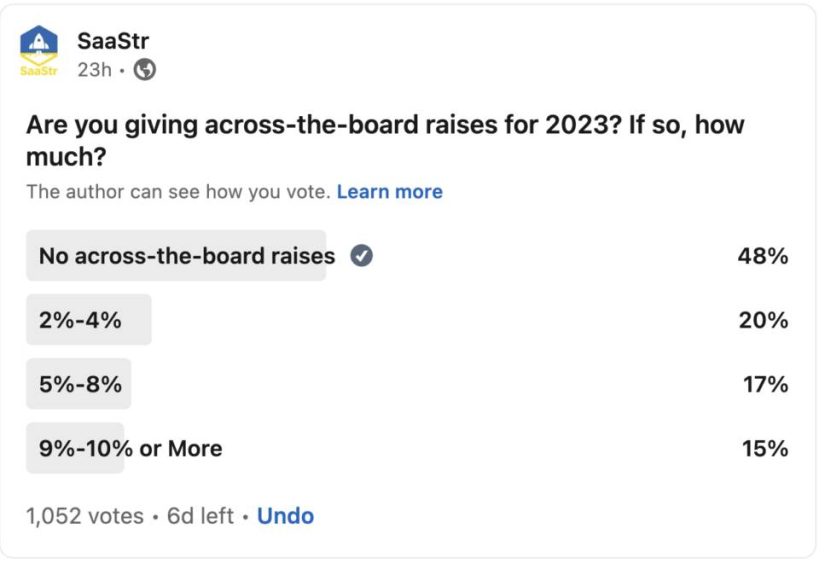
The headline is rooted in a founder-heavy poll from the SaaS/startup world where
roughly half of respondents said they planned no raises for 2023. That’s a
meaningful signalbut it’s not the same thing as “half of all U.S. employers.” It’s a snapshot
of a specific corner of the economy that was getting squeezed by higher interest rates, tighter
funding, and a fast mood swing from “growth at all costs” to “profitability yesterday, please.”
So treat the headline like a weather alert, not a permanent climate report:
it tells you conditions were roughespecially in tech and venture-backed companiesbut it doesn’t
mean every industry stopped giving increases.
Why So Many Companies Hit Pause on Raises in 2023
1) Inflation hangover met budget reality
Inflation in 2022 was the kind of problem that shows up everywheregas, groceries, rent, and that
one streaming service you swear you canceled. When prices rise faster than pay budgets, employers
face a hard truth: making employees “whole” is expensive, and most companies can’t (or won’t) fund
an across-the-board inflation match year after year.
2) The labor market cooledespecially in white-collar roles
In 2021–2022, many employers felt like they were competing in a salary auction where the rules were
“bid higher or lose.” By 2023, hiring demand cooled in many sectors, job openings declined,
and layoffsparticularly in techchanged employee leverage. When urgency drops, raise pressure often
drops too.
3) Leadership was trying to avoid layoffs (or cleaning up after them)
Companies commonly pick from three unpleasant options when money gets tight: layoffs, pay freezes,
or a mix of both. Some leaders chose “no raises” as the lesser evil because keeping people employed
felt more important than bigger annual increases. Others froze pay after layoffs to stabilize
cash flow and reassure investors.
4) Pay already jumped in 2022 for some roles
A lot of organizations made mid-year market adjustments in 2022especially for hard-to-hire roles.
If you already raised starting pay and gave retention bumps, the 2023 “merit” cycle might have felt
like a second expensive lap… on a track that had suddenly turned into mud.
The Reality Check: Many Employers Still Budgeted Raises in 2023
Broad compensation surveys around that time consistently showed that many U.S. organizations were
still planningand deliveringsalary increases in the neighborhood of about 4% on average.
That’s high compared with pre-pandemic norms.
Here’s the catch: “average” is a sneaky word.
- Averages can hide zeros. If some employees get 6–8% and others get 0%, the average can still look healthy.
- Budgets aren’t evenly shared. Many companies prioritize critical roles, high performers, or pay equity fixes.
- Inflation changed the emotional scoreboard. A 4% raise feels different when prices rose faster recently.
In other words: even if a company had a raise budget, it may have been distributed in a way that left
a sizable portion of employees feeling like they got… politely ignored by the spreadsheet.
What “No Raises” Does Inside a Company
Pay freezes don’t freeze feelings
When raises stop, people start comparing. To everything. Their bills. Their friends’ offers. Their
newest hire’s salary. Their CEO’s LinkedIn post about “resilience.” (That one stings.)
It can trigger retention risk in predictable places
The employees most likely to leave after a freeze aren’t always the lowest paid; they’re often the ones
who have options: top performers, in-demand specialists, and “quiet leaders” who keep projects moving.
If you freeze pay without a retention plan, you may accidentally create a talent scavenger hunt… for your competitors.
Pay compression gets louder
If market rates rose and you had to pay new hires more, your existing team might discover the unpleasant truth
that loyalty sometimes comes with a discount. Compression can quietly wreck trust unless addressed through targeted
adjustments.
Performance management gets weird
If raises aren’t happening, managers can struggle to make reviews meaningful. Employees hear “exceeds expectations”
and think, “Coolso my reward is… vibes?” That’s how you end up with cynical high performers and managers who dread review season.
If You Can’t Give Raises, Here’s What Actually Helps
Let’s be honest: replacing cash with “employee appreciation donuts” is a fast way to become a workplace meme.
But there are smart alternatives that reduce churn and keep motivation intact.
1) Targeted raises instead of universal ones
If you can’t afford raises for everyone, prioritize:
- Roles where turnover would be catastrophic (revenue, security, key operations)
- Pay equity corrections (especially if you have known gaps)
- High performers with clear impact (not just the loudest voices)
This isn’t about playing favorites. It’s about preventing business damage.
2) One-time bonuses (with rules)
Lump-sum bonuses can be cheaper long-term than permanent base increases. They also give employees something real
right now. The key is clarity: explain whether it’s a one-off, what it rewards, and how it’s determined.
3) Equity refreshes or milestone grants (for startups)
If you’re a startup that can’t compete in cash, equity can workif employees understand the value, vesting,
and realistic outcomes. Equity only motivates when it’s paired with transparency and a believable plan.
4) Career progression that isn’t imaginary
Promotions, expanded scope, and title changes can matterbut only if they come with real authority, meaningful work,
and a timeline for pay adjustment. Otherwise it’s just “more work, same money,” which is not a fan favorite.
5) Benefits that reduce real costs
Consider benefits that hit household budgets directly: stronger health coverage, commuter benefits, childcare support,
student loan help, or extra PTO. These don’t replace cash, but they can soften the blow in ways employees actually feel.
How to Communicate “No Raises” Without Torching Morale
A pay freeze can be survivable. A poorly explained pay freeze can become a legendtold in group chats for years.
-
Say it early, not after reviews.
Don’t let managers spend weeks hinting at raises that don’t exist. -
Explain the “why” in plain English.
“Macro headwinds” is corporate poetry. People need concrete reasons: revenue goals, cost increases, rebuilding runway, etc. -
Explain what you can do.
If raises are frozen, what about bonuses, promotions, market adjustments, or mid-year reviews? -
Give a timelineeven if it’s conditional.
A freeze with no revisit date feels endless. A freeze with a checkpoint feels managed. -
Coach managers with scripts.
Managers need language that is honest, empathetic, and consistentso every team isn’t getting a different story.
For Employees: What to Do If You Got No Raise in 2023
Start with information, not outrage
You don’t need to pretend you’re thrilled. But you do want a clear picture of what happened:
Was it a company-wide freeze? Performance-based? Role-based? Budget-based? Ask for the compensation philosophy
and how decisions were made.
Build a specific business case
“I deserve more” is emotionally true and negotiation-weak. “Here are three measurable outcomes I delivered, the market range
for this role, and the responsibilities I’ve absorbed” is negotiation-strong.
Offer options
If base pay is frozen, ask about:
- One-time bonus tied to deliverables
- Title or level adjustment with a defined pay review date
- Professional development budget or certification support
- Flexibility benefits (remote days, schedule control)
Know when to test the market
If the company can’t outline a path to future increases, or if your pay has fallen behind market rates, exploring
options is rational. You don’t have to rage-quit. You can calmly gather information and decide.
What 2023 Taught Leaders About Raises
2023 exposed a simple truth: annual raises aren’t just maththey’re culture. When compensation decisions feel random,
secretive, or unfair, trust erodes quickly. But when companies communicate clearly, target pay where it matters,
and offer credible alternatives, teams can handle a “lean year” without falling apart.
The best-compensating organizations don’t necessarily spend the most; they spend with intention:
they know what roles are critical, how they reward performance, and how they’ll revisit decisions when conditions improve.
Experiences: What a “No Raise Year” Looked Like in Real Life (About )
Experience #1: The founder who froze pay to avoid layoffs.
In many startups, leaders chose a pay freeze because cash runway mattered more than keeping merit cycles “normal.”
The best version of this story included a very specific promise: “We’ll revisit comp in six months if revenue hits X.”
The worst version was silenceemployees found out through rumors, then updated their résumés with impressive speed.
Experience #2: The manager stuck delivering bad news with no tools.
Some managers had to do performance reviews without any raise budget. The ones who survived focused on growth plans:
clear goals, visible projects, and a documented case for future promotion. The managers who didn’t had conversations that
sounded like, “You did amazing, congrats,” which is basically confetti made of disappointment.
Experience #3: The team that got targeted increasesand learned what “critical” means.
In operations-heavy businesses, certain roles (think production, field service, or customer support) received adjustments
because turnover would break the business. Other roles got zero. This created tension, but it also clarified priorities.
Where leaders explained the logic and acknowledged the trade-offs, teams grumbled but stayed. Where leaders acted like
nobody would notice, resentment became a group hobby.
Experience #4: The employee who negotiated a bonus instead of a raise.
Plenty of employees learned that “no raises” sometimes meant “no permanent raises.” A practical alternative was a
milestone bonus: deliver a specific project, hit a measurable outcome, receive a one-time payout. It wasn’t perfect,
but it created fairness and momentumand it gave employees a reason to stay through uncertainty.
Experience #5: The pay-compression wake-up call.
A common frustration in 2023: new hires were brought in at higher market rates while existing employees were frozen.
When someone discovered the gap (they always do), the best leaders addressed it with targeted market adjustments and a
transparent leveling framework. The worst leaders tried to ban discussion, which mostly taught employees two lessons:
(1) they were underpaid, and (2) the company didn’t want to hear about it.
Experience #6: The “small raise” that felt like no raise.
Even where raises existed, employees often said it didn’t feel like progress. If prices rose faster recently, a 2–3% bump
could feel like a pay cut in disguise. Managers who acknowledged this (“I know it doesn’t fully keep up with costs”) built
more trust than managers who tried to sell it like a trophy.
Experience #7: The teams that leaned into non-cash improvements and actually benefited.
Some organizations used the freeze year to fix pain points: reducing pointless meetings, adding flexible schedules, funding
training, improving benefits, and creating clearer promotion paths. None of that replaces money, but it can restore a sense
that leadership is listeningand that your job is more than a waiting room for the next payroll cycle.