Table of Contents >> Show >> Hide
- The Ozone Hole Is Shrinking, and That Is a Big Deal
- What Exactly Is the Ozone Layer?
- How Humans Damaged the Ozone Layer
- The Montreal Protocol: The Rare Environmental Success Story
- What the Latest Science Says About Ozone Recovery
- Why the Ozone Hole Still Changes From Year to Year
- Ozone Recovery Is Not the Same as Climate Change
- What Could Slow Ozone Recovery?
- Why This News Should Make You Optimistic, Not Complacent
- Practical Takeaways for Readers
- Experiences and Reflections: What the Shrinking Ozone Hole Teaches Us
- Conclusion: A Smaller Ozone Hole Is a Bigger Hope
- SEO Tags
Good news from the stratosphere: the famous hole in the ozone layer is not fixed yet, but it is healing. After decades of global action, careful science, and a surprisingly successful international treaty, Earth’s natural sunscreen is showing real signs of recovery.
The Ozone Hole Is Shrinking, and That Is a Big Deal
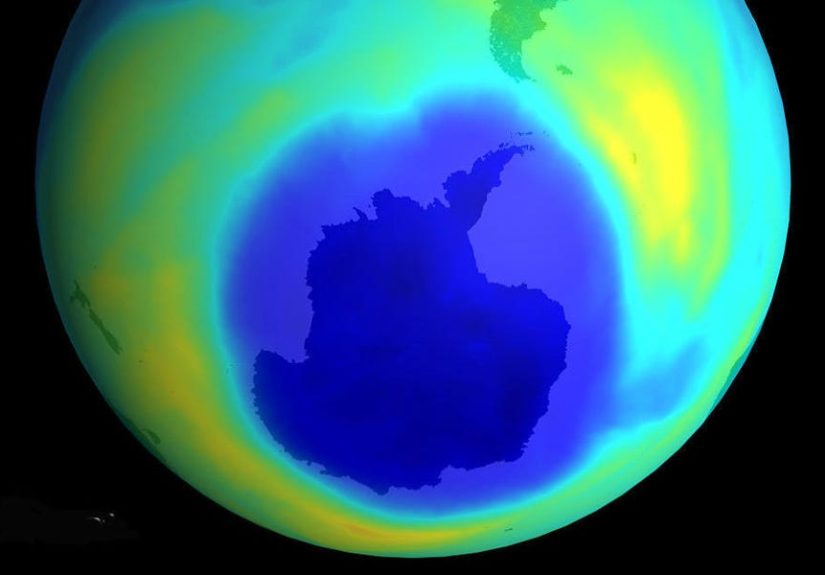
For once, an environmental headline does not arrive wearing steel-toed boots and carrying a fire extinguisher. The hole in the ozone layer, especially the seasonal Antarctic ozone hole, is finally shrinking over the long term. Scientists still see year-to-year changes, and some years are better than others, but the overall direction is encouraging: the ozone layer is healing.
NASA and NOAA reported that the 2025 Antarctic ozone hole ranked as the fifth smallest since 1992, the year when the Montreal Protocol’s controls began taking stronger effect. That does not mean the ozone hole has vanished. At its seasonal peak, it was still enormous by normal human standards. But compared with the biggest ozone holes of past decades, the trend is moving in the right direction.
This recovery matters because the ozone layer acts like Earth’s high-altitude sunscreen. Located in the stratosphere, it absorbs much of the sun’s harmful ultraviolet-B radiation. Without enough ozone, more UV radiation can reach the surface, increasing risks for skin cancer, cataracts, weakened immune systems, crop damage, and harm to marine ecosystems. In other words, ozone is not just a chemistry-class word you forgot after the final exam. It is part of the reason life on land can comfortably exist without wearing a lead poncho.
What Exactly Is the Ozone Layer?
The ozone layer is a region of the stratosphere where ozone molecules are more concentrated than in other parts of the atmosphere. Ozone is made of three oxygen atoms, written chemically as O3. Near the ground, ozone can be a harmful pollutant and a major part of smog. But high above us, ozone is a protective shield.
The stratospheric ozone layer absorbs a large share of the sun’s UV-B radiation before it reaches people, animals, plants, and ocean life. Think of it as a planetary pair of sunglasses, except it covers the entire Earth and never gets lost under a car seat.
Why the Ozone Hole Forms Over Antarctica
The ozone hole is not a literal empty hole like someone drilled through the sky. It is an area of severe seasonal ozone depletion, most famously over Antarctica during the Southern Hemisphere spring. The process depends on a combination of extremely cold temperatures, polar stratospheric clouds, sunlight returning after the dark polar winter, and chlorine and bromine compounds released from human-made chemicals.
When sunlight returns to Antarctica in spring, chemical reactions rapidly destroy ozone. The result is a large region of unusually low ozone concentration. The hole grows, peaks, and then usually breaks apart as seasonal conditions change.
How Humans Damaged the Ozone Layer
The main culprits were ozone-depleting substances, especially chlorofluorocarbons, better known as CFCs. For much of the 20th century, these chemicals were used in refrigerators, air conditioners, aerosol sprays, foam products, and industrial processes. They were popular because they were stable, useful, and not obviously dangerous at ground level. Unfortunately, “stable” turned out to be the atmospheric equivalent of “this problem will travel far and stay a while.”
CFCs can drift into the stratosphere, where ultraviolet radiation breaks them apart and releases chlorine atoms. A single chlorine atom can participate in reactions that destroy many ozone molecules. Bromine-containing chemicals, such as some halons, are even more aggressive ozone destroyers.
By the 1970s and 1980s, scientists had connected these chemicals to ozone depletion. The discovery of the Antarctic ozone hole in the 1980s turned a technical atmospheric chemistry issue into a global alarm bell. It was the sort of scientific finding that made governments, industries, and the public realize that invisible gases could create very visible consequences.
The Montreal Protocol: The Rare Environmental Success Story
The biggest reason the ozone layer is recovering is the Montreal Protocol, the international agreement created in 1987 to phase out the production and consumption of ozone-depleting substances. It is widely considered one of the most successful environmental treaties in history.
The treaty worked because it combined science, diplomacy, industry transition, and accountability. Countries agreed to reduce and eventually phase out major ozone-depleting chemicals. Over time, the agreement was strengthened with amendments and adjustments as scientists learned more and as safer alternatives became available.
Why the Montreal Protocol Worked
The Montreal Protocol succeeded because the problem was clear, the chemicals were identifiable, and alternatives could be developed. It also helped that the threat was easy to understand: lose the ozone layer, get more dangerous ultraviolet radiation. Nobody needed a 400-page report to understand that “more sunburns, more skin cancer, and damaged crops” was not a great business plan for civilization.
Another reason it worked was global participation. The agreement became nearly universal, which reduced the chance that ozone-depleting chemicals would simply move from one country to another. This is important because the atmosphere does not respect borders, customs forms, or strongly worded emails.
What the Latest Science Says About Ozone Recovery
Current assessments show that the ozone layer is on track to recover to pre-1980 levels, assuming countries continue enforcing existing policies. The World Meteorological Organization has reported that, under current policies, ozone may recover to 1980 levels around 2040 for much of the world, around 2045 over the Arctic, and around 2066 over Antarctica.
The Antarctic recovery takes longer because the region has unique atmospheric conditions that make ozone depletion especially intense. The cold polar stratosphere, seasonal isolation of the polar vortex, and chemical reactions on polar stratospheric clouds all create a perfect ozone-destroying laboratory. Antarctica, apparently, has a flair for drama.
NASA’s Ozone Watch and other monitoring programs continue to track ozone levels using satellites, ground instruments, balloons, and atmospheric models. These systems help scientists separate long-term recovery from short-term weather and climate variability. That distinction matters because a single small ozone hole does not prove full recovery, just as one sunny day does not prove winter has been canceled.
Why the Ozone Hole Still Changes From Year to Year
Even though the long-term trend is improving, the ozone hole can still vary dramatically from one year to the next. Temperature, wind patterns, volcanic eruptions, wildfire smoke, and stratospheric circulation can all influence the size and duration of the Antarctic ozone hole.
For example, the 2022 Hunga Tonga-Hunga Ha’apai volcanic eruption injected a large amount of water vapor into the stratosphere. Scientists have studied how that event may have influenced ozone chemistry and atmospheric conditions in later years. Large wildfires can also send particles high into the atmosphere, potentially affecting chemical reactions connected to ozone loss.
This is why scientists are careful with their language. They do not say, “The ozone hole is gone, bring confetti.” They say the ozone layer is healing, the trend is positive, and full recovery is expected if protective policies remain in place.
Ozone Recovery Is Not the Same as Climate Change
The ozone hole and climate change are related, but they are not the same problem. Ozone depletion is mainly caused by chemicals such as CFCs and halons that break down ozone in the stratosphere. Climate change is mainly driven by heat-trapping greenhouse gases such as carbon dioxide, methane, and nitrous oxide.
However, the two issues overlap in important ways. Many ozone-depleting substances are also powerful greenhouse gases. By phasing them out, the Montreal Protocol helped protect the ozone layer and also avoided additional warming. Later, the Kigali Amendment targeted hydrofluorocarbons, or HFCs, which do not significantly deplete ozone but can strongly warm the climate.
A Lesson for Climate Action
The ozone story proves something important: global environmental cooperation can work. It does not prove that every environmental problem is easy. Climate change is more complex because fossil fuels are deeply connected to transportation, electricity, agriculture, construction, and industry. Still, the ozone recovery shows that science-based rules, international cooperation, and technological innovation can change the direction of a planetary problem.
What Could Slow Ozone Recovery?
The ozone layer is improving, but it is not immune to setbacks. Scientists are watching several risks, including illegal or unexpected emissions of banned substances, leakage from industrial feedstocks, emissions from old equipment and foam banks, and the growing impact of rocket launches and satellite reentry on the upper atmosphere.
Recent research has raised concerns that some industrial uses of ozone-depleting chemicals may be leaking more than expected. Even if these uses are allowed under certain rules, extra emissions can delay recovery. This does not mean the Montreal Protocol has failed. It means that a successful treaty still needs maintenance, updates, and enforcement. Even the best umbrella needs patching if someone keeps poking it with a stick.
Another challenge is public memory. Many people hear “ozone hole shrinking” and assume the job is finished. But ozone-depleting substances can remain in the atmosphere for decades. The chemicals already released do not simply apologize and leave. Recovery takes time because the atmosphere is still slowly clearing out past pollution.
Why This News Should Make You Optimistic, Not Complacent
The shrinking ozone hole is one of the clearest examples of humans identifying a global environmental threat, listening to scientists, changing policy, and seeing measurable improvement. That deserves celebration. It is proof that the phrase “international agreement” does not always have to be followed by a nap.
But optimism should not become laziness. The ozone layer is still recovering, and Antarctica may not return to pre-1980 conditions until around the 2060s. That means today’s teenagers may be middle-aged before the Antarctic ozone layer is considered fully healed. The good news is that the path is visible. The bad news is that we still have to stay on it.
For everyday people, ozone recovery is also a reminder that personal choices and public policy are connected. Consumers did not individually fix the ozone layer by switching deodorant brands. Governments, scientists, companies, and international institutions had to work together. Individual awareness mattered, but coordinated regulation did the heavy lifting.
Practical Takeaways for Readers
1. The ozone layer is healing, but it is not fully healed
The long-term trend is positive, especially because major ozone-depleting chemicals have been phased out. However, full recovery will take decades.
2. The Montreal Protocol is the hero of the story
The global phaseout of CFCs, halons, and related substances is the main reason the ozone hole is shrinking. It is a rare case where humanity saw a problem, acted, and did not immediately trip over its own shoelaces.
3. UV protection still matters
Even with ozone recovery, people should still protect themselves from excessive ultraviolet exposure. Sunscreen, shade, hats, and sunglasses are still useful. The ozone layer is improving, but it is not your personal dermatologist.
4. Environmental progress can be slow and real at the same time
Some environmental wins take decades. The ozone story reminds us that delayed results are still results. The atmosphere does not work on social media speed.
Experiences and Reflections: What the Shrinking Ozone Hole Teaches Us
There is something strangely emotional about learning that the ozone hole is shrinking. For many people who grew up hearing warnings about CFCs, aerosol cans, and a damaged sky, the ozone hole felt like one of those permanent background problems adults talked about with worried faces. It was up there with acid rain, rainforest loss, and the mysterious danger of sitting too close to the television. The difference is that the ozone story now offers something rare: a receipt for progress.
One useful experience connected to this topic is the way it changes how we think about environmental problems. When people hear about climate change, plastic pollution, or biodiversity loss, it is easy to feel overwhelmed. The ozone recovery shows that environmental damage is not always a one-way street. When the cause is identified, when rules are enforced, and when technology adapts, nature can begin to recover. Slowly, yes. Not perfectly, yes. But recovery is possible.
Another experience is more personal: the ozone story makes sunscreen feel less like a boring bathroom product and more like a small daily reminder of atmospheric science. Most people apply sunscreen without thinking about stratospheric chemistry, chlorine radicals, or polar vortices. Fair enough. Nobody wants to recite a chemistry lecture while packing for the beach. But the reason UV protection matters is directly connected to the invisible shield above us. The ozone layer reduces risk, but it does not eliminate UV exposure. Even a recovering ozone layer does not give anyone permission to roast like a forgotten marshmallow.
The shrinking ozone hole also teaches patience. In modern life, people expect fast results. Send a message, get a reply. Order food, track the driver. Search a question, receive 10 million answers before blinking. Atmospheric recovery does not move like that. The Montreal Protocol was signed in 1987, and decades later scientists are still monitoring the healing process. That timeline can feel slow, but it is also impressive. A treaty signed before many current students were born is still protecting their future health.
For educators, writers, parents, and science communicators, the ozone recovery is a powerful story to share because it avoids both doom and denial. It does not say, “Everything is fine, stop worrying.” It also does not say, “Nothing works, give up.” It says something more useful: science can identify danger, policy can reduce harm, and long-term commitment can produce measurable benefits. That message is practical, hopeful, and refreshingly adult.
Finally, the ozone hole reminds us that invisible problems still matter. The chemicals that damaged ozone were not dramatic villains with theme music. They were ordinary industrial compounds used in ordinary products. The damage happened high above daily life, out of sight. Yet the consequences were real. Today, the recovery is also mostly invisible. Most people will not look up and see the ozone layer stitching itself back together. But satellites, balloons, and ground-based instruments can measure the change. Sometimes progress is not a parade. Sometimes it is a data trend moving, quietly and beautifully, in the right direction.
Conclusion: A Smaller Ozone Hole Is a Bigger Hope
The hole in the ozone layer is finally shrinking, and that is one of the best environmental stories of the modern era. It proves that science matters, treaties can work, and global cooperation can protect the planet. The ozone layer is not fully restored yet, and the Antarctic ozone hole will likely take decades more to recover completely. But the trend is real, the progress is measurable, and the lesson is powerful.
The world did not fix the ozone problem by accident. It took research, public awareness, international pressure, policy changes, and industry adaptation. That combination gave Earth’s natural sunscreen a fighting chance. If humanity needs a reminder that big environmental problems can be solved, the shrinking ozone hole is floating right above us, quietly making the case.