Table of Contents >> Show >> Hide
- Street medicine, in plain English
- Why it exists: the clinic is a mile away and a world apart
- What street medicine teams actually do
- Trust is the treatment plan
- Does it work? What the evidence says (and what it doesn’t)
- Street medicine is not a substitute for housing
- The uncomfortable part: why the public “doesn’t care”
- What caring looks like when you’re not a clinician
- Experiences from the sidewalk (a 500-word reality check)
- Conclusion
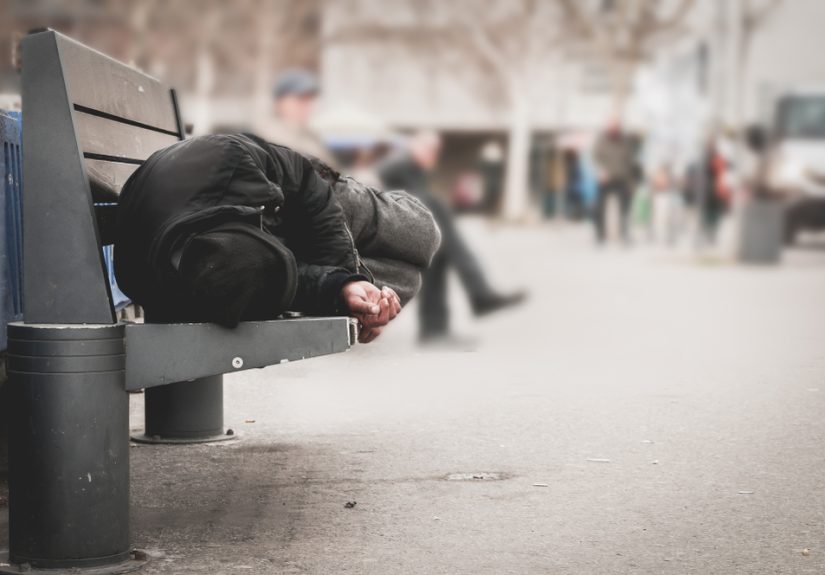
If you’ve ever walked past a sidewalk tent and thought, “That’s sad”and then immediately wondered what’s for dinneryou’ve already met the emotional business model that street medicine exists to disrupt. Street medicine is health care that leaves the clinic and goes to people living outside. It’s practiced in encampments, under overpasses, in parks, behind warehouses, and anywhere the “waiting room” is a piece of cardboard and a shopping cart.
And here’s the uncomfortable truth baked into the title: most people don’t know street medicine exists because most people don’t need to know. If your health care comes with an online portal, an appointment reminder, and a parking garage, you can pretend the rest of the city’s body is doing just fine. Street medicine is what happens when clinicians stop pretending.
Street medicine, in plain English
Street medicine (sometimes called “backpack medicine”) is a care model designed to deliver direct medical services to people experiencing unsheltered homelessness where they live. Not “where they live” in a poetic way. Literally where they live: tents, doorways, camp clusters, alleyways.
The goal isn’t to replace clinics. It’s to reach people who can’tor won’tuse traditional health systems because the system is built for patients with stable housing, transportation, a phone, an ID, and enough bandwidth to sit on hold for forty minutes without losing their spot in line at the shelter.
Why it exists: the clinic is a mile away and a world apart
From the outside, it’s easy to reduce homelessness to a “bad choices” story. From the inside, it’s a logistics story with medical consequences. People living unsheltered face higher risks of infectious disease exposure, chronic illness complications, mental health conditions, and substance use disorders. Add constant stress, disrupted sleep, dehydration, injuries, and violence riskand you get a health profile that doesn’t fit neatly into 15-minute appointments.
Clinics also require things that are hard to keep while living outside: appointment times (good luck when your tent got cleared at 6 a.m.), medication storage (insulin doesn’t love hot cars), wound care supplies (antibiotic ointment gets stolen like it’s luxury skincare), and follow-up (hard when your “address” changes weekly).
Street medicine shows up because the usual pathwaysymptoms → clinic → treatment → recoveryoften breaks at step one. So teams flip the route: street → relationship → care → connection to longer-term services.
What street medicine teams actually do
Street medicine isn’t just band-aids and pep talks (though there are band-aids, and pep talks are a clinical intervention some days). Teams vary by city, but many combine medical care, behavioral health, case management, and social services. The work is practical, portable, and relentlessly human.
Backpack-based primary care
- Wound care: abscesses, cellulitis, pressure sores, foot injuries, burns, lacerations.
- Chronic disease management: hypertension, COPD/asthma, diabetes, seizure disordersoften with medication refills and simplified regimens.
- Infectious disease support: screening referrals, vaccinations when possible, treatment navigation for HIV, hepatitis C, TB exposure concerns.
- Basic diagnostics: vitals, glucose checks, symptom-driven assessments, and the classic “tell me what’s changed since last week.”
Behavioral health and harm reduction
Street medicine teams frequently overlap with harm reductionbecause ignoring substance use doesn’t make it go away; it just makes overdoses happen out of sight. Many street-based programs focus on low-barrier, nonjudgmental care: overdose prevention education, naloxone distribution, safer-use supplies where legal, and connection to medications for opioid use disorder when available.
Mental health support may include crisis de-escalation, brief counseling, medication continuity, and (when possible) warm handoffs to psychiatric care. It’s rarely tidy. It’s often effective.
Paperwork, the hidden procedure
A lot of street medicine looks like “non-medical” work because the barriers are non-medical. Teams help people replace IDs, re-enroll in Medicaid, locate lost medical records, schedule appointments they can actually make, and navigate hospital discharges that otherwise land a patient right back outside.
If you’ve never had to prove you exist to receive a prescription refill, congratulations on your stability. For many unsheltered patients, stability is the rarest medication.
Trust is the treatment plan
Street medicine runs on consistency. A clinician who shows up once is a visitor. A clinician who shows up every week, learns names, remembers the dog’s name, and brings socks when it’s cold becomes something else: safe.
That trust matters clinically. People who have been dismissed, stigmatized, or traumatized in health settings are less likely to seek care early. Street medicine reduces the “activation energy” required to get help. It’s health care with fewer hoops and more respect.
Street-based harm reduction work also emphasizes trust: respectful, nonjudgmental interactions shape whether people use services like naloxone, sterile supplies, and referrals. In other words, the relationship is not a bonusit’s the delivery system.
Does it work? What the evidence says (and what it doesn’t)
The research on street medicine is growing, but it’s not a giant pile of randomized controlled trialsbecause it’s hard to randomize “who gets compassion” on a sidewalk and still sleep at night.
Reviews of published programs suggest street medicine and mobile clinics commonly provide primary care, behavioral health, and social services, and may reduce emergency department visits or hospitalizations by addressing problems earlier and improving connection to ongoing care. That can also translate into system-level savings, especially when care prevents avoidable crises.
The limitations are real: programs differ widely, outcomes are measured inconsistently, and communities have very different housing policies, shelter capacity, and access to follow-up care. Still, the directional signal is clear: meeting people where they are can reduce harm, improve engagement, and catch problems before they become catastrophic.
Street medicine is not a substitute for housing
Let’s say this plainly: street medicine is necessary, but it is not the solution to homelessness. It’s a response to a failurean ethical and clinical “we can’t wait for the system to fix itself.”
People don’t heal well without a safe place to sleep. That’s why street medicine often pairs with two critical “middle spaces”:
- Medical respite care: short-term residential care for people experiencing homelessness who are too sick to recover on the streets but not sick enough to need a hospital bed. Respite programs provide a safe place to rest, receive ongoing medical care, and connect to supportive services.
- Supportive housing and robust shelter-based care: long-term stability that makes chronic disease management, wound healing, mental health treatment, and substance use recovery dramatically more achievable.
Some of the most mature homeless health programs blend street outreach, clinic-based services, and medical respite into a continuumbecause patients don’t live in silos, and neither should care.
The uncomfortable part: why the public “doesn’t care”
Most people aren’t cartoon villains twirling mustaches about homelessness. The apathy is usually quieterbuilt from distance, discomfort, and a steady drip of stigma.
1) Visibility without relationship
When you see someone living outside but never speak to them, your brain tends to file them as “background.” Humans are great at caring about individuals and terrible at caring about categories. “A person with a name” gets empathy. “The homeless” becomes a problem to manage.
2) The myth of personal deservingness
American culture loves a morality tale. If someone is suffering, we want a clean reason whypreferably one that reassures us it can’t happen to us. So people default to blame: addiction, laziness, “bad choices.” It’s psychologically convenient. It’s also clinically lazy.
3) Policy that treats symptoms like crimes
Across the U.S., debates over encampments often focus on visibility, not viability. Clearing camps may change what you see, but it doesn’t magically create housing, mental health infrastructure, or treatment access. It often just scatters patientsmaking continuity of care harder and health outcomes worse.
Street medicine teams feel this immediately: the moment someone’s belongings are swept, their medications, wound supplies, and paperwork can vanish. The next visit becomes a medical scavenger hunt.
What caring looks like when you’re not a clinician
You don’t have to carry a stethoscope to reduce harm. You just need to stop outsourcing empathy to “the system” and start acting like you live in a shared place.
- Support evidence-based services: street outreach, medical respite, shelter-based clinics, mental health care, and substance use treatment that is accessible and humane.
- Be wary of “simple fixes”: if a proposal is mostly about moving people out of sight, it’s not a health interventionit’s a visibility strategy.
- Normalize preparedness: many communities distribute naloxone and teach overdose response. Knowing how to help is a civic skill now, like CPR.
- Donate smart: socks, hygiene supplies, menstrual products, and gift cards help. So do donations to local homeless health and outreach programs.
- Practice micro-respect: eye contact, a greeting, using a person’s name if you know itthese are tiny acts that push back against social erasure.
Experiences from the sidewalk (a 500-word reality check)
The most consistent story street medicine clinicians tell is not about dramatic rescues. It’s about repetition: returning to the same block, the same underpass, the same patch of trees, because relationships are built in inches, not miles.
There’s the patient with diabetes who knows exactly what insulin doesbut can’t keep it from freezing in winter or overheating in summer. A street team might spend weeks problem-solving: a clinic refill timed to a predictable outreach day, a cooler when possible, a simplified regimen, and a plan for what to do when supplies get stolen. This is “care coordination,” but in street medicine it feels more like engineering with a side of compassion.
There’s the older man with COPD who keeps declining the shelter because the last one felt unsafe. He’s not refusing help; he’s prioritizing survival. A clinician listens to his breathing, checks his inhaler use, and tries to prevent the next flare that would land him in an emergency department. The visit ends with a small win: he agrees to meet the team at a mobile clinic next week. Not a miracle. A step.
There’s the woman with a leg wound wrapped in a dirty bandage because clean gauze is hard to come by when your life is one long improvisation. The team cleans the wound, re-dresses it, and explains infection signs in plain language. They also ask about food, safety, and sleepbecause healing is not just biology; it’s environment. When she says she’s been moved along three times this month, the team’s plan changes: fewer “come back in two days,” more “we’ll find you.”
Street medicine clinicians also talk about how often the first complaint isn’t the most urgent medical issue. A patient may start with foot pain, because foot pain is safe to share. Trauma, depression, withdrawal, domestic violence, or paranoia might be behind it. Trust determines how much truth shows up in the first visit.
And then there are the quiet moments: a clinician kneeling to be eye-level, a patient introducing their dog like a family member, someone laughing at a joke in the middle of a hard day. Those moments matter because homelessness is not only a lack of housing; it’s a relentless experience of being treated as less-than. Street medicine pushes back by treating a person like a personagain and againuntil care becomes possible.
Conclusion
Street medicine exists because the health care system is not built for life without walls. It brings care to people experiencing unsheltered homelessness, builds trust through consistency, and addresses urgent needs before they become tragedies. It also exposes a civic mirror: if your community requires clinicians with backpacks to provide basic health care on sidewalks, that’s not just a medical storyit’s a policy story.
You may not practice street medicine. But you live in the same city as the people who need it. Caring doesn’t require heroicsjust the courage to look, learn, and support solutions that treat health and housing as inseparable.