Table of Contents >> Show >> Hide
- The Poll Numbers Behind the “Slim Majority”
- Why Support Was Narrow Instead of a Blowout
- Mandate vs. Test-or-Mask: The Practical Middle Ground
- The Legal Landscape Employers Couldn’t Ignore
- How Employers Made Mandates Work (Without Burning Trust)
- Equity, Trust, and the Partisan Reality
- What the “Slim Majority” Means for Return-to-Office Decisions Today
- Conclusion
- Workplace Experiences and Lessons Learned (The Part Everyone Remembers)
If you ever wanted proof that Americans can split a hair into thirds, here it is: when it comes to requiring COVID-19 vaccination as a condition for returning to the workplace, the “yes” side often winsbarely. Not by a landslide. Not by a heroic margin. More like by the political equivalent of a coin landing on its edge and everyone agreeing that counts as “heads.”
Still, that slim majority matters. It shaped employer policies, court fights, HR playbooks, and plenty of tense Slack threads (and, for the record, none of us needed more tension in Slack). Below is a grounded, plain-English breakdown of what the polling showed, why public support stayed narrow, what the legal guardrails looked like, and what practical mandate policies did right (and painfully wrong).
The Poll Numbers Behind the “Slim Majority”
“Slim majority” wasn’t a vibeit was a recurring pattern in surveys. Across multiple reputable U.S. pollsters, support for employer vaccine requirements hovered around the 50% mark, sometimes creeping upward depending on how the question was asked.
Office workers vs. “working Americans” vs. “voters”
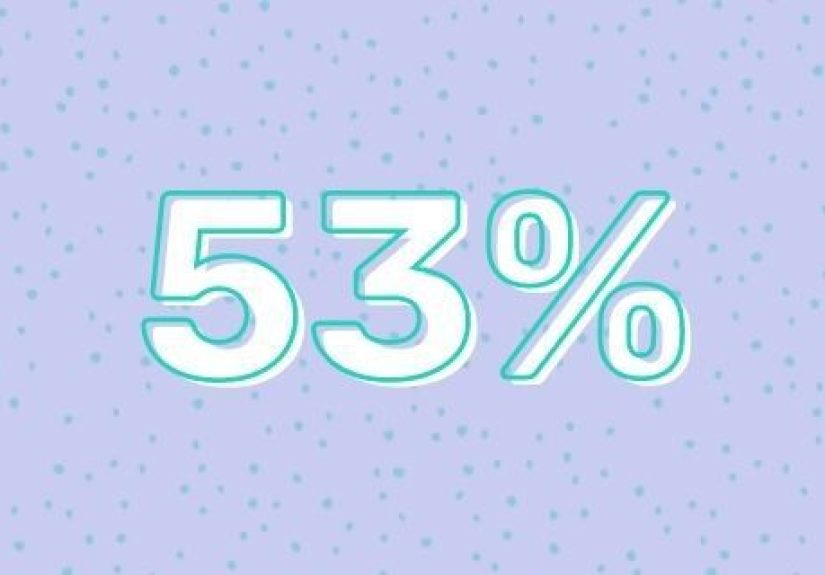
One early snapshot came from a poll of U.S. office workers: just over half said employers should require COVID-19 vaccination to return to the workplace. That sounds decisive until you remember the other half existsand they also have keyboards, feelings, and occasionally access to the company-wide email list.
Broader surveys often landed in the same neighborhood. In an AP-NORC study focused on working Americans, support for requiring in-person employees to be vaccinated landed right around half. An NPR/PBS NewsHour/Marist poll similarly showed about half supporting employer requirements for in-person work, with a sizable minority opposed. The consistent theme: mandates weren’t a universal “of course,” but they weren’t fringe either.
Employer mandates vs. federal rules: wording changed everything
Public support shifted depending on who was doing the requiring. When questions were framed around federal policyespecially “large employers must require vaccination or weekly testing”support in some polls rose into the high 50s. Gallup found a majority favoring requirements aimed at large companies, federal employees, and healthcare facilities that receive federal funds. KFF polling also recorded majorities supporting the vaccine-or-test framework for large employers at key points in 2021.
But when the question narrowed to your employer requiring you to get vaccinated, support often tightened. Pew data looking back on the pandemic era found that a minority of workers said their employer should require COVID-19 vaccination, even though a meaningful share reported their employer had required it.
Takeaway: Americans were more comfortable with mandates in theory (especially for high-risk settings or broad public policy) than with mandates as a personal workplace ruleparticularly if they felt they weren’t given choices.
Why Support Was Narrow Instead of a Blowout
If you’ve ever wondered how a topic can feel “widely supported” and “intensely controversial” at the same time, vaccine mandates are the master class. Support was narrow because the debate wasn’t just about medicineit was about identity, trust, fairness, and who gets to make rules when everyone’s exhausted.
Reason 1: People wanted safety… but not a new culture war at 9 a.m.
For many workers, the argument was simple: “I’m trying to do my job, not collect viral variants like Pokémon.” Mandates promised fewer outbreaks, fewer disruptions, and less anxiety about close-contact workespecially in healthcare, public-facing roles, and shared indoor spaces.
But even some pro-vaccine workers disliked mandates because they feared backlash: resignations, lawsuits, ugly confrontations, or a sudden increase in “anonymous feedback” that was neither anonymous nor feedback.
Reason 2: Autonomy and distrust were powerful (and sticky)
A large chunk of opposition was rooted in the belief that medical decisions should be personal, not an employment condition. Add in distrustof institutions, of changing guidance, of political messagingand you get a bloc that doesn’t budge easily. KFF tracking repeatedly found deep partisan differences, with unvaccinated workers and Republicans far more likely to oppose employer requirements.
Reason 3: “Mandate” sounded like “no options”
Support rose when people were offered flexibility: vaccination or regular testing; vaccines plus reasonable accommodations; paid time off to get shots and recover; clear exemptions handled respectfully. In other words, people liked safety measures more when they didn’t feel like a trap door.
Mandate vs. Test-or-Mask: The Practical Middle Ground
If vaccine mandates were the spicy entrée, “vaccine-or-test” was the side dish most people could tolerate without starting a debate at the table. That approach became prominent in national policy conversations and in employer plansespecially for large organizations trying to balance safety with retention.
Why the compromise appealed
- For employers: It reduced operational risk while avoiding an all-or-nothing cliff.
- For employees: It preserved a sense of choice (even if testing felt like a weekly chore).
- For teams: It created a shared safety baseline without forcing identical decisions.
Polling consistently suggested people were more supportive of employer requirements when paired with options and protectionslike paid leave for vaccination and recovery, or clear rules for in-person environments.
Of course, compromise had a price: testing programs cost money, required logistics, and sometimes triggered a strange new workplace role“the person who knows too much about nasal swabs.”
The Legal Landscape Employers Couldn’t Ignore
Vaccine policy wasn’t just a workplace culture decision. It was a legal decision, and employers who treated it like a casual “team preference survey” learned quickly that laws do not care about vibes.
EEOC: Mandates generally allowed, accommodations required
Federal equal employment opportunity guidance made a key point: employers could require COVID-19 vaccination for employees entering the workplace, as long as they provided reasonable accommodations for disability and sincerely held religious beliefs when required, unless doing so would create undue hardship. That meant building an actual processintake, interactive dialogue, documentation, and alternatives where appropriate.
Importantly, accommodations weren’t a “perk.” They were a compliance requirement. Common accommodations included masking, distancing, modified shifts, periodic testing, remote work where feasible, or reassignment.
Courts and federal rules: not all mandates were treated the same
The U.S. Supreme Court’s 2022 decisions effectively drew a line between different federal approaches. The Court blocked OSHA’s broad vaccine-or-test emergency rule for large employers while allowing the CMS vaccination requirement for many Medicare- and Medicaid-certified healthcare facilities to move forward. Translation for employers: the rules depended on industry, authority, and the specific legal foundation behind the requirement.
State laws added complexity
Employers also faced a patchwork of state and local rules that could restrict requirements, limit what proof could be requested, or add procedural steps. The result was policy gymnastics: a national company might have one baseline approach and then a set of state-by-state overlays that made HR systems cry quietly in the corner.
How Employers Made Mandates Work (Without Burning Trust)
Some organizations implemented vaccine requirements smoothly. Others turned it into a cautionary tale that future managers will tell around the proverbial campfire (which is, of course, a virtual meeting invite).
What tended to work
- Clarity: A simple policy with a clear why (“protect patients,” “keep worksites open,” “reduce disruptions”), a clear who, and a clear deadline.
- Fairness: Consistent enforcement, documented processes, and respectful accommodation handling.
- Support: Paid time off, access to vaccines, help scheduling, and straightforward answers to common concerns.
- Privacy discipline: Collect only what you must, store it securely, and don’t treat health information like gossip material.
What tended to backfire
- Surprise rollouts: Nothing says “we respect you” like a mandate announced at 5:17 p.m. on Friday.
- Zero process for exemptions: That’s not “strict,” that’s “lawsuit-flavored.”
- Public shaming: If your policy requires humiliation to function, your policy is the problem.
- Inconsistent enforcement: If leaders get exceptions that frontline staff don’t, trust evaporates.
Data from HR-focused organizations suggested that, while many employers preferred encouragement over mandates, a meaningful minority still required vaccination for returning to officesoften influenced by industry risk, client requirements, and workforce sentiment.
Equity, Trust, and the Partisan Reality
One reason “slim majority” kept showing up is that the country wasn’t debating one single issue. Different groups approached workplace mandates through different lenses:
- Risk exposure: Healthcare and public-facing workers saw the stakes differently than fully remote workers.
- Trust: Confidence in institutions and public health messaging strongly influenced acceptance.
- Politics: Surveys repeatedly showed wide partisan gaps in support for mandates.
- Access barriers: Some groups faced more hurdles in getting vaccinated, which raised fairness concerns if policies didn’t account for logistics.
Employers that acknowledged these realitieswithout turning the workplace into a political arenahad better outcomes. The goal wasn’t to “win an argument.” It was to keep people safe and keep operations functioning.
What the “Slim Majority” Means for Return-to-Office Decisions Today
Many broad workplace COVID-19 vaccine mandates have faded in prominence as emergency phases passed and policies evolved. But the lesson from that slim-majority era is still useful: when you require something touching personal autonomy, you should expect close marginsand design policy accordingly.
The modern playbook looks less like “one-size-fits-all” and more like:
- Industry- and role-specific health requirements (especially in healthcare and congregate settings)
- Clear accommodation pathways
- Voluntary vaccination encouragement paired with practical supports
- Flexible responses to outbreaks (testing availability, stay-home-when-sick culture, ventilation, remote options)
In short: the future of “return to work” isn’t a single mandate. It’s a set of workplace norms that treat health protection as operational reliabilitynot a morality play.
Conclusion
A slim majority favoring vaccine mandates to return to work wasn’t a contradictionit was a snapshot of a country trying to balance safety with choice. The polling told us something practical: many people will accept strong workplace health rules when they understand the purpose, see fair implementation, and have reasonable options for legitimate exceptions.
For employers, the winning formula was rarely “be toughest.” It was “be clear, be lawful, be consistent, and be human.” And if you can do all of that while also keeping the office microwave from becoming a biohazard, you deserve an award.
Workplace Experiences and Lessons Learned (The Part Everyone Remembers)
Policies are clean on paper. Real workplaces are… not. The “slim majority” era produced a set of shared experiences that show up again and again across industriesespecially for HR teams, managers, and employees who just wanted to do their jobs without starring in a weekly crisis episode.
1) The HR reality: process beats passion
HR teams learned fast that the most important part of a mandate wasn’t the announcementit was the process behind it. The moment you require vaccination, you also inherit a workload: accommodation requests, documentation handling, deadline reminders, and individual conversations that can’t be solved with a single FAQ link.
The strongest programs treated accommodations like a standard workflow, not a debate. They built intake forms, trained reviewers, documented interactive steps, and offered reasonable alternatives when appropriatetesting schedules, masking rules, modified duties, or remote assignments. The weak programs tried to “wing it,” and they paid in confusion, resentment, and avoidable legal risk.
2) The manager reality: consistency is your superpower
Many managers didn’t care to become amateur epidemiologists. They cared about staffing, deadlines, and keeping teams intact. What they needed was a simple rule: “Here is the policy, here is the timeline, here is who to contact for exceptions, and here is how we treat people respectfully while we enforce it.”
When leaders enforced the policy unevenlymaking exceptions for high performers or quietly ignoring violationsmorale cratered. Employees can forgive a strict rule more easily than a hypocritical one. If you want to see workplace trust evaporate in real time, tell the warehouse crew they must comply while the corporate office “figures it out later.”
3) The employee reality: people wanted choice, dignity, and honesty
For pro-mandate employees, the requirement often felt like relief: fewer disruptions, less fear about in-person meetings, and a sense that the employer was serious about safety. In healthcare settings especially, requirements aligned with patient protection expectations and helped standardize safety protocols.
For anti-mandate employees, the mandate could feel like coercioneven if they accepted the vaccine eventually. The difference between “I chose this” and “I had to do this” mattered emotionally, and that emotion spilled into work performance, engagement, and retention.
The best employers recognized that persuasion is not the same as humiliation. They used respectful messaging, answered common questions, offered paid time off, and communicated what would happen if someone didn’t complywithout turning the workplace into an internet comment section.
4) The surprising lesson: the policy wasn’t just about COVID
Vaccine mandates became a proxy conversation about a dozen workplace tensions: remote vs. in-person fairness, trust in leadership, political identity, and how much control employers should have over personal decisions. That’s why support stayed “slim.” People weren’t only reacting to a shot; they were reacting to a whole ecosystem of change.
If there’s a lasting lesson for return-to-office planning, it’s this: employees can handle hard rules. What they struggle with is uncertainty, inconsistency, and disrespect. Build policies that are clear, lawful, and humaneand you won’t need a “slim majority” to keep the workplace functioning. You’ll have something rarer: genuine buy-in.