Table of Contents >> Show >> Hide
- Table of Contents
- What Are Salvage Grocery Stores?
- Why They’re So Cheap (And Why That’s Not Automatically Sketchy)
- What You’ll Find Inside: The “Treasure Hunt” Aisles
- Safety First: How to Shop Salvage Like a Pro
- The Date-Label Decoder Ring
- Best Buys vs. Risky Buys
- A Smart Savings Strategy (So You Don’t Buy 12 Jars of Regret)
- At-Home Storage Tips to Protect Your Savings
- The Bigger Picture: Food Waste, Budget Relief, and Why This Matters
- Quick FAQ
- Bonus: Real-World Shopping Experiences (500+ Words)
- Conclusion
If your grocery bill has been giving you jump scares lately, you’re not alone. The good news:
there’s a whole corner of the food world built for people who love a bargain and don’t mind a
little “treasure hunt” energy. Enter: salvage grocery storesthe places where
perfectly good food (and some “use your eyeballs, friend” food) gets a second chance and you
get a smaller total at the register.
This guide breaks down what salvage grocery stores are, why they’re so cheap, what to buy,
what to skip, and how to shop them safelywithout turning your pantry into a museum of
weird discontinued salad dressings.
What Are Salvage Grocery Stores?
A salvage grocery store is a discount retailer that sells food (and sometimes household goods)
that traditional grocery stores can’t or won’t keep on their regular shelves. That doesn’t mean
the items are “bad.” It usually means the product is:
- Overstocked (a warehouse has too much of it)
- Discontinued (flavor gone, product line retired, seasonal item ended)
- Packaging-changed (new label design, same crackers)
- Cosmetically imperfect (dented box, smudged label, weirdly taped case pack)
- Close-dated (near a quality date like “Best if Used By”)
- Mis-shipped or cancelled (logistics did a backflip)
Think of it as a “clearance rack” for groceriesexcept it’s the whole store.
And yes, the vibe is often part warehouse, part scavenger hunt, part “how did they get
30 pounds of holiday-shaped pasta in February?”
Why They’re So Cheap (And Why That’s Not Automatically Sketchy)
Salvage stores can offer deep discounts because they buy inventory that mainstream retailers
don’t want to manageitems that are harder to sell at full price due to timing, packaging, or
shelf-life considerations. The salvage buyer gets it for less. You get it for less. Everyone wins
(except the marketing team that worked really hard on the old packaging).
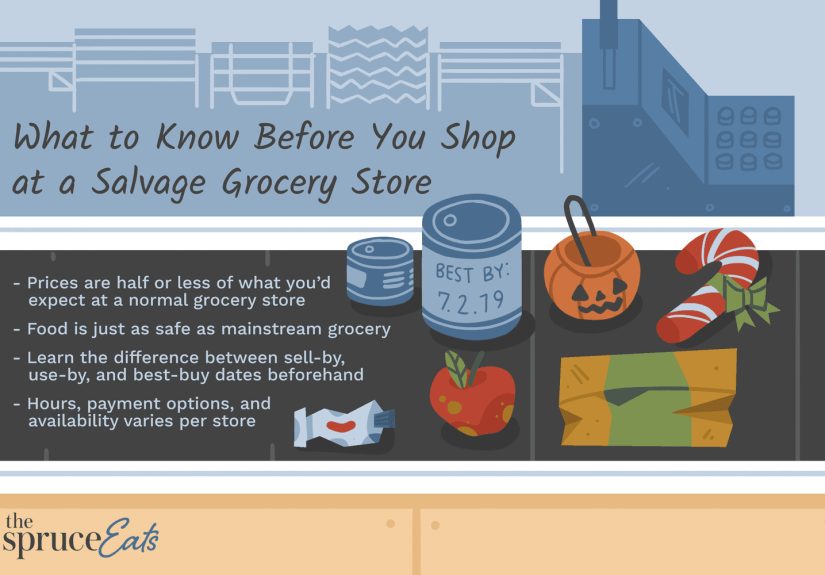
Savings vary by store, region, and what comes through the doors, but it’s common to see
discounts in the “wow, that’s cheaper than my childhood” rangeoften 30% to 50% off,
and sometimes more on certain items.
The trade-off is consistency. Your favorite cereal might be there one week and gone the next.
If you require the emotional security of a predictable aisle, salvage shopping may feel chaotic.
If you enjoy the thrill of the find, congratulationsyou’re about to become insufferable at parties
(in a good way): “Did I tell you about the $1.29 olive oil?” Yes. Yes you did.
What You’ll Find Inside: The “Treasure Hunt” Aisles
Salvage stores aren’t just about “expired food.” In many stores, you’ll see a mix of normal-looking
groceries plus oddball items you didn’t know existed. Typical categories include:
Pantry Staples
- Canned vegetables, beans, soups
- Pasta, rice, grains
- Sauces, dressings, condiments
- Snacks and cereals
- Baking goods (flour, sugar, mixes)
Refrigerated and Frozen Foods
- Cheese, yogurt, deli items (often close-dated)
- Frozen vegetables and meals
- Meat can appear in some salvage stores, but requires extra caution
“Seasonal Weird” and Discontinued Gems
- Limited-edition flavors
- Holiday packaging (yes, even Valentine’s candy in July)
- Products that were rebranded
Non-Food Bargains
- Paper products
- Cleaning supplies
- Basic toiletries
The best mindset is: go with a plan, stay flexible. You’re there to save money,
not to re-enact a cooking show called “How Many Random Ingredients Can I Buy for $20?”
(Although… that does sound fun.)
Safety First: How to Shop Salvage Like a Pro
Salvage grocery stores can be a smart way to cut costs, but they require a little more
attention than a conventional supermarket. Here’s how to shop safely and confidently:
1) Inspect Packaging Like It Owes You Money
- Avoid bulging cans, leaking jars, broken seals, or anything with visible mold.
- Be cautious with heavily dented cansespecially dents on seams or sharp creases.
- Skip packages that look tampered with or re-sealed in a sketchy way.
2) Know the “Cold Chain” Rule
For refrigerated and frozen items, temperature control is everything. If an item should be cold,
it should be cold right now. In the store, look for properly working coolers/freezers and
avoid items that are partially thawed, wet, or oddly soft.
Bring a cooler bag if you’re buying perishablesespecially if you have a long drive home.
Your savings aren’t real if the yogurt becomes a science project.
3) Prioritize High-Confidence Items
If you’re new to salvage shopping, start with shelf-stable pantry goods and sealed packaged items.
Work your way up to refrigerated/frozen once you get comfortable with the store’s quality.
4) Don’t Taste-Test Safety
Spoilage and foodborne illness aren’t always obvious by taste or smell. Use common sense:
when in doubt, throw it out. (Your stomach is not a clearance aisle.)
The Date-Label Decoder Ring
One of the biggest reasons people avoid salvage stores is confusion about date labels.
Here’s the truth: in the U.S., most date labels are about quality, not safety.
That means a product can be past a “Best if Used By” date and still be safeif it’s been handled and stored properly.
Common Labels You’ll See
- Best if Used By / Best By: Peak quality (flavor/texture) date, not a safety deadline.
- Sell By: A store stock-rotation date. It’s about the retailer, not you.
- Use By: Sometimes used for quality; in certain cases it can relate more closely to safety.
Treat it more seriously, especially for highly perishable foods.
A practical rule: the closer the food is to “fresh and perishable,” the more cautious you should be.
Pantry goods? Usually lower risk. Refrigerated proteins? Higher attention required.
One Big Exception
Infant formula is a special case: it has a federally required “use by” date.
If you see infant formula past that date, skip it. No heroic bargain is worth messing with infant nutrition.
Best Buys vs. Risky Buys
Not all bargains are created equal. Here’s a simple way to sort your cart into “smart savings” and “maybe don’t.”
Best Buys (High Value, Lower Risk)
- Sealed shelf-stable foods: pasta, rice, canned goods (in good condition), nut butters, coffee
- Snacks and cereal (especially if packaging is intact)
- Condiments and sauces with solid seals
- Frozen foods that are rock-solid frozen and properly stored
- Household items: paper towels, detergent, soap
Proceed With Caution (But Not Automatically “No”)
- Refrigerated dairy (buy only if very cold; use quickly)
- Eggs (check packaging and store handling)
- Deli items (watch dates and storage conditions)
Skip These (Not Worth the Gamble)
- Anything with a broken seal, swelling, leaks, or obvious spoilage
- Deeply dented cans on seams, or cans with sharp creases
- Perishables that don’t feel properly refrigerated
- Infant formula past its “use by” date
Your goal is not to “win salvage shopping” by buying the most chaotic item possible.
Your goal is to lower your grocery bill while keeping your kitchen boringly safe.
A Smart Savings Strategy (So You Don’t Buy 12 Jars of Regret)
Salvage stores reward strategy. Here’s how to get the biggest savings without turning your pantry into a sitcom subplot.
Step 1: Go In With a “Flexible List”
Write down categories, not brands: “breakfast,” “snacks,” “lunch staples,” “quick dinners,” “protein,” “produce.”
If you only shop for one specific item, you might leave disappointed. If you shop for categories, you’ll leave triumphant.
Step 2: Build Meals Around Your Finds
Salvage shopping is best when you let the bargains steer the menu. Example:
you find cheap tortillas, salsa, and canned beans? Congratulations, taco night is back on the calendar.
You find pasta and jarred sauce? You just bought yourself three easy dinners.
Step 3: Stock Up Selectively
Stocking up is great when (1) the item is shelf-stable, (2) you actually use it, and (3) the price is truly excellent.
Stockpiling twelve bottles of “limited edition pumpkin ranch dressing” is not a retirement plan.
Step 4: Compare Unit Prices
“Cheap” is not always cheap. Bigger packages can look like a deal but cost more per ounce.
Salvage shopping still benefits from quick mental math (or a phone calculator, if you’re civilized).
Step 5: Combine Salvage With a Regular Grocery Run
Many people save the most by using salvage stores for pantry/frozen staples and then buying fresh produce and
must-have items at a conventional store. Think: salvage for the backbone, regular store for the finishing touches.
At-Home Storage Tips to Protect Your Savings
The best bargain in the world becomes expensive if it ends up in the trash. Make your savings stick with smart storage:
Follow the “2-Hour Rule” for Perishables
Don’t leave perishable food sitting at room temperature for long. Get it into the fridge/freezer promptly when you get home.
If it’s blazing hot outside or you had a long drive, your cooler bag becomes your best friend.
Use the Fridge/Freezer Like a System
- Keep the fridge cold and don’t overcrowd it (airflow matters).
- Freeze what you won’t use soonespecially meat, bread, and some prepared foods.
- Label leftovers with dates so you don’t play “mystery container roulette.”
Leftovers: Don’t Let Them Linger Forever
A simple approach is to eat refrigerated leftovers within a few days and freeze anything you won’t get to quickly.
Your future self will thank you. Your future self is also tired and hungry, so help them out.
The Bigger Picture: Food Waste, Budget Relief, and Why This Matters
Salvage grocery stores don’t just help shoppersthey also help keep usable food out of the waste stream.
A lot of surplus and closeout food exists because supply chains are messy: packaging changes, seasonal resets,
over-ordering, discontinued products, and consumer confusion about date labels.
When salvage stores resell these items, they create a win-win:
- Households stretch their budget without sacrificing variety.
- Food gets eaten instead of wasted.
- Communities gain access to discounted groceries, which can matter a lot during tight economic times.
If you want to maximize the “do good while saving money” effect, focus on items you’ll actually use and store safely.
Saving money and reducing waste is a power combobut only if you don’t buy three carts of stuff you won’t eat.
Quick FAQ
Are salvage grocery stores safe?
They can be, yesespecially when you shop smart: inspect packaging, pay attention to temperature control,
and prioritize lower-risk items if you’re new.
Is food “expired” at salvage stores illegal to sell?
Many foods are sold past quality dates (like “Best if Used By”) because those dates often relate to quality, not safety.
The key is how the product was handled and stored.
What’s the biggest mistake new salvage shoppers make?
Buying random bargains without a planthen watching them expire at home. The best savings come from
buying what you already use and freezing/storing items correctly.
How do I find a salvage grocery store?
Search online for “salvage grocery,” “discount grocery,” “closeout grocery,” or “grocery outlet” plus your city.
You can also check local bargain-shopping groups and community forums.
Bonus: Real-World Shopping Experiences (500+ Words)
Salvage shopping has a personality. If a regular grocery store is a well-lit library, a salvage grocery store is a
flea market where the booths are made of pallets and the vibe is “you never know.”
Here are some common experiences shoppers haveso you can walk in prepared (and slightly entertained).
The “Wait, This Is Brand-Name?!” Moment
You’ll spot a familiar, name-brand item at a price that makes you suspicious of reality. The packaging might be
an older design, or it’s the “limited edition” flavor that had a brief run. Your brain will whisper,
“Is this allowed?” Your wallet will answer, “Put it in the cart.”
This is the signature salvage-store dopamine hitenjoy it, but keep reading labels and checking seals like a grown-up.
The Seasonal Time Warp
Salvage stores are where holidays go to retire. You might see pumpkin-shaped pasta in spring or
winter peppermint snacks in June. The upside: the seasonal stuff is often deeply discounted because
mainstream stores are already onto the next theme. The downside: if you buy too much, you may become
the person who serves Christmas cookies at Fourth of July. (No judgment. Cookies are cookies.)
The Cart Math Challenge
Because prices can be so low, it’s easy to overbuy. Shoppers often report leaving with a cart full of
“great deals”… and then realizing they bought five different types of sauce but nothing to put the sauce on.
A good salvage run usually includes a quick pause in the aisle where you ask:
“What meals does this create?” If the answer is “um… condiment tasting flight,” maybe put two back.
The “I’m Bringing a Cooler Next Time” Lesson
Many first-timers learn the hard way that salvage stores can have excellent refrigerated dealsespecially on
close-dated dairy, prepared foods, and some frozen itemsbut you need a plan to get them home safely.
After the first trip where you’re racing your own commute like it’s an Olympic sport, you’ll start bringing a
cooler bag and maybe an ice pack. Suddenly you’re not just saving moneyyou’re saving your future self’s sanity.
The Unexpected Pantry Glow-Up
A fun surprise: salvage stores can upgrade your pantry variety. Shoppers often discover interesting products
they wouldn’t try at full pricespecialty crackers, fancy marinades, unusual teas, snack flavors that sound
like a dare. When the price is low, experimentation feels less risky. You’re more willing to try something new,
and sometimes you find a new favorite.
The “Know Your Store” Confidence
Over time, shoppers develop a feel for their local salvage store: what categories are consistently strong,
how quickly refrigerated items move, and which days have the best selection. Some people treat it like a routine:
salvage store first for the bulk of the haul, then a conventional grocery store for fresh produce, specific staples,
or that one item the family refuses to compromise on.
The Best Experience of All: A Smaller Receipt
The lasting satisfaction isn’t just the quirky findsit’s the moment you look at your receipt and realize you got
a week’s worth of lunches, snacks, and dinner foundations for a fraction of your usual spend. That’s the
real magic. Salvage shopping doesn’t require you to be extreme or perfect. It just asks you to be attentive,
flexible, and willing to treat grocery shopping like a game where the prize is… financial breathing room.
Conclusion
Salvage grocery stores can be a powerful tool for cutting your grocery billespecially if you shop with a plan,
understand date labels, and prioritize safe handling of perishable foods. Start with shelf-stable and frozen items,
inspect packaging carefully, and build meals around what you find. Over time, you’ll get better at spotting the
“high-confidence bargains” and skipping the stuff that’s only cheap because it’s a bad idea.
If you’ve never tried a salvage store, consider this your permission slip. Go once. Bring a flexible list.
And prepare for the moment you proudly announce, “I got this for HALF OFF,” to someone who did not ask.
(But heynow you have grocery money left for dessert.)