Table of Contents >> Show >> Hide
- Quick Verdict
- What the PGC21B Actually Is (and Isn’t)
- Key Specs at a Glance
- Design and Build: Why the Rails Matter
- Cut Quality on Real Flooring Materials
- Accuracy and Repeatability: Where It Earns Its Keep
- Dust and Noise: The Unsexy Stuff That Matters Indoors
- Battery and Runtime: Realistic Expectations
- How It Compares to the Usual Flooring-Cut Options
- What Could Be Better
- Who Should Buy the Ryobi PGC21B
- What to Look for When You Evaluate It
- Final Take
- Experiences and “What It Feels Like” in Real Projects (Extended Field Notes)
- SEO Tags
Flooring projects have a way of starting out as “just one room” and ending as “why is there vinyl dust in my coffee?”
If you’ve ever installed luxury vinyl plank (LVP) or laminate, you already know the villain isn’t the click-lock systemit’s the cutting.
You need crosscuts, rip cuts, weird little nibbles around door jambs, and the occasional “how is this wall not remotely square?” moment.
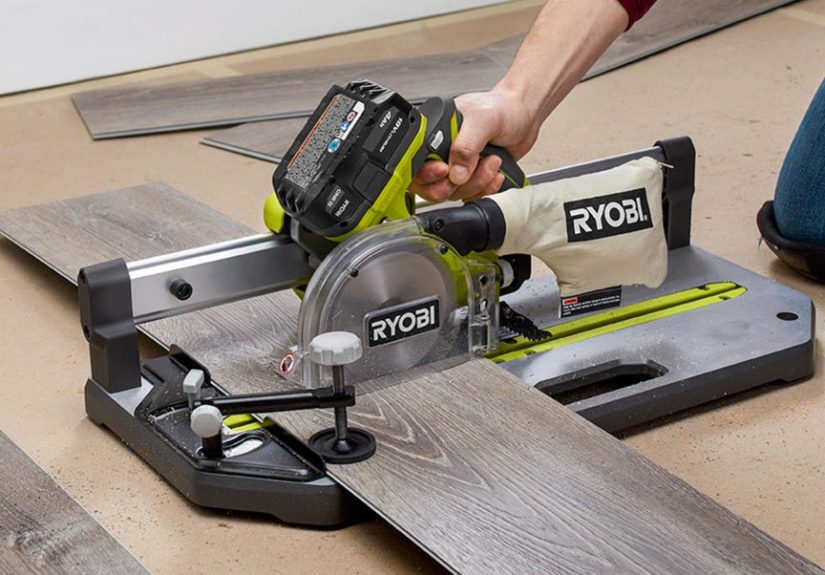
That’s where the Ryobi PGC21B enters the chat. It’s marketed like a circular saw, but it’s really a
specialty cordless flooring saw designed to make repetitive flooring cuts faster and cleanerwithout hauling a full-size miter saw or table saw
into your living room like you’re staging a woodworking competition.
Quick Verdict
The Ryobi PGC21B is a smart buy if you’re doing a lot of plank flooring cuts and want something more accurate and repeatable than “utility knife + hope,”
but less bulky than a full saw station. It shines for LVP/LVT and laminate and can handle many thinner hardwood flooring products, though its
limited cut depth and flooring-focused capacities mean it won’t replace a full-size circular saw for framing or thick lumber.
Pros
- Purpose-built for flooring: fast, repeatable crosscuts and rips with less fuss.
- Stable “supported saw” design helps with consistency versus freehand cutting.
- Dust port compatibility makes indoor work noticeably less messy (your lungs will send a thank-you card).
- Runs on the Ryobi ONE+ 18V battery platform, so it can slot into an existing Ryobi ecosystem.
Cons
- Not a traditional handheld circular sawthis is a flooring specialist, not an all-purpose lumber slicer.
- Depth and capacity limits mean it’s not ideal for thicker solid hardwood boards or big carpentry tasks.
- Like any specialty tool, it only pays off if you’re actually doing the kind of work it’s designed for.
What the PGC21B Actually Is (and Isn’t)
Let’s clear up the name confusion before it clears up your budget. The PGC21B is described as a circular saw, but it’s not the classic
“one-hand-on-the-grip, one-hand-on-the-board” style. Instead, it’s a compact, rail-guided saw supported on a work surface.
That design choice is the whole point: the tool is meant to bring more control and repeatability to flooring cutsespecially when you’re
doing dozens (or hundreds) of pieces in a row.
If you’re expecting a general-purpose circular saw for framing, plywood breakdown, or deck building, this isn’t that.
Think of it as a flooring-friendly hybrid: part mini table saw vibe, part sliding-saw vibe, with the portability advantage of cordless power.
Key Specs at a Glance
Here’s what matters in day-to-day useespecially for flooring installs where speed and consistency beat brute-force power:
- Blade size: 5-1/2-inch (includes a thin-kerf flooring blade)
- Speed: up to 6,500 RPM
- Depth of cut: up to 3/4-inch
- Crosscut capacity: up to 15 inches
- Rip cut capacity: up to 8 inches
- Miter capacity: up to 10 inches
- Dust port: compatible with 1-1/4-inch vacuum accessories
- Claimed runtime example: up to 240 linear feet on a 9Ah battery
- Typical price point: often listed around $179 for the tool-only option
- Warranty: 3-year limited warranty
Design and Build: Why the Rails Matter
Flooring is repetitive by nature. You measure, mark, cut, click. Repeat until your knees file a formal complaint.
The PGC21B’s biggest advantage is that it’s designed around that repetition. A rail-supported cut path helps keep cuts
consistent without relying entirely on your steady-hand skillsbecause after the 47th plank, “steady” becomes more of a concept than a reality.
The platform-style setup also helps with controlling smaller pieces that can feel awkward on big saws.
You’re not trying to balance a short plank while the blade spins and your brain whispers, “Please don’t chip the top layer.”
For many DIYers, that added stability is the difference between “clean install” and “why does this seam look like it survived a bar fight?”
Cut Quality on Real Flooring Materials
LVP and LVT: The Sweet Spot
Luxury vinyl plank and tile are popular for good reasons: durable, waterproof-ish depending on product, and DIY-friendly.
But cuts can get ugly fast if the blade isn’t right or the material flexes mid-cut. With a flooring-oriented blade and a guided setup,
the PGC21B is built to deliver clean, fast cuts on LVP/LVTespecially when you’re making straight crosscuts and repeatable lengths.
Where it’s most helpful is the rhythm: measure once, cut consistently, keep moving.
If you’ve ever tried to do a whole house and spent more time walking to your saw station than installing planks,
you’ll understand why “cordless + compact + repeatable” feels like a power-up.
Laminate: Clean Edges Depend on Blade and Technique
Laminate can chip if you look at it funny, especially on the decorative surface. In general, laminate benefits from
fine-tooth blades and attention to minimizing tear-out. Many DIY guides recommend high tooth counts and simple chip-reduction tricks
like tape over the cut line, depending on the saw and cut direction.
The PGC21B’s included thin-kerf flooring blade is meant to help produce clean, fast cuts. Thin kerf can also reduce the power needed for a cut
and can generate less waste in the kerfuseful in smaller cordless tools where efficiency matters.
In plain English: it’s designed to cut flooring material without acting like it’s auditioning for “World’s Roughest Edge.”
Hardwood Flooring: Know the Limits
Ryobi positions this tool as compatible with hardwood flooring, and it can be a great match for many thinner flooring products,
especially engineered boards and other materials that stay within the saw’s depth capacity. But the key phrase is
“within the saw’s depth of cut.”
If your project involves thicker solid hardwood boards, you’ll want to double-check your material thickness and expectations.
This tool is a flooring specialist, not a “cut anything anywhere” jobsite saw.
Accuracy and Repeatability: Where It Earns Its Keep
Flooring installs reward consistency. A tiny error once is a “huh, that’s odd.” A tiny error 40 times is a “why do I have a permanent
zig-zag line across my room?” The PGC21B’s guiding concept is repeatable cuts: crosscuts to length, rips for edge rows, and controlled miter cuts.
For DIYers, the real value isn’t just that it can cutit’s that it can cut the same way again and again.
That’s how you reduce waste, speed up installs, and stop feeding your scrap pile like it’s a pet that gets anxious when it’s empty.
Dust and Noise: The Unsexy Stuff That Matters Indoors
Cutting flooring inside a home is where dust management stops being optional and starts being “please don’t coat my HVAC system in polymer confetti.”
The PGC21B includes a dust port designed to work with common 1-1/4-inch vacuum accessories, which is a practical touch for indoor use.
Even basic dust collection can make cleanup faster and visibility better, especially when you’re doing lots of cuts.
It also helps keep the work area less slippery, because fine debris underfoot is an underrated way to accidentally re-enact a cartoon.
Battery and Runtime: Realistic Expectations
Ryobi highlights a cut count exampleup to 240 linear feet on a 9Ah batterywhich is a useful reference point for planning.
The big caveat: real runtime depends on the flooring type, thickness, how aggressive the cut is, and how often you’re stopping/starting.
Still, it’s helpful to know the tool is designed to handle serious “whole-room install” workloads on a higher-capacity battery.
Also note the common buying scenario: tool-only listings are typical, meaning you may need to supply a battery and charger
if you’re not already in the Ryobi ONE+ system. If you are already there, the convenience factor goes up immediately.
How It Compares to the Usual Flooring-Cut Options
Utility Knife Scoring (Great… Until It Isn’t)
For some vinyl products, scoring and snapping with a utility knife is a legit approach. It can be fast, quiet, and low-mess.
But it has limits: thicker planks, certain rigid core products, and highly repetitive precision cuts can turn “simple” into “why won’t you snap straight?”
Miter Saw or Table Saw (Powerful, But Not Always Convenient)
Traditional saws are excellent, especially when you already own them and have space for a cutting station.
A miter saw can crush crosscuts; a table saw is king for long rips. The tradeoff is setup, dust, noise, and portability.
Dragging a big saw indoorsor working outside and trekking back and forthadds friction to the project.
Where the PGC21B Fits
The PGC21B’s pitch is simple: bring the cutting capability closer to the work, keep it compact, and make it repeatable.
For many homeowners and DIYers, that’s exactly the pointespecially on installs where you’re cutting constantly and want
the process to feel more like “production” and less like “improvisational carpentry.”
What Could Be Better
- Capacity constraints: Great for flooring planks, not for wide sheet goods or general carpentry needs.
- Depth limitations: Works best when your material stays within its designed cut depth.
- It’s a specialty tool: If you only install flooring once every decade, renting or using existing tools may be smarter.
- Learning curve: A guided flooring saw feels different than handheld cuttingexpect a short adjustment period.
Who Should Buy the Ryobi PGC21B
This tool makes the most sense for:
- DIY homeowners installing LVP/LVT or laminate in multiple rooms (or multiple projects over time).
- Landlords and renovators who do frequent turnover upgrades and want quicker, cleaner installs.
- Ryobi ONE+ users who already own batteries and want a flooring-specific tool without buying into a new platform.
- People who value indoor-friendly setup and want something more controlled than freehand cutting.
It’s a pass if you primarily need a general-purpose circular saw for framing, building decks, or cutting sheet goods.
In that case, you’ll be happier with a traditional cordless circular sawand maybe a dedicated flooring cutter strategy later.
What to Look for When You Evaluate It
If you’re trying to decide whether the PGC21B is “worth it,” focus on practical outcomes rather than marketing poetry:
- Repeatability: Does it produce consistent lengths and clean seams without constant re-checking?
- Edge quality: Are you getting clean edges on your specific flooring type without chipping?
- Workflow speed: Are you cutting faster overall, including setup and cleanup time?
- Dust control: Does connecting a vacuum meaningfully reduce mess where you’re working?
- Project match: Are your plank sizes and thicknesses aligned with the saw’s capacities?
Final Take
The Ryobi PGC21B is one of those tools that makes you wonder why it took so long for someone to make a cordless,
flooring-centered cutting solution that doesn’t require a full shop setup. It’s not trying to be everything.
It’s trying to be the thing that makes flooring installs less annoyingand in that role, it’s genuinely compelling.
If you’re staring down a multi-room LVP or laminate install and you want cleaner cuts, faster repetition, and less sawdust drama,
the PGC21B earns a spot on the shortlist. Just don’t ask it to frame a house afterward. It has boundaries. Healthy ones.
Experiences and “What It Feels Like” in Real Projects (Extended Field Notes)
Most people don’t buy a flooring saw because they love buying tools. They buy it because somewhere between plank #23 and plank #24,
they realize they’ve spent an entire afternoon doing two activities: walking to the saw and cleaning up the results of walking to the saw.
That’s where the PGC21B tends to win heartsby smoothing the workflow and cutting down the “project friction” that makes DIY feel harder than it should.
A common first impression is that the saw feels like a “station,” even though it’s compact and cordless. Instead of balancing a plank on sawhorses
while your hands do the nervous coordination dance, you’re working with a supported setup that encourages consistency. On a weekend install,
that can translate to fewer re-cuts, fewer chipped edges, and fewer moments where someone in the house asks, “Are you SURE you measured that?”
and you answer, “Yes,” while internally adding, “I think,” and “maybe,” and “please stop talking to me.”
In multi-room installs, the biggest quality-of-life gain is repeat cuts. You’ll often have runs where many planks need the same lengthespecially
once you establish the stagger pattern. With typical tools, you can do this too, but it often requires a bigger setup or repeated marking and checking.
The PGC21B experience is more like batch work: the cut process starts to feel consistent and predictable, which is exactly what flooring needs.
People frequently describe this shift as the moment the project stops feeling like “DIY chaos” and starts feeling like “I can actually finish today.”
On LVP and LVT, the cuts tend to look cleaner when the tool is matched to the material. Many DIYers notice they’re getting fewer ragged edges
compared with improvised approaches, especially when they’re trying to keep visible seams tight. On laminate, the conversation is often about
chipping and surface protectionso a flooring-oriented blade and controlled cut path can be a relief. The tool won’t magically eliminate every
finish issue (flooring still demands care), but it can reduce the number of “mystery chips” that show up right when you’re about to click in a piece.
Dust collection is another “experience” factor that doesn’t sound exciting until you’ve lived the alternative. When you’re cutting indoors, dust isn’t
just messit’s a productivity tax. Fine debris gets everywhere, visibility drops, cleanup takes longer, and your work area starts feeling less safe.
With a vacuum connected, many users find the workspace stays clearer, which helps you move faster and feel less like you’re operating in a beige fog.
It also tends to make the project more socially acceptable to everyone else in the house, which is a surprisingly important performance metric.
The biggest disappointment experiences usually come from mismatched expectations. Someone sees “circular saw” and imagines a universal cutting tool.
Then they realize it’s designed around flooring: plank sizes, flooring thickness, and the type of cuts you typically make during an install.
If your job involves thick stock, framing lumber, or bigger carpentry tasks, you may feel boxed in by the tool’s capacities.
But if your goal is “install flooring efficiently with clean results,” the limitations feel more like boundaries that keep the tool focused.
Bottom line: in real projects, the PGC21B tends to feel less like a “luxury” tool and more like a “why didn’t I do this sooner?” toolwhen
the project matches its strengths. It’s the kind of purchase that makes sense when you’re doing enough flooring that time, consistency, and cleanup
become the true cost drivers, not just the price tag.