Table of Contents >> Show >> Hide
- Quick Snapshot: PSP vs PS Vita at a Glance
- Design and Build: Pocket-Friendly vs “Serious” Handheld
- Screens Side by Side: Resolution Is a Loud Flex
- Controls and Gameplay Feel: The Two-Stick Turning Point
- Power and Performance: What You Could Do on a Train
- Game Libraries: What You’ll Actually Play
- Media and “Extra Stuff”: The PSP Was a Tiny Entertainment Center
- Connectivity and Remote Play: Sony’s Big Dream, Two Different Generations
- Storage and Collecting: The Part Nobody Misses (But Everyone Must Deal With)
- Which One Should You Choose Today?
- Real-World Experiences: Using PSP and PS Vita Today (Extra)
- Conclusion
- SEO Tags
Sony’s PSP and PS Vita are like two siblings born in different decades: one grew up on shiny plastic discs and MP3 playlists,
the other showed up with a touch screen, dual sticks, and the confidence of a handheld that thought it could be your tiny PS3/PS4.
Put them side by side and you don’t just see a “newer model.” You see Sony’s entire philosophy shiftfrom
“portable multimedia player that also happens to play excellent games” to “portable console-grade experience, please hold my rear touchpad.”
This PSP vs PS Vita comparison breaks down the hardware, feel, game libraries, and real-world usability todayso you can decide
which handheld fits your life (or your shelf) better. Whether you’re nostalgic for UMD clamshell cases or curious why the Vita still has
a cult following, let’s line them up and judge them like we’re on a reality show called America’s Next Top Handheld.
Quick Snapshot: PSP vs PS Vita at a Glance
| Category | PlayStation Portable (PSP) | PlayStation Vita (PS Vita) |
|---|---|---|
| Launch era | Mid-2000s handheld boom | Early 2010s “handhelds meet smartphones” era |
| Screen | 4.3" widescreen, 480×272 LCD | 5" 960×544 (OLED on early models; LCD on the Slim) |
| Controls | D-pad + buttons + one analog nub | Buttons + D-pad + two analog sticks + front touch + rear touch pad |
| Game media | UMD discs (most models); some digital | Game cards + digital downloads (no UMD support) |
| Storage | Memory Stick variants; some models with internal storage | Proprietary Vita memory cards; Slim model adds 1GB internal storage |
| Connectivity | Wi-Fi on most models; PSP Go adds Bluetooth | Wi-Fi; some models add 3G; designed around online accounts and digital storefronts |
| Signature vibe | “Pocket PlayStation + media player” | “Console-like controls + high-res screen + ambitious features” |
Design and Build: Pocket-Friendly vs “Serious” Handheld
PSP: The sleek pioneer
The PSP is all about that mid-2000s “premium gadget” energy: glossy finishes, curved edges, and a wide screen that made
handheld gaming feel suddenly cinematic. Even now, a PSP still looks like it was designed by someone who cared deeply about
how it would look in a commercial with techno music.
It’s also famously portable. The control layout is simple and familiarD-pad on the left, face buttons on the right, shoulder buttons on top,
and one analog nub. If you’re into quick sessions, the PSP feels like it’s always ready to be tossed into a bag and booted up on demand.
PS Vita: More comfortable, more complex
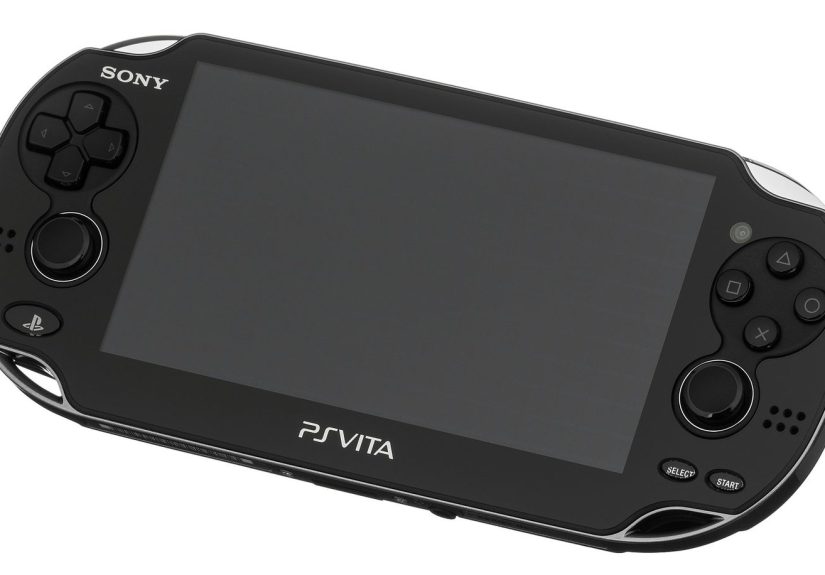
The PS Vita is a bigger “hands-first” design. The grips are more natural, the controls are more console-like, and the whole system feels
built for longer play sessions. Dual sticks alone change the personality of the device: suddenly shooters, action games, and camera control
don’t feel like a compromise.
The Vita’s layout also signals its ambition: touch screen up front, rear touch pad on the back, motion sensors, and a UI that leans into apps,
accounts, and digital downloads. It’s still portable, but it’s a “bring a case” portablelike a nice pair of headphones you don’t just shove
into your pocket with loose coins and existential dread.
Screens Side by Side: Resolution Is a Loud Flex
PSP screen: cinematic… for its time
PSP’s 4.3-inch widescreen was a headline feature when it launched, and it helped the system stand out immediately. At 480×272, it looks
softer by today’s standards, but it can still be charmingespecially for games built around bold shapes and strong art direction. Classic PSP
titles often “fit” the screen naturally because they were designed for it, not scaled down from something else.
PS Vita screen: sharper, richer, and more modern
The Vita’s 960×544 display is a major leap. Text is clearer, fine details pop, and UI elements look more at home in the modern world.
Early OLED models add deep contrast that makes colors feel extra punchy; later Slim models switch to LCD but gain practical perks like a
lighter build and small internal storage for essentials.
In plain terms: if you put PSP and Vita side by side, the Vita looks like “HD handheld,” and the PSP looks like “stylish classic.”
Neither is “bad”they’re just different eras, like comparing DVDs to streaming in 4K.
Controls and Gameplay Feel: The Two-Stick Turning Point
PSP’s one-nub life
PSP’s single analog nub was a big deal at the timemany handhelds didn’t have analog control at all. But once games started leaning hard
into 3D cameras, one nub became a design challenge. Developers got clever: camera buttons, shoulder-button modifiers, lock-on systems,
and control schemes that feel like they were built by engineers solving a fun puzzle.
The upside? Many PSP games were designed with that limitation in mind, which can make them surprisingly elegant. The downside?
If you’re used to modern controls, some genresespecially shooterscan feel like you’re trying to thread a needle while riding a bus.
Vita’s “console controls” upgrade
Dual analog sticks change everything. Third-person action and first-person movement feel more natural, and ports from bigger systems
don’t need as many workarounds. Add the touch screen and rear touch pad, and the Vita becomes a playground for experimentation
sometimes brilliant, sometimes “why am I rubbing the back of my handheld like it’s a magic lamp?”
When the touch features are optional or lightly integrated, they’re fun. When they’re mandatory in the wrong moments, they can feel like
a mini-game you didn’t ask for. Still, for pure comfort and modern control, the Vita is the clear winner.
Power and Performance: What You Could Do on a Train
PSP performance: optimized and surprisingly capable
The PSP was built to deliver “home-console vibes” in a portable form, and for its era it did. Games like God of War: Chains of Olympus,
Gran Turismo, Daxter, and Monster Hunter proved the PSP could handle big ambitionespecially when developers tailored
art and performance specifically for the hardware.
What the PSP does best is consistency. It’s not trying to be everything at once. It’s a focused machine that runs the PSP library well,
and that library is packed with games that were designed to look good on that screen and play well on those controls.
PS Vita performance: a generational jump
The Vita’s hardware leap shows up immediately in lighting, texture detail, and smoother motion in many titles. It also enables more robust
system software features and richer online integration. Games like Uncharted: Golden Abyss, Killzone: Mercenary,
Tearaway, and Gravity Rush show what the system can do when it’s pushed thoughtfully.
In a side-by-side comparison, the Vita feels like Sony aiming to shrink the living room into your hands. The PSP feels like Sony
making a portable device that’s proud to be portable.
Game Libraries: What You’ll Actually Play
PSP library: deep, weird, wonderful
PSP has one of the most eclectic handheld libraries ever. You get huge franchises, strong JRPG representation, rhythm games,
experimental oddities, and a lot of “this shouldn’t work on a handheld, but it does” energy. It’s also an era when developers were still
willing to make handheld-first gamesnot just companion products.
If you love physical media, PSP is also the UMD era. There’s something satisfying about clicking in a disc in a tiny plastic shell
like you’re loading a miniature spaceship. It’s nostalgic, tactile, and undeniably cool.
Vita library: quality peaks, indie paradise, and cult classics
Vita’s first-party and “big budget” moments are memorable, but its long-term identity became a mix of unique exclusives, Japanese imports,
and a strong indie presence. The Vita is also a great home for games that benefit from the screen quality and controls: crisp pixel art,
action platformers, roguelikes, and story-driven titles that feel right at home in handheld sessions.
Backward compatibility reality check
Many people ask the same question: “Can the Vita play PSP games?” The practical answer is: it can play a lot of PSP titles digitally,
but it does not accept PSP’s UMD discs. So if your PSP collection is mostly physical, a Vita won’t replace that experience.
On the flip side, if you prefer digital libraries and quick switching, Vita can be a smoother day-to-day system.
Media and “Extra Stuff”: The PSP Was a Tiny Entertainment Center
PSP: ahead of its time for multimedia
The PSP wasn’t just a game machineit was marketed and used as a portable media device. Movies on UMD, music playback,
photos, and a sense that you were carrying a miniature home theater. Today, phones do all of that and then some, but in the mid-2000s,
the PSP felt like a futuristic flex.
Vita: more modern interface, less “movie disc” charm
Vita leans more into digital distribution and account-based experiences. It’s not trying to sell you movies on tiny discs; it’s trying to
keep you in a modern handheld ecosystem. The experience can feel more seamlessespecially for hopping between gamesthough it also
depends more on storage decisions and digital availability.
Connectivity and Remote Play: Sony’s Big Dream, Two Different Generations
PSP’s early experiments
PSP introduced a lot of players to handheld Wi-Fi features: online modes, updates, browsing, and early experiments with connecting to
Sony’s home consoles. It was a “first draft” of something Sony clearly wanted to grow over time.
Vita’s stronger Remote Play identity
Vita is more closely tied to the idea of Remote Play and second-screen gaming. It was built with that in mind, and it feels like Sony’s
more mature take on the conceptespecially in how it positions the Vita as an extension of a home console experience.
Storage and Collecting: The Part Nobody Misses (But Everyone Must Deal With)
PSP storage: flexible, model-dependent
PSP storage depends on which model you have and how you like to play. UMD owners can live happily with minimal storage,
while digital users rely on Memory Stick formats. Some models (like the PSP Go) lean harder into digital, adding internal storage and
changing the whole vibe of the system.
Vita storage: proprietary decisions, real-world consequences
Vita’s storage is one of its most talked-about pain points: proprietary memory cards can make building a digital library feel more expensive
and more complicated than it needed to be. The Slim model’s small internal storage helps with basics, but anyone who downloads multiple
larger games will still need a dedicated memory solution.
Which One Should You Choose Today?
Choose PSP if…
- You want a classic handheld with a massive, distinctive library.
- You love physical collecting (UMDs are peak “tiny sci-fi disc” energy).
- You prefer a simple, pick-up-and-play device with fewer ecosystem complications.
- You’re chasing pure nostalgiaPSP delivers it in high-gloss.
Choose PS Vita if…
- You want dual sticks and a more modern control feel.
- You care about screen clarity and higher resolution.
- You like digital libraries and switching games quickly.
- You’re interested in Vita’s unique catalog plus portable-friendly indie and action titles.
Choose both if…
You’re a handheld enthusiast who knows the truth: there is no “one perfect device,” only different flavors of joy.
The PSP is an era. The Vita is an ambition. Side by side, they’re like a before-and-after photo of Sony’s handheld dreams.
Real-World Experiences: Using PSP and PS Vita Today (Extra)
Here’s what the day-to-day experience often feels like when you actually live with these systemsbecause specs are cute,
but your commute, couch time, and “where did I put that charger?” reality will make the final decision.
On a short trip or commute, the PSP tends to win on “grab-and-go” simplicity. You pop in a UMD, hit power, and you’re in.
There’s something oddly relaxing about a device that doesn’t constantly ask you to think about storage management or a digital queue.
The PSP experience is closer to carrying a favorite paperback: you picked the game you wanted, you brought it, end of story.
Also, UMDs have that satisfying click when they loadlike the handheld is saying, “Yes, I am doing a physical media thing, and I am proud.”
The Vita, meanwhile, feels more like carrying a whole library. If you’re the type who changes mood every 12 minutes (“JRPG? Nah. Shooter? Maybe.
Puzzle game? Actually, yes.”), Vita’s digital-first design is convenient. You can bounce between games without swapping anything.
The trade-off is that you’ll think about storage sooner than you thinkusually right after you download two games and the system politely
suggests you become an expert in file management.
At home on the couch, Vita’s controls shine. Dual sticks make a huge difference in comfort, especially if you like action games.
In side-by-side play, many players describe the PSP as “still fun” but the Vita as “more natural.” It’s not that the PSP is unusableit’s that
your hands quickly remember what modern controls feel like, and they start negotiating for the better deal.
For late-night sessions, screen preferences become personal. Some people love the crispness and pop of the Vita’s display,
especially on OLED models, where colors look rich and contrast is dramatic. The PSP screen can feel softer and warmerless sharp, but often
easier on the eyes for older games that weren’t built to show off tiny UI fonts. Translation: Vita looks like “wow,” PSP looks like “cozy.”
For collecting, PSP is pure fun because UMDs feel like artifacts. You can build a physical library that looks distinct and
“of its time.” Vita collecting is more of a mixgame cards exist, but the system’s identity leans digital, and that changes the vibe.
If you love shelves, cases, and tangible game nights, PSP fits that personality better. If you love convenience and a device that feels
like a portable dashboard for your library, Vita scratches that itch.
The best “side by side” truth is this: PSP is a handheld you bond with like a classic gadget. Vita is a handheld you rely on like a mini console.
Owning both is not redundantit’s like having both a vintage camera and a modern one. They take different kinds of “pictures,” and both can be
the right choice depending on what kind of day you’re having.
Conclusion
When you compare PSP and PS Vita side by side, you’re not just comparing specsyou’re comparing two eras of portable gaming.
The PSP is iconic for its physical media charm, straightforward portability, and a library that feels like a time capsule of mid-2000s creativity.
The PS Vita is the more modern-feeling handheld, with sharper visuals, console-like controls, and features that aimed bigeven if the market
shifted under its feet. If your priority is simplicity and physical collecting, PSP is still a joy. If your priority is control comfort, screen clarity,
and a more console-style handheld experience, Vita is tough to beat. Either way, you’ll be holding a piece of PlayStation historyjust in two
very different dialects.