Table of Contents >> Show >> Hide
- The Electric Truck That Looks Like a Truck
- What Is the Ford F-150 Lightning?
- Design: Familiar on Purpose
- Performance: Quiet, Quick, and Surprisingly Fun
- Range and Charging: The Big Questions
- Towing, Payload, and Work Capability
- Pro Power Onboard and Home Backup Power
- Interior and Technology
- Safety and Recalls: What Buyers Should Know
- 2025 and 2026 Ford F-150 Lightning Lineup
- How the Lightning Compares With Other Electric Trucks
- Who Should Buy the Ford F-150 Lightning?
- Ownership Experience: What It Feels Like to Live With a Ford F-150 Lightning
- Conclusion
Note: This article is written for web publication in standard American English, using real product information and market context available as of 2026. Pricing, incentives, availability, and production status can change by region and dealer inventory.
The Electric Truck That Looks Like a Truck
The Ford F-150 Lightning is one of the most important electric pickups ever sold in the United States, not because it looks like a spaceship or tries to make your driveway feel like a science-fiction movie set, but because it does almost the opposite. It takes America’s best-known pickup nameplate and electrifies it without asking truck buyers to learn a new visual language. At first glance, the Lightning is clearly an F-150. It has a big cab, a useful bed, a confident stance, and enough presence to make compact crossovers quietly move aside in parking lots.
That familiar shape is the whole point. Ford did not design the F-150 Lightning as a rolling experiment for people who collect charging cables the way others collect baseball cards. It built an electric truck for drivers who still care about towing, hauling, job-site practicality, family comfort, weekend projects, and the sacred American ritual of buying plywood because “we might need it someday.” The Lightning adds instant torque, quiet driving, home-charging convenience, and a front trunk where the engine used to live. That front trunk, officially called the Mega Power Frunk, is one of the truck’s most delightful tricks: lockable, weather-resistant storage with power outlets and enough space for tools, groceries, luggage, or a suspiciously large amount of tailgate snacks.
The result is a pickup that feels both traditional and futuristic. It is not perfect, especially if your daily routine involves heavy towing across long distances. But for the right driver, the Ford F-150 Lightning is a surprisingly practical bridge between old-school truck usefulness and the electric future.
What Is the Ford F-150 Lightning?
The Ford F-150 Lightning is the all-electric version of the F-150 full-size pickup. It uses dual electric motors and standard four-wheel drive, giving every model strong traction and quick acceleration. Unlike a gas-powered F-150, there is no V6 or V8 under the hood. Instead, the Lightning uses a battery pack mounted low in the chassis and electric motors that deliver power immediately.
That instant power delivery changes the personality of the truck. In a gasoline pickup, acceleration builds as the engine revs and the transmission works through gears. In the Lightning, the response is immediate. Press the accelerator and the truck moves with the kind of smooth, muscular shove that makes passengers look up from their phones with respect, fear, or both. Depending on configuration, the 2025 F-150 Lightning offers up to an EPA-estimated 320 miles of range, while certain extended-range models produce serious horsepower and 775 lb-ft of torque.
The Lightning is sold as a crew-cab pickup with a 5.5-foot bed, which makes it especially useful for families, contractors, outdoor enthusiasts, and anyone who wants a truck that can handle both weekday errands and weekend chaos. It is not a stripped-down novelty EV. It is a real pickup with a real bed, real towing numbers, and a cabin that can double as a mobile office when life refuses to respect your calendar.
Design: Familiar on Purpose
One of the smartest things about the Ford F-150 Lightning is that it does not overthink its appearance. The truck has distinctive lighting, a closed-off front grille area, and EV-specific details, but it still looks like an F-150. That matters. Pickup buyers are often practical people. They may appreciate technology, but they do not necessarily want a truck that looks like it was designed by a committee of laser pointers.
The Lightning keeps the upright shape, roomy cab, and tough proportions of the regular F-150. The design says, “Yes, I am electric,” but it also says, “I can still haul mulch without becoming emotionally fragile.” Ford’s approach gives the truck broad appeal. It can park at a construction site, a school pickup line, a campsite, or a suburban driveway without looking out of place.
The Mega Power Frunk
The front trunk may be the Lightning’s most useful party trick. Since there is no combustion engine under the hood, Ford turned that space into a large, lockable storage compartment. It offers about 14.1 cubic feet of cargo space and can hold up to 400 pounds. That is enough for luggage, power tools, groceries, muddy boots, sports gear, or a cooler full of beverages that should probably be labeled “for after the work is done.”
Better yet, the frunk includes power outlets, making it useful for tailgating, camping, mobile work, and emergency situations. It turns the front of the truck into a practical storage-and-power station, which is the kind of clever feature that makes you wonder why trucks were not doing this decades ago.
Performance: Quiet, Quick, and Surprisingly Fun
The Ford F-150 Lightning is not just quick “for a truck.” It is quick, period. Electric motors provide instant torque, and the Lightning uses that advantage beautifully. Even the work-oriented versions feel strong, while extended-range models can deliver the kind of acceleration that makes a full-size pickup feel almost mischievous.
Standard-range versions of the 2025 Lightning are commonly associated with 452 horsepower and 775 lb-ft of torque, while extended-range versions can reach up to 580 horsepower with the same massive torque figure. The 2026 STX trim, introduced as a more rugged replacement for the outgoing XLT, uses an extended-range battery and is rated at 536 horsepower and 775 lb-ft of torque. Those numbers are not decorative. They translate into confident merging, easy passing, and effortless movement even when the truck is carrying people, tools, or weekend gear.
The low-mounted battery also helps the truck feel planted. The Lightning is heavy, and you can feel its size, but the weight sits low, giving it a stable, controlled character on the road. It is not a sports car, and anyone expecting canyon-carving delicacy from a full-size pickup should probably also expect a golden retriever to do their taxes. But for a big truck, it is composed, smooth, and unusually quiet.
Range and Charging: The Big Questions
Range is the first thing many shoppers ask about, and for good reason. The 2025 Ford F-150 Lightning offers EPA-estimated range figures that vary by trim and battery. Standard-range models are generally rated around 240 miles, while extended-range versions can reach up to about 300 to 320 miles depending on configuration. The 2025 Lariat is one of the models associated with the highest available range, while Platinum models trade some efficiency for more luxury equipment and larger wheels.
EPA efficiency figures also vary. Some 2025 Lightning configurations are rated around the high 60s to 70 MPGe combined, with city numbers often better than highway numbers. That is typical for EVs, which are more efficient at lower speeds and can recover some energy through regenerative braking.
Charging is where ownership habits matter. For many drivers, the best Lightning experience starts at home. Plug in overnight, wake up with range, and avoid gas stations entirely. Public DC fast charging helps on road trips, but electric trucks are large, heavy vehicles with big batteries, so charging stops require more planning than filling a gas tank. Ford has expanded charging access over time, and many owners benefit from home Level 2 charging, which makes daily use dramatically easier.
Real-World Range Depends on Real-World Life
EPA numbers are helpful, but they are not magic spells. Weather, speed, payload, tires, terrain, and towing can all change range. Highway driving at 75 mph uses more energy than relaxed city driving. Cold weather can reduce battery efficiency. Towing a tall trailer can cut range significantly because air resistance is the silent villain of electric-truck road trips. The Lightning can tow, but drivers who regularly haul heavy trailers over long distances should plan carefully and be honest about their routes.
For commuting, local work, school runs, errands, and moderate weekend use, the Lightning’s range can be more than enough. For cross-country towing, it requires more patience and planning than a gas or hybrid truck. That is not a failure; it is the reality of today’s electric pickup technology.
Towing, Payload, and Work Capability
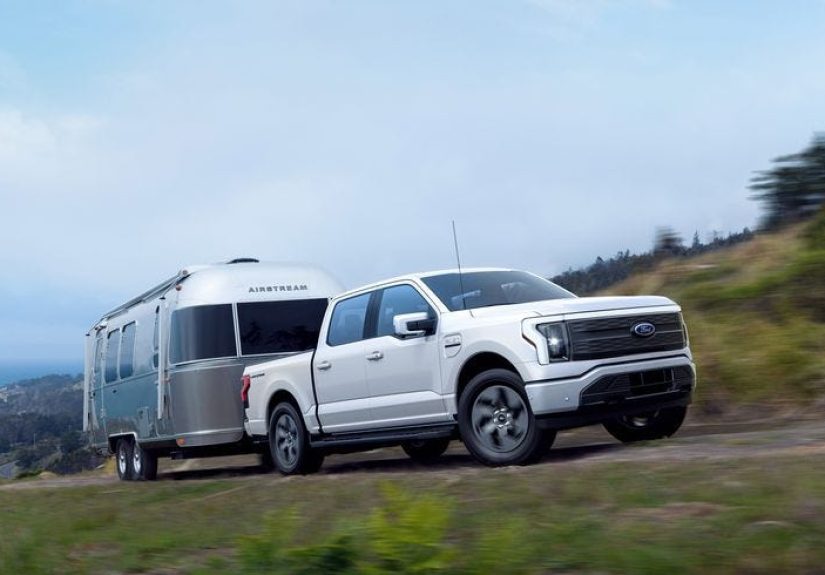
The Ford F-150 Lightning is a real truck, and its towing numbers prove it. Properly equipped 2025 Flash and Lariat models can tow up to 10,000 pounds with the available Max Trailer Tow Package. The Platinum is rated lower, up to 8,500 pounds, largely because its luxury equipment and configuration affect capacity. Payload can reach up to about 2,000 pounds depending on trim and setup.
Those figures make the Lightning useful for many owners: utility trailers, small campers, boats, landscaping equipment, building supplies, and weekend toys are all within its skill set. The truck’s instant torque makes pulling feel smooth and confident. There is no engine roar, no dramatic downshift, and no sense that the truck is working itself into a motivational speech. It simply moves.
However, towing range is the key trade-off. A trailer changes aerodynamics and energy use dramatically. A Lightning towing a heavy camper may need more frequent charging stops than a gas F-150 needs fuel stops. For local towing, that may not matter. For long-distance towing across rural areas, it matters a lot. Buyers should match the truck to their actual use, not to an imaginary version of themselves who tows a yacht through the Rockies every Wednesday.
Pro Power Onboard and Home Backup Power
One of the F-150 Lightning’s best features is its ability to export power. Ford’s Pro Power Onboard system can run tools, lights, appliances, campsite gear, and other electrical equipment. On properly equipped models, the truck can become a mobile generator, which is extremely useful for contractors, outdoor events, emergency situations, and tailgates where someone will absolutely bring a blender.
The Lightning can also support home backup power when equipped with the right hardware. Ford has promoted the truck’s ability to power an average home for a limited period, depending on battery size, home energy use, and installation setup. For homeowners in areas with outages, storms, or unreliable grid service, that feature can be more than a convenience. It can be peace of mind on four wheels.
This is where the Lightning feels genuinely different from a regular truck. A gas pickup can tow and haul, but it cannot easily become a large battery for your house, job site, or campsite. The Lightning adds a new layer of usefulness that goes beyond transportation.
Interior and Technology
Inside, the Ford F-150 Lightning feels familiar to anyone who has spent time in a modern F-150. That is good news. The cabin is roomy, practical, and designed around real-world use. Depending on trim, buyers can get durable work-ready materials, large digital displays, premium seating, advanced driver-assistance features, and a massive vertical touchscreen on higher trims.
Ford’s SYNC system handles navigation, media, smartphone integration, and EV-specific information such as charging status and range estimates. Higher trims may include features such as BlueCruise hands-free highway driving capability, premium audio, heated and ventilated seats, and upscale interior finishes. The cabin can feel like a mobile command center, especially when paired with the available interior work surface. Park the truck, fold out the work area, open a laptop, and suddenly your pickup is an office with better towing capacity than most conference rooms.
Safety and Recalls: What Buyers Should Know
Safety information is an important part of evaluating any vehicle, especially a large family-and-work truck. The F-150 Lightning has strong modern safety technology, but buyers should pay attention to official ratings and recall status. IIHS testing has highlighted specific concerns in updated crash-test categories, including rear-seat passenger protection in certain evaluations. That does not mean the truck is unsafe overall, but it does show why shoppers should look at the latest safety ratings rather than relying on brand reputation alone.
Recalls are also part of the ownership picture. Like many modern vehicles, the F-150 Lightning has been affected by software and component-related recall campaigns. Some Ford recalls have involved park-module or rollaway-prevention concerns across multiple Ford electrified models. Owners and shoppers should always check a specific vehicle identification number through Ford or NHTSA before buying, especially when shopping used.
The practical advice is simple: do not panic, but do verify. A completed recall repair is normal. An ignored recall is a problem waiting patiently with a clipboard.
2025 and 2026 Ford F-150 Lightning Lineup
The 2025 Ford F-150 Lightning lineup includes trims such as Pro, XLT, Flash, Lariat, and Platinum. The Pro is aimed at fleets and work buyers, while the XLT adds more everyday comfort. The Flash is one of the most interesting trims because it brings the extended-range battery and a strong mix of technology and value. The Lariat adds more premium equipment, and the Platinum sits at the top with luxury features, larger wheels, and a higher price.
For 2026, Ford introduced the STX trim to replace the XLT in the Lightning lineup. The STX brings a more rugged look, an extended-range battery, all-terrain styling cues, and a standard rear electronic locking differential. It is not a hardcore off-road model with lifted suspension and skid-plate drama, but it gives buyers more attitude and more range than the outgoing entry-mid trim. Early reporting placed the STX around the mid-$60,000 range including destination, while other trims such as Flash, Lariat, and Platinum sit higher.
Pricing can change quickly because EV incentives, dealer discounts, tax-credit rules, and regional inventory all move around like squirrels in a leaf blower. Shoppers should compare transaction prices, financing offers, lease deals, and charging-equipment incentives before deciding.
How the Lightning Compares With Other Electric Trucks
The Ford F-150 Lightning competes with electric pickups such as the Rivian R1T, Chevrolet Silverado EV, GMC Sierra EV, and Tesla Cybertruck. Each takes a different approach. Rivian focuses on adventure and premium design. The Silverado EV emphasizes range and truck capability. The Cybertruck leans into radical styling and high-tech theater. The Lightning’s advantage is familiarity. It feels like an F-150 that happens to be electric, and that may be exactly what many buyers want.
Compared with some rivals, the Lightning may not always offer the longest range or the fastest charging. But it counters with practical packaging, strong dealer support, a huge existing F-Series customer base, and useful features like the frunk and Pro Power Onboard. For buyers who want an electric truck without learning to love stainless-steel origami, the Lightning makes a strong case.
Who Should Buy the Ford F-150 Lightning?
The Ford F-150 Lightning makes the most sense for drivers who can charge at home, drive predictable daily routes, and want pickup capability without gasoline. It is especially appealing for homeowners, contractors with local routes, fleet operators, suburban families, outdoor enthusiasts, and tech-friendly truck buyers who still want traditional usefulness.
It may not be ideal for drivers who tow heavy trailers long distances every week, lack convenient charging, or need maximum range in remote areas. For those buyers, a gas or hybrid F-150 may still be the more practical choice. But for many people, the Lightning can replace a gas truck with fewer compromises than expected.
Ownership Experience: What It Feels Like to Live With a Ford F-150 Lightning
Living with the Ford F-150 Lightning is less about making a dramatic lifestyle statement and more about small daily surprises. The first surprise is silence. Start the truck and there is no rumble, no idle vibration, and no cold-start neighborhood announcement. You simply shift into drive and glide away. For people used to gas trucks, the quietness can feel strange at first, almost as if the truck is sneaking out before sunrise to avoid waking the dog.
The second surprise is how quickly the Lightning becomes normal. Charging at home changes the routine. Instead of stopping at a gas station after work, you plug in at night. In the morning, the truck is ready. For daily commuting, school drop-offs, hardware-store runs, and local job-site driving, that convenience can be addictive. The gas station becomes a place you visit mostly for windshield washer fluid, snacks, and the occasional questionable hot dog.
The frunk also changes how you use the truck. In a regular pickup, secure dry storage usually means using the cab, adding a bed cover, or buying a toolbox. In the Lightning, the front trunk gives you a clean, lockable space separate from the bed. Groceries do not roll around next to muddy gear. Power tools can stay out of the rain. Luggage can be hidden from view. For families, the frunk is excellent for sports equipment, backpacks, and emergency supplies. For workers, it becomes a mobile storage bin with outlets. For tailgaters, it is basically a snack bunker with electricity.
Driving the Lightning in traffic is easy. The instant torque makes merging simple, and the regenerative braking can make stop-and-go driving smoother. The truck is still large, so parking garages and tight city streets require attention. But the smooth power delivery makes it feel less stressful than expected. There is no transmission hunting, no engine noise, and no delay when you ask for power. It just goes.
On the highway, the Lightning feels confident and comfortable. The cabin is quiet, the ride is composed, and the truck has plenty of passing power. The main adjustment is mental: you pay more attention to range, charging stops, and speed. Driving faster uses more energy, and towing or cold weather can make the range estimate drop faster than your patience during a software update. Experienced EV owners learn to plan ahead, precondition when possible, and treat charging stops as part of the trip rather than a personal insult.
For weekend projects, the Lightning is excellent. Hauling mulch, furniture, lumber, bikes, camping gear, or home-improvement supplies feels natural. The bed is useful, the cab is spacious, and the available power outlets can run equipment without hauling a separate generator. On a job site, that can save time. At a campsite, it can make the difference between “roughing it” and “roughing it with coffee,” which is clearly the superior civilization.
The ownership experience is not flawless. Public charging reliability can vary. Some charging stalls are awkwardly placed for a truck this size. If you tow often, you will need to plan around reduced range. And because the Lightning is still a relatively expensive vehicle, depreciation, insurance, and repair costs deserve careful consideration. Used shoppers should check battery health, recall completion, warranty status, charging history if available, and tire condition. EV tires on heavy trucks work hard, and they do not accept motivational speeches as payment.
Still, the overall experience can be deeply satisfying for the right owner. The Lightning feels powerful, practical, and refreshingly easy to use when your lifestyle fits its strengths. It is a truck that can take kids to school, power tools at a work site, haul weekend gear, and sit silently in the driveway storing enough energy to help during an outage. That combination is rare. The Ford F-150 Lightning is not just an electric F-150; it is a new kind of household tool, one that happens to be very fast when the light turns green.
Conclusion
The Ford F-150 Lightning is one of the most compelling electric trucks because it understands pickup buyers. It does not abandon the familiar F-150 formula; it upgrades it with electric power, instant torque, clever storage, and serious energy-export capability. Its strengths are daily usability, home charging, quiet performance, work-site power, and family-friendly practicality. Its limitations are equally clear: towing reduces range, public charging still requires planning, and pricing can be high depending on trim and incentives.
For drivers who want a full-size electric pickup that feels like a real truck rather than a rolling design debate, the Lightning remains a standout. It is practical enough for work, comfortable enough for families, and quick enough to make passengers question the laws of physics. That is a pretty good résumé for a pickup with no engine under the hood.