Table of Contents >> Show >> Hide
- The Day We Learned Something Was Wrong
- Birth Didn’t Feel Like the Beginning We Expected
- The First Open Heart Surgery: Shock, Terror, and a Tiny Hospital Gown
- The Long Stretch Between Surgeries
- The Second Open Heart Surgery: Familiar, Which Somehow Made It Harder
- What Three Surgeries Before Age 5 Does to a Family
- The Third Open Heart Surgery: The One Before Kindergarten
- What I Wish More People Understood About Pediatric Heart Surgery Recovery
- How Our Son Changed the Way We See Strength
- Extended Reflections From Our Journey
- Conclusion
There are moments that divide your life into neat little categories: before, after, and the strange in-between where time becomes soup. For our family, that moment came when we learned our son had a critical congenital heart defect. One minute, we were discussing baby names and stroller colors. The next, we were learning the kind of vocabulary no parent wants to master: oxygen saturation, cardiothoracic surgeon, ICU, bypass, chest tubes, staged repair.
This is the story of our congenital heart disease journey, the one that took our son through three open heart surgeries before kindergarten and took us through every human emotion known to science, plus a few that probably deserve their own medical journals. It is about fear, pediatric heart surgery recovery, hospital coffee, tiny socks, huge courage, and the long, uneven road to something that finally looked a little like ordinary life again.
Every child’s diagnosis is different, and every family’s path through pediatric heart care is its own wild map. But if you are a parent standing at the beginning of this road, staring at an echocardiogram like it has personally offended you, I hope this story helps. And if you are just trying to understand what life after pediatric open heart surgery can really look like, welcome in.
The Day We Learned Something Was Wrong
When “everything looks good” suddenly changed
Our pregnancy had been wonderfully average right up until it wasn’t. We had the usual appointments, the usual excitement, the usual debates about whether a nursery really needed twelve stuffed animals or whether we were just decorating for a very short roommate. Then came the scan that turned the room quiet.
No one says, “Don’t panic,” unless there is an excellent reason to panic. We were told our son appeared to have a serious heart problem. More tests followed. Then more specialists. Then that surreal phase where you are technically still living your normal life, but mentally you have already moved into a hospital waiting room.
We learned that some babies with congenital heart disease can be diagnosed before birth, which is both heartbreaking and helpful. Heartbreaking because ignorance had been much cozier. Helpful because a prenatal diagnosis gives families and doctors time to plan delivery, transfer, surgery, and immediate newborn care. In our case, that planning mattered. It gave us a roadmap, even if it was the most terrifying roadmap we had ever seen.
Birth Didn’t Feel Like the Beginning We Expected
When our son was born, the room should have felt triumphant. Instead, it felt fast. Busy. Focused. Medical. The happiest day of our lives arrived carrying a clipboard.
He was beautiful. He was tiny. He was ours. And almost immediately, he belonged to a team of specialists too.
That is one of the hardest parts for parents of children with a critical congenital heart defect: the split screen of joy and grief. You are in love with your baby, but you are also mourning the version of parenthood you thought you would have. The one with sleepy newborn photos and uncomplicated first weeks at home. Instead, we got monitors, lines, alarms, and a crash course in how fragile and fierce a human heart can be.
At first, I thought survival mode would feel dramatic. It does not. It feels practical. You answer questions. You sign forms. You memorize medication names. You cry in bathrooms because hospital hallways are too public and bedside crying feels like bad marketing. Then you wash your face and ask the cardiologist another question because your baby is depending on adults to be brave and annoyingly organized.
The First Open Heart Surgery: Shock, Terror, and a Tiny Hospital Gown
The first handoff
Nothing prepares you for the first surgery. Not the pamphlets. Not the surgeon’s calm voice. Not the kind nurse who explains everything twice because she knows you only heard half of it the first time.
Our son needed open heart surgery as an infant, the first in what would become a staged series of procedures. We were told that some children with complex heart defects need multiple surgeries early in life, sometimes because the heart is being repaired in steps and sometimes because the child literally outgrows parts of earlier repairs. I understood the words. I did not understand how a parent is supposed to hand over a baby and then proceed to keep breathing.
But you do. Somehow, you do.
The surgery itself lasted hours. Each minute felt heavily insured and terribly expensive. We sat in that waiting room with our phones in our hands and our souls somewhere near the operating room doors. We lived on updates. “He’s on bypass.” “They’re closing now.” “The surgeon will come speak to you soon.” In that room, soon is not a time measurement. It is a personality test.
When we finally saw him afterward, the sight hit like a wall. Tubes. Wires. Swelling. Machines doing jobs his body was still relearning. And yet, there he was. Still our son. Still fighting. Still impossibly beautiful under all that medical equipment.
Recovery was not a straight line
Open heart surgery in children is not just about the operation. Recovery is its own chapter, sometimes its own book. There were good hours followed by awful ones. Steps forward followed by setbacks that made us feel as if progress had been a rumor started by optimistic nurses.
Feeding became complicated. Sleep became weird. We learned that healing a heart can involve a whole-body recovery plan, including nutrition, physical therapy, occupational therapy, and sometimes feeding support. We also learned that no one should ever underestimate the emotional power of hearing, “He tolerated that well today.” It became our favorite sentence in the English language.
The Long Stretch Between Surgeries
Once we came home, people assumed the crisis was over. In reality, the crisis had simply changed clothes.
Home after pediatric heart surgery is not exactly relaxing. It is beautiful, yes. But it is also intense. Suddenly you are the one watching for breathing changes, checking medications, tracking feeds, counting ounces, guarding sleep, attending follow-up appointments, and trying not to jump every time your child sneezes.
Our diaper bag became a mobile command center. Instead of wipes and snacks alone, it held syringes, meds, extra clothes, discharge paperwork, and enough anxiety to qualify as checked luggage. We had cardiology visits, imaging, blood work, and constant recalibration. We also had ordinary parenting tasks, which felt almost funny in comparison. “Do babies like this swaddle?” we asked, while also casually monitoring a surgically repaired heart.
This period taught us that congenital heart disease is rarely a single event. It is ongoing. Even after surgery, children often need routine follow-up, and many families live with the knowledge that another procedure may be coming. That awareness hums in the background of everything, including birthdays, holidays, and random Tuesday afternoons when your child seems fine and your nervous system absolutely is not.
The Second Open Heart Surgery: Familiar, Which Somehow Made It Harder
By the time the second surgery came, we were more informed and less shocked. I had assumed that would make it easier. It did not. Knowledge is useful, but it is not soothing.
The first time, fear had a foggy, unreal quality. The second time, we knew too much. We knew how the waiting felt. We knew how recovery could wobble. We knew what it meant to see our child sedated and swollen and stitched down the center of his chest. We knew the scent of the ICU. We knew how many miracles modern medicine could perform and how powerless we still felt as parents while those miracles were happening.
But there was something else this time too: trust. We trusted the team. We trusted the process, even when we hated it. We trusted that our son had already shown us who he was. He was tougher than his age, tougher than his size, and tougher than I thought any little person should have to be.
The second recovery taught us patience. Not inspirational-poster patience. Real patience. The kind that looks like taking progress in teaspoons. A little more feeding. A little more color. A little more energy. A little less oxygen support. A little more eye contact. A little more room for hope.
What Three Surgeries Before Age 5 Does to a Family
It changes your calendar, your marriage, your friendships, and your definition of “normal”
Families living through a congenital heart disease journey do not just manage medical events. They build an entirely new operating system. We became the people who could discuss cath labs at breakfast and insurance authorizations before lunch. We celebrated lower-risk scan results like people celebrate winning the lottery, because to us, that is exactly what it felt like.
It changed our marriage too. Not in the simplistic “hard times make you stronger” way that sounds nice on a mug. It made us tired. It made us short-tempered. It made us protective of each other in strange ways. Sometimes one of us was the researcher and one of us was the steady hand. Sometimes one of us fell apart and the other one became a functioning adult out of sheer spite.
It changed our friendships. Some people showed up brilliantly. They brought meals, sent gas cards, texted specific offers instead of vague ones, and understood that “How can I help?” is kind, but “I’m dropping dinner on your porch at 6” is divine. Other people disappeared because medical uncertainty makes some folks deeply uncomfortable. That hurt, but it also clarified everything.
Most of all, it changed our definition of normal. Normal was no longer a child with no medical needs. Normal became a kid who laughed in clinic. A kid who gained weight. A kid who asked for snacks after a follow-up appointment. A kid who wanted to run, play, argue, make messes, and live like his body had not already survived more than most adults ever will.
The Third Open Heart Surgery: The One Before Kindergarten
By the time our son faced his third open heart surgery before age 5, he was no longer just our baby. He was a full little person with opinions, routines, favorite pajamas, and a talent for asking emotionally devastating questions at exactly the wrong time.
That changed everything.
Infant surgery is terrifying because the baby is so vulnerable. Surgery in the preschool years is terrifying because your child is aware. He knows he is going to the hospital. He knows grown-ups are worried. He knows something is happening to his body, even if he cannot fully understand why.
We prepared as best we could. We explained things simply. We packed comfort items. We smiled a lot more than we felt like smiling. We made ordinary things matter: a favorite blanket, a certain stuffed animal, a silly game, a post-op promise about pancakes. Parents of medically complex children become experts at smuggling normalcy into very abnormal places.
This recovery felt different. Hard, yes. But also strangely clarifying. We could finally see how far he had come. We had moved from “Will he survive this?” to “How do we help him thrive after this?” That is a different question. A heavier one in some ways, but a more hopeful one too.
We also began paying closer attention to the parts of recovery that people do not always talk about enough: developmental milestones, stamina, feeding habits, school readiness, behavior, and emotional resilience. Kids with complex heart disease can need extra support in these areas, and early intervention matters. Once we stopped treating survival as the finish line, we became much better at noticing what support could make life richer, not just safer.
What I Wish More People Understood About Pediatric Heart Surgery Recovery
Recovery does not end at discharge
One of the biggest myths about life after pediatric open heart surgery is that the story ends when the incision heals. It does not. Some children need lifelong cardiology care. Some need therapy. Some need learning support. Some need future procedures. Many need all of the above plus the freedom to still be kids, which can be a delicate balancing act for parents whose nervous systems have basically been marinated in adrenaline.
Recovery also has an emotional layer. Parents may carry trauma long after the medical emergency passes. I understand that now in my bones. A routine fever can send your mind into a twelve-tab browser spiral. A pulse oximeter can feel both reassuring and accusatory. Even a healthy, joyful season may arrive with a tiny whisper in the background: yes, but what if?
That does not mean family life becomes only fear. Not even close. It means fear becomes one roommate among many. It lives alongside gratitude, humor, exhaustion, tenderness, and an impressive amount of paperwork.
How Our Son Changed the Way We See Strength
Before all this, I thought strength looked loud. Heroic. Movie-worthy. Now I know strength often looks very small and very ordinary. It looks like a child taking a few more steps down a hospital hallway. It looks like a parent asking one more question on no sleep. It looks like a family making room for joy in a life that did not unfold the way they planned.
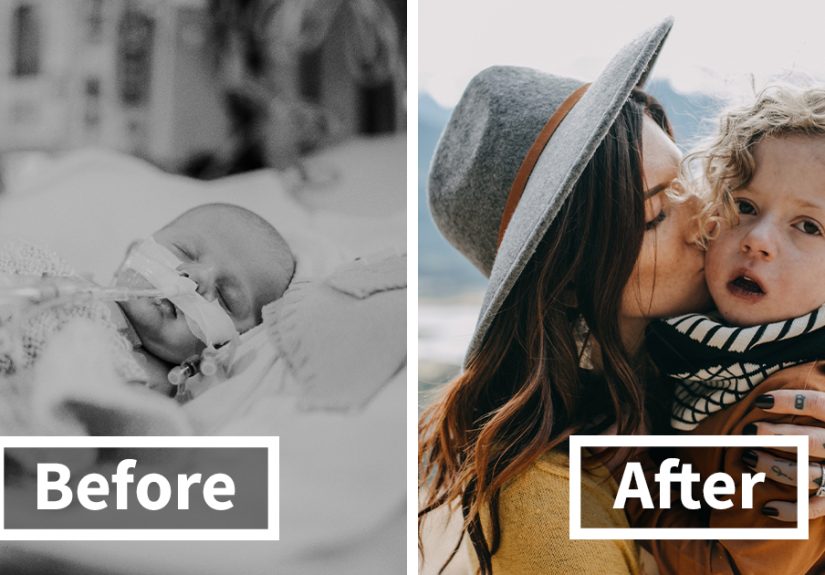
Our son does not define himself by his scar, but we do not hide it either. That scar tells the truth. It says he was here. It says he was fragile and fought anyway. It says modern medicine, skilled surgeons, vigilant nurses, therapists, follow-up care, and a stubborn little heartbeat all worked together to give him more time, more growth, more childhood.
And childhood is exactly what we want for him. Not a life shaped entirely by appointments, but a life large enough to hold soccer games, school projects, bad jokes, birthday cake, friendships, and the ordinary chaos of growing up. That has always been the goal. Not merely getting through surgery, but getting back to life.
Extended Reflections From Our Journey
If I had to explain this experience to another parent in one honest paragraph, I would say this: having a child undergo three open heart surgeries before age 5 is like living in two worlds at once. In one world, you are doing very normal things. You are folding tiny laundry, cutting grapes, buying shoes they will somehow outgrow in twelve minutes, and telling your child to stop licking random public surfaces. In the other world, you are carrying around medical knowledge you never asked for and making decisions that feel impossibly high-stakes. You become both parent and care coordinator, both soft place to land and relentless keeper of details.
I also learned that resilience is not a permanent mood. It is not waking up every morning brave and glowing like a motivational speaker with perfect hair. Resilience is much messier than that. It is crying in the parking garage and then going upstairs anyway. It is learning to laugh when a nurse says, “Get some rest,” in a room where twelve machines are actively auditioning for a percussion ensemble. It is recognizing that fear and gratitude can coexist in the exact same heartbeat.
There were stretches when our son looked so healthy that people assumed the hard part was behind us. That misunderstanding can be lonely. Children with congenital heart disease often look wonderfully ordinary, and that is a gift, but it can make their ongoing needs invisible. Follow-up care matters. Developmental support matters. Monitoring matters. The “after” portion of a heart surgery story is still a real story.
At the same time, I never want our family narrative to become only about struggle. There was so much beauty in this journey too. Nurses who remembered his favorite toy. Surgeons who spoke to us with skill and kindness in the same sentence. Therapists who celebrated small gains like they were Olympic events. Friends who dropped off meals and did not demand updates when we were too tired to type. And our son, again and again, showing us that joy is stubborn. He could be hooked to wires one week and cracking up at bubbles the next.
Today, when I think about those three surgeries, I do not only remember the terror. I remember the transformation. I remember how our priorities got cleaner. I remember learning that “better” does not always mean easy, but it can still be wonderful. I remember that our son was never just surviving. He was growing, learning, adapting, and becoming himself all along. The journey was hard. It was unfair. It was exhausting. It was also full of love so concentrated it felt almost visible. If you are living this life right now, I hope you know this: you do not have to be fearless to keep going. You just have to keep going, one hour, one appointment, one recovery milestone at a time.
Conclusion
When people ask how our journey went, I never know whether to give the short answer or the true one. The short answer is this: our son had three open heart surgeries before age 5, and he made it through. The true answer is bigger. Our whole family went through something life-altering. We learned how to live with uncertainty, how to trust experts, how to advocate for our child, and how to build a beautiful life in the middle of medical complexity.
That is what this pediatric heart surgery journey really gave us. Not gratitude wrapped in a cliché. Not some magical immunity to fear. Something more useful than that: perspective, tenderness, humor in the hard places, and a fierce appreciation for every ordinary day that used to seem ordinary only because we did not yet know how precious it was.