Table of Contents >> Show >> Hide
- Who Are Marianne Evennou and Clémence Leboulanger?
- Why Their Pairing Matters: Design That’s Both Poetic and Practical
- The Signature Moves: What Their Approach Looks Like in Real Rooms
- How American Home Experts Echo These Ideas (and Where Evennou’s Twist Helps)
- A Practical Step-by-Step Playbook Inspired by Their Approach
- Common Small-Space Mistakes Their Work Helps You Avoid
- Why This Matters Beyond Style: Small Spaces Change How You Live
- of Real-World “Experience” When You Try Their Ideas
- Final Thoughts
If you’ve ever tried to “just make it work” in a small apartment, you already know the plot twist: the space doesn’t get bigger, but your opinions do.
Suddenly you’re debating whether a coffee table is a “need” or a “luxury,” and you’re one ill-placed chair away from a mild existential crisis.
That’s why the collaboration between interior designer Marianne Evennou and design journalist/editor Clémence Leboulanger lands like a friendly, stylish intervention.
Evennou is known for turning compact Parisian apartments into highly livable, character-packed homesspaces that feel intentional, not improvised.
Leboulanger, with years spent shaping design stories, helps translate that visual magic into clear ideas you can actually use.
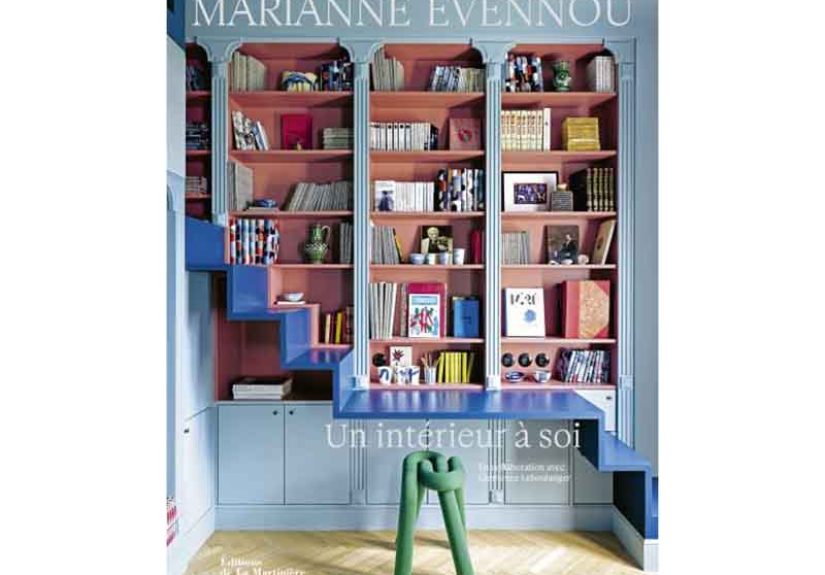
Together, they’re associated with the book Un intérieur à soi (“An Interior of Your Own,” loosely), a love letter to color, clever layouts, and the kind of practicality that still looks good in photos.
This article unpacks what makes their approach so stickyand how to apply it in real American homes, whether you’re living in a studio, sharing a rental,
or simply dealing with that one “why is this room shaped like a triangle?” corner of your house.
Who Are Marianne Evennou and Clémence Leboulanger?
Marianne Evennou: The small-space realist with a painter’s eye
Evennou is frequently described as a self-taught interior designer with a specialty in small spacessomeone who treats limitations like a design brief instead of a personal insult.
Her work is often recognized for gentle, complex color palettes, strong zoning (creating “rooms within rooms”), and details that feel collected rather than copied.
Think interior windows, playful built-ins, and finishes that add warmth without adding clutter.
One of the most useful things about her reputation is that it’s built on constraints you can relate to: tight footprints, awkward light, older buildings, and
clients who need to live normal lives (cook, work, sleep, store things) in places that don’t naturally cooperate.
Clémence Leboulanger: The design storyteller and editor
Leboulanger is a decoration-focused journalist and editor. She’s connected with major French design publications and has held a leadership role at ELLE Décoration (France).
Her superpower is making style make sense: naming what works, why it works, and how to recreate the feeling without recreating the exact shopping list.
If Evennou’s work is the “before and after,” Leboulanger’s contribution is often the “here’s what actually changed, and here’s the logic behind it.”
That combinationvisual transformation plus editorial clarityis catnip for anyone who wants design inspiration without the usual vague advice to “add texture.”
Why Their Pairing Matters: Design That’s Both Poetic and Practical
In American home media, small-space advice can swing between two extremes:
(1) “Paint everything white and buy furniture the size of a sandwich,” or (2) “Install custom millwork everywhere,” which is
adorable advice if your budget is a tech CEO’s bonus.
The Evennou–Leboulanger lane is different. It’s practical without becoming sterile, expressive without turning chaotic.
It also respects something most people forget: small spaces don’t just need to be pretty; they need to be easy.
You should be able to find your keys, put away groceries, and walk from the bed to the bathroom without performing interpretive dance.
Their shared philosophy can be summarized like this: clarity + character. You define functions clearly (sleeping, eating, working, relaxing),
then you give each function a little identityoften through color, material, lighting, or a boundary that doesn’t kill the flow.
The Signature Moves: What Their Approach Looks Like in Real Rooms
1) Color that organizes, not just decorates
Plenty of people use color; fewer people use it strategically. In small spaces, color can behave like architecture.
A shift in paint can mark a “sleep zone” from a “work zone.” Two tones can emphasize ceiling height or calm visual noise.
A muted palette can make a space feel cohesive, while a bolder accent can create a destination point (and distract from the fact that your dining area is… also your hallway).
The key is intention. Instead of randomly choosing a trendy shade, start by asking: “What should feel calm here?” “Where do I want energy?”
“What do I want to fade into the background?” Color can push and pull walls, define corners, and make storage blend in rather than shout.
2) “Zoning” that doesn’t require building walls
The best small-space layouts often behave like a good movie set: every angle is doing multiple jobs.
Evennou’s style is associated with dividing and defining without making a home feel chopped up. That can mean:
- Interior windows or glass partitions that share light while creating separation
- Built-ins that act like both storage and subtle room dividers
- Furniture placement that draws “paths” so the room feels navigable
- Materials that change by zone (tile here, wood there) to signal function
Translation: you can make a studio feel like it has rooms, without actually trapping yourself in a maze of drywall and regret.
3) Storage that hides in plain sight
In small homes, clutter isn’t just messyit’s spatial sabotage. When surfaces fill up, rooms feel smaller and life gets harder.
The Evennou–Leboulanger playbook leans toward storage that’s integrated: benches with compartments, shelving that goes vertical,
cabinetry that’s designed to look like part of the architecture, and pieces that do more than one job.
The goal isn’t to own nothing. The goal is to make your belongings stop auditioning for attention.
4) Details that add soul without adding chaos
Small spaces can look “optimized” in a way that feels like living inside a spreadsheet.
Their aesthetic avoids that by mixing in tactile materials and personalityvintage hardware, warm woods, handmade-looking textures,
and little moments of pattern that feel curated rather than crowded.
This is where Leboulanger’s editorial sensibility shines: it’s not just “add a cute lamp.”
It’s “choose a few meaningful, high-impact elements and let them carry the vibe.”
How American Home Experts Echo These Ideas (and Where Evennou’s Twist Helps)
What’s fun is how often their French small-space mindset lines up with the best American advicejust with a more romantic, color-forward accent.
Across U.S.-based home and design outlets, you’ll see recurring themes:
- Use light wisely: Reflective surfaces, mirrors, layered lighting, and window-friendly choices help small rooms feel larger.
- Go vertical: Walls and ceilings are storage opportunities, not blank space you’re “saving for later.”
- Choose multifunctional pieces: Furniture should earn its rent with storage, flexibility, or double-duty use.
- Keep a cohesive palette: Too many competing colors and styles can fragment a compact room.
- Edit your layout: The way you place furniture is often more important than buying new furniture.
Evennou’s twist is that she doesn’t treat smallness like a problem to “minimize.” She treats it like a chance to create intimacy and specificity.
Instead of chasing a generic “bigger” feeling, she aims for a home that feels completeas if every inch has a job and a point of view.
A Practical Step-by-Step Playbook Inspired by Their Approach
Step 1: Map your non-negotiables (function first)
Before you pick paint or scroll for “tiny apartment aesthetic,” do a brutally honest list of what your home must support.
Most people need some version of: sleeping, eating, working, washing, storing, relaxing.
If you skip this step, you’ll end up with a gorgeous room that can’t hold a vacuumand you’ll be angry every time you clean.
Step 2: Create zones with boundaries that share light
Use what you already have: rugs, shelving, curtains, lighting, and color changes can all mark zones.
If you’re allowed to make light modifications, consider glass, open shelving, or half-height dividers rather than solid walls.
The win is separation plus flow.
Step 3: Choose a palette that behaves like a system
A tight palette makes a small home feel calm. That doesn’t mean boring.
Think in families: a warm neutral, a main color, a deeper anchor shade, and a small accent.
Repeat them across zones so the home feels intentionallike one story, not five subplots fighting for screen time.
Step 4: Make storage part of the architecture
When possible, push storage to the perimeter and upward.
If you can’t do built-ins, fake the built-in look with tall bookcases, closed cabinets, baskets that match, and consistent finishes.
Aim for fewer “floating piles” and more designated homes for items.
Step 5: Pick a few “soul” moments
Small spaces don’t need more stuffthey need better choices.
Choose one or two high-impact elements per zone: a special light fixture, a patterned wallpaper panel, a piece of art you actually love,
a richly colored cabinet, or hardware that feels like jewelry.
Then stop. (Yes, stop. Put the throw pillows down and back away slowly.)
Common Small-Space Mistakes Their Work Helps You Avoid
- Overfurnishing: Too many pieces shrink pathways and create visual clutter.
- Ignoring scale: Tiny furniture everywhere can look accidental; a few well-scaled pieces can feel more grounded.
- Blocking light: Heavy window treatments and tall clutter near windows steal space psychologically.
- No “landing zones”: Without a spot for keys, bags, mail, and shoes, surfaces become chaotic fast.
- Too many styles at once: A small room can’t “hold” five aesthetics. Pick a main story and a supporting character.
Why This Matters Beyond Style: Small Spaces Change How You Live
The deeper takeaway from Marianne Evennou and Clémence Leboulanger isn’t a single trick.
It’s a mindset: you can design a small home to support your life without flattening your personality.
Function doesn’t have to look utilitarian. Color doesn’t have to be reckless. And “cozy” doesn’t have to mean “cluttered.”
When a compact home works well, it reduces daily friction. You waste less time searching, moving piles, and reorganizing the same shelf every weekend.
That’s not just decorit’s quality of life with better lighting.
of Real-World “Experience” When You Try Their Ideas
Let’s talk about what actually happens when you apply an Evennou-and-Leboulanger-inspired approachbecause the internet loves a “before/after,”
but your real life happens in the middle, usually while holding a laundry basket and wondering why socks are multiplying.
Week 1 feels strangely emotional. You start by defining zones and suddenly realize you’ve been asking one corner of your apartment to be
a bedroom, office, dining room, gym, and storage unit. Giving each function a “home” feels like finally assigning chores to the right people.
The first time you sit down to work and your work area isn’t also your snack pile, you may experience a brief moment of peace.
Don’t panic. It’s normal.
Week 2 is the “storage reckoning.” Once you decide storage must be integrated, you begin to notice every object that doesn’t have a designated place.
This is when random items start auditioning for new jobs. A basket becomes a mail station. A shallow tray becomes a “keys, wallet, sunglasses” landing zone.
You stop stacking things “temporarily” (the biggest lie in home organization) and start containing them intentionally.
The room looks calmer not because you became a minimalist, but because your stuff finally got directions.
Week 3 is when color starts doing work for you. A cohesive palette makes your space feel like a single narrative.
You’ll notice that your eye relaxes. In a small home, visual fragmentation is exhaustingtoo many competing colors can feel like a crowd.
When you repeat shades across zones (even subtly), the room reads as purposeful. And if you use a deeper color to anchor one areasay, behind the bed or
around a dining nookit can create the psychological effect of a “room within a room.” You didn’t build walls; you built clarity.
Then comes the surprise: you get pickier in a good way. Small spaces teach you to respect every object.
You stop buying “fine for now” decor because you don’t have room for filler. You choose one lamp you love instead of three you tolerate.
You hang art that means something instead of art that matches your couch by accident. This is the part that feels most aligned with Leboulanger’s editorial
sensibility: the home becomes more you because you’re editing with intention, not just accumulating.
And yes, life still happens. Shoes appear. Dishes show up. A friend drops by with a bulky coat.
The difference is that your home becomes easier to reset. When zones are clear and storage is planned, tidying up is a quick routine, not an all-day event.
That’s the quiet win of this approach: it doesn’t demand perfection. It builds a system that survives Monday.
Final Thoughts
Marianne Evennou and Clémence Leboulanger represent a rare combination: design that looks elevated but functions like a well-run kitchen.
Their shared message is simple and surprisingly kind: small spaces aren’t a punishment.
With the right zoning, smart storage, and a palette that feels intentional, compact homes can become deeply personal, warm, and genuinely enjoyable.