Table of Contents >> Show >> Hide
- What Is Gulf Wax and Why Does It Work on Sticky Drawers?
- Why Wooden Drawers Get Sticky in the First Place
- Step-by-Step: How to Use Gulf Wax on Sticky Drawers
- Other Smart Uses for Gulf Wax Around the House
- Gulf Wax vs. Other Drawer Lubricants
- Safety Tips and When Wax Isn’t Enough
- Real-World Experiences with Gulf Wax for Sticky Drawers
- Final Thoughts: A Tiny Box of Wax, a Big Everyday Upgrade
Few things ruin a peaceful morning faster than a dresser drawer that needs a gym membership to open. You tug, it shudders, maybe squeaks in protest, and for a second you wonder if your socks are truly worth the fight. The good news? The fix is often ridiculously simple: a small, inexpensive block of Gulf Wax.
Gulf Wax is a household paraffin wax that was originally sold for canning and candle making, but it’s become a secret weapon for sticky wooden drawers, squeaky windows, and other high-friction spots around the house. With one quick rub along the drawer runners, you can turn a stubborn drawer into a smooth-gliding dream.
Let’s unpack what makes Gulf Wax so effective, how to use it correctly, and what to try if your drawers are still misbehaving. Then we’ll finish with some real-world, story-style experiences that show just how much difference a tiny block of wax can make in everyday life.
What Is Gulf Wax and Why Does It Work on Sticky Drawers?
Gulf Wax is a highly refined, food-grade paraffin wax sold in solid blocks, usually around one pound. It’s stocked in many grocery stores and hardware stores in the canning, baking, or household sections. While its packaging often emphasizes uses like sealing jams and jellies or making candles, it’s also marketed for practical household jobs such as:
- Lubricating sticking drawers, windows, and doors
- Helping zippers slide more smoothly
- Reducing friction on tools and outdoor equipment
Paraffin wax is ideal for wood-on-wood drawer slides because it:
- Provides a thin, dry, non-sticky lubricant that doesn’t attract dust the way oil does
- Doesn’t stain most wood finishes when applied moderately
- Is easy to control you just rub the block where you need it
- Is inexpensive and one block lasts for years of small household projects
In short, Gulf Wax gives you the friction-fighting power of paraffin in a convenient, solid block that fits perfectly into a homeowner’s toolbox or kitchen drawer.
Why Wooden Drawers Get Sticky in the First Place
Before you reach for the wax, it’s helpful to understand why drawers stick. That way, you’ll know when wax is enough and when you need additional repairs.
1. Humidity and Seasonal Wood Movement
Wood naturally expands when it absorbs moisture and contracts when it dries out. In humid seasons, you might notice that your drawers feel tighter and harder to open. The drawer sides or bottom can swell just enough to rub against the cabinet frame or runners.
2. Wear and Tear on Wooden Runners
On older or traditional furniture, drawers often run on simple wooden rails. Years of use can leave these rails worn, rough, or slightly misaligned. Even minor wear can increase friction, especially if the wood fibers are fuzzy or splintered in places.
3. Dirt, Dust, and Old Finish
Dust, grit, and flakes of old finish can build up on the contact surfaces. That gritty layer acts like sandpaper each time the drawer opens, eventually making it feel jerky or stuck.
4. Structural Issues
Sometimes the problem is more structural: loose screws, sagging drawer bottoms, or a racked cabinet frame. Wax will help a little, but if the drawer is seriously misaligned, you may need repairs along with lubrication.
Gulf Wax shines when the main problem is friction not a broken part or massively warped wood. If the drawer looks intact but feels rough or tight, it’s a perfect candidate.
Step-by-Step: How to Use Gulf Wax on Sticky Drawers
Ready for smoother drawers in just a few minutes? Here’s a simple, Family Handyman–style approach that most DIYers can handle without special tools.
Step 1: Remove the Drawer Completely
Pull the drawer all the way out and set it on a stable surface. If it’s an older piece with no stops, you may need to lift the front slightly as you pull. This gives you full access to all the contact points.
Step 2: Identify Contact and Friction Points
Look for all the places where wood touches wood when the drawer moves:
- The edges or “runners” under the drawer sides
- The bottom edges or center strip on the underside of the drawer
- The matching rails or ledges inside the cabinet
- Any wear marks, shiny spots, or grooves where the drawer rubs
These are the surfaces you’ll wax. Smudges, rubbed areas, or shiny tracks are your best clues.
Step 3: Clean the Surfaces
Use a dry cloth or soft brush to remove dust and debris. If there’s sticky residue or built-up finish, gently sand with fine-grit sandpaper (220-grit or similar) to smooth the area. Wipe again to remove sanding dust.
Step 4: Rub on the Gulf Wax
Now for the satisfying part:
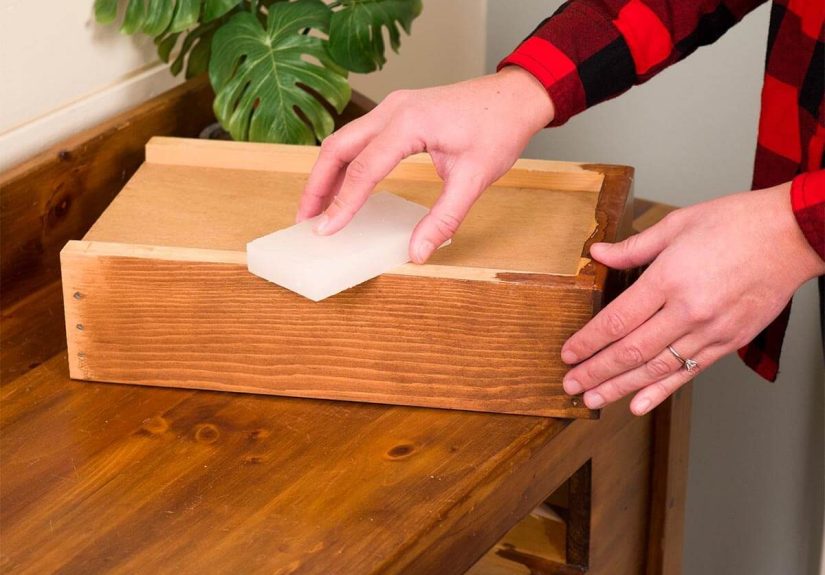
- Hold the block of Gulf Wax like a giant crayon.
- Rub it firmly along the drawer runners, the underside edges, and any other friction points.
- Repeat the process on the cabinet rails or supports inside the furniture.
You don’t need a thick, cakey layer just enough to leave a visible, slightly cloudy coating. If you accidentally apply too much, buff it lightly with a clean cloth.
Step 5: Reinstall and Test
Slide the drawer back into place and open and close it several times. The motion will distribute the wax and press it into the wood fibers, creating a long-lasting, low-friction surface.
Most people notice a dramatic difference immediately: the drawer that previously needed two hands and a motivational speech suddenly glides with one finger.
Step 6: Reapply as Needed
In normal household use, a good waxing can last months or longer. In high-use areas (like the kitchen junk drawer you open 37 times a day), you might reapply once or twice a year or whenever you feel the drawer start to drag again.
Other Smart Uses for Gulf Wax Around the House
Once you’ve used Gulf Wax on drawers, you’ll start eyeing other sticky things in your home and thinking, “I bet wax would fix that.” You’re not wrong. Homeowners commonly use paraffin wax for:
- Windows and doors: Rubbing wax on wooden sash channels or door edges can reduce binding.
- Wooden tools: Handles and wooden planes can benefit from a little wax to reduce friction and protect fibers.
- Outdoor gear: Some folks lightly wax shovels or snow equipment to help snow and dirt slide off more easily.
- Zippers: A quick swipe along a stubborn zipper (on coats, sleeping bags, or gear bags) can help it glide more smoothly.
- Craft projects: Candle making, sealing bottles, or creating decorative accents all make use of Gulf Wax’s versatility.
Think of Gulf Wax as a multi-purpose friction-reducer and moisture barrier. Once you have a box in your house, you’ll find plenty of small uses for it.
Gulf Wax vs. Other Drawer Lubricants
If you’ve ever searched for ways to fix sticky drawers, you’ve probably seen a few other suggestions besides Gulf Wax. Here’s how they stack up.
Candle Wax
A plain paraffin or beeswax candle is essentially a DIY version of Gulf Wax. For occasional use, a white, unscented candle works well just avoid heavily colored or fragranced candles that might leave residue or stain light wood. Gulf Wax, however, tends to be more consistent and pure, making it a safer long-term choice for furniture.
Beeswax and Paste Waxes
Beeswax blocks or furniture paste wax can also work beautifully on drawer slides. They may offer a slightly softer, more “buttery” glide. The downside is that some paste waxes contain solvents or oils that could be overkill for simple drawer runners and may alter the sheen of nearby finished surfaces.
Bar Soap
Bar soap is a popular “in a pinch” solution. It can temporarily reduce friction, but soap can absorb moisture and may eventually get sticky, especially in humid environments. It’s fine for a quick fix, but Gulf Wax is usually a more durable choice.
Spray Lubricants and Oils
Oil-based lubricants (like WD-40 or general-purpose oils) are not ideal for wood-on-wood drawers. They can soak into the wood, feel greasy, attract dust, and eventually create a gunky mess. For metal drawer slides, a dry lubricant or silicone spray is better, but traditional wooden runners usually do best with wax, not oil.
Modern Drawer Slides
If your drawers use metal ball-bearing or soft-close slides, wax may not be necessary. A light cleaning and a dry silicone lubricant are often recommended. But for classic furniture with wood-on-wood movement, Gulf Wax remains one of the simplest and safest options.
Safety Tips and When Wax Isn’t Enough
Using Gulf Wax is low-risk, but a few precautions will help you get professional results.
- Don’t overdo it: Too much wax can build up and flake. Aim for a thin, even coat.
- Test on hidden areas: If you’re worried about darkening or sheen changes, test a small spot on the underside of the drawer first.
- Watch for structural issues: If a drawer is wildly crooked, sagging, or jammed, fix the alignment or damage before relying on wax.
- Keep away from open flame: Gulf Wax is flammable, so store it away from heat sources and use common sense when working near candles or stoves.
Wax is a finishing touch, not a replacement for real repairs. If the drawer slides are split, screws are missing, or the cabinet frame is racked, address those issues first. Then add Gulf Wax as the final smoothing step.
Real-World Experiences with Gulf Wax for Sticky Drawers
It’s one thing to say “Gulf Wax works great.” It’s another to actually feel that stubborn drawer glide like new. Here are some experience-based scenarios that capture what homeowners and DIYers often report after trying this simple fix.
The Antique Dresser Rescue
Imagine you score a beautiful vintage dresser at a thrift store solid wood, dovetail joints, gorgeous patina. There’s just one catch: the drawers feel like they’ve been glued shut since 1974. You tug, they move an inch, and your enthusiasm drops.
So you pull one drawer out and take a closer look. The runners are worn, a little dusty, and clearly dry. You grab a block of Gulf Wax, run it along the underside edges of the drawer, then along the rails inside the dresser. The wax leaves a faint cloudy trail wherever you rub it. You slide the drawer back in, half expecting another battle.
Instead, the drawer glides in with a gentle push. You open it again smooth. You try another drawer, repeating the process. In under fifteen minutes, the whole dresser feels transformed. What looked like an “old furniture problem” turned out to be a simple friction issue that a few passes of wax could fix.
The Kitchen Junk Drawer That Finally Behaved
Every home has the drawer: the junk drawer. It’s loaded with batteries, pens, tape, coupons, random screws, and the key you’re afraid to throw away. Over time, that drawer starts to drag. You push it in and it stops halfway. You pull it out and the contents shift like a landslide.
One day you’ve had enough. You empty the drawer (discovering three pairs of scissors and seven rolls of tape in the process), then pull the whole drawer out. The sides are slightly rough, and the finish on the cabinet rails has worn to raw wood in spots. You dust everything off, rub Gulf Wax along the contact surfaces, and reinstall the drawer.
Suddenly, the junk drawer the most abused drawer in the house works better than your brand-new kitchen cabinets. It’s easy to open with one finger, and it closes smoothly instead of thudding to a stop. You may not have decluttered your junk, but you did upgrade your daily experience every time you reach for a pen.
The Humid Summer Fix
In many climates, summer humidity turns smooth drawers into sticky ones overnight. A dresser that worked perfectly in winter starts binding in July. The culprit is swelling wood, not bad craftsmanship.
Instead of forcing the drawers (which can strain joints and weaken glue), a homeowner pulls each drawer, lightly sands any areas that are obviously swollen or shiny from rubbing, and then applies Gulf Wax to both the drawer edges and the cabinet rails. The wax doesn’t stop seasonal movement, but it reduces friction enough that the drawers slide easily even when the wood expands a bit.
After that, “summer sticking season” becomes a non-issue. A quick re-wax once a year turns a recurring annoyance into a five-minute maintenance task.
A Small Block with Big Payoff
The recurring theme in these experiences is simple: Gulf Wax offers a huge quality-of-life improvement for a tiny investment of time and money. For the price of a single box, you can treat every sticky drawer in your home, plus a few windows and doors for good measure. The wax lives quietly in a utility drawer or workshop shelf, ready to fix the next squeak, bind, or drag.
For many homeowners, that first try with Gulf Wax turns it into a permanent staple right next to screwdrivers, painter’s tape, and the good flashlight that everyone swears they didn’t move.
Final Thoughts: A Tiny Box of Wax, a Big Everyday Upgrade
Sticky drawers may seem like a small annoyance, but they add a little friction to your daily routine every single time you reach for socks, utensils, or tools. Gulf Wax for sticky drawers is one of those classic, low-tech solutions that just works: easy to apply, long-lasting, inexpensive, and safe for most wood furniture.
If your drawers are structurally sound but feel stubborn, start with this simple fix. Clean the runners, rub on Gulf Wax, and test the action. In a few minutes, you can turn that daily tug-of-war into a smooth, quiet glide that makes your furniture feel cared for and your home feel just a bit more civilized.