Table of Contents >> Show >> Hide
- The Story Behind the Headline
- Why This Was More Painful Than a Normal Rejection
- Why SNL Says No to So Many Funny People
- Why Pete Davidson Likely Got the Slot
- Andrew Santino’s Career After the Near Miss
- Why This Story Resonates So Much
- The Experience Behind the Headline: Why Near-Miss Stories Stick With Comedians
- Final Take
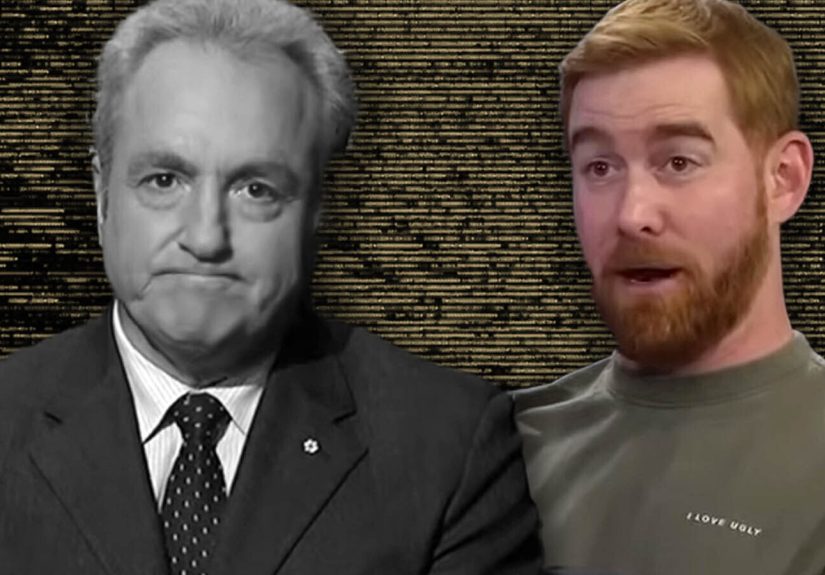
Some entertainment headlines sound fake until you remember that show business is powered by caffeine, anxiety, and decisions made in hallways at 30 Rock. This is one of those headlines. Andrew Santino, the sharp-tongued stand-up comic and actor with the permanently mischievous look of a man who just roasted someone in his head, recently shared a brutally funny story about almost landing Saturday Night Live. And not just almost landing it in the usual, “Hey, good set, kid, now disappear into the fog” way. No, this one came with extra seasoning: a call back to New York, a sit-down with Lorne Michaels, a warm conversation about Chicago, a walk around the writers’ room, and then a polished rejection that felt suspiciously like the world’s fanciest breakup speech.
It is, in other words, an SNL story in its purest form. The show has always sold the dream and the nightmare in the same package. You get the iconic stage, the five-minute audition mythology, the silent faces behind the table, and the possibility that one good night can change your life. You also get the reality that comedy is not math. The funniest person in the room does not always get the job. Sometimes the right comic arrives in the wrong year. Sometimes the fit is off. Sometimes the puzzle already has a piece that looks an awful lot like your energy. And sometimes, apparently, you are flown to New York so the rejection can be delivered with artisanal care.
Santino’s story matters because it is more than a funny anecdote. It says something important about SNL, about Lorne Michaels’ mysterious decision-making style, and about why near-miss stories in comedy often become just as legendary as success stories. It also says plenty about Santino himself: he got close, got passed over, kept moving, and turned the whole thing into material instead of a lifelong sulk. That may be the most comedian thing imaginable.
The Story Behind the Headline
According to Santino’s retelling, he auditioned for SNL in the run-up to the 2013–2014 era, in the same general lane as Pete Davidson and Dan Soder. That alone tells you the field was stacked. This was not open mic night at a sports bar where the prize is three drink tickets and a handshake. This was a high-pressure sorting hat for the most famous sketch-comedy institution in America.
Then came the twist. After the audition, Santino got the kind of call that makes comedians immediately start mentally spending money they do not yet have. An SNL producer wanted him back in New York to meet with Lorne Michaels. That is not the sort of invitation you brush off as administrative. That is the kind of call that makes you look in the mirror and think, “Well, I guess I live in Manhattan now. Hope I enjoy elevators and expensive salads.”
When Santino arrived, Michaels reportedly talked with him for about an hour, much of it centered on Chicago. Michaels, who has long had a thing for comedy scenes and talent pipelines, clearly knew Santino’s background well enough to linger there. There was popcorn. There was charm. There was a tour. Santino met writers. For any comic trying to decode the strange religion of SNL, these are not casual signs. These are neon arrows pointing toward “You might be in.”
And then came the polite dagger. Michaels essentially told Santino that he believed he would have a great career, but that he was not the puzzle piece he was looking for. That phrasing is classic SNL: flattering, maddening, and vague enough to haunt a comic while still sounding graceful on paper. It is the entertainment-business equivalent of being told you are wonderful, just not wonderful in the exact geometry required for this particular machine.
What makes the story sing is the theatrical structure of it all. Santino was not simply rejected. He was courted just enough to imagine the life, introduced just enough to picture the job, and then gently set back outside the velvet rope. It is a little funny, a little cruel, and very on-brand for a show that has always been part factory, part cult, part boot camp, and part lottery ticket.
Why This Was More Painful Than a Normal Rejection
SNL auditions are already famous for being a special kind of psychological cardio. Former cast members and media coverage around the show’s 50th-anniversary material have reinforced the same basic image: you get a short window, often about five minutes, and perform in front of powerful people who are not exactly there to laugh like tourists at a Vegas residency. The room is quiet. The pressure is absurd. Your best joke can land like a spoon on carpet.
That is why Santino’s extra trip to New York feels so bizarrely intimate. The standard SNL rejection is impersonal. You audition, go home, and wait for your phone to either become a portal to destiny or remain a small rectangle of silence. Santino got something stranger: a personalized no. Michaels did not reject him from a distance. He brought him in close enough to make the possibility feel real.
From a human perspective, that stings. From a comedy perspective, it is fantastic. It is the kind of story that gets funnier the farther you get from it. At the time, it probably felt like being invited to the championship parade only to find out you were there to hold a folding chair. Years later, it becomes gold because the details are so painfully specific. The Chicago talk. The popcorn. The writers’ room walk-through. The “great career” line. This was not a rejection. This was a rejection with production value.
Why SNL Says No to So Many Funny People
The easiest mistake in reading stories like this is assuming rejection from SNL means someone was not funny enough. History laughs at that idea. The show has passed on, missed, or otherwise failed to lock down a startling number of future stars. Over the years, names like Stephen Colbert, Steve Carell, Lisa Kudrow, and Jim Carrey have all been part of the broader legend of people who did not become cast members when the moment came. Lorne Michaels himself has acknowledged that nobody gets all of these decisions right.
That is because SNL is not hiring for “funniest living organism.” It is hiring for a weekly ecosystem. The show wants range, writing instincts, impressions, live-wire weirdness, and cast chemistry. It also wants timing. Maybe it needs one anarchic stand-up and already has two. Maybe it wants a younger voice. Maybe it wants someone more adaptable to sketch. Maybe it wants a very specific energy it cannot even explain without sounding like a shaman describing weather patterns.
That is where Michaels’ “puzzle piece” idea actually makes sense, even if it is a lousy consolation prize when you are on the receiving end. Santino may have been good enough. He may have been more than good enough. But SNL has never been a pure meritocracy of punchlines. It is a fit-based institution, and fit can be irrational, seasonal, and occasionally infuriating.
Why Pete Davidson Likely Got the Slot
Santino himself did not seem bitter when comparing his near miss with Pete Davidson’s breakthrough. In fact, his read on the situation was pretty clear-eyed. Davidson was younger, newer, and easier to shape inside the system. He also represented a distinctly contemporary comic voice at a moment when SNL was always under pressure to keep refreshing itself for a younger audience.
That matters more than people like to admit. SNL is not built to reassure viewers that they are still cool at 40. It is built to keep mutating so the next wave of viewers feels like the show belongs to them. Santino even made the larger point that people often complain about the show when the real issue is simpler: they aged out of its center of gravity. That is a sharp, mature observation from someone who would have every right to roll his eyes at the franchise forever.
And that generosity makes the anecdote stronger, not weaker. This is not a revenge story. It is a behind-the-curtain story. Santino is not insisting the show was wrong to pick Davidson. He is saying the process was strange, emotionally loaded, and extremely funny in hindsight. That is a better story anyway.
Andrew Santino’s Career After the Near Miss
If Michaels told Santino he was going to have a great career, that part at least looks pretty solid. Santino did not vanish into comedy-trivia limbo. He kept building. He acted on ABC’s Mixology, later showed up in Showtime’s I’m Dying Up Here, and became especially familiar to a wider TV audience as Mike, the manager and college best friend in FX’s DAVE. On the stand-up side, he kept sharpening his onstage identity through specials including Home Field Advantage, Netflix’s Cheeseburger, and Hulu’s White Noise.
Then there is the podcast empire side of Santino, which is no small thing in modern comedy. Whiskey Ginger gave him a lane as a conversational host with enough ease and irritation to keep things lively, while Bad Friends, co-hosted with Bobby Lee, turned chaos into a business model. In today’s comedy ecosystem, podcasts are not just side hustles. They are brand engines, fan funnels, testing grounds, and sometimes bigger cultural footprints than traditional TV jobs.
That is part of what makes this story satisfying. The rejection did not become his defining line. It became one chapter in a much larger career. In a weird way, Michaels’ forecast was accurate, just not in the way Santino hoped while boarding that flight to New York.
Why This Story Resonates So Much
Everybody understands a clean rejection. It hurts, but it is easy to file away. What lingers are the almosts. The interviews that ran long. The boss who said, “We loved you.” The opportunity that made room in your imagination before it disappeared. Santino’s SNL story lands because it lives in that painful universal zone between promise and outcome.
It also reveals something about Michaels that has shown up in other accounts over the years. He can be elusive about hiring, restrained in the way he communicates, and very careful not to overplay the emotional beats of the process. To some people, that reads as discipline. To others, it reads as a Jedi mind trick with office furniture. Either way, it has become part of the show’s folklore.
And folklore matters. SNL is not just a sketch series. It is one of the few entertainment institutions that still manufactures origin stories in public. People audition. People bomb. People get hired. People get passed over and go on to become huge stars anyway. The machine keeps producing myth. Santino’s version just happens to have one of the best punchlines: he got flown to New York to be rejected properly.
The Experience Behind the Headline: Why Near-Miss Stories Stick With Comedians
If you want to understand why Santino’s story has traveled so quickly, look beyond celebrity gossip and into the emotional mechanics of comedy itself. Stand-up is a profession built on risk, ego management, and public failure. Comedians spend years learning how to bomb, recover, rewrite, and pretend on podcasts that bombing does not still feel like swallowing a parking meter. So when a comedian gets extremely close to one of the most famous comedy jobs in America and still hears no, that story hits a nerve.
The first reason is simple: proximity changes everything. A distant dream is abstract. A near win becomes personal. Santino was not just imagining SNL from his couch. He was in the ecosystem. He was invited back. He was talking to the boss. He was meeting writers. Once that happens, the mind starts redecorating its future. You picture the move. You picture the first table read. You picture yourself pretending not to care while secretly caring so much that your organs file a complaint.
The second reason is that polite rejection can be more memorable than blunt rejection. If someone tells you, “No thanks,” you can get mad and move on. If someone tells you, “You are talented, you are going to do great things, but not here,” they have handed you something emotionally unstable. It sounds encouraging, but it gives you no neat target for closure. It makes you wonder how close you were, what tiny variable tipped the scale, and whether the timing was off by six months, six days, or one impression.
That is especially true in comedy, where timing is not just a craft issue but a career issue. A comedian can be ready in one sense and still wrong for a room in another. A voice can be too sharp, too similar to somebody already there, too old for the slot, too young for the writers, too stand-up, too sketch, too polished, too rough. None of those things necessarily mean “not good.” They often mean “not now.” But “not now” can feel a lot like “not ever” when you are living it in real time.
The third reason these stories last is that comedians are natural archivists of humiliation. They remember green rooms, weird managers, dead crowds, bad travel, and every bizarre sentence ever spoken by someone with power. That memory bank is not a bug. It is the fuel supply. A normal person has an awkward career moment and wants to forget it. A comic has an awkward career moment and eventually gives it structure, rhythm, and a callback. Pain goes in. Bit comes out.
That is why Santino’s story does not read as tragedy. It reads as professional scar tissue turned into entertainment. The experience almost certainly hurt. But by the time he tells it now, it has changed form. It is no longer only about missing SNL. It is about surviving the weirdness of ambition, the absurd theater of entertainment culture, and the almost comical intimacy of high-level rejection. That transformation is the real win. He did not get the cast slot, but he got something comedians prize nearly as much: a story that kills.
Final Take
“Lorne Michaels made Andrew Santino fly to New York for an SNL rejection” is a terrific headline because it sounds mean, hilarious, and oddly elegant all at once. It also captures the exact contradiction that has always made SNL so fascinating. The show is a dream factory, but it is also a selective, mysterious machine that passes on brilliant people all the time. Santino’s story does not expose a scandal. It exposes the emotional weirdness of how talent gets filtered at the highest level.
In the end, Michaels may have been right in the broadest sense. Santino was not the right puzzle piece for that moment at SNL, but he also did not need that one piece to build a real career. He kept going, expanded his audience, found his lanes in television, stand-up, and podcasting, and turned the rejection itself into proof of voice. That is not a consolation prize. That is the whole point.
And honestly, if you are going to get rejected, getting flown to New York first is at least a premium package. Emotionally devastating, sure. But premium.