Table of Contents >> Show >> Hide
- What Defines French Modernist Lighting?
- The Designers Behind the Look
- Why This Style Works So Well in Contemporary Homes
- How to Use French Modernist-Inspired Lighting at Home
- Materials, Colors, and Finishes That Complete the Look
- Common Mistakes to Avoid
- Why Designers and Homeowners Keep Coming Back to It
- Experiences with Lighting Inspired by French Modernists
- Conclusion
Some lighting trends whisper. French modernist-inspired lighting walks into the room, adjusts its angle, throws a perfect pool of light on your favorite chair, and somehow makes everything else look more intelligent. That is the magic. It is not flashy in the usual sense. It is disciplined, sculptural, practical, and just dramatic enough to make your ceiling feel like it finally got its life together.
When people talk about French modernists, they are usually circling a remarkable cast of designers and architects such as Charlotte Perriand, Jean Prouvé, Pierre Chareau, Serge Mouille, and Le Corbusier. Their work did not all look the same, but it shared a family resemblance: clear purpose, elegant structure, honest materials, and a refusal to treat decoration like frosting slapped on a stale cupcake. In lighting, that philosophy created fixtures that still feel fresh because they were never chasing novelty in the first place.
This is what makes lighting inspired by French modernists so compelling today. It can look refined without being fussy, industrial without feeling cold, and artistic without becoming a “Please don’t sit there, that room is for guests” situation. Whether you are decorating a city apartment, a warm minimalist home, or a room that needs one very smart focal point, French modernist lighting offers a design vocabulary that still works beautifully.
What Defines French Modernist Lighting?
At its core, French modernist lighting is about function shaped by intelligence. The fixture should solve a problem first. It should direct light where people actually need it, move when movement is useful, and use materials that make structural sense. But unlike purely utilitarian design, French modernist work often adds a poetic twist. A long arm becomes a line drawing in space. A cone shade looks sharp and mechanical, yet oddly graceful. A glass-block wall turns daylight into atmosphere. In other words, it works hard and photographs extremely well.
Several recurring traits appear again and again in French modernist-inspired pieces. The first is clean geometry: lines, arcs, cylinders, cones, and balanced asymmetry. The second is material honesty. Steel looks like steel. Aluminum looks like aluminum. Wood is not disguised. Painted metal is used for tension, weight, contrast, and silhouette. The third is adaptability. Many iconic fixtures pivot, swivel, extend, or redirect light, which makes them feel useful rather than merely decorative.
French modernist lighting also often balances opposites. It can be spare yet expressive, engineered yet warm, bold yet restrained. That is why a single fixture can anchor an entire room. It does not need five tassels and a motivational speech. The shape does the work.
The Designers Behind the Look
Jean Prouvé: The Engineer with Great Taste
Jean Prouvé remains one of the clearest influences on French modernist-inspired lighting. His designs often feel reduced to essentials, but not in a boring way. They show how engineering can become visual poetry when every part earns its place. Lighting inspired by Prouvé tends to emphasize cantilevered arms, visible structure, thin yet strong profiles, and a no-nonsense beauty that feels almost inevitable.
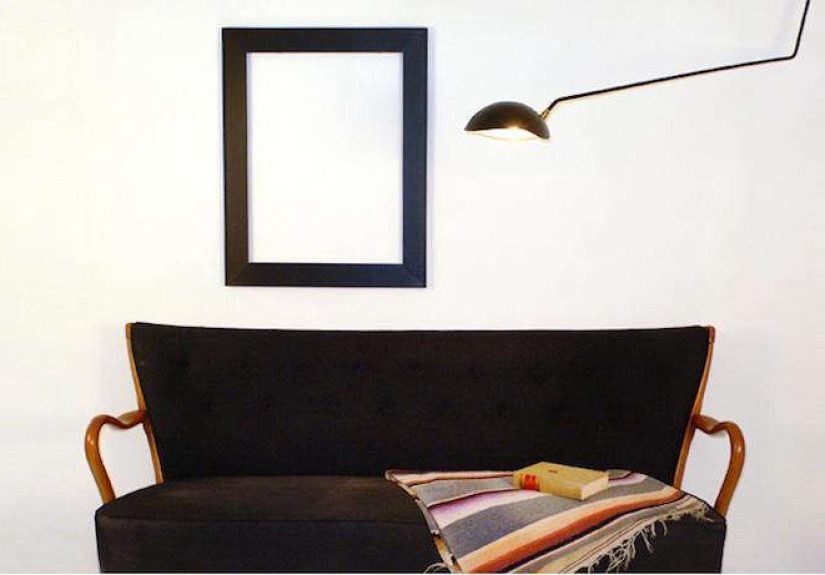
A classic example is the long-arm wall lamp, often associated with the Potence family. It projects outward with confidence, almost like a drawing made in black metal across the wall. It is dramatic without being bulky. It is practical without looking office-like. That combination is hard to beat. If you want a room to look collected and thoughtful, a Prouvé-inspired wall light can do more than an entire herd of trendy table lamps.
This influence works especially well in reading corners, over dining tables, or in bedrooms where you want overhead drama without a traditional chandelier. It creates presence through proportion rather than ornament.
Charlotte Perriand: Warm Modernism with a Human Touch
Charlotte Perriand brought a distinctly human and material sensitivity to modern design. She embraced metal and machine-age thinking, but she also valued texture, craft, wood, and the emotional feeling of a space. Lighting inspired by Perriand often reflects that balance. You may see simple wall sconces, compact lamps, or architectural fixtures that feel streamlined yet welcoming rather than severe.
Perriand’s influence is especially useful for people who love modernism in theory but do not want their home to feel like a very stylish laboratory. Her spirit helps soften the harder edges of design. Think matte finishes, warm whites, muted black, aged metal, pale wood, and forms that are minimal but not sterile.
In practical terms, Perriand-inspired lighting works beautifully in kitchens, hallways, bedrooms, and smaller rooms where visual restraint matters. A modest wall lamp with a smart silhouette can do more for a space than a giant statement fixture trying much too hard to become the main character.
Serge Mouille: Sculpture That Happens to Light the Room
If Prouvé is the engineer and Perriand is the humanist, Serge Mouille is the sculptor with excellent spatial instincts. His most recognizable lighting designs use long, slender arms and insect-like shades that seem to hover in motion. They are instantly graphic. They bring line, rhythm, and attitude to a room, often without requiring much visual clutter around them.
Mouille-inspired lighting is ideal when you want one piece to carry serious visual weight. A floor lamp with multiple arms can replace both a lamp and a sculpture. A ceiling fixture can stretch across a room like a drawn gesture. A sconce can make a plain wall feel edited rather than empty.
The key is balance. Because these shapes are strong, they look best when paired with quieter materials nearby: plaster walls, wood floors, linen upholstery, stone tables, or restrained cabinetry. Put another way, let the lamp flirt, but do not give it twenty-seven competing suitors.
Pierre Chareau: Diffused Light and Architectural Mood
Pierre Chareau’s legacy is often discussed through architecture and interiors, especially the famous Maison de Verre. For lighting, his influence shows up less as a single lamp type and more as an atmosphere. Think diffused glow, translucent surfaces, layered materials, steel framing, and light treated as an architectural ingredient rather than a separate object.
Lighting inspired by Chareau works beautifully in bathrooms, entryways, offices, and kitchens where ambient glow matters as much as task lighting. Frosted glass, ribbed surfaces, glass blocks, and softly filtered illumination all echo this tradition. It is a sophisticated way to make a room feel luminous rather than simply bright.
Why This Style Works So Well in Contemporary Homes
French modernist-inspired lighting has survived countless design cycles because it solves real problems. It directs light effectively. It integrates with architecture. It complements both vintage and contemporary furnishings. It looks good with wood, concrete, marble, leather, plaster, glass, and textiles. That is design range. Not “I own twelve throw pillows in the same beige family” range. Actual range.
It also suits the way people live now. Open-plan homes benefit from lighting that defines zones without cluttering them. Smaller homes need fixtures with strong visual impact and a modest physical footprint. Flexible rooms require lights that can pivot, extend, dim, and adapt. French modernist ideas anticipated all of that by focusing on structure, use, and efficiency.
Another advantage is longevity. This style does not depend on gimmicks or seasonal finishes. A well-chosen French modernist-inspired lamp can last through several furniture changes, multiple paint colors, and at least one phase where you become convinced your entire personality is now walnut and travertine.
How to Use French Modernist-Inspired Lighting at Home
In the Living Room
Choose one hero piece. A multi-arm floor lamp or a long wall-mounted fixture can anchor the seating area and create instant structure. Pair it with softer materials like boucle, linen, wool, or aged leather so the room feels balanced rather than stark. The goal is tension: crisp lines meeting tactile comfort.
In the Dining Area
Look for a fixture with an architectural silhouette rather than ornate detail. A long-arm wall light, a linear pendant, or a directional ceiling piece can make the dining table feel intentional. Keep the palette grounded with black, ivory, muted red, brushed metal, oak, or walnut.
In the Bedroom
This style shines in bedroom lighting because it is so good at being compact, useful, and visually calm. Wall-mounted lamps inspired by Perriand or Prouvé free up bedside space and add a tailored look. A small directional lamp feels smarter than a bulky nightstand lamp that behaves like it pays rent.
In the Kitchen or Hallway
French modernist-inspired lighting works beautifully where function matters most. Use pared-down sconces, directional wall lights, or modest pendants with strong shapes. These fixtures can make hardworking spaces feel considered instead of merely lit.
Materials, Colors, and Finishes That Complete the Look
If you want the lighting to feel authentically French modernist-inspired, pay attention to what surrounds it. The best companions are natural wood, painted steel, matte black, softened white, brushed aluminum, plaster, stone, and glass. These materials create depth without visual noise.
Color matters too. This design language usually prefers restraint over rainbow chaos. Black and ivory are classics. Deep navy, muted green, dusty red, and industrial gray can also work well. The idea is not to make everything neutral. It is to let the form speak clearly.
Texture should provide warmth. Linen curtains, wool rugs, leather seating, woven accents, and lightly grained wood prevent the room from becoming too hard-edged. French modernism at its best is not cold. It is edited. There is a difference.
Common Mistakes to Avoid
The biggest mistake is over-theming the room. One or two French modernist-inspired pieces can be powerful. Seven iconic replicas crammed into one space can start to feel like a design history exam. Another mistake is forgetting light quality. A beautiful fixture with harsh, overly cool bulbs will ruin the mood. Use warm, flattering light whenever possible.
Scale is another issue. These fixtures often rely on proportion for their impact. A tiny lamp on a huge wall can disappear. An oversized multi-arm light in a cramped room can feel like a mechanical spider plotting something. Measure carefully. Let the architecture guide the choice.
Finally, do not pair this style with too much visual fuss nearby. If the lamp has a strong silhouette, give it breathing room. French modernist-inspired lighting likes a little space to stretch its limbs and look smug. Honestly, fair enough.
Why Designers and Homeowners Keep Coming Back to It
Because it works. Because it is elegant. Because it respects materials. Because it understands that beautiful objects should still be useful. Because it brings history into a room without making the room feel stuck in history. French modernist-inspired lighting offers a rare combination of credibility and ease. It appeals to serious design people, but it also makes immediate sense to anyone who simply wants their home to look better and feel smarter.
That may be the greatest lesson of the French modernists. Good lighting is not only about brightness. It is about structure, comfort, atmosphere, and the choreography of daily life. A fixture can direct light, define a corner, flatter a wall, soften a material, and change the mood of an entire space. When design does all of that while looking effortless, it earns its place.
So if you are searching for lighting that feels timeless, sculptural, and genuinely livable, start here. French modernist-inspired lighting is one of the rare design choices that can make a room look more sophisticated without making the people in it feel like they need to sit up straighter. That is a win.
Experiences with Lighting Inspired by French Modernists
Living with lighting inspired by French modernists is a different experience from living with generic fixtures that merely occupy the ceiling and mind their business. These pieces tend to change how you notice a room. A long swing-arm wall lamp does not just provide illumination; it draws a line across the wall that makes the architecture feel more deliberate. A Mouille-inspired floor lamp does not simply brighten a corner; it gives the corner a pulse, a sense that someone actually thought about how the room should work and feel. The experience is subtle at first, and then suddenly it is not subtle at all. You begin to notice that your reading chair feels more inviting, your dining table feels more defined, and your evening routine looks faintly cinematic in the best possible way.
One of the most satisfying experiences with this style is how it changes throughout the day. In the morning, a French modernist-inspired fixture often reads as sculpture. The shape stands out against daylight, and the materials do the talking. Painted steel looks crisp. Wood accents feel warm. The geometry becomes part of the room’s visual rhythm. At night, the mood shifts. The fixture becomes less object and more atmosphere. Shadows lengthen, walls glow, and the room starts to feel edited by light itself. This is especially true when the fixture has a directional shade or adjustable arm. You are not just turning on a lamp. You are composing the room.
Another experience people often mention is the sense of calm that comes from lighting with clear intent. French modernist-inspired pieces usually avoid visual clutter. They do not rely on crystal sparkle, bulky shades, or decorative excess to earn attention. Because of that, rooms lit this way can feel cleaner and more settled, even when the rest of life is doing cartwheels. The fixture says, “I have a job, I am doing it, and I also happen to look fantastic.” That kind of quiet confidence is contagious.
There is also a practical pleasure in using lighting that adapts to real life. A pivoting wall lamp beside the bed feels thoughtful every single day. A directional lamp over a desk makes work feel easier. A sculptural ceiling fixture over a dining table can shift a room from weekday functionality to dinner-party charm with very little effort. This is where French modernist ideas prove they were never only about style. They were about living better through design. Not in a cheesy slogan way. In a “this room now works for me instead of against me” way.
Emotionally, these lights often create a home that feels collected rather than decorated. They bring a sense of permanence. Even when surrounded by newer furniture or more casual pieces, they add gravity and coherence. Guests may not know the history behind the design, but they usually notice the effect. They can tell the room feels intentional. And for the homeowner, that is perhaps the best experience of all: the sense that one smart choice elevated everything around it.
In the end, lighting inspired by French modernists is memorable because it engages both the eye and daily life. It is beautiful when off, useful when on, and persuasive in every in-between moment. Few design decisions earn that kind of loyalty. This one does.
Conclusion
Lighting inspired by French modernists remains relevant because it never depended on trend-chasing in the first place. It came from designers who believed light should be useful, structure should be visible, materials should be honest, and beauty should emerge from clarity rather than clutter. That philosophy still feels refreshing now. Whether you love the tensile drama of Jean Prouvé, the warm precision of Charlotte Perriand, the sculptural elegance of Serge Mouille, or the atmospheric glow associated with Pierre Chareau, this design tradition offers something rare: fixtures that are intellectually respectable, visually striking, and genuinely easy to live with.
In a world full of disposable decor and fast-fading trends, French modernist-inspired lighting still feels grounded, stylish, and smart. Not bad for a design language that proves a lamp can be practical, sculptural, and timeless all at once.