Table of Contents >> Show >> Hide
- Why Kelly “Calling Out” Mark Works (Instead of Imploding Their Marriage on Live TV)
- The Call-Outs Fans Keep Replaying (Because They’ve Lived Them)
- 1) The “Airport Divorce” Debate: When Travel Styles Become a Love Language Test
- 2) The “You’re Not Listening” Moment: A Masterclass in Married-People Radar
- 3) The “Hard Launch” Proposal: After 30 Years, Should Instagram Make It Official?
- 4) The “You Just Negated Your Own Argument” Call-Out: Debate Club, Married Edition
- 5) The Viral “Bird Theory” Test: When a Tiny Moment Becomes a Big Signal
- 6) “I Resent the Fact That You Aren’t Aging”: When Compliments Wear Disguises
- 7) The Morning-Sex Reality Check: Love, Logistics, and a Very Early Call Time
- 8) The Parenting Flashback: The Hooters Playdate Story
- What These Moments Actually Say About Their Relationship
- How to Call Out Your Partner Without Starting a Relationship Wildfire
- of Real-Life “Been There” Experiences Inspired by Kelly & Mark
- Conclusion: The Real Reason Their “Call-Outs” Feel So Watchable
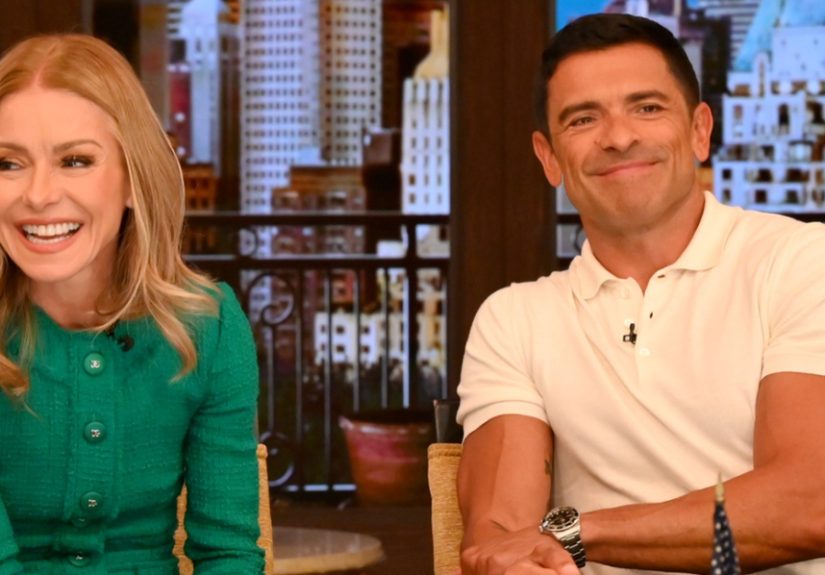
Some couples do date night. Kelly Ripa and Mark Consuelos do daytime televisionwhich is basically date night, but with bright studio lights, a live audience, and the very real possibility that your spouse will roast you before you finish your coffee.
Over nearly three decades of marriage (and now as co-hosts on Live with Kelly and Mark), Ripa has turned “calling out” her husband into something closer to an art form: playful, pointed, oddly relatable, and usually delivered with the kind of timing that makes you suspect she could also moonlight as a stand-up comic. The headline-making moments aren’t about scandal. They’re about the everyday friction that shows up in long relationshipscommunication quirks, travel stress, social media weirdness, aging anxieties, and the eternal question: “Are you listening to me, or are you thinking about lunch?”
And that’s exactly why people can’t stop watching. Because while most of us don’t have an audience when we bicker about airport arrival times, we do have those same argumentsjust with less applause and more passive-aggressive dishwashing.
Why Kelly “Calling Out” Mark Works (Instead of Imploding Their Marriage on Live TV)
On paper, working with your spouse sounds like a romantic comedy setup. In practice, it’s more like a reality show where the prize is “staying married while being awake before sunrise.” Ripa’s call-outs land because they’re usually rooted in three things:
- Shared history: They met on All My Children, built a life, raised three kids, and have enough inside jokes to power a sitcom for 12 seasons.
- Mutual buy-in: Consuelos dishes it right back. He’s not a silent victimhe’s a willing participant in the banter Olympics.
- Humor as a pressure valve: The jokes work like emotional WD-40. It doesn’t mean they never get annoyed. It means they know how to keep annoyance from becoming a full-blown event.
In other words: she’s not “calling him out” to embarrass him. She’s “calling him out” the way couples do when they trust the relationship can handle a little comedic turbulence.
The Call-Outs Fans Keep Replaying (Because They’ve Lived Them)
1) The “Airport Divorce” Debate: When Travel Styles Become a Love Language Test
Few topics expose a couple’s core values like airport logistics. Some people want to arrive early enough to personally oversee the runway. Others want to time it so perfectly they can board mid-sentence.
Ripa’s on-air “airport divorce” pitchbasically, “We should separate at the airport and reunite at the gate”sparked a playful argument about how early Consuelos likes to arrive versus how loosely she approaches the whole “flight leaves at a specific time” concept. The humor hits because it’s not really about airports. It’s about how couples handle stress: one partner becomes a schedule gladiator; the other becomes a chaos poet.
Relatable takeaway: If you’ve ever said, “We’re leaving at 6,” and your partner heard, “We’re leaving at 6-ish, emotionally,” you understand this segment on a cellular level.
2) The “You’re Not Listening” Moment: A Masterclass in Married-People Radar
Ripa has the kind of spouse-detection skills that should qualify her for government work. In one widely shared moment, she told Consuelos she could tell he “drifted off,” because she’s been married to him long enough to spot the exact face he makes when his brain exits the conversation and begins pursuing other hobbieslike regretting lunch choices.
That’s the funny part: she didn’t accuse him of being evil. She accused him of being human. And instead of fighting it, he admitted he’d been thinking about what he ordered. Which is the most married-person plot twist possible.
Relatable takeaway: Long-term love doesn’t mean constant attention. It means your partner knows exactly when you’ve left the chatand they can still laugh about it.
3) The “Hard Launch” Proposal: After 30 Years, Should Instagram Make It Official?
Modern dating has terms that sound like tech product releases. “Hard launching” a relationship (making the first official social media post) is one of them. Ripa suggested they should “hard launch” their relationship… despite being married since the pre-Instagram era when people “soft launched” by simply showing up to family functions together.
Consuelos pushed back with the idea that “the happiest couples don’t post,” which earned him a classic Ripa clapbackimplying he must be thrilled if that’s the case. The segment worked because it poked at something real: social media can make love feel like a performance. But couples who’ve been together a long time know the truthyour relationship is official when someone has seen you with the flu and still chooses to stay.
Relatable takeaway: If your partnership needs a “launch,” you might be confusing romance with PR.
4) The “You Just Negated Your Own Argument” Call-Out: Debate Club, Married Edition
During a discussion that touched on “just because” reasoning, Consuelos tried to make a point, and Ripa pointed outon airthat he was basically arguing against himself. She even turned to the audience for backup like a lawyer who knows the jury is already on her side.
It’s funny because it’s familiar: couples can debate anything. Parenting, travel, whether “just because” is an acceptable explanation, and why one adult man needs to hover near boarding like the plane will leave without him personally watching it happen.
Relatable takeaway: Being married doesn’t stop you from being stubborn. It just means your stubbornness has a co-author.
5) The Viral “Bird Theory” Test: When a Tiny Moment Becomes a Big Signal
Ripa also brought viral relationship culture onto the show by testing “bird theory,” a concept linked to relationship research that emphasizes responding to a partner’s bids for connection. The test is simple: you mention something small (“I saw a bird”) and see if your partner engages or dismisses it.
When she tried it on Consuelos, he responded with interestasking what kind of birdand Ripa celebrated like she’d just discovered proof of love in the wild. It was cute, funny, and surprisingly useful as a reminder that attention is often shown in small ways, not grand gestures.
Relatable takeaway: Romance isn’t always roses. Sometimes it’s saying, “Oh yeah? What kind of bird?” like it mattersbecause it does.
6) “I Resent the Fact That You Aren’t Aging”: When Compliments Wear Disguises
Ripa’s “resentment” over Consuelos’ low-key refusal to age is the kind of complaint that is secretly a compliment. She joked that he has basically three gray hairs, while she’d be bald if she plucked all of hers.
It lands because couples often navigate aging differentlyand not just physically. It’s about energy, confidence, how people perceive you, and the complicated way we compare ourselves to the person we see every day in our kitchen. Making it a joke doesn’t erase the insecurity; it makes it speakable.
Relatable takeaway: If your partner “complains” you’re too attractive, congratulationsyour biggest problem is extremely annoying in the best way.
7) The Morning-Sex Reality Check: Love, Logistics, and a Very Early Call Time
Some couples romanticize “morning intimacy.” Ripa has described it with the kind of disgust usually reserved for stepping on a wet bathroom floor in socks. More recently, the couple revisited the topic on-air when a guest bluntly declared: “There’s no morning sex,” and Consuelos admitted their early schedule has gotten in the way.
Ripa’s responsedelivered with emphasismade it clear that the morning talk show routine is not exactly an aphrodisiac. When you’re up before dawn, dealing with hair, makeup, and the psychological burden of being cheerful on command, “romance” starts to look a lot like “let me drink water and stare into space for a minute.”
Relatable takeaway: Desire is real, but so is exhaustion. Long relationships aren’t about being spontaneous 24/7they’re about negotiating the calendar like grown-ups who love each other.
8) The Parenting Flashback: The Hooters Playdate Story
If you want instant couple comedy, add parenting history. In one memorable story, Ripa recalled that Consuelos once took their young sonon a playdatewith another dad… to Hooters. She described the moms being alarmed, the dads coming home smelling like cigarette smoke, and her overall assessment: “That was crazy.”
It’s a perfect “marriage call-out” moment because it’s not cruel. It’s family folklore. Every long-term couple has at least one story that lives forever as evidence that one partner briefly lost all judgmentand the other partner has been storing the receipts for decades.
Relatable takeaway: A successful marriage requires forgiveness, humor, and the ability to say, “I love you, but what were you thinking?” without calling a lawyer.
What These Moments Actually Say About Their Relationship
Strip away the studio and the punchlines, and the pattern looks surprisingly healthy:
- They narrate the little stuff. Many couples only talk seriously when things are already bad. They talk about tiny issues earlyattention, habits, schedulesbefore resentment gets comfy.
- They repair quickly. The argument is rarely the main event. The recovery is. They move from “you’re wrong” to “this is funny” fast, which is a real relationship skill.
- They normalize imperfection. Viewers don’t see a curated “perfect couple.” They see two people who adore each other and still get annoyed. That’s reassuring.
- They use humor, not humiliation. There’s a difference between teasing and tearing down. Their banter generally stays on the teasing side.
That’s why Ripa “calling out” Consuelos doesn’t read as a crisis. It reads as a language they sharelike a comedic shorthand for, “We know each other too well to pretend we don’t have quirks.”
How to Call Out Your Partner Without Starting a Relationship Wildfire
Most of us are not co-hosting a national TV show with our spouse (and thank goodness, because someone would immediately get canceled over dishwasher loading technique). But the principles behind Ripa’s funniest call-outs are surprisingly transferable:
Keep it specific, not global
“You weren’t listening just now” lands better than “you never listen,” because the second one sounds like a character assassination with a side of doom.
Use humor as a bridge, not a weapon
Humor works when both people feel safe. If the joke makes your partner feel small, it’s not a jokeit’s a disguised complaint.
Pick the right stage
Kelly can do this on TV because it’s their shared job and shared tone. For most couples, the best stage is privateunless you also want your group chat to vote on who’s wrong.
Balance the critique with the affection
The reason their banter works is that the affection is obvious. The call-out is the spice, not the meal.
of Real-Life “Been There” Experiences Inspired by Kelly & Mark
Watching Kelly Ripa call out Mark Consuelos can feel like looking into a funhouse mirror that somehow still tells the truth. Not because your life is identical to theirsbut because the themes are universal. If you’ve been in a long relationship, you’ve probably had your own “airport divorce” moment. Maybe not at an actual airport. Maybe at the grocery store, when one person is trying to speed-run the list like it’s a competitive sport and the other is emotionally bonding with the avocados.
The travel thing hits hard because it’s rarely about travel. It’s about control vs. flexibility. One partner feels calm when there’s a plan; the other feels calm when there’s breathing room. And the compromise often looks like this: the planner learns not to narrate the itinerary like a documentary, and the free-spirit learns that “we’ll just figure it out” is not a flight strategy.
Then there’s the “not listening” call-outarguably the most relatable relationship plotline on Earth. People drift. Brains wander. Sometimes your partner is nodding while internally calculating whether lunch regret is preventable. The useful part of the joke isn’t that Mark drifted; it’s that Kelly can name it without panic. In real life, the best relationships often develop an unspoken rule: we’re allowed to be human, but we’re also allowed to ask for attention when it matters. A gentle “Hey, can you come back to me for a second?” can be a relationship-saving sentence.
The “bird theory” bit is also sneakily practical. Big romantic gestures are wonderful, but most couples live in the small stuff: noticing your partner’s story, caring about their tiny observations, asking one follow-up question instead of defaulting to your phone. Those micro-moments are where people feel chosen. If you want to feel closer without a big dramatic overhaul, try this: when your partner mentions something random, respond like it’s interesting. Even if it’s about a bird. Especially if it’s about a bird.
And yestiming, schedules, and intimacy are real relationship issues, not tabloid bait. The “no morning sex” conversation is funny because it’s honest: life has rhythms. Work has demands. Exhaustion is not a moral failure. Many couples quietly learn that desire doesn’t always show up on command, and that’s normal. The win is not “performing romance perfectly.” The win is staying curious about each other, staying kind, and staying willing to adapt as your bodies and routines change.
Finally, the aging jokes“I resent that you aren’t aging”capture something tender: the weird mix of admiration and insecurity that can pop up when you share a life with someone you still find attractive. In real relationships, it helps to say the honest thing underneath the joke: “You look great,” “I’m feeling self-conscious,” “Can you remind me we’re on the same team?” Because you are. Always. Even when you’re fighting about TSA lines like it’s an Olympic event.
Conclusion: The Real Reason Their “Call-Outs” Feel So Watchable
Kelly Ripa calling out Mark Consuelos isn’t a sign of relationship troubleit’s a sign of relationship fluency. Their on-air dynamic turns everyday couple friction into entertainment, but the underlying message is surprisingly grounded: long relationships are built in the small moments, repaired in the awkward moments, and survived through the funny moments.
And if nothing else, their marriage offers one comforting truth: even when your partner isn’t listening… they might still love you. They might just be thinking about lunch.