Table of Contents >> Show >> Hide
- What Is Soup Joumou?
- What Makes a Great Soup Joumou?
- Soup Joumou Recipe
- Tips for the Best Haitian Freedom Soup
- Easy Variations and Substitutions
- What to Serve With Soup Joumou
- Storage and Reheating
- Why This Haitian Freedom Soup Still Matters
- The Experience of Making and Sharing Soup Joumou
- Conclusion
Note: Publish-ready HTML body content only. Unnecessary source-code artifacts removed.
Some soups warm you up. Soup Joumou does that, then casually hands you a history lesson, a holiday tradition, and a reason to go back for a second bowl. This beloved Haitian squash-and-beef soup is deeply tied to January 1, the day Haiti celebrates independence, which is why it is often called Haitian Freedom Soup. It is rich, fragrant, colorful, and gloriously hearty. In other words, it is not here to play around.
If you are looking for a Soup Joumou recipe that respects the dish’s roots while still feeling approachable for a home cook, this version delivers. It draws on the common threads found across respected Haitian and American food sources: a silky squash base, tender beef, a bright and punchy epis marinade, a generous pile of vegetables, and a little pasta near the finish line. The result is a bowl that tastes layered, comforting, and celebratory all at once.
Even better, this is not one of those recipes that requires a dramatic monologue and three obscure ingredients harvested under a full moon. If you can find calabaza squash, wonderful. If not, butternut squash steps in like a reliable understudy and absolutely nails the role. Let’s make a pot of soup that tastes like comfort, community, and culinary triumph.
What Is Soup Joumou?
Soup Joumou is a traditional Haitian soup made with squash, beef, vegetables, herbs, and often pasta or rice. The word joumou refers to squash, and the soup is famous for its velvety golden broth and its balance of savory, earthy, peppery, and slightly sweet flavors. Depending on the household, you may also see ingredients such as cabbage, turnips, potatoes, plantains, malanga, leeks, or marrow bones.
What makes the dish unforgettable, though, is not just the taste. Soup Joumou is a symbol of freedom. Historically, enslaved Haitians prepared it for French enslavers but were forbidden from eating it themselves. After Haiti won independence on January 1, 1804, the soup became a powerful culinary expression of liberation, dignity, and national pride. Today, families in Haiti and throughout the diaspora still prepare and share it on New Year’s Day.
That history matters. It is the reason this dish is more than “just pumpkin soup,” which is a bit like calling fireworks “tiny sky candles.” Technically not wrong, emotionally very wrong.
What Makes a Great Soup Joumou?
1. A Smooth, Flavorful Squash Base
The broth should be lush and silky, not watery and sad. Calabaza squash is traditional, but butternut squash works beautifully if that is what your market offers. Once cooked and blended, it gives the soup its signature body and golden color.
2. Beef That Actually Tastes Like Something
This is not the time for bland meat cubes floating around like confused party guests. A good Soup Joumou recipe starts by marinating beef in epis, the Haitian green seasoning made with herbs, peppers, garlic, onion, and acid. That marinade builds flavor before the pot even heats up.
3. Layers of Vegetables
Cabbage, carrots, celery, leeks, turnips, and potatoes are all common additions. Some cooks also add plantains or root vegetables such as malanga or yam. The vegetables make the soup feel substantial and festive, not just brothy.
4. Pasta at the End
Many versions use rigatoni, macaroni, or vermicelli. Others go with rice. The point is not culinary perfectionism. The point is comfort. Add your starch near the end so it does not overcook and steal the spotlight from the broth.
Soup Joumou Recipe
Yield: 8 to 10 servings
Prep time: 35 minutes, plus marinating time
Cook time: About 2 hours 30 minutes
Ingredients for the Epis Marinade
- 1 medium onion, roughly chopped
- 4 scallions, chopped
- 1/2 green bell pepper, chopped
- 1/2 red bell pepper, chopped
- 5 garlic cloves
- 1 cup fresh parsley
- 1/2 cup fresh cilantro
- 1 tablespoon fresh thyme leaves
- 1 Scotch bonnet pepper, seeded for less heat if desired
- 2 celery stalks, chopped
- 1/4 cup fresh lime juice
- 2 tablespoons white vinegar or apple cider vinegar
- 1/4 cup olive oil
- 1 1/2 teaspoons kosher salt
- 1 teaspoon black pepper
Ingredients for the Soup
- 2 1/2 pounds beef stew meat or beef shank, cut into chunks
- 1 tablespoon oil
- 10 cups beef stock or water, plus more if needed
- 2 pounds calabaza or butternut squash, peeled and cubed
- 2 carrots, cut into chunks
- 2 celery stalks, chopped
- 1 leek, cleaned and sliced
- 1 medium turnip, peeled and cubed
- 2 medium potatoes, peeled and cubed
- 1/2 small green cabbage, chopped
- 1 small onion, sliced
- 2 tablespoons tomato paste
- 1 teaspoon garlic powder
- 1 teaspoon onion powder
- 1/4 teaspoon ground cloves
- 1 bay leaf
- 1 tablespoon fresh thyme or 1 teaspoon dried thyme
- 1/2 teaspoon cayenne pepper, optional
- 1/2 cup rigatoni, macaroni, or vermicelli
- 1 tablespoon butter
- 1 tablespoon lime juice
- Salt and black pepper, to taste
How to Make Soup Joumou
- Blend the epis. Add all epis ingredients to a blender or food processor and blend until smooth. It should smell bright, herbal, and powerful enough to make plain chicken nervous.
- Marinate the beef. Toss the beef with about 3/4 cup of the epis. Cover and marinate for at least 1 hour, or overnight in the refrigerator for deeper flavor.
- Cook the squash. In a separate pot, simmer the squash in water until fork-tender, about 20 to 25 minutes. Drain, then blend with 1 to 2 cups of stock until smooth. Set aside.
- Brown the beef. Heat 1 tablespoon oil in a large heavy pot or Dutch oven over medium-high heat. Add the marinated beef and brown it well on several sides. Do not rush this step. Browning builds flavor, and flavor is the whole point.
- Build the broth. Add the remaining stock, tomato paste, bay leaf, thyme, garlic powder, onion powder, cloves, and a few spoonfuls of the remaining epis. Bring to a boil, then reduce to a simmer. Cover and cook for 45 to 60 minutes, or until the beef begins to turn tender.
- Add the blended squash. Stir the squash puree into the pot. The broth should turn thick, golden, and gorgeous.
- Add the vegetables. Stir in carrots, celery, leek, turnip, potatoes, cabbage, and sliced onion. Simmer uncovered for 25 to 30 minutes, until the vegetables are tender but not falling apart.
- Finish with pasta. Add the pasta and cook until just tender. Stir in the butter and lime juice, then season with salt, black pepper, and cayenne if you want a little more heat.
- Rest and serve. Let the soup sit for 10 minutes before serving. Like many great soups, it becomes even better once it has had a moment to collect itself.
Tips for the Best Haitian Freedom Soup
Use Calabaza if You Can, But Don’t Panic if You Can’t
Calabaza brings a classic earthy sweetness, but butternut squash is an excellent substitute. Kabocha can also work if you want a slightly denser texture.
Let the Beef Marinate
The epis is not decorative. It is a major source of the soup’s identity. Even a short marinade helps, but overnight is where the magic really shows up.
Blend the Squash Smoothly
A smooth puree helps the broth feel luxurious. If it is too thick, add a splash more stock. If it is too thin, simmer uncovered a little longer.
Don’t Overcook the Pasta
Add it near the end and keep an eye on it. Nobody dreams of “perfectly mushy celebratory noodles.”
Taste Before Serving
Because the soup contains squash, beef, herbs, and vegetables, it may need an extra pinch of salt or a small squeeze of lime at the end to brighten everything up.
Easy Variations and Substitutions
One of the beautiful things about Soup Joumou is that it varies from kitchen to kitchen. That is not a flaw. That is the tradition working exactly as it should.
- Use oxtail or marrow bones: These add body and richness to the broth.
- Add plantains or malanga: Great for a more traditional Caribbean root-vegetable feel.
- Swap pasta for rice: Some families prefer rice, and it makes the soup feel even more substantial.
- Make it milder: Reduce the Scotch bonnet or leave it whole so it perfumes the broth without turning dinner into a dramatic event.
- Go meat-light, not history-light: Some modern versions use less meat, but the soul of the dish still comes from the seasoned broth, squash, and shared tradition.
What to Serve With Soup Joumou
This soup is a full meal, but a few simple sides can make it feel even more festive:
- Warm Haitian bread or crusty rolls for dipping
- Sliced avocado for a cool contrast
- A crisp cabbage salad if you want extra crunch
- Fresh lime wedges for brightness
If you are serving it on New Year’s Day, keep the table easy and communal. Big pot in the center, bowls all around, people helping themselves, somebody inevitably announcing that they are “just having a little more” before taking a portion large enough to qualify as a personal achievement.
Storage and Reheating
Soup Joumou keeps well in the refrigerator for up to 4 days. In fact, the flavor often deepens overnight. Reheat it gently on the stovetop with a splash of stock or water if it thickens too much.
You can also freeze it for up to 3 months, though pasta can soften after thawing. If you plan to freeze a large batch, consider cooking and adding the pasta separately when reheating.
Why This Haitian Freedom Soup Still Matters
There are plenty of famous soups in the world, but not many carry a meaning this profound. Soup Joumou is a living reminder that food can preserve memory, tell the truth about history, and gather people around a table in a way that feels both ordinary and sacred.
It also reminds us that recipes are not only instructions. They are archives. They carry stories through generations, often without anyone needing to say, “Please note the symbolism of this turnip.” The symbolism is already there, simmering in the pot.
That is part of why the dish continues to resonate so strongly beyond Haiti. When people cook Soup Joumou today, they are not just preparing dinner. They are participating in a tradition of remembrance, resilience, and joy.
The Experience of Making and Sharing Soup Joumou
Making Soup Joumou is not the kind of cooking project you forget five minutes later while scrolling for dessert ideas. It is immersive. It begins with the cutting board crowded by vegetables and herbs, the blender buzzing with epis, and the sharp, clean scent of parsley, garlic, lime, and thyme filling the kitchen before the soup itself even starts. Right away, it feels like more than a recipe. It feels like an event.
There is something especially satisfying about watching the squash go from chunky cubes to a smooth golden puree. One moment it looks practical and plain, the next it becomes the heart of the pot. When it hits the broth, everything changes. The soup turns rich and sunset-colored, and suddenly the kitchen smells warm, savory, and just a little sweet. It is the kind of aroma that makes people wander in and ask, “What are you making?” even if they had no interest in cooking ten minutes ago.
The beef adds another layer to the experience. Because it has been marinated in epis, it does not just taste seasoned; it tastes intentional. As it simmers, it softens into the broth and gives the soup a deeper, fuller character. Add the vegetables, and the whole thing starts to look generous in the best possible way. This is not minimalist soup. This is soup with a social life.
What makes the experience memorable, though, is the rhythm of it. Soup Joumou invites slowness. You chop, blend, simmer, stir, taste, adjust, and then wait just a little longer. It rewards patience. The process creates natural pauses for conversation, storytelling, or the universal kitchen tradition of standing near the stove and pretending you are only checking the broth while secretly stealing bites.
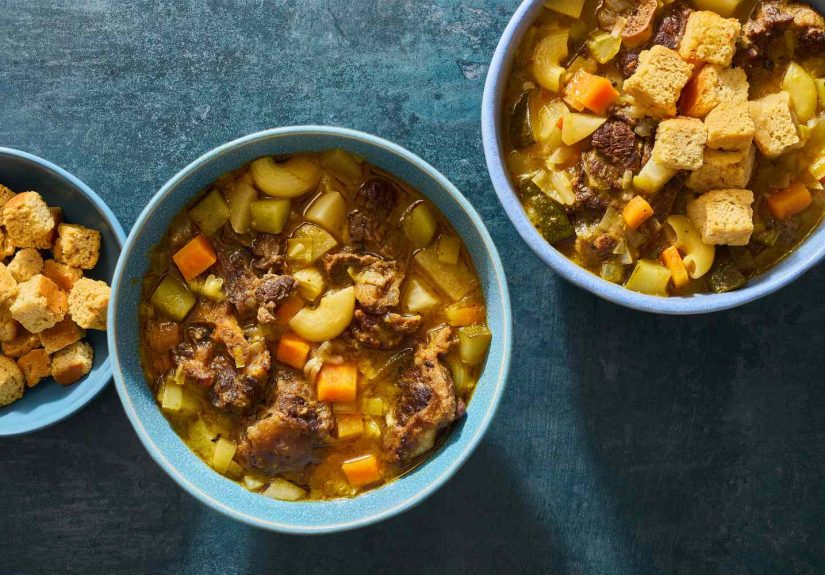
Serving it feels special too. A bowl of Soup Joumou looks abundant before you even take the first spoonful. You get the golden broth, the tender beef, the soft vegetables, the pasta tucked in between, maybe a squeeze of lime over the top. The first bite is both comforting and lively. You taste sweetness from the squash, savoriness from the stock, brightness from the herbs, and warmth from the pepper. It is layered, but not fussy. Deep, but still welcoming.
The emotional part arrives almost automatically. Even if you did not grow up with the dish, you can feel that it was built to be shared. It does not eat like a private desk lunch. It eats like a gathering. A holiday. A moment that asks people to sit down, stay a while, and take another ladle if they are still hungry. The experience of making it teaches you something important: some recipes are designed to nourish more than appetite. They nourish memory, belonging, and the quiet joy of feeding people something that matters.
That may be the real magic of Soup Joumou. Long after the pot is empty, the experience lingers. You remember the smell of epis in the air, the steam rising off the bowl, the color of the broth, the comfort of the first bite, and the feeling that this meal carried a story with it. Plenty of soups are delicious. Very few feel like they mean something. This one absolutely does.
Conclusion
If you want a soup with rich flavor, real substance, and a story worth honoring, Soup Joumou belongs in your kitchen. This Haitian Freedom Soup recipe offers a practical, deeply comforting version of a dish that has stood for resilience and celebration for more than two centuries. The squash makes it silky, the beef gives it backbone, the epis keeps it lively, and the shared table gives it purpose.
Make it for New Year’s Day, make it for a cold weekend, or make it because you want a recipe that tastes as meaningful as it is satisfying. Either way, do yourself a favor: serve it hot, pass the bread, and do not be surprised when people ask for the recipe before they have finished the bowl.