Table of Contents >> Show >> Hide
- What Makes the Cucina Classico Different?
- Choosing the Right Surface: Maple Top vs. Stainless Top
- Size, Height, and Kitchen Fit: Don’t Skip This Part
- Day-to-Day Use: What It’s Actually Good For
- Care and Maintenance: Keeping It Nice Without Making It Your New Hobby
- Mobility: Optional Locking Casters (and Why They Matter)
- Pros and Cons: The Honest Snapshot
- Who Should Buy a John Boos Cucina Classico Work Table?
- Buying Tips: How to Get the Right One the First Time
- Conclusion
- Experiences: What Living With a Cucina Classico Work Table Feels Like (About )
If your kitchen had a “level-up” button, the John Boos Cucina Classico work table would be one of the most satisfying things to press.
It’s the kind of piece that looks like it wandered out of a pro prep kitchen, realized it liked your vibe, and decided to staybringing along a
sturdier workspace, a cleaner workflow, and the quiet confidence of American-made food-prep furniture.
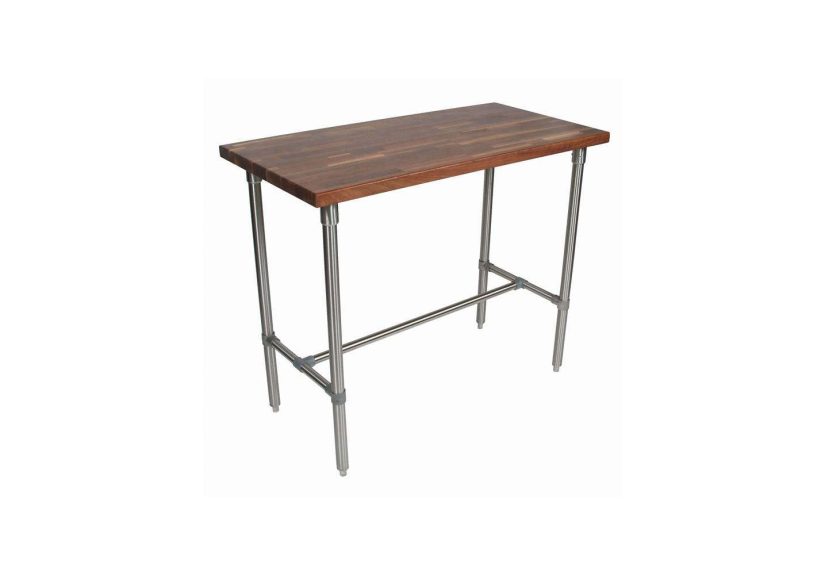
The Cucina Classico line is best known for pairing a thick hardwood top (often 1.5-inch Northern Hard Rock Maple) with a
stainless steel base and center bracing. There’s also a stainless-top version for folks who prefer a full metal prep surface.
Either way, the theme is the same: more space, less wobble, fewer kitchen regrets.
What Makes the Cucina Classico Different?
Plenty of kitchen carts promise “extra space” but deliver “extra annoyance” (hello, shaky legs and wheels that drift like they’re haunted).
The Cucina Classico work table has a more serious personality: open-front base, center cross bracing, and materials chosen for durability rather
than vibes alone.
Signature construction
-
Thick wood top (common configuration): a 1.5-inch Northern Hard Rock Maple top with edge-grain construction for strength and a
furniture-like look. -
Varnique finish (on many wood-top models): a semi-gloss protective coating designed to be low maintenancegreat for general kitchen work,
but not something you want to slice into like it’s a cutting board. - Stainless steel base: stainless legs and center bracing create a stable platform that feels at home in both residential and commercial-style kitchens.
- Optional mobility: many models can be ordered with (or upgraded to) locking casters for roll-where-you-need-it flexibility.
Choosing the Right Surface: Maple Top vs. Stainless Top
Maple (or other hardwood) top: warm, classic, “kitchen furniture” energy
The maple-top Cucina Classico is the crowd-pleaser: it adds visual warmth and gives you a substantial landing zone for mixing bowls, sheet pans,
and big prep projects. The popular size family includes a 48-inch length with either a 24-inch or 30-inch depthroughly 8 to 10 square feet
of usable surface (48×24 = 8 sq ft; 48×30 = 10 sq ft). That’s the difference between “Where do I put this?” and “Yes, I can prep and breathe.”
Important reality check: if your wood-top model uses a Varnique finish, treat it like a beautiful countertopwipe it down, keep it dry,
and use a cutting board for knives. It’s built to be easy-care and attractive, not to be repeatedly scored by blades.
Stainless top: pro-prep practicality and easy cleanup
If you want the “commercial kitchen” vibe and a surface that’s quick to sanitize, the stainless-top Cucina Classico is the move.
These versions are often described with a 16-gauge Type 300 stainless steel top and polished bullnose edges/corners, plus
working heights commonly offered around 36 inches or 40 inches.
For messy tasks (raw proteins, pastry flour storms, sauce splatter), stainless can feel like cheatingin a good way.
Size, Height, and Kitchen Fit: Don’t Skip This Part
The Cucina Classico work table family is commonly seen in a 48-inch length with either 24-inch or 30-inch depth.
Height varies by model and configuration, and some listings describe it in the mid-30-inch range (typical prep-counter territory).
Stainless-top models are also often listed with 36-inch or 40-inch working height options.
A quick, practical sizing checklist
- Measure your clearances: leave walking space so you’re not doing side-shuffles with hot pans.
- Match your workflow: 24-inch depth is great for tight kitchens; 30-inch depth shines for baking, catering-style prep, and big platters.
- Think about seating: some owners use these tables with bar stools as a casual “eat/prep” hybridespecially in open-plan kitchens.
- Don’t guess height comfort: if you’re tall, a higher working surface can be a back-saver; if you’re shorter, standard counter height may feel best.
Day-to-Day Use: What It’s Actually Good For
The Cucina Classico work table tends to shine in the “high-traffic kitchen moments” that make flimsy carts cry.
Here are some real-world examples of how people use it without turning their kitchen into a juggling act:
1) Baking and pastry projects
A broad, stable surface is a gift when you’re rolling dough, staging cookie sheets, or assembling layer cakes.
The 48-inch length gives you room to keep ingredients on one side while you work on the otherless clutter, fewer flour avalanches.
2) Big-batch prep
Chopping vegetables for meal prep, assembling freezer meals, or prepping for a party is easier when you can line up containers
and move down the surface like an assembly line. The stainless base and bracing help the table feel planted, even when you’re moving fast.
3) Entertaining as a “landing zone”
This is underrated: during gatherings, a dedicated work table becomes the “safe harbor” for platters, ice buckets, appetizers, and dessert staging.
Your main counters stay functional instead of becoming a museum exhibit of random serving spoons.
Care and Maintenance: Keeping It Nice Without Making It Your New Hobby
For Varnique-finished wood tops
- Clean simply: mild soap and water, then wipe dry.
- Don’t cut directly on it: use a cutting board to avoid damaging the finish.
- If the finish gets nicked: reseal promptly so moisture doesn’t get into exposed wood.
The vibe here is “easy-care countertop,” not “butcher block cutting station.”
If you want a surface you can cut on directly, you’d typically look for a natural-oil cutting surface design rather than a sealed furniture finish.
For stainless tops
- Wipe down often: warm water + mild detergent is usually enough for daily cleaning.
- Dry it after cleaning: helps prevent water spots and keeps the surface looking crisp.
- Use the right tools for stuck-on mess: a non-abrasive pad or scraper beats harsh abrasion that can dull the polish.
Mobility: Optional Locking Casters (and Why They Matter)
Some kitchens want a table that stays put. Others want a table that can roll over to the action:
next to the stove during sauce season, closer to the sink during produce prep, then out of the way when guests arrive.
Locking casters are the “best of both worlds” upgrademobility when you want it, stability when you need it.
A commonly referenced caster option is a set of four 5-inch heavy-duty locking casters (often sold as a kit),
designed to fit work tables with 1-5/8-inch diameter legs. Translation: these aren’t toy wheels. They’re meant to move a serious table.
Pros and Cons: The Honest Snapshot
Pros
- Stability: stainless legs plus center bracing creates a solid, confidence-inspiring work surface.
- Work surface you’ll actually use: 48-inch length with 24–30 inch depth supports real cooking projects.
- Looks “intentional”: it can read as furniture, prep station, or kitchen island depending on your space.
- Customization: wood species, stainless-top variants, heights, and caster options let you match your workflow.
Cons
- Not all tops are meant for cutting: Varnique-finished wood is gorgeous, but it’s not a cut-on surface.
- Footprint matters: the 48-inch length is amazing… unless your kitchen is already playing Tetris.
- Some models are made to order: which can mean lead time versus instant gratification.
- It’s an investment: you’re paying for materials, build, and long-term durabilitynot bargain-cart economics.
Who Should Buy a John Boos Cucina Classico Work Table?
You’re a strong candidate if:
- You cook often and feel constrained by your existing counter space.
- You bake, entertain, or meal prep and want a dedicated staging area.
- You appreciate durable materials and don’t want to replace a wobbly cart every couple of years.
- You like the look of a pro-inspired kitchen but still want warmth (wood) or easy sanitation (stainless).
You might want to rethink it if:
- You truly need a cut-on butcher block surface and you’re only seeing Varnique-finished options.
- Your kitchen can’t spare the floor space without turning daily cooking into an obstacle course.
- You need something ultralight and ultra-cheap (this table is neither of those things).
Buying Tips: How to Get the Right One the First Time
1) Identify the top finish before you buy
“Wood top” doesn’t automatically mean “cutting surface.” If the listing calls out a Varnique finish, plan to use cutting boards.
If you want a cutting surface, look for models/finishes intended for that purpose.
2) Decide if you want mobility up front
Adding casters later can be straightforward if you buy compatible parts, but it’s easier when you plan aheadespecially if your kitchen
layout benefits from rolling the table to different zones.
3) Consider the table’s job description
Is it a prep station? A baking center? A serving hub? An island alternative? Pick depth and top material based on what you’ll do most.
For example, 30-inch depth feels luxurious for baking and plating, while 24-inch depth can be the “fits anywhere” MVP.
Conclusion
The John Boos Cucina Classico work table isn’t trying to be everything to everyoneand that’s exactly why it works.
It’s built to be stable, useful, and visually at home in kitchens that actually get used.
Choose maple (or another hardwood) when you want warmth and furniture-style presence.
Choose stainless when you want fast cleanup and a no-nonsense prep surface.
Either way, if you’ve ever wished your kitchen had “just one more counter,” this table is basically that wishbuilt like it plans to outlive your next renovation.
Experiences: What Living With a Cucina Classico Work Table Feels Like (About )
Most people don’t realize how much their kitchen routine is shaped by a lack of “neutral territory.” You’ve got the sink area, the stove area,
and then the leftover slivers of counter space that become a parking lot for a toaster, a coffee maker, and yesterday’s mail. Adding a Cucina
Classico work table changes the emotional weather of the room. Suddenly, there’s a place where cooking can happen without negotiating with clutter.
A common first-week experience is the “I didn’t know I needed this much space” moment. You set out a cutting board, a mixing bowl, a tray of
vegetables, andshockinglythere’s still room. If you bake, it becomes the dough headquarters. You can keep flour, sugar, and tools on one side,
roll on the other, and leave a sheet pan parked nearby without it teetering off the edge. The table feels steady enough that you stop bracing it
with a hip like you might with a lightweight cart. That stability is a quiet luxury: fewer rattles, fewer micro-annoyances, more flow.
If your model has a Varnique-finished wood top, the learning curve is simple: treat it like a handsome countertop. Wipe it down, keep it dry, and
use a cutting board. People who do this tend to keep the surface looking “new” longer because they’re not turning it into a knife battlefield.
You’ll also notice the table becomes a natural gathering point. Guests drift toward it during parties. Kids do homework there while you prep dinner.
Someone inevitably leans on it and says, “This is nice. Where did you get it?”which is the universal signal that your kitchen upgrade worked.
Owners who add locking casters often talk about the table like it’s a helpful assistant. Need more room by the stove? Roll it over. Need to clear
space for guests? Roll it back. The “lock” part matters, because once it’s parked, you want it to feel like a permanent fixture, not a shopping cart
with wanderlust. With the wheels locked, it becomes a sturdy island alternativeespecially in kitchens where built-in islands aren’t possible.
The longer-term experience is that the work table quietly absorbs chaos. Holidays get easier because there’s a place for turkey carving, pie staging,
and buffet setup. Weeknights get smoother because meal prep stops competing with everything else. And maybe the best part: the table encourages you to
cook more, not because it’s magical, but because it removes friction. In a kitchen, less friction is basically the same thing as more joy.