Table of Contents >> Show >> Hide
Every now and then, life serves up a moment so weird, so wildly off-center, that you stop mid-breath and think, Wait… are we all pretending this is normal? Maybe it is a coworker treating a truly alarming behavior like office comedy. Maybe it is a family gathering where everyone politely ignores the emotional elephant tap-dancing on the dining room table. Or maybe it is the modern classic: another giant data leak hits the news, half the internet shrugs, and you are left clutching your coffee like the last sober person at a pirate wedding.
That unsettling feeling has a reason. Psychology has long described how people can normalize troubling behavior, copy the group, stay silent when others stay silent, or start doubting their own judgment when someone keeps insisting, “You’re overreacting.” In other words, the feeling of being “the only sane one” is not always proof that you are right about every detail. But it is often a sign that your internal alarm system noticed something important before the crowd did.
This article takes that deliciously uncomfortable feeling and turns it into what it deserves to be: a funny, sharp, highly relatable list of bizarre moments that make people question reality. Think of it as a field guide for those times when the world seems one shrug away from becoming a full-blown sketch comedy routine.
Why These Moments Feel So Unsettling
Part of what makes these experiences so memorable is not just the weirdness itself. It is the audience reaction. If one person acts strangely, that is a story. If ten people act like the strange thing is no big deal, that is when your brain starts filing paperwork under possible alternate dimension.
The psychology behind the “only sane person in the room” feeling
Sometimes the problem is gaslighting, where a person or group keeps minimizing or twisting reality until someone begins doubting their own judgment. Sometimes it is pluralistic ignorance: everyone reads everyone else’s calm face as proof that nothing is wrong. Then there is groupthink, where people value harmony over honesty, and conformity, where going along feels safer than speaking up. Add stress, fatigue, power dynamics, and a social media culture that can turn absurdity into background noise, and suddenly bizarre behavior starts strolling around in a fake mustache labeled “normal.”
Which brings us to the main event: 44 moments that make people wonder whether they are perceptive, paranoid, or simply trapped in a very underfunded episode of reality TV.
44 Bizarre Moments That Make People Feel Like the Only Sane Ones
- The office meeting where the terrible idea gets a standing ovation. You watch a plan with obvious holes, obvious risks, and the structural integrity of wet cardboard get praised as “bold.” Everyone nods. You start wondering whether common sense forgot to badge in.
- The coworker with the “harmless joke” that is absolutely not harmless. One person’s alarming behavior gets recast as personality. Somehow the room agrees that this is “just how they are,” and now you are the odd one out for not laughing.
- The family secret that is not secret, just aggressively unaddressed. Everybody knows Uncle Whatever has been doing awful things for years, but the group energy says, “Let’s pass the mashed potatoes and never discuss it again.”
- The midnight work email labeled flexibility. Your boss messages at 12:14 a.m., people respond by 12:16, and the company still insists it values work-life balance. Ah yes, the cherished balance of panic and Wi-Fi.
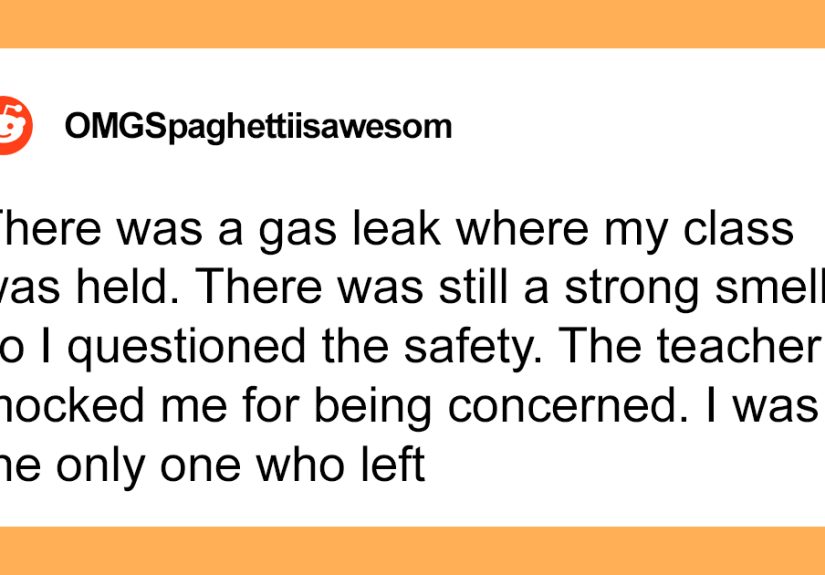
- The emergency that gets treated like a minor inconvenience. A serious allergic reaction, terrifying symptom, or obvious health scare happens, and the people around you act like it deserves maybe half a shrug and a juice box.
- The tech app asking for your soul and everyone clicking “Allow.” Why does the flashlight app need your contacts, microphone, location, calendar, and firstborn? Great question. Apparently not a popular one.
- The data breach that lasts one news cycle. Millions of people’s private information spills into the digital street, and by lunchtime the internet has moved on to ranking sandwiches.
- The group chat that ignores the actual crisis. Someone raises a real problem. The conversation glides right past it and lands on sticker reactions, brunch plans, and whether blue hearts feel passive-aggressive.
- The public meltdown nobody acknowledges. A customer screams at a cashier, or a passenger behaves like an escaped game show contestant, and everybody studies the floor like eye contact costs extra.
- The wildly unhygienic restaurant behavior nobody seems bothered by. Food mishandling is happening in plain sight, yet people keep chewing as though salmonella builds character.
- The tradition that turns out to be low-key horrifying. Plenty of people grow up assuming a family ritual is sweet and wholesome, only to describe it later and get the universal response: “I’m sorry, you did what on birthdays?”
- The religious or social ritual that escalates out of nowhere. You thought you were attending a normal gathering. Five minutes later, the room is in full theatrical chaos and everyone else looks deeply accustomed to it.
- The boss who says “we’re a family” right before crossing a boundary. Nothing good ever follows that sentence. It is corporate code for “We would like emotional loyalty without legal responsibility.”
- The school rule that makes no logical sense but is enforced like sacred law. Zero tolerance policies, contradictory dress codes, or absurd punishments somehow survive because no one wants to be the person who asks, “But why?”
- The friend group built around one person’s bad behavior. Everyone has quietly reorganized their lives to avoid setting off one dramatic, manipulative, or volatile individual, yet somehow they are still the “fun” one.
- The marriage advice that sounds like a threat. Somebody says, “Oh, you’ll get used to being ignored,” and the room chuckles. You sit there thinking, “This feels less like wisdom and more like an accidental cry for help.”
- The couple fight happening in front of everyone like dinner theater. Not only is it public, but the table keeps eating breadsticks while emotional shrapnel flies overhead.
- The neighborhood danger everyone has accepted as scenery. A broken streetlight, aggressive dog, creepy landlord, or repeated theft becomes “just part of living here.” Comforting. Extremely comforting.
- The friend who clearly needs help but gets called dramatic. People are quick to mock visible distress when it is inconvenient, then later wonder why nobody asked for support sooner.
- The social media trend that is one bad decision in a ring light. It is unhealthy, humiliating, or plainly risky, but the comments section says, “Obsessed.” Civilization remains under review.
- The house rule that sounds invented by a villain. Shoes off? Totally normal. No water after 7 p.m., no closed doors, no sitting on certain furniture, or no speaking during meals? Now we are entering museum-of-oddity territory.
- The doctor visit where you leave feeling silly for having symptoms. Medical dismissal can make people question themselves, even when their body has been broadcasting distress in 4K.
- The wildly unsafe workplace shortcut that everybody swears is fine. The procedure exists for a reason, but after enough corner-cutting, the risky version becomes “how we’ve always done it.”
- The roommate who has declared war on basic cleanliness. Mountainous dishes, mystery smells, and a refrigerator that should probably be studied by NASA somehow coexist with their cheerful claim that everything is “pretty clean.”
- The parent who rewrites history in real time. You remember the event clearly. They deny it, reshape it, and present a third version with full confidence. Suddenly your childhood feels like it was edited by a magician.
- The celebration of overwork like it is a personality trait. Being exhausted, under-slept, over-caffeinated, and vaguely haunted is treated as ambition rather than a flashing warning sign.
- The friend who confuses bluntness with virtue. They say something mean, call it honesty, and get applauded for “telling it like it is.” Fascinating how “authenticity” keeps picking on softer targets.
- The event where everyone is clearly miserable but committed to pretending otherwise. Weddings, retreats, team-builders, reunions: everyone is trapped in discomfort, yet the official vibe remains “best day ever.”
- The person who keeps violating boundaries and gets described as passionate. No, Cheryl, that is not passion. That is a human battering ram wearing perfume.
- The online pile-on presented as accountability. Sometimes public criticism is warranted. Sometimes it is a digital town square rediscovering the joy of torches. Telling the difference is increasingly an extreme sport.
- The roommate, partner, or relative who “jokes” about deeply alarming things. When a threat, insult, or scary pattern is wrapped in humor, people often laugh first and think later.
- The airplane or public transit moment where one person behaves absurdly and nobody intervenes. The rest of us become amateur statues, hoping social paralysis will somehow solve itself.
- The office gossip everyone treats as a management system. Official communication is nonexistent, but rumor has become the company intranet, HR handbook, and weather report.
- The party where consent and comfort are treated as optional accessories. People pressure, tease, or corner others, and the social script says being upset is somehow ruder than being inappropriate.
- The internet conspiracy that sneaks into ordinary conversation. Someone says something completely detached from reality, and instead of pushback, the room offers thoughtful nodding. You consider moving to a lighthouse.
- The family member who keeps insulting everyone and gets protected as “from another generation.” Strange how age is sometimes used like a decorative blanket over behavior that would otherwise get instantly shut down.
- The company perk that is actually an apology in costume. Free pizza for impossible deadlines. A meditation app for chronic understaffing. Cupcakes placed gently on the altar of burnout.
- The school, club, or community leader who is clearly unfit but untouchable. Everybody has stories. Nobody wants consequences. So the chaos remains fully employed.
- The person who always “forgets” what they promised. At some point, chronic convenient amnesia stops being forgetfulness and starts looking suspiciously like strategy.
- The social event where one person is obviously being excluded and no one breaks formation. Few things feel stranger than watching adults quietly cooperate with cruelty while pretending it is scheduling.
- The neighborhood or workplace danger reframed as toughness. If speaking up about broken systems, intimidation, or exhaustion is seen as weakness, dysfunction gets promoted to cultural identity.
- The family gathering where a harmful pattern is called love. Control becomes “concern.” Surveillance becomes “protection.” Guilt becomes “closeness.” Suddenly every red flag is wearing a cardigan.
- The moment you describe your childhood and the room goes silent. You told the story because you thought it was funny. Everyone else heard it as Exhibit A.
- The instant you realize your private discomfort has been socialized into silence. Maybe the weirdest moment of all is discovering that lots of people noticed something was wrong, but everyone waited for someone else to say it first.
Why People Normalize the Absurd
The short answer is that humans are social creatures, not independent fact-checking robots. We take cues from the people around us. If a crowd stays calm, we assume calm is appropriate. If a boss normalizes nonsense, employees often adapt. If a family has operated around one unhealthy pattern for years, that pattern can stop feeling shocking and start feeling like wallpaper. Not good wallpaper, mind you. The kind from a haunted motel. But wallpaper all the same.
There is also the practical issue of cost. Speaking up can be awkward, risky, tiring, or socially expensive. It may threaten a relationship, create conflict, or make someone the designated Problem Person. So people rationalize. They minimize. They wait. They tell themselves maybe it is not that bad. That is how bizarre moments become regular moments, and regular moments become culture.
Sometimes the weirdness is institutional. Workplaces normalize impossible hours. Schools normalize contradictory rules. Healthcare systems normalize patients feeling rushed or unheard. Online platforms normalize surveillance, outrage, and endless emotional static. When the environment stays strange long enough, noticing it can make you feel strange.
That is why these moments hit so hard. They are not just weird. They challenge your trust in shared reality. And when shared reality starts wobbling, even ordinary people begin mentally checking whether they accidentally wandered into a satirical novel.
500 More Words on the Experience of Feeling Like the Last Rational Person in the Room
One of the oddest parts of these experiences is how physical they can feel. You are not just intellectually confused. Your shoulders tense. Your stomach drops. Your face does that tiny involuntary expression that says, surely someone else is hearing this too. There is often a split second where you scan the room for confirmation, expecting one other person to raise an eyebrow, snort, whisper, or otherwise signal that reality still has at least one active employee on shift.
And then nobody does.
That silence is the part people remember years later. The bizarre action matters, yes, but the collective agreement to ignore it is what makes the memory stick like gum to a hot sidewalk. A boss shouts at staff and the office keeps typing. A relative says something monstrous and the family asks who wants dessert. A friend describes obvious manipulation and then laughs it off because everybody else does. The moment becomes surreal not because it is loud, but because the room refuses to name it.
Many people first encounter this feeling in childhood, which is especially powerful because kids assume adults know what they are doing. If a child grows up around chaotic rules, scary punishments, emotional whiplash, or strange “traditions,” they often accept those things as normal by default. Later, maybe in college, maybe at work, maybe while casually swapping stories with friends, they describe some old family routine and get a reaction that changes the temperature in the room. Suddenly they are not revisiting a funny memory. They are discovering that what felt ordinary was actually deeply unusual.
Adults experience the same thing in different packaging. The workplace version is especially common. Employees learn which absurdities must be tolerated to stay employed: impossible deadlines, leaders who communicate in riddles, unofficial expectations that violate official policy, and pressure to treat burnout as commitment. Plenty of workers have had that moment where they realize an entire team has quietly built its daily routine around one dysfunctional behavior no one is willing to challenge. It feels less like professionalism and more like a hostage situation with matching lanyards.
Then there is the internet, that great global amplifier of “Wait, are we really doing this?” Online, weirdness spreads fast because repetition creates familiarity. The more often people see invasive tech, manipulative influencers, dehumanizing jokes, or public humiliation framed as entertainment, the more ordinary it can begin to feel. But familiarity is not the same thing as health. Just because a behavior is common does not mean it is wise, harmless, or humane.
The good news is that this eerie feeling can also be useful. Discomfort is information. It does not automatically make you correct about every detail, but it can alert you to a gap between what is happening and what people are willing to admit is happening. Sometimes being the first person to say, “No, this is weird,” is exactly what breaks the spell. Other times it simply helps you trust your own judgment enough to step back, ask better questions, or refuse to participate.
So if you have ever had one of those moments where the room seemed determined to gaslight itself and you were left gripping reality by the ankles, congratulations: you may not be the only sane person alive. You may just be the first one who noticed the emperor forgot his pants.
Conclusion
The strangest moments in life are not always the loudest, scariest, or most dramatic. Often, they are the ones wrapped in a weird layer of social acceptance. That is what makes them so unforgettable. They expose the fragile, funny, slightly alarming way humans create normality together. We copy one another, excuse one another, protect routines, and sometimes keep the peace so hard that reality itself starts looking undercooked.
Still, there is something reassuring hidden inside these stories. The fact that so many people have had that same “am I the only one seeing this?” moment means you are hardly alone. In fact, your confusion may be a sign that your instincts are working beautifully. In a world where people can normalize almost anything, noticing the bizarre is not a flaw. It is a skill.
Note: This article is an original, web-ready synthesis written in standard American English and cleaned for publication use without placeholder citation artifacts.