Table of Contents >> Show >> Hide
- Why Is My Caramel Sauce Too Thin?
- Method 1: Simmer the Caramel Sauce to Reduce It
- Method 2: Cool or Refrigerate the Caramel Sauce
- Method 3: Add a Thickening Ingredient Carefully
- How Thick Should Caramel Sauce Be?
- Common Mistakes to Avoid When Thickening Caramel Sauce
- Can You Thicken Store-Bought Caramel Sauce?
- How to Fix Caramel Sauce That Became Too Thick
- Experience-Based Tips for Thickening Caramel Sauce
- Conclusion
Caramel sauce is one of those magical kitchen creations that can make a plain bowl of vanilla ice cream look like it just got promoted to dessert royalty. But when caramel turns out too thin, the mood changes fast. Instead of a glossy ribbon that drapes beautifully over brownies, apples, pancakes, cheesecake, or coffee drinks, you get something that runs away like it has somewhere better to be.
The good news? Thin caramel sauce is usually fixable. In many cases, it is not ruined at all. It may simply need more cooling time, a short simmer, or a small adjustment to its ratio of sugar, cream, and butter. Learning how to thicken caramel sauce is less about panic and more about understanding what caramel is trying to tell you. Spoiler: it is usually saying, “Please stop poking me and let me cool.”
In this guide, we will walk through three easy methods to thicken caramel sauce, explain why caramel becomes runny in the first place, and share practical tips for getting that perfect spoon-coating texture. Whether you are making salted caramel from scratch or rescuing a store-bought jar that pours like melted ice, these methods will help you bring your sauce back to its glossy, dessert-saving glory.
Why Is My Caramel Sauce Too Thin?
Before thickening caramel sauce, it helps to know why it became thin. Caramel sauce is usually made from melted sugar combined with cream, butter, salt, and sometimes vanilla. Its final texture depends on heat, cooking time, moisture, fat, and cooling temperature. That sounds dramatic, but do not worry. Caramel is not a villain. It is just sugar with trust issues.
It Has Not Cooled Enough Yet
Fresh caramel sauce often looks thinner while it is hot. That is completely normal. Hot caramel flows easily because the sugar, cream, and butter are still loose and fluid. As the sauce cools, it thickens naturally. Refrigeration makes it even thicker, sometimes firm enough to scoop rather than pour.
If your caramel looks watery right after cooking, wait before making changes. Let it sit at room temperature for at least 20 to 30 minutes. For a true texture test, chill a small spoonful in the refrigerator for a few minutes. This tells you what the finished sauce will feel like once cooled.
Too Much Cream or Liquid Was Added
Heavy cream gives caramel its smooth, rich texture, but too much can make the sauce loose. Even a few extra tablespoons can change the final consistency. Some recipes are designed to be pourable; others are meant to be thick enough for filling cakes, layering bars, or spreading on cookies.
If you accidentally added too much cream, do not throw the caramel away. A gentle simmer can reduce the excess moisture and concentrate the sauce. We will cover that method in detail below.
The Sauce Was Not Cooked Long Enough
Caramel thickens when water evaporates and sugar concentration increases. If the caramel is removed from the heat too soon, it may remain thin after cooling. This often happens when home cooks get nervous once the sugar turns amber. Understandable. Hot sugar can look like it is one second away from becoming a kitchen volcano.
However, caramel sauce needs enough cooking time after the cream is added. A short return to the stove often helps the sauce become thicker, smoother, and more balanced.
The Recipe Was Designed to Be Thin
Some caramel sauces are intentionally light and pourable. Coffee caramel, sundae sauce, and drizzle-style caramel are usually thinner than caramel used for fillings or toppings that need to stay put. Before “fixing” the sauce, think about how you plan to use it. A thin caramel may be perfect for lattes but disappointing between cake layers.
Method 1: Simmer the Caramel Sauce to Reduce It
The most reliable way to thicken caramel sauce is to simmer it gently. This method reduces excess water, intensifies the flavor, and creates a richer texture. It is especially useful when your caramel is already finished but too runny after cooling.
Best For
This method works best for homemade caramel sauce that contains too much liquid or was not cooked long enough. It is also useful for caramel that tastes good but refuses to cling to a spoon.
How to Do It
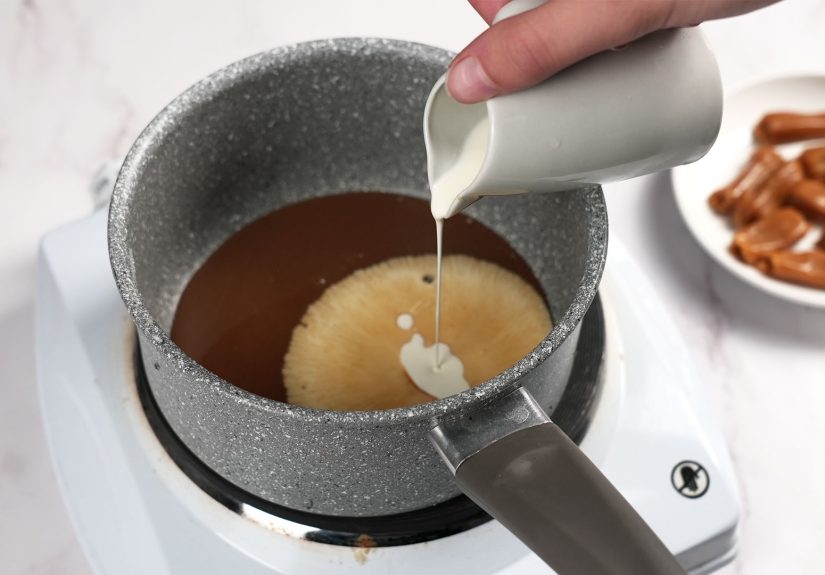
- Pour the thin caramel sauce into a heavy-bottomed saucepan.
- Place the pan over low to medium-low heat.
- Stir gently with a heatproof spatula as the sauce warms.
- Let it simmer for 3 to 8 minutes, depending on how thin it is.
- Watch the bubbles. As the sauce thickens, the bubbles usually become slower, glossier, and heavier.
- Remove the sauce from heat and let it cool before judging the final texture.
The key is patience. Do not crank the heat to high unless you enjoy the flavor of burnt sugar and regret. Caramel can go from “almost perfect” to “why does my kitchen smell like a campfire?” very quickly.
Texture Test
Dip a spoon into the caramel and lift it above the pan. If the sauce runs off like water, it needs more time. If it coats the spoon in a glossy layer and falls in a slow ribbon, you are close. Remember that caramel continues to thicken as it cools, so stop slightly before it reaches the final thickness you want.
Important Tip
If you have a candy thermometer, aim for a sauce consistency rather than a hard candy stage. Many caramel sauces become thick and saucy around the low 220°F range, while higher temperatures can create a chewier or firmer caramel. For a pourable dessert sauce, avoid cooking it so long that it turns into candy.
Method 2: Cool or Refrigerate the Caramel Sauce
Sometimes the easiest way to thicken caramel sauce is also the most overlooked: let it cool. Hot caramel almost always looks thinner than cooled caramel. If you judge it too soon, you may overcook it, and then you will be trying to thin it back out five minutes later. Caramel enjoys making people humble.
Best For
This method is best when the caramel is freshly made and still warm. It is also ideal when the sauce seems slightly thin but still has good body.
How to Do It
- Remove the caramel sauce from the heat.
- Let it cool in the pan for 5 to 10 minutes.
- Transfer it to a heatproof jar or bowl.
- Let it stand at room temperature for 20 to 30 minutes.
- If needed, refrigerate it for 30 to 60 minutes for a thicker texture.
Once chilled, caramel may become quite thick. That does not mean it is ruined. To loosen it, microwave it in short bursts or warm the jar in a bowl of hot water. Stir until smooth before serving.
When Cooling Is Enough
Cooling is enough if the caramel is thin while hot but becomes spoon-coating after resting. It is also enough if you are using the caramel as a drizzle over chilled desserts, because the cold surface will help it set slightly.
When Cooling Is Not Enough
If your caramel is still watery after it has fully cooled, it likely needs reducing. In that case, use Method 1. Refrigeration can temporarily make caramel thicker, but it will not fix an overly diluted sauce once it warms up again.
Method 3: Add a Thickening Ingredient Carefully
Adding a thickening ingredient can work, but it should be done carefully. Caramel has a delicate texture, and the wrong addition can make it grainy, cloudy, or oddly pudding-like. This method is best when you need a quick rescue and simmering alone is not enough.
Option A: Add More Sugar and Reheat
If the sauce is too thin because it contains too much cream, adding a little more sugar can help restore balance. Add 1 to 2 tablespoons of granulated sugar to the sauce, warm it gently, and stir until fully dissolved. Simmer briefly, then cool and test the texture.
This method works best when the caramel still tastes balanced but lacks body. Avoid adding too much sugar at once, or the sauce may become overly sweet or grainy.
Option B: Add Butter for Body
Butter does not thicken caramel the same way reducing does, but it can give the sauce a richer, fuller mouthfeel. Whisk in 1 tablespoon of unsalted butter while the caramel is warm. This can help a loose sauce feel smoother and more luxurious.
Butter is especially helpful for caramel that tastes flat or watery. It adds shine and a soft finish, making the sauce feel more like a dessert topping and less like caramel-flavored syrup.
Option C: Use a Cornstarch Slurry Only When Necessary
A cornstarch slurry can thicken caramel quickly, but it should be a last resort for classic caramel sauce. Mix 1 teaspoon of cornstarch with 1 tablespoon of cold water or cold cream until smooth. Whisk it into warm caramel and simmer for 1 to 2 minutes until slightly thickened.
This method is useful for caramel fillings, dessert sauces for layered dishes, or caramel that will be mixed into puddings, trifles, or pies. However, it may slightly change the glossy, silky texture of traditional caramel. Use it when function matters more than perfect classic caramel texture.
How Thick Should Caramel Sauce Be?
The ideal caramel thickness depends on how you plan to use it. There is no single perfect texture. A caramel sauce for iced coffee should pour easily. A caramel for brownies should be thicker. A caramel for cake filling should hold its place like it understands the assignment.
For Ice Cream and Pancakes
Use a pourable caramel that flows slowly from a spoon. It should be thick enough to coat the dessert but not so thick that it lands in one stubborn blob.
For Apple Slices or Pretzels
Use a thicker caramel that clings when dipped. If it slides off immediately, simmer it a little longer or chill it before serving.
For Cakes, Cupcakes, and Brownies
Use a spoon-coating caramel that holds a ribbon for a few seconds. This texture is ideal for drizzling over frosted cakes or layering between baked goods.
For Fillings
Use a thicker caramel, but avoid cooking it until hard. A filling should be soft enough to bite but firm enough not to leak everywhere. Nobody wants a cupcake that behaves like a caramel sprinkler system.
Common Mistakes to Avoid When Thickening Caramel Sauce
Using High Heat
High heat can scorch caramel. Always reheat and reduce caramel gently. A heavy-bottomed saucepan helps distribute heat evenly and lowers the chance of burning.
Judging the Sauce While It Is Hot
Hot caramel lies. It looks thinner than it really is. Always cool a spoonful before deciding whether it needs more thickening.
Adding Too Much Thickener
Thickeners should be added in tiny amounts. Too much cornstarch can make caramel taste starchy. Too much sugar can make it grainy. Too much butter can make it greasy. Small adjustments are your friend.
Walking Away From the Stove
Caramel is not a “set it and scroll your phone” recipe. Stay near the pan. Stir when appropriate, watch the bubbles, and remove it from heat before it goes too far.
Forgetting That Storage Changes Texture
Caramel thickens in the refrigerator and loosens when warmed. If it seems too thick after chilling, warm it gently. If it seems too thin after warming, let it cool again before adjusting.
Can You Thicken Store-Bought Caramel Sauce?
Yes, you can thicken store-bought caramel sauce, though results vary by brand. Many commercial caramel sauces contain stabilizers, corn syrup, or other ingredients that behave differently from homemade caramel. Still, a gentle simmer can help reduce a thin sauce and make it taste more concentrated.
Pour the sauce into a small saucepan and warm it over low heat. Simmer for a few minutes, stirring often. Let it cool before testing. If it still seems thin, add a small amount of butter for richness or chill it before serving.
Avoid boiling store-bought caramel aggressively. Some sauces can separate or become sticky in an unpleasant way. Treat them gently, and they will usually cooperate.
How to Fix Caramel Sauce That Became Too Thick
Sometimes thickening goes too well. If your caramel becomes too firm, do not panic. Add 1 tablespoon of warm cream, milk, or water at a time and stir over low heat until smooth. Heavy cream gives the best flavor and texture, while water will thin the sauce without adding richness.
If the caramel has hardened completely, warm it gently before adding liquid. Be careful, because hot caramel can bubble up when liquid is added. Use a deep pan and stir slowly.
Experience-Based Tips for Thickening Caramel Sauce
After making caramel sauce many times, one lesson stands above the rest: caramel rewards calm cooks. The sauce can sense fear. All right, maybe not literally, but it certainly behaves better when you slow down, prepare your ingredients, and stop treating every bubble like an emergency.
One practical habit is to measure everything before turning on the stove. Caramel moves quickly once the sugar melts, and there is no graceful way to measure cream while your sugar is darkening in the pan. Have the cream, butter, salt, vanilla, thermometer, spatula, and heatproof jar ready. This small step can prevent overcooking, splattering, and the classic kitchen dance known as “Where did I put the butter?”
Another experience-based tip is to use a lighter-colored pan if possible. Dark pans make it harder to judge caramel color. A golden amber shade is easier to see in stainless steel or light enamel. Since color affects flavor and thickness, visibility matters. Pale caramel may be sweet but mild and thin. Deep amber caramel has a stronger flavor and often a better body, but it can become bitter if pushed too far.
When thickening caramel by simmering, use your eyes and ears. Thin caramel bubbles quickly and lightly. Thicker caramel bubbles more slowly and sounds heavier, almost like it is sighing in the pan. The spoon test is also useful: drag a spatula across the bottom of the pan. If the caramel briefly leaves a trail before flowing back together, it is gaining body.
For home bakers, the best trick is to test a teaspoon of caramel on a cold plate. Place a small plate in the freezer before you start. When you want to check thickness, drop a little caramel onto the cold plate and wait 30 seconds. This gives you a better idea of the cooled texture than staring into a hot pan and hoping for wisdom.
If you are making caramel for a specific dessert, adjust the thickness to the job. For cheesecake topping, a medium-thick sauce is best because it spreads without soaking the crust. For apple dipping, go thicker and chill it slightly before serving. For coffee drinks, keep it loose enough to dissolve. For brownies, make it thick enough to ribbon over the top without disappearing into the cracks like a tiny caramel explorer.
Storage also matters. Homemade caramel sauce is usually best kept in a clean jar in the refrigerator. It will thicken when cold, so do not judge it straight from the fridge unless you plan to serve it cold. Warm it gently in the microwave in short bursts, stirring between each one. If it separates slightly, keep stirring. Often it comes back together as it warms.
Finally, do not be afraid to make notes. Write down how much cream you used, how long you simmered the sauce, and how thick it became after cooling. Caramel recipes can vary depending on pan size, stove heat, humidity, and ingredient temperature. A few notes can turn your next batch from “pretty good” into “hide this jar from the family because I want it all.”
Conclusion
Learning how to thicken caramel sauce is mostly about choosing the right fix for the problem. If the sauce is hot, let it cool first. If it is still thin after cooling, simmer it gently to reduce excess moisture. If it needs extra help, add a small amount of sugar, butter, or a careful thickener depending on how you plan to use it.
The best caramel sauce should be glossy, smooth, and rich, with a texture that matches its purpose. Whether you want a pourable ice cream topping, a dip for apples, or a thick caramel layer for brownies, these three easy methods will help you control the consistency without starting over.
Caramel may seem fussy, but once you understand how heat, cooling, and liquid affect texture, it becomes much easier to manage. And when you finally drizzle that thick, golden sauce over dessert, you will know the truth: caramel was never the boss of you. It just needed a little simmer and a pep talk.
Note: This article is based on practical caramel-making principles and synthesized guidance from reputable American cooking, baking, and recipe resources. It is written as original web-ready content with no copied source text.