Table of Contents >> Show >> Hide
- First, What “Tax Credit” Actually Means (and Why It’s Better Than a Deduction)
- What’s Phasing Out (and the Deadlines That Matter)
- The “Two Moves” Strategy: Do the Right Thing, Then Prove You Did It
- Home Upgrades Credit (25C): The One With Caps (and a Sneaky 2025 ID Requirement)
- Residential Clean Energy Credit (25D): The Big 30% One (Solar, Batteries, Geothermal)
- Clean Vehicle Credits (30D New / 25E Used): Mostly Gone, But Not Necessarily Lost
- EV Charger Credit (30C): The One You Can Still Chase in 2026 (But Only in the Right Place)
- Claiming Checklist: How to Make Sure You Actually Get the Credit
- Real-World Examples (Because Math Is More Convincing Than Vibes)
- Mistakes That Commonly Blow Up Credits
- If You Missed the Big Home Credits: Your Plan B Isn’t Nothing
- Experience Corner: What It Feels Like to Chase These Credits (and What People Learn the Hard Way)
- Wrap-Up: Your “Don’t Miss It” Action List
Clean energy tax credits are the rare kind of government paperwork that can actually feel like winning. You upgrade your home, buy a cleaner car, or install a charger… and the IRS hands you a coupon for your tax bill. The catch? These credits don’t hang around forever. Some have already ended for new projects, and others are on a very real countdown.
This guide is built for normal humans (not tax-law robots). We’ll cover what’s expiring, what you can still claim, and how to lock things in (or salvage them) without stepping on the classic rakes: wrong year, wrong form, missing documentation, or the dreaded “I thought paying a deposit counted.”
Quick heads-up: This is educational info, not individualized tax advice. If your situation is spicy (rentals, partial business use, new construction, divorces, trusts, or you simply enjoy complex spreadsheets), a tax pro is your friend.
First, What “Tax Credit” Actually Means (and Why It’s Better Than a Deduction)
A tax credit reduces your federal income tax dollar-for-dollar. Owe $6,000 in tax and claim a $2,000 credit? Now you owe $4,000. A deduction reduces taxable income (helpful, but not as direct).
Most clean energy credits for homeowners are nonrefundablemeaning they can reduce your tax to $0, but generally won’t cut you a check beyond that. Some credits allow unused amounts to carry forward; others don’t. (More on that in the “don’t leave money on the table” section.)
What’s Phasing Out (and the Deadlines That Matter)
“Phased out” sounds gentlelike a dimmer switch. In practice, these deadlines are more like a trapdoor. Here are the key end dates you need to know under current rules:
| Credit | What It Covers | Big Deadline | What the Deadline Really Means |
|---|---|---|---|
| 25C Energy Efficient Home Improvement | Heat pumps, HVAC, water heaters, windows/doors, insulation, panel upgrades, home energy audits | Dec 31, 2025 | Property generally must be placed in service by this date. |
| 25D Residential Clean Energy | Solar, battery storage, geothermal, small wind, fuel cells | Dec 31, 2025 | Expenditures are treated as made when installation is completed. |
| 30D New Clean Vehicle | New qualifying EVs / fuel cell vehicles (up to $7,500) | Sept 30, 2025 | Vehicle must be “acquired” by this date (binding contract + payment). You claim when placed in service. |
| 25E Previously-Owned Clean Vehicle | Used qualifying EVs (up to $4,000, subject to rules) | Sept 30, 2025 | Vehicle must be acquired by this date (same “acquired” concept). |
| 30C EV Charger / Refueling Property | Home EV charger (and certain related electrical work), in eligible locations | June 30, 2026 | Property must be placed in service by this date. |
| 45L New Energy Efficient Home (builder credit) | Energy-efficient new homes (claimed by builders) | June 30, 2026 | Home must be acquired by this date for the credit to apply. |
The “Two Moves” Strategy: Do the Right Thing, Then Prove You Did It
Getting these credits is mostly two moves:
- Qualify on paper: meet the right date + the right product standards + the right residence rules.
- Document like a mildly paranoid accountant: keep receipts, reports, and product IDs so you can claim smoothly (and defend it if asked).
Home Upgrades Credit (25C): The One With Caps (and a Sneaky 2025 ID Requirement)
The Energy Efficient Home Improvement Credit (25C) rewards efficiency upgradesthink heat pumps, efficient HVAC, better windows, insulation, panel upgrades, and even home energy audits. It’s generous, but it’s also picky.
What you can get (typical highlights)
- 30% credit rate for qualifying costs in the eligible period.
- Annual limits: up to $1,200 for many improvements, plus up to $2,000 for qualified heat pumps, heat pump water heaters, and certain biomass equipment.
- Item caps exist for things like windows, doors, and audits.
- No carryforward: if you can’t use the credit because you don’t owe much tax, the unused part generally doesn’t roll to next year.
The deadline rule that trips people
For 25C, timing is tied to when the property is installed and placed in servicenot when you ordered it, not when you argued with the contractor about “what is a reasonable timeline,” and not when the box arrived looking like it lost a fight with a forklift.
2025-only “QMID” rule (yes, it’s as thrilling as it sounds)
For 2025, certain items require that they’re produced by a qualified manufacturer and that you report a Qualified Manufacturer Identification Number (QMID) on your tax return. Translation: keep product documentation and make sure your installer or retailer can provide the needed manufacturer info for the exact model installed.
How to maximize 25C before it goes away
- Stack smartly within the caps: If you did multiple upgrades in 2025, map them against the annual limits so you claim the maximum allowed.
- Don’t assume labor counts: Some categories allow installation labor, others (like certain building envelope components) generally don’t. Read the category rules carefully.
- Keep the “proof packet”: invoices showing labor vs materials, product model numbers, manufacturer certificates, and payment records.
Residential Clean Energy Credit (25D): The Big 30% One (Solar, Batteries, Geothermal)
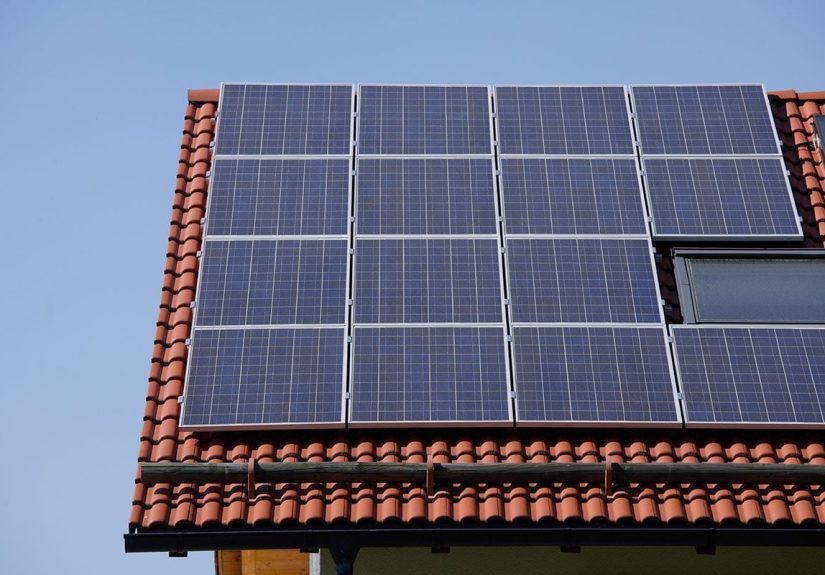
The Residential Clean Energy Credit (25D) is the headline credit for renewable generation and storage at homesolar panels, battery storage, geothermal heat pumps, small wind, and fuel cells. For many households, this is the “largest single credit” category.
What qualifies
- Solar electric (including certain solar roofing tiles/shingles that generate electricity)
- Battery storage (must meet minimum capacity requirements)
- Geothermal heat pumps
- Small wind turbines
- Fuel cells (with special limits)
The key timing rule: “Paid” isn’t the same as “Done”
For 25D, what matters is when the expenditure is treated as madewhich is generally when the original installation is completed. That means paying a deposit before the deadline doesn’t rescue you if installation finishes after the cutoff.
Credit size and carryforward
The credit is 30% of eligible costs in the eligible window. It’s nonrefundable, but unlike 25C, you can generally carry forward unused credit to future years (so if your system is big and your tax bill is smaller, you don’t automatically lose the rest).
Don’t miscalculate the “net cost”
Some rebates and incentives may reduce the costs you can use to calculate your credit, depending on how they’re structured. Keep the paperwork for utility incentives, installer discounts, and any state/local programs so you can compute properly.
Clean Vehicle Credits (30D New / 25E Used): Mostly Gone, But Not Necessarily Lost
EV credits have been especially deadline-driven. Under the updated rules, the big federal clean vehicle credits are not available for vehicles acquired after Sept 30, 2025. But there’s an important twist: you can still claim the credit when the vehicle is placed in service if you acquired it by the deadline.
What “acquired” means (this is the detail that saves people)
“Acquired” isn’t just “I wanted it really badly.” It generally means you entered a written binding contract and made a payment (including a down payment or trade-in) on or before the cutoff date. You then claim the credit in the year you take possession (placed in service).
The big eligibility filters (new vehicles)
- Income limits apply (based on modified AGI thresholds by filing status).
- MSRP caps apply ($80k for SUVs/vans/pickups; $55k for other vehicles).
- Final assembly in North America is required, and battery sourcing rules may affect the credit amount.
- Dealer reporting is not optional: you need a time-of-sale report; if the seller doesn’t report properly, the credit can be denied.
EV Charger Credit (30C): The One You Can Still Chase in 2026 (But Only in the Right Place)
If you missed the solar/heat pump window, don’t rage-quit just yet. The Alternative Fuel Vehicle Refueling Property Credit (30C) for home EV chargers is still alive into 2026but it ends for property placed in service after June 30, 2026, and it comes with a location requirement.
How much is it?
For most homeowners, it’s typically 30% of the cost (equipment + eligible installation/associated costs), up to $1,000 per charging port.
The “eligible census tract” requirement
Your home must be in an eligible census tract (generally low-income or non-urban, per the program rules). This is the part that surprises people: a charger installed at a home that’s not in an eligible tract doesn’t qualifyeven if the charger itself is perfect.
How to claim
You generally claim 30C on Form 8911 for the year the charger is placed in service. Keep invoices that clearly show the charger cost and installation costs, plus documentation showing your address qualifies.
Claiming Checklist: How to Make Sure You Actually Get the Credit
Step 1: Match your project to the correct year
- 25C and 25D: you generally claim for the year the property is installed/placed in service (and for 25D, when installation is completed).
- EV credits: you claim for the year the vehicle is placed in service (when you take possession), as long as you acquired it by the deadline.
- 30C charger: you claim for the year the charger is placed in service (ready for use).
Step 2: Gather the “proof packet” before you file
- Itemized invoices (materials vs labor, model numbers, address where installed)
- Proof of payment and completion date
- Manufacturer documentation (and QMID where required)
- For EVs: VIN + time-of-sale report from the dealer
- For chargers: documentation that your address is in an eligible census tract
Step 3: Use the right form (this is where credits go to die)
- Form 5695 for 25C and 25D home energy credits
- Form 8936 for clean vehicle credits (new/used, as applicable)
- Form 8911 for the charger/refueling property credit (30C)
Step 4: If you forgot a credit, don’t panicamend
If you already filed and later realize you missed a credit, you may be able to file an amended return (Form 1040-X). The practical takeaway: keep your documents even after you file, because the “oops” fix is often possible if done within the allowed window.
Real-World Examples (Because Math Is More Convincing Than Vibes)
Example 1: Heat pump upgrade in 2025
You install a qualifying heat pump in 2025 for $9,000 total. 30% of $9,000 is $2,700, but the heat pump portion of 25C is capped at $2,000 for the year. Result: your credit is $2,000 (assuming you have enough tax liability to use it).
Example 2: Solar + battery completed in 2025
You complete a solar + battery install in 2025 costing $28,000. 30% is $8,400. If your tax liability is only $6,500 that year, you can use $6,500 now and carry forward the remaining $1,900 (subject to the credit’s carryforward rules).
Example 3: EV acquired by deadline, delivered later
You signed a binding contract and made a payment for a qualifying EV on Sept 20, 2025, but delivery happens in January 2026. Because you acquired the vehicle by the deadline, you may still claim the credit when you take possession in 2026assuming the vehicle and your income meet the other requirements and you get the dealer’s required report.
Example 4: Home charger in 2026 (still possible)
You install a Level 2 charger in May 2026 for $2,400 (equipment + installation). Your address is in an eligible census tract. 30% is $720, under the $1,000 capso the credit is $720. Miss the eligible-location rule, and the credit can drop to $0 faster than your phone battery in winter.
Mistakes That Commonly Blow Up Credits
- Counting “ordered” as “installed”: deadlines generally care about placed-in-service/completion dates, not shopping cart dates.
- Missing required IDs/reports: QMID (where required) for certain 2025 items; time-of-sale report for EV credits.
- Claiming a leased system: if you don’t own the solar system (e.g., lease/PPA), you generally can’t claim the homeowner credit.
- Double-dipping incorrectly: rebates may change your “qualified cost” calculation in some cases.
- Wrong residence type: many credits focus on your primary residence, with limited exceptions.
If You Missed the Big Home Credits: Your Plan B Isn’t Nothing
Even with federal credits shrinking, you may still find meaningful savings from:
- State and local incentives: many states offer rebates, tax incentives, sales tax exemptions, or property tax exemptions for solar and efficiency upgrades.
- Utility programs: rebates for heat pumps, insulation, smart thermostats, and demand-response programs can stack nicely.
- DOE Home Energy Rebates: depending on where you live, whole-home and electrification rebates may be available through state-run programs.
- Smarter sequencing: energy audit → insulation/air sealing → HVAC sizing → electrification upgrades. Doing things in the right order can cut total cost even without big federal credits.
Experience Corner: What It Feels Like to Chase These Credits (and What People Learn the Hard Way)
The clean energy credit experience usually starts with optimism (“We’re going solar!”), briefly becomes logistics theater (“The permit office says… what?”), and ends with paperwork that feels like it was designed by someone who hates fonts. If you’ve already lived through a 2025 upgrade sprint, you’re not alone.
One common story: the Permit Purgatory Solar Saga. Homeowners sign a contract in late summer, then learn their city’s permitting queue moves at the speed of a sleepy sloth on a three-day weekend. The lesson is brutal but useful: for credits tied to completion dates, the true enemy isn’t the price of panelsit’s the calendar. People who succeeded usually had one thing in common: they treated timelines like a project manager would. They asked the installer for a week-by-week schedule, requested permit submission receipts, and followed up early when utility interconnection paperwork stalled. The credit wasn’t “free money”; it was a prize for finishing the race before the finish line got moved.
Then there’s the Heat Pump Eligibility Plot Twist. A homeowner picks a heat pump that looks great on paper, only to find out later that “high efficiency” isn’t the same as “qualifies for the credit.” The smarter approach people learned is to confirm eligibility before installation: check the specific certification category and model line, and keep documentation showing the exact unit installed. This is especially important when installers substitute equipment due to supply issues. If the invoice just says “heat pump system,” that’s not a vibeit’s a future headache. The winners had invoices listing model numbers, and they saved product sheets like they were family photos.
EV credits created their own genre: The Missing Dealer Report Thriller. Someone buys a qualifying vehicle, expects the credit, and later discovers the dealer didn’t file or provide the required time-of-sale report. That can mean a denied credit, awkward calls, and a sudden interest in dealership compliance policies. People who avoided this mess asked for the report at delivery, confirmed it included the key fields, and kept a copy with their tax documents. It’s not glamorous, but neither is arguing with customer service while your return is on hold.
Finally, the 2026 survivor story: The Charger Credit Surprise Win. Homeowners who missed the home upgrade deadlines sometimes still found value in the charger creditif their home is in an eligible census tract and they install before the cutoff. The “aha” moment is usually realizing that location matters as much as equipment. Folks who got it right checked tract eligibility first, then bundled charger installation with needed electrical work that was directly attributable to the charger. Done correctly, the credit felt like getting paid back for doing what they already wanted: making charging at home simple.
If there’s a single takeaway from these real-world patterns, it’s this: deadlines reward people who document early and verify details before purchase. The tech is exciting, but the credit is earned in the boring partspaperwork, dates, and proof.
Wrap-Up: Your “Don’t Miss It” Action List
- If you completed 2025 home upgrades: gather documents now and claim the correct credits on your return using the right forms.
- If you acquired an EV by the deadline but took delivery later: confirm you have the required dealer report and file correctly for the placed-in-service year.
- If you want a home EV charger credit in 2026: confirm your address is in an eligible census tract and install before the June 30, 2026 cutoff.
- When in doubt: verify the exact model eligibility and keep a clean documentation folder. Your future self will thank you.