Table of Contents >> Show >> Hide
- What Is Theoretical Yield?
- What You Need Before You Start
- How to Calculate Theoretical Yield in 12 Steps
- Step 1: Write the chemical equation
- Step 2: Balance the equation
- Step 3: Identify the product you care about
- Step 4: Write down the known amounts of all reactants
- Step 5: Convert each reactant to moles
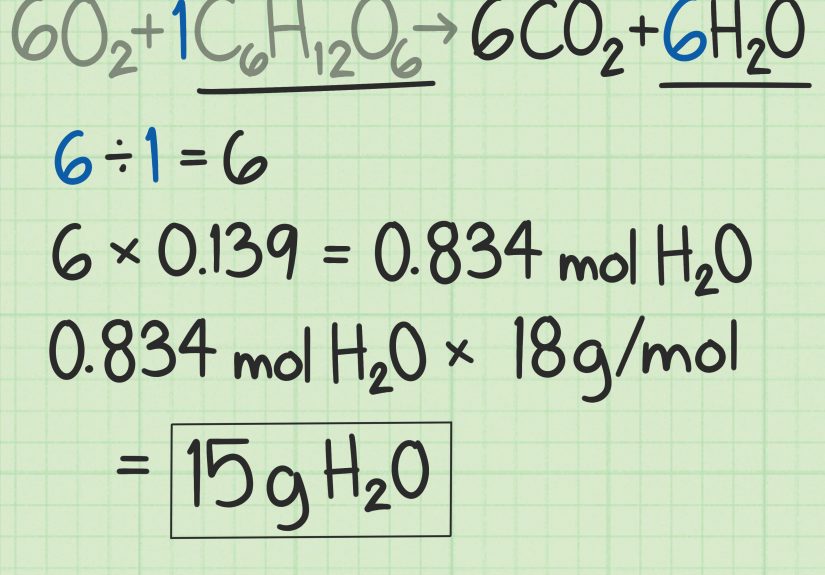
- Step 6: Use the balanced equation to find the mole ratio
- Step 7: Determine which reactant is limiting
- Step 8: Ignore the excess reactant for the yield calculation
- Step 9: Convert limiting reactant moles to product moles
- Step 10: Convert product moles to grams
- Step 11: Label the answer as theoretical yield
- Step 12: Check units, significant figures, and common-sense logic
- Theoretical Yield Formula, Simplified
- A Quick Mini Example
- Why Actual Yield Is Usually Lower
- Common Mistakes to Avoid
- Final Thoughts
- Real-World Experiences With Theoretical Yield Calculations
Chemistry has a funny way of looking intimidating right up until the moment it clicks. Then suddenly theoretical yield is not some terrifying lab phrase whispered by stressed students in goggles. It is just a practical way to answer one question: what is the maximum amount of product a reaction can make?
If you have ever stared at a stoichiometry problem like it personally offended you, good news: this guide breaks the whole thing into 12 clean steps. No drama, no mystery, and no need to sacrifice a calculator to the science gods. By the end, you will know how to calculate theoretical yield, identify the limiting reactant, avoid common mistakes, and check your work like someone who actually remembers chemistry class.
What Is Theoretical Yield?
Theoretical yield is the greatest amount of product you can predict from a chemical reaction if everything goes perfectly. In other words, it is the best-case scenario. No spills, no side reactions, no wet filter paper, no lab partner who “accidentally” used the wrong beaker.
To find theoretical yield, you use the balanced chemical equation, convert the amounts of reactants into moles, determine the limiting reactant, and then calculate how much product that limiting reactant can make. That is the whole game.
What You Need Before You Start
Before you begin, gather these essentials:
- A balanced chemical equation
- The starting amount of each reactant
- Molar masses from the periodic table
- A calculator that has not emotionally given up
We will use this running example throughout the steps:
N2 + 3H2 → 2NH3
Suppose you start with 10.0 g of nitrogen gas and 3.00 g of hydrogen gas. Your goal is to find the theoretical yield of ammonia, NH3.
How to Calculate Theoretical Yield in 12 Steps
Step 1: Write the chemical equation
Start with the correct reaction. This sounds obvious, but skipping this step is like trying to bake a cake from memory when your memory is mostly song lyrics. If the reaction is wrong, every answer after it will also be wrong, just with more decimals.
Example: N2 + H2 → NH3
Step 2: Balance the equation
The equation must be balanced before you use it for stoichiometry. A balanced equation tells you the mole ratio between reactants and products. For ammonia synthesis, the balanced equation is:
N2 + 3H2 → 2NH3
That means 1 mole of nitrogen reacts with 3 moles of hydrogen to produce 2 moles of ammonia. Those coefficients are not decoration. They drive the whole calculation.
Step 3: Identify the product you care about
Sometimes a reaction can produce more than one substance, so be clear about the target product. In our example, we want the theoretical yield of NH3. That keeps your mole ratio and molar mass focused on the right compound instead of wandering off into the chemical weeds.
Step 4: Write down the known amounts of all reactants
List the starting quantities exactly as given. This is your chemistry version of laying all the ingredients on the counter before you cook.
- N2 = 10.0 g
- H2 = 3.00 g
If your problem gives liters, molarity, or particles instead of grams, that is fine. You will simply convert them before using the mole ratio.
Step 5: Convert each reactant to moles
Stoichiometry speaks fluent mole. So if your amounts are in grams, divide by molar mass:
moles = grams ÷ molar mass
Molar masses:
- N2 = 28.02 g/mol
- H2 = 2.016 g/mol
Now calculate:
- N2: 10.0 ÷ 28.02 = 0.357 mol
- H2: 3.00 ÷ 2.016 = 1.49 mol
Step 6: Use the balanced equation to find the mole ratio
The balanced equation shows the relationship between substances. Here, the key ratio is:
1 mol N2 : 3 mol H2 : 2 mol NH3
This tells you how much hydrogen is required for each mole of nitrogen, and how many moles of ammonia can be formed from either reactant.
Step 7: Determine which reactant is limiting
The limiting reactant is the one that runs out first. It controls the theoretical yield. To check, compare what the equation requires with what you actually have.
If you have 0.357 mol of N2, you need:
0.357 × 3 = 1.071 mol H2
You actually have 1.49 mol H2, so hydrogen is in excess. Nitrogen runs out first. That means N2 is the limiting reactant.
Step 8: Ignore the excess reactant for the yield calculation
This step saves people from a lot of confusion. Once you know the limiting reactant, the excess reactant no longer decides the maximum product. It is still there, hanging around with unused potential, but it does not control the answer.
From this point on, use only the limiting reactant, which in our example is nitrogen.
Step 9: Convert limiting reactant moles to product moles
Now use the mole ratio from the balanced equation. The reaction says:
1 mol N2 produces 2 mol NH3
So:
0.357 mol N2 × (2 mol NH3 / 1 mol N2) = 0.714 mol NH3
This is the theoretical yield in moles.
Step 10: Convert product moles to grams
Most chemistry problems want the final answer in grams. So convert moles of product using the product’s molar mass.
Molar mass of NH3:
14.01 + (3 × 1.008) = 17.03 g/mol
Now calculate:
0.714 mol × 17.03 g/mol = 12.2 g NH3
Step 11: Label the answer as theoretical yield
This matters more than students sometimes realize. Do not just write “12.2 g NH3.” Write:
The theoretical yield of NH3 is 12.2 g.
That makes it clear this is the maximum predicted amount, not necessarily what you would isolate in a real experiment.
Step 12: Check units, significant figures, and common-sense logic
Before you celebrate, do a quick quality check:
- Did you balance the equation first?
- Did you convert grams to moles before using coefficients?
- Did you base the final answer on the limiting reactant?
- Are your units correct?
- Did you round reasonably?
In our example, the answer makes sense. Nitrogen was limiting, hydrogen was excess, and the theoretical yield came out to 12.2 g of NH3.
Theoretical Yield Formula, Simplified
There is no single magic formula that replaces the process, but this flow works every time:
Given amount of reactant → moles of reactant → mole ratio → moles of product → grams of product
That is theoretical yield in one line. It is less a formula and more a chemistry road map.
A Quick Mini Example
Let’s say you react 4.00 g of hydrogen with excess oxygen to make water:
2H2 + O2 → 2H2O
Hydrogen molar mass is 2.016 g/mol, so:
4.00 g H2 ÷ 2.016 g/mol = 1.98 mol H2
The mole ratio between H2 and H2O is 1:1, so that gives 1.98 mol H2O. The molar mass of water is 18.02 g/mol, so:
1.98 × 18.02 = 35.7 g H2O
The theoretical yield is 35.7 g of water.
Why Actual Yield Is Usually Lower
If theoretical yield is the maximum amount, actual yield is what you really collect in the lab. The two are often not the same, because chemistry in real life is messier than chemistry on paper.
- Some product may be lost during transfer or filtration
- The reaction may not go to completion
- Side reactions may form other products
- Reactants may contain impurities
That is why chemists often calculate percent yield:
Percent yield = (actual yield ÷ theoretical yield) × 100
So if your actual yield of ammonia were 10.5 g and your theoretical yield were 12.2 g, the percent yield would be about 86.1%.
Common Mistakes to Avoid
- Using grams in the mole ratio: coefficients compare moles, not grams
- Skipping the limiting reactant: this is the classic stoichiometry trap
- Using the wrong molar mass: double-check the formula of the product
- Forgetting unit conversions: mL, L, grams, and moles are not interchangeable by wishful thinking
- Not balancing the equation: this is chemistry’s version of building a house on a skateboard
Final Thoughts
Learning how to calculate theoretical yield gets much easier once you stop seeing it as a giant chemistry monster and start seeing it as a sequence of small, logical moves. Write the balanced equation. Convert to moles. Find the limiting reactant. Use the mole ratio. Convert back to grams. That is it.
Once you practice this process a few times, theoretical yield problems become far less scary and much more mechanical. And honestly, that is a beautiful thing. Chemistry is exciting, but it is even better when the numbers behave.
Real-World Experiences With Theoretical Yield Calculations
One reason this topic sticks with people is that theoretical yield feels very different on paper than it does in a real lab. On paper, everything behaves like a model student. In the lab, everything behaves like it stayed up too late, forgot its notebook, and spilled something important. That contrast is exactly why students remember this concept so clearly.
A common experience is getting a beautiful theoretical yield calculation, then running the experiment and collecting much less product than expected. At first, that feels like a personal attack from the universe. But it is actually one of the most useful lessons in chemistry. Theoretical yield teaches you what should happen under ideal conditions. Actual yield teaches you what did happen in the real world. The gap between the two is where a lot of practical learning lives.
Another familiar moment comes when students discover that the limiting reactant is not always the one with the smaller mass. That realization tends to arrive with a dramatic pause and a look of betrayal. Chemistry does not care which reactant looks smaller in grams. It cares about moles and reaction ratios. Once that clicks, stoichiometry starts making much more sense, and many future mistakes disappear.
People also remember how often unit mistakes cause trouble. A problem may seem impossible until you notice that one amount is given in grams, another in liters, and the question wants the answer in moles or grams of product. The calculation itself is often not the hardest part. The hardest part is staying organized. Students who write units carefully usually do far better than students who try to do everything in their heads. Chemistry rewards neat thinking more than heroic guessing.
In lab settings, theoretical yield also becomes a tool for judging technique. If a class runs the same reaction and one group gets a much lower percent yield than everyone else, that usually points to something practical: incomplete drying, product loss during transfer, inaccurate measurements, or contamination. In other words, theoretical yield is not just a math answer. It is a benchmark for experimental quality.
There is also a confidence boost that comes with finally mastering it. At first, stoichiometry problems can look like alphabet soup with trust issues. But after working through several examples, students often realize the structure is predictable. That moment matters. It turns chemistry from a subject that feels chaotic into one that feels manageable. And once learners understand theoretical yield, they are usually much more comfortable with limiting reactants, percent yield, and reaction stoichiometry in general.
So yes, theoretical yield is a calculation. But it is also an experience. It teaches accuracy, patience, unit discipline, and respect for the difference between ideal chemistry and real chemistry. Not bad for a topic that starts with a balanced equation and ends with a pile of numbers on a lab report.