Table of Contents >> Show >> Hide
- Why Make Your Own Automatic Dishwasher Tablets?
- Reality Check: Safety, Warranties, and Common Mistakes
- Meet the Ingredients: What Each One Actually Does
- Simple DIY Automatic Dishwasher Tablet Recipe
- How to Use DIY Dishwasher Tablets Correctly
- Troubleshooting Common Problems
- Variations on the Basic DIY Tablet Recipe
- Safety, Storage, and When Not to DIY
- Real-Life Experience: What It’s Like to Use DIY Automatic Dishwasher Tablets
- Conclusion
If the price of store-bought dishwasher pods makes you gasp louder than your machine’s “beep-beep-beep,” you’re not alone. DIY automatic dishwasher tablets are a popular way to save money, cut down on plastic packaging, and control exactly what’s swirling around your plates and glasses. Inspired by the clever projects you’d see on Hometalk, this guide walks you through how to make your own tablets, what’s actually in them, and how to avoid the most common DIY detergent disasters.
Before you grab the baking soda and a cute silicone ice cube tray, it’s important to understand the basics: how dishwashers clean, what ingredients do what, and where DIY cleans up nicelyand where commercial detergents still have the edge. Think of this as your deep-dive, real-talk tutorial, with a side of kitchen chemistry and a dash of humor.
Why Make Your Own Automatic Dishwasher Tablets?
Homemade dishwasher tablets have become a go-to for people who want something cheaper, simpler, and often “cleaner” ingredient-wise than big-brand pods. Here are some of the biggest perks:
- Save money over time: Bulk ingredients like washing soda, baking soda, and salt are inexpensive and go a long way.
- Less plastic waste: No plastic tubs, no individually wrapped pods. Just a jar, tin, or container you already own.
- Control over ingredients: You can skip fragrances, dyes, or ingredients you’re sensitive to and keep the formula minimal.
- Custom scents (or no scent): A few drops of essential oil can add a pleasant smellor you can skip fragrance completely.
- Fun project vibes: There’s something weirdly satisfying about popping out a tray of homemade tablets like you’re baking tiny cleaning brownies.
That said, DIY dishwasher detergent isn’t magic. Commercial pods pack lab-tested enzymes and rinse aids designed to break down baked-on food under specific water conditions. Your homemade version will typically do best on reasonably rinsed, not crusted-over dishes, and may need small tweaks for your water hardness and machine.
Reality Check: Safety, Warranties, and Common Mistakes
Before we mix anything, a quick safety and expectations check:
- Always follow your dishwasher manual: If the manufacturer specifically warns against homemade detergents, keep that in mindespecially if your appliance is still under warranty.
- Never use regular dish soap in the dishwasher: Hand dish soap foams like crazy and can cause leaks, suds overflow, and a serious mess inside and outside your machine.
- Be careful with vinegar: Vinegar is great as a separate maintenance rinse for mineral buildup, but mixing a lot of vinegar into a high-alkaline tablet formula can neutralize cleaning powerand in some setups, repeated vinegar exposure isn’t ideal for rubber parts and seals.
- Prep your dishwasher first: If your machine is full of old mineral deposits, citric acid in DIY tablets can loosen gunk that then re-deposits as cloudy film. Running a hot cycle with citric acid in an empty machine can help clear that out before you switch to homemade tabs.
- Test before fully committing: Start with a small batch and try it for a week. If you get heavy residue, etched glassware, or greasy plates, you’ll know you need to adjust the formulaor use DIY only for lightly soiled loads.
Homemade dishwasher tablets aren’t inherently unsafe, but they do require a little more attention and experimentation than tossing a commercial pod into the dispenser.
Meet the Ingredients: What Each One Actually Does
Most DIY automatic dishwasher tablet recipes you’ll see use the same handful of pantry and laundry aisle staples. Here’s what each one is doing in your machine.
Washing Soda (Sodium Carbonate)
Washing soda is the heavy lifter in most homemade recipes. It helps break down grease and loosens food residues, and it also raises water pH, which boosts cleaning power. It’s stronger than baking soda, which is why you don’t usually swap them one-for-one.
Baking Soda (Sodium Bicarbonate)
Baking soda helps with gentle cleaning and deodorizing. It’s milder than washing soda, but it contributes to scrubbing action and neutralizes smellsuseful when last night’s garlic pasta is still haunting your plates.
Citric Acid
This is your anti-spot and anti-scale hero. Citric acid helps dissolve mineral deposits from hard water and can reduce white residue on glassware. It’s also what makes your mixture fizz when it meets moisture, so you want to add liquids slowly when forming tablets.
Salt
Plain salt (like kosher or coarse sea salt) acts as a mild water softener and can boost cleaning performance in hard water. In some recipes, it also helps with texture and binding.
Optional: Essential Oils
Essential oils like lemon or orange add a fresh scent and a little extra degreasing power. They’re completely optionalskip them if anyone in your home is sensitive to fragrances or strong scents.
Optional: A Tiny Bit of Liquid Soap
Some recipes use a teaspoon or two of liquid castile or dish soap to help bind ingredients and add extra grease-cutting. The key word is tiny. More is not better; too much can lead to suds you don’t want in a dishwasher.
Simple DIY Automatic Dishwasher Tablet Recipe
Here’s a straightforward, borax-free recipe that fits most standard automatic dishwashers. This will make about 24–30 tablets depending on your mold size.
Ingredients
- 1 cup washing soda
- 1 cup baking soda
- 1/2 cup citric acid
- 1/2 cup coarse or kosher salt
- 2–3 tablespoons water (added gradually, as needed)
- 1 teaspoon liquid castile soap or unscented dish soap (optional)
- 10–15 drops lemon or orange essential oil (optional)
Equipment
- Mixing bowl
- Silicone ice cube tray or small silicone molds
- Measuring cups and spoons
- Spoon or spatula
- Airtight jar or container for storage
Step-by-Step Instructions
- Mix the dry ingredients. Add washing soda, baking soda, citric acid, and salt to your bowl. Stir until everything looks evenly combinedno clumps or streaks.
- Add the optional extras. If you’re using essential oils and liquid castile or dish soap, drizzle them over the dry mix and stir thoroughly. The mix may begin to clump slightlythis is normal.
- Add water a little at a time. This is the part where many people go wrong. Use a spray bottle or teaspoon and add water slowly, stirring constantly. The citric acid will want to fizz; you want just enough moisture for the mixture to hold together when squeezed, like damp sandnot a bubbly science-fair volcano.
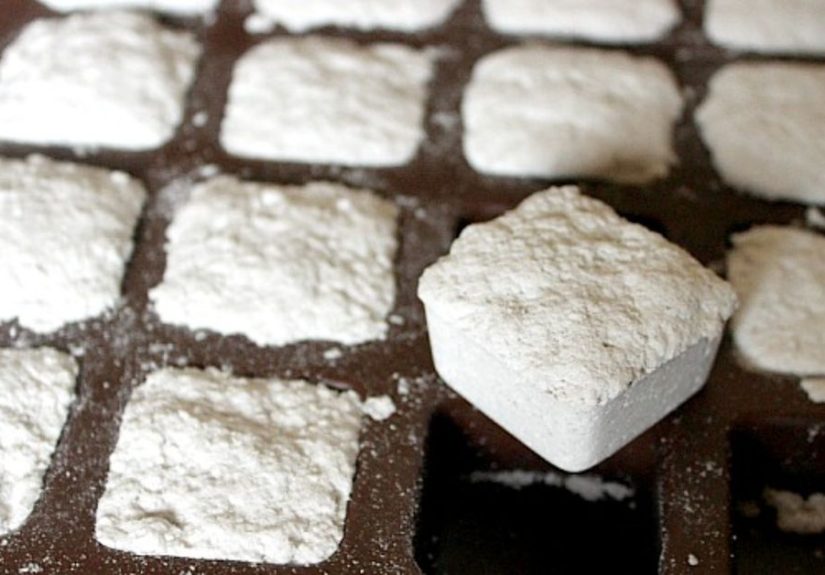
- Press into molds. Firmly pack the mixture into your silicone tray. Press down with your fingers or the back of a spoon so each cavity is tightly filled without air pockets.
- Let the tablets dry completely. Leave the molds in a dry place for at least 24 hours. Humid climates may need a bit longer. The tablets should be hard and easy to pop out without crumbling.
- Unmold and store. Gently pop each tablet from the mold and store them in an airtight container. Keep the container tightly sealed so the tablets don’t absorb moisture from the air and get soft or crumbly.
That’s ityou’ve just made your own automatic dishwasher tablets. Try not to brag too much every time you start a load.
How to Use DIY Dishwasher Tablets Correctly
Using homemade tablets is simple, but a few small details can make a big difference in how clean your dishes come out.
- Place the tablet in the detergent dispenser, not the bottom of the tub. Your dishwasher is designed to release detergent at a specific time in the cycle. Tossing a tab straight into the bottom usually means it dissolves during prewash and is mostly gone by the main wash.
- Scrape, don’t rinse. Scrape off big chunks of food, but you don’t have to fully pre-rinse dishes. In fact, super-clean plates can confuse some dishwashers’ soil sensors.
- Don’t overload. If dishes are packed so tightly that water can’t reach them, even the best tablet can’t help.
- Use hot water. Check that your dishwasher is set to a higher temperature or “sanitize” option if available. Many powders and tablets dissolve and clean best in hot water.
- Adjust for your water hardness. In very hard water, you might need slightly more citric acid or a separate rinse aid. In very soft water, too much detergent can leave residue, so half a tab may be enough.
Troubleshooting Common Problems
1. White Film or Cloudy Glasses
If your glasses look like they’ve been dusted with chalk, the most likely culprit is mineral buildup from hard water or undissolved detergent residue.
Try this:
- Run an empty hot cycle with dishwasher-safe citric acid or a commercial dishwasher cleaner to clear existing buildup.
- Use slightly less tablet per load, especially if your dishwasher is small or your water is soft.
- Check your dishwasher’s temperature and make sure it’s actually getting hot enough.
2. Tablets Don’t Fully Dissolve
Leftover chunks of tablet in the dispenser or stuck in the bottom of the tub usually mean low water temperature, poor water flow, or a tablet that’s too tightly packed or too big for your machine’s dispenser.
Try this:
- Break tablets in half and see if a smaller dose dissolves better.
- Make your next batch slightly less tightly packed so the water can penetrate more easily.
- Check that the dispenser door can fully open and isn’t blocked by tall plates or pans.
3. Dishes Still Look Greasy
If you’re seeing greasy film or stuck-on sauce, your load may be too heavy for a one-size-fits-all DIY tablet.
Try this:
- Scrape dishes more thoroughly before loading.
- Add a touch more washing soda in your next batch for extra degreasing.
- Use DIY tablets for lighter everyday loads and keep a small stash of high-performance commercial pods for the “that lasagna pan” nights.
Variations on the Basic DIY Tablet Recipe
For Hard Water
If you know you have hard water, you can tweak the recipe to fight mineral deposits more aggressively:
- Increase citric acid to 3/4 cup.
- Use coarse salt instead of fine; it dissolves more gradually.
- Consider using a commercial rinse aid in the rinse compartment, even with DIY tablets.
Fragrance-Free Version
If anyone in your home has allergies, asthma, or fragrance sensitivity, skip essential oils and scented soaps entirely. The tablets will still clean; they just won’t smell like lemons ran through a spa day.
Powder Instead of Tablets
If your home is very humid, tablets can be tricky to keep dry. You can use the same ingredient ratios, skip the water, and store the mixture as a loose powder. Use about 1 tablespoon per load and keep the jar tightly sealed. No unmolding requiredjust scoop and go.
Safety, Storage, and When Not to DIY
Even though your ingredients look familiar, DIY dishwasher tablets are still cleaning chemicals and should be treated with respect.
- Keep out of reach of children and pets: Store tablets in a clearly labeled, child-resistant container.
- Label your jar: “Dishwasher Tablets – Do Not Eat” might sound obvious, but it’s better than confusion later.
- Watch delicate items: Fine crystal, hand-painted dishes, cast iron, and some nonstick cookware usually shouldn’t go in the dishwasher at all, homemade tablets or not.
- Know when to stop experimenting: If you’ve tried reasonable tweaks and are still unhappy with resultsor if your machine is very new, expensive, or finickythere’s no shame in going back to quality commercial pods or powder.
Real-Life Experience: What It’s Like to Use DIY Automatic Dishwasher Tablets
So what does living with homemade dishwasher tablets actually look like, day to day? Imagine this: you spend an afternoon measuring, mixing, and pressing your mixture into a silicone ice cube tray. The kitchen smells faintly of lemon essential oil, and your inner DIY hero is feeling pretty smug. The next day, you pop out a tray of neat little cubes, stack them in a jar, and line them up next to your sink like minimalist candy. So far, so Pinterest-perfect.
The real test, of course, is that first load. Most people start with a regular dinner-day mix: plates with a bit of sauce, some cups, silverware, and maybe a not-too-awful baking sheet. You pop a tablet into the dispenser, close the door, and start the cycle. There’s a tiny moment of suspense when the machine beeps at the endwill everything be cloudy and streaked, or satisfyingly squeaky-clean?
For many DIYers, the first load is surprisingly good. Glasses are clear, plates look fine, and the dishwasher has that faint “clean minerals and citrus” smell. The biggest early annoyance usually shows up in humid climates: the rest of the tablets in the jar slowly start to soften or clump. That’s when storage tweaks come inadding a moisture absorber packet to the jar, using a truly airtight container, or switching to powder for a while when the weather is especially damp.
The next part of the experience is the “experimentation phase.” Maybe your water is pretty hard and, after a week or two, you notice a bit of white film creeping onto the glasses. Or certain plastic containers feel slightly filmy. That’s when small recipe tweaks become your best friend. Upping the citric acid just a bit, adjusting the amount of detergent you use, or running an empty hot cycle with citric acid or a dishwasher cleaner can make a big difference.
One thing almost everyone learns quickly: DIY tablets are not superheroes for disaster loads. That casserole dish that soaked in cheesy tomato sauce for two days? It’ll probably still need some hand-scrubbing or a soak before going into the dishwasher. Homemade tablets shine most with everyday dishes where the biggest challenge is coffee stains, light grease, and regular mealsnot deep, baked-on messes that would challenge even a commercial pod.
Over time, some people land on a hybrid routine. They use homemade tablets for most everyday loads and save a small stash of heavy-duty store-bought pods for holidays, big parties, or when things have clearly gotten out of control. This “middle path” is realistic, budget-friendly, and lowers plastic usage without demanding perfection every single day.
The other thing that happensquietly, in the backgroundis that you become more dishwasher-aware. You pay attention to how you load dishes, check for spray arms getting blocked, and actually clean the filter once in a while. You might find yourself running your dishwasher on a hotter cycle or experimenting with different settings. In other words, DIY tablets don’t just change what’s in the dispenser; they change the way you interact with the appliance.
And then there’s the intangible perk: the little mental boost every time you reach for that jar. Knowing that you made something functional from a handful of simple ingredients is satisfying, especially when it replaces a brightly colored, heavily marketed product in plastic wrapping. It feels resourceful and a bit old-school in the best way, like hanging laundry on a sunny day or mending a favorite shirt instead of tossing it.
Of course, DIY dishwasher tablets aren’t for everyone. If you want strictly “set it and forget it” with zero experimentation or if your home has extreme hard water and a picky dishwasher, commercial pods might still be the calmer option. But if you’re willing to tinker a little, track what works, and accept that the occasional cloudy glass is part of the learning curve, homemade tablets can slide into your routine pretty smoothly.
In the end, your experience with DIY automatic dishwasher tablets will depend on your water, your machine, and your expectations. Some people become instant converts and never look back. Others use DIY only part-time. Either way, once you’ve tried making your own, you’ll never look at those tidy little store-bought pods quite the same way again.
Conclusion
DIY automatic dishwasher tablets combine budget savings, ingredient control, and a satisfying hands-on project into one small, hard-working cube. With a simple mix of washing soda, baking soda, citric acid, and salt, you can create tablets tailored to your home’s needs and your personal preferences. Are they perfect for every situation, in every dishwasher, with every water type? Not always. But with a bit of tweaking and a realistic understanding of their strengths and limits, they can handle a large chunk of your everyday dishwashing.
Whether you’re going fully DIY or just supplementing your favorite commercial pods, this kind of project fits right in with the creative, practical spirit you’d expect from a Hometalk-style community: clever, budget-conscious, and just a little bit proud every time the dishes come out sparkling.