Table of Contents >> Show >> Hide
- Why Classroom Nature Experiments Work So Well
- How to Set Up a Curiosity-Friendly Nature Lab
- Experiment 1: Seed Germination Race
- Experiment 2: The Great Soil Showdown
- Experiment 3: Mini Water Cycle in a Bag
- Experiment 4: Ice Melt Investigation
- Experiment 5: Classroom Compost Jar
- Experiment 6: Leaf Transpiration Bag
- Experiment 7: Schoolyard Biodiversity Survey
- Experiment 8: Bird Behavior Observation Station
- Experiment 9: Natural Color Lab
- Experiment 10: Build a Tiny Terrarium
- How to Make Nature Experiments More Scientific
- Safety and Classroom Management Tips
- Connecting Nature Experiments to Reading, Writing, and Math
- Classroom Experiences: What Teachers Often Notice
- Conclusion: Let Nature Do Some of the Teaching
There is a special kind of magic that happens when a student stops asking, “Will this be on the test?” and starts asking, “Waitwhy did that happen?” That tiny question is the doorway to science. And one of the easiest ways to opemysteries. A seed cracks open and becomes a plant. A puddle disappears. A leaf changes color. A worm becomes the most controversial guest in the room. Suddenly, students are not just memorizing vocabulary words like evaporation, habitat, decomposition, or adaptation; they are watching those ideas unfold right in front of them.
The best part? Nature experiments do not require a national park, a greenhouse, or a science budget large enough to make the principal faint. Many powerful activities can happen on a windowsill, in a plastic cup, beside a schoolyard tree, or with a tray of soil and a healthy respect for paper towels.
This guide explores practical, engaging, and standards-friendly classroom nature experiments to spark student curiosity. These hands-on science activities help students observe, predict, measure, compare, discuss, and revise their thinkingthe real habits of scientists. They also make learning feel alive, which is exactly what nature does best.
Why Classroom Nature Experiments Work So Well
Students are naturally curious, but curiosity needs something to grab onto. Nature gives them visible change, surprising patterns, and questions that do not always come with neat textbook answers. That is good news. Real science is not a perfect worksheet with ten blanks. It is a process of wondering, testing, observing, and sometimes saying, “Well, that was not what we expected.”
Classroom nature experiments support inquiry-based learning because they place students in the role of investigators. Instead of simply being told that plants need light, they can test it. Instead of hearing that soil holds water differently, they can pour, measure, and compare. Instead of reading that animals choose habitats based on survival needs, they can observe birds, insects, or pill bugs and collect evidence.
Nature Builds Observation Skills
Observation is more than looking. It is careful attention to color, size, shape, texture, pattern, movement, sound, and change over time. A student who says, “The plant grew,” is making a basic observation. A student who says, “The plant near the window grew three centimeters taller, leaned toward the light, and had darker green leaves than the plant in the cabinet,” is doing science with both eyes open.
Nature experiments train students to slow down. In a fast-scroll world, that is practically a superpower.
Nature Encourages Better Questions
Good experiments begin with good questions. Nature helps students move from broad curiosity to testable questions:
- Do seeds sprout faster in light or darkness?
- Which soil absorbs the most water?
- Does salt make ice melt faster?
- Which schoolyard area has the most insect activity?
- How does temperature affect evaporation?
These questions are simple enough for students to investigate, yet rich enough to develop scientific thinking.
How to Set Up a Curiosity-Friendly Nature Lab
Before jumping into experiments, create a classroom culture where wondering is welcomed. Students should know that unexpected results are not failures. They are plot twists. Science loves a plot twist.
Start With the “I Notice, I Wonder, I Think” Routine
This routine works beautifully with almost any nature object: a leaf, feather, rock, seed pod, flower, shell, pine cone, or cup of soil.
- I notice: Students record what they can directly observe.
- I wonder: Students write questions about what they see.
- I think: Students make a possible explanation based on evidence.
This structure helps students separate observations from guesses. That distinction is essential for strong science learning.
Use Science Journals
A nature science journal can be as simple as a notebook divided into dates, drawings, measurements, and reflections. Students can sketch plant growth, record weather, map schoolyard habitats, track decomposition, or compare leaf shapes. Drawing is not just “art time wearing a lab coat.” It helps students notice details they may otherwise miss.
Keep Materials Simple
Many classroom nature experiments use everyday items: cups, jars, paper towels, seeds, soil, leaves, thermometers, rulers, plastic bags, string, food coloring, ice cubes, and natural objects from the schoolyard. The goal is not to impress students with expensive equipment. The goal is to help them realize that science is already happening around them.
Experiment 1: Seed Germination Race
Best for: Grades K–6
Main concept: Plant life cycles, variables, observation, growth
Few things spark curiosity like a seed that looks completely asleep and then suddenly decides to become a plant. For this experiment, students compare how different conditions affect seed germination.
Materials
- Fast-growing seeds such as beans, radishes, or peas
- Plastic cups or clear bags
- Paper towels or soil
- Water
- Labels
- Rulers
Procedure
Place seeds in different conditions: one near sunlight, one in darkness, one with regular water, one with very little water, and one with too much water. Students predict which seeds will sprout first and explain their reasoning. Over several days, they record changes, measure growth, and sketch what they see.
Curiosity Questions
- What does a seed need before it can grow?
- Can a seed begin growing without sunlight?
- What happens when a plant gets too much water?
This experiment teaches students that living things respond to environmental conditions. It also introduces variables in a concrete way: only one condition should change at a time if students want fair results.
Experiment 2: The Great Soil Showdown
Best for: Grades 2–8
Main concept: Soil composition, water retention, erosion, ecosystems
Soil may not look glamorous, but it is basically the world’s busiest apartment complex. It holds water, supports roots, shelters organisms, and stores nutrients. In this experiment, students compare how sand, clay, potting soil, and garden soil absorb and drain water.
Materials
- Samples of sand, clay, potting soil, and local soil
- Clear cups with small holes in the bottom
- Coffee filters
- Measuring cups
- Water
- Graduated cylinders or marked containers
Procedure
Place each soil type into a filtered cup. Pour the same amount of water into each sample and measure how much drains out after a set time. Students compare which soil holds the most water and which drains fastest.
Curiosity Questions
- Which soil would be best for a cactus? Which would be best for lettuce?
- How might soil affect flooding after heavy rain?
- What happens when soil has no plant roots holding it together?
Extend the lesson by placing soil on a tilted tray and spraying it with water to model erosion. Add grass, moss, or mulch to one tray and compare how much soil washes away. Students quickly see why plant cover matters.
Experiment 3: Mini Water Cycle in a Bag
Best for: Grades K–5
Main concept: Evaporation, condensation, precipitation, water cycle
The water cycle can feel huge and abstract. After all, clouds do not usually fit inside a classroom. But a plastic bag can model the process surprisingly well.
Materials
- Clear zip-top plastic bags
- Water
- Blue food coloring
- Tape
- Permanent markers
- A sunny window
Procedure
Students draw a sun, clouds, land, and water on the outside of the bag. Add a small amount of blue-tinted water, seal the bag, and tape it to a sunny window. Over time, students observe water droplets forming inside the bag as water evaporates and condenses.
Curiosity Questions
- Where did the droplets come from?
- Why does sunlight speed up the process?
- How is this model similar to Earth’s water cycle? How is it different?
This is a great experiment for helping younger students connect vocabulary to visible evidence. It also opens discussions about weather, clouds, rain, and the role of the sun.
Experiment 4: Ice Melt Investigation
Best for: Grades 3–8
Main concept: Heat transfer, temperature, states of matter, fair testing
Ice experiments are excellent because students can see change quickly. Also, ice cubes are dramatic. They arrive solid and confident, then slowly lose the argument.
Materials
- Ice cubes of equal size
- Bowls or cups
- Salt
- Warm water
- Cool water
- Thermometers
- Timers
Procedure
Students place ice cubes in different conditions: room temperature, warm water, cool water, and salt. They time how long each ice cube takes to melt and record temperature data. Older students can graph melt rates and discuss energy transfer.
Curiosity Questions
- Which condition melts ice fastest?
- How does salt change the melting process?
- Why should all ice cubes be the same size?
This activity strengthens students’ understanding of controlled variables. It also connects naturally to real-world topics such as icy roads, polar environments, and climate systems.
Experiment 5: Classroom Compost Jar
Best for: Grades 2–8
Main concept: Decomposition, soil, microorganisms, recycling nutrients
A compost jar lets students observe decomposition without turning the classroom into a swampy disaster zone. Done carefully, it is clean, contained, and fascinating.
Materials
- Clear plastic jar or bottle
- Soil
- Dry leaves
- Small fruit or vegetable scraps
- Spray bottle of water
- Paper or cloth cover
Procedure
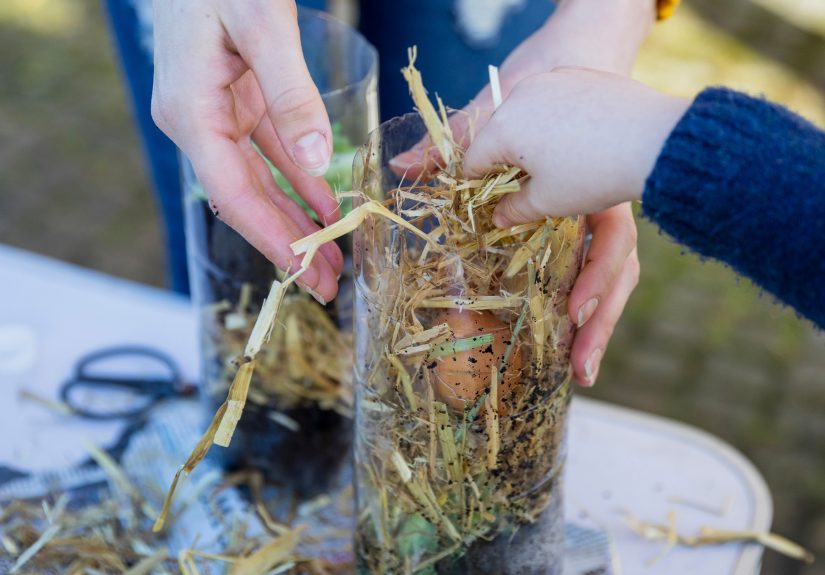
Layer soil, dry leaves, and small food scraps in a clear container. Lightly mist the materials so they are damp, not soggy. Cover the top with breathable fabric or paper. Students observe changes over several weeks, noting smell, color, texture, and visible breakdown.
Curiosity Questions
- Which materials break down fastest?
- Why do dry leaves change more slowly than fruit scraps?
- What role do tiny organisms play in decomposition?
For a comparison experiment, create two jars: one with moisture and one very dry. Students will quickly learn that decomposers are picky little workers. They need the right conditions to do their job.
Experiment 6: Leaf Transpiration Bag
Best for: Grades 3–7
Main concept: Plant processes, transpiration, water movement
Plants do not just sit there looking green and innocent. They are constantly moving water. This experiment helps students see evidence of transpiration.
Materials
- A healthy plant or tree branch
- Clear plastic bags
- String or twist ties
- Observation journals
Procedure
Place a clear plastic bag around a leafy branch or part of a potted plant and gently secure it. Leave it for several hours. Students observe droplets forming inside the bag and discuss where the water came from.
Curiosity Questions
- How does water travel through a plant?
- Why might leaves release water vapor?
- Would the result be different on a hot day than a cool day?
This experiment pairs well with lessons on roots, stems, leaves, and the water cycle. It also helps students understand that plants are active living systems, not classroom decorations with homework vibes.
Experiment 7: Schoolyard Biodiversity Survey
Best for: Grades 3–12
Main concept: Biodiversity, habitats, data collection, ecosystems
Students do not need a forest to study biodiversity. A schoolyard, sidewalk crack, garden bed, tree, or grassy patch can become a living laboratory.
Materials
- Clipboards
- Observation sheets
- String or hula hoops for sample plots
- Magnifying glasses
- Field guides or approved identification apps
Procedure
Students mark small study areas and count how many different plants, insects, birds, or signs of life they can find. They should avoid disturbing organisms and focus on observation. Groups compare results from different microhabitats: sunny grass, shaded soil, under a tree, near flowers, or beside a building.
Curiosity Questions
- Which area had the most living things?
- What conditions might explain the difference?
- How could the schoolyard be improved for wildlife?
This activity can grow into a larger project. Students might design a pollinator garden, create habitat maps, or track seasonal changes throughout the school year.
Experiment 8: Bird Behavior Observation Station
Best for: Grades K–8
Main concept: Animal behavior, adaptation, data collection, patterns
Birds are everywhere, which makes them excellent classroom science partners. They are also unpaid, which helps the budget.
Materials
- A window view, schoolyard, or outdoor sitting area
- Bird observation sheets
- Binoculars if available
- Simple field guides
- Optional classroom bird feeder, if allowed and safely maintained
Procedure
Students observe birds for a set amount of time and record behavior: flying, feeding, calling, perching, walking, interacting, or searching for nesting materials. Older students can create ethograms, which are behavior charts used by animal scientists.
Curiosity Questions
- What behaviors did we see most often?
- How do beak shapes relate to food sources?
- Do birds visit more often at certain times of day?
This experiment strengthens patience and pattern recognition. It can also introduce citizen science, where student observations contribute to larger scientific projects.
Experiment 9: Natural Color Lab
Best for: Grades 2–8
Main concept: Plant pigments, observation, physical changes, art-science connection
Nature is full of color, and students love discovering that leaves, berries, flowers, bark, onion skins, and even soil can produce pigments. This activity blends science and creativity while keeping inquiry at the center.
Materials
- Colorful leaves, flowers, berries, or vegetable scraps
- Small bowls
- Warm water
- Spoons or craft sticks
- Coffee filters or paper towels
- White paper
Procedure
Students crush or soak natural materials in warm water to release pigments. They test the colors on paper and compare which materials produce the strongest marks. Older students can test how lemon juice, baking soda solution, or vinegar changes certain plant-based colors.
Curiosity Questions
- Which natural materials produced the brightest colors?
- Why do some colors fade quickly?
- How might people have used plant pigments before synthetic dyes?
This activity encourages students to see connections between science, art, history, and the natural world.
Experiment 10: Build a Tiny Terrarium
Best for: Grades 3–8
Main concept: Ecosystems, water cycle, plant needs, systems thinking
A terrarium is a tiny ecosystem in a container. It is also a classroom conversation starter because students will absolutely name it something like “Plant City,” “The Moist Kingdom,” or “Bob.” Let them. Ownership builds engagement.
Materials
- Clear jars or plastic containers
- Small pebbles
- Soil
- Moss or small plants
- Spray bottle
- Optional small natural decorations
Procedure
Add a pebble layer for drainage, then soil, then small plants or moss. Mist lightly and cover the container. Students observe condensation, plant growth, and changes over time. Compare closed and open terrariums to explore how water cycles within a system.
Curiosity Questions
- Why does water appear on the inside of the container?
- What might happen if we add too much water?
- How is this tiny system like a larger ecosystem?
This experiment encourages systems thinking, one of the most valuable skills in science education.
How to Make Nature Experiments More Scientific
Fun matters, but strong experiments need structure. The goal is not just to entertain students with dirt, leaves, and mysterious jars. The goal is to help them think like scientists.
Teach Variables Clearly
Students should understand three basic types of variables:
- Independent variable: What students change.
- Dependent variable: What students measure or observe.
- Controlled variables: What stays the same to keep the test fair.
For example, in a seed experiment, the amount of light may change, but the seed type, water amount, cup size, and observation schedule should stay the same.
Use Data Tables and Graphs
Even young students can collect data. They can count leaves, measure plant height, record the number of birds seen, or track daily temperature. Older students can calculate averages, create bar graphs, line graphs, or scatter plots, and explain trends using evidence.
Ask Students to Revise Their Thinking
A powerful question after every experiment is: “How did your thinking change?” This helps students understand that science is not about being right immediately. It is about improving explanations with evidence. That is a lesson worth repeating, especially in a world where everyone seems suspiciously confident online.
Safety and Classroom Management Tips
Nature experiments are exciting, but they should be safe, respectful, and manageable.
- Check school policies before bringing soil, plants, insects, or food scraps into the classroom.
- Avoid unknown berries, mushrooms, irritant plants, or anything students may be allergic to.
- Teach students to observe living things gently and return them to their habitat when appropriate.
- Use gloves when handling soil, compost, or decomposing materials.
- Keep water-based experiments on trays to prevent heroic puddles.
- Wash hands after outdoor investigations or plant handling.
Good procedures protect students and help the experiment run smoothly. They also prevent the teacher from needing to say, “Please stop licking the rock,” which is a sentence every educator hopes to avoid.
Connecting Nature Experiments to Reading, Writing, and Math
Classroom nature experiments do not belong only in science time. They can support literacy, math, art, and social-emotional learning.
Science Writing
Students can write lab reports, nature journal entries, claim-evidence-reasoning paragraphs, or “field scientist letters” explaining their findings to another class.
Math Skills
Nature experiments naturally include measurement, counting, comparison, graphing, averages, elapsed time, and percentages. A plant growth chart can become a math lesson without needing to announce, “Surprise, this is math.”
Art and Design
Students can sketch leaves, create habitat maps, design pollinator gardens, or build models of ecosystems. Scientific drawing teaches accuracy, patience, and attention to detail.
Classroom Experiences: What Teachers Often Notice
After using classroom nature experiments, many teachers notice a shift in student energy. The room feels less like a place where answers are delivered and more like a place where questions are grown. This is especially clear during long-term observations. At first, students may write short notes such as “The seed is bigger.” But after a few days of guided practice, their entries become sharper: “The seed coat split yesterday. Today the root is longer and curves downward.” That is not just better writing. That is better thinking.
One memorable classroom experience comes from a seed germination investigation. Students placed bean seeds in different conditions and predicted that the seed in the sun would sprout first. To their surprise, the seed in darkness sprouted quickly too. This created a lively discussion about what seeds need at the beginning of growth. Students realized that stored food inside the seed helps early germination before the plant needs strong light for photosynthesis. The discovery felt more powerful because students had been wrong first. Their mistake became the hook.
In another classroom, a soil water-retention test became unexpectedly competitive. Groups tested sand, clay, and potting soil, carefully pouring equal amounts of water into each sample. Students cheered when water rushed through the sand and groaned when clay seemed to hold onto water like it had trust issues. The laughter helped, but the learning was serious. Students connected soil texture to farming, flooding, plant roots, and playground puddles. Later, when it rained, several students pointed out where water collected around the school and began explaining why. That is the dream: science escaping the worksheet and following students outside.
Bird observation stations can also create wonderful surprises. Students who are usually quiet may become expert spotters. A child who struggles with long written assignments might carefully notice that one bird hops while another walks, or that certain birds visit after snack time when crumbs appear on the pavement. Those details matter. Nature experiments create more ways for students to show intelligence: through watching, sketching, measuring, building, comparing, and asking original questions.
Compost jars often produce the most dramatic reactions. Students may begin with “Eww,” which is a perfectly valid scientific starting point. Over time, disgust often turns into fascination. They notice that apple peels change faster than dry leaves. They wonder why moisture matters. They begin to understand that decomposition is not just garbage getting gross; it is nature recycling nutrients. The compost jar becomes a tiny, earthy reminder that ecosystems waste almost nothing.
The biggest lesson from these experiences is that curiosity grows when students have time to observe change. Quick demonstrations are useful, but repeated observations build ownership. When students check “their” seed, “their” terrarium, or “their” bird data, they become invested. They ask better questions because the experiment belongs to them. That sense of ownership turns classroom nature experiments into more than activities. They become invitations to think, notice, care, and keep wondering.
Conclusion: Let Nature Do Some of the Teaching
Classroom nature experiments to spark student curiosity do not need to be complicated. A seed, a cup of soil, a melting ice cube, a leaf, a bird outside the window, or a jar of compost can become the beginning of real scientific investigation. The key is to give students time to observe, tools to measure, language to explain, and permission to wonder.
When students investigate nature, they practice the heart of science: asking questions, testing ideas, collecting evidence, and changing their minds when the evidence says, “Nice try, but look again.” They also build a connection to the living world around them. That connection matters because students are more likely to protect what they understand, and they are more likely to understand what they have personally explored.
So open the blinds, bring out the hand lenses, label the cups, and prepare for a few spills. Curiosity is rarely tidy. But in a classroom where nature is allowed to be a teacher, even a muddy tray of soil can grow something remarkable.
Note: This article is original, written in standard American English, and synthesized from reputable U.S.-based science education, environmental education, and classroom STEM resources. It is designed for web publication without source-link clutter or unnecessary citation placeholders.