Table of Contents >> Show >> Hide
- What Is Mistletoe Therapy?
- Mistletoe Is Not a Stand-Alone Cancer Treatment
- Why Are Researchers Interested in Mistletoe?
- What the Evidence Shows So Far
- How Mistletoe Is Used in Cancer Care
- Is Mistletoe Approved for Cancer Treatment in the United States?
- Possible Side Effects and Safety Concerns
- Could Mistletoe Interfere With Cancer Treatment?
- What About Mistletoe for Breast Cancer, Pancreatic Cancer, and Other Specific Cancers?
- How to Evaluate Mistletoe Claims Online
- Questions to Ask Your Oncologist Before Considering Mistletoe
- Evidence-Based Alternatives for Supportive Cancer Care
- Experiences and Real-World Perspectives: Why Patients Ask About Mistletoe
- Conclusion: So, Can Mistletoe Help Treat Cancer?
- SEO Tags
Mistletoe has a public-relations problem. In December, it is the plant that makes people awkwardly look at the ceiling and wonder who started this whole kissing tradition. In integrative cancer care, however, mistletoe is discussed for a very different reason: extracts from European mistletoe, especially Viscum album, have been studied as a complementary therapy for people with cancer.
So, can mistletoe help treat cancer? The honest answer is: maybe in limited supportive ways, but it has not been proven to cure cancer, shrink tumors reliably, or replace chemotherapy, immunotherapy, surgery, radiation, targeted therapy, or hormone therapy. In the United States, mistletoe extract is not approved by the Food and Drug Administration as a cancer treatment or as a treatment for any medical condition. That does not mean researchers are ignoring it. It means the evidence is still not strong enough to treat mistletoe like a standard oncology drug.
This guide explains what mistletoe therapy is, why it attracts attention, what clinical studies suggest, where the evidence is weak, what side effects are possible, and how patients can discuss it safely with their care team.
What Is Mistletoe Therapy?
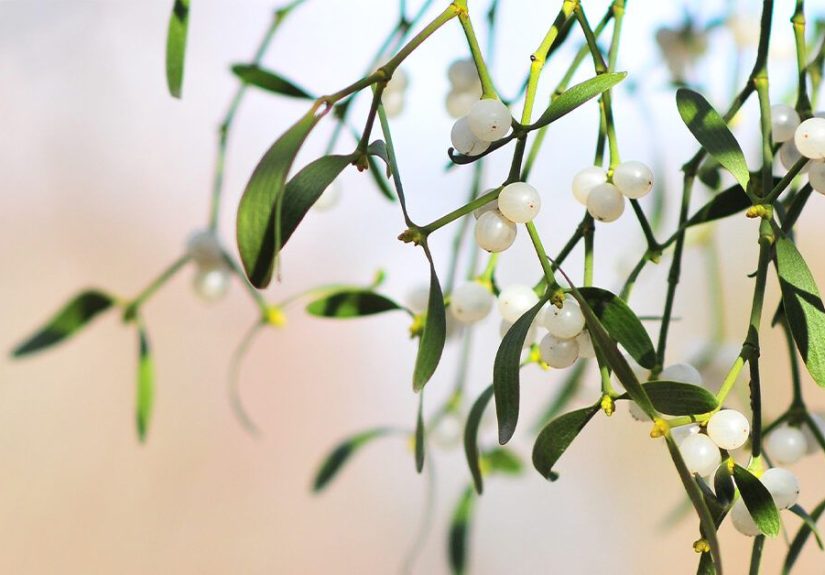
Mistletoe therapy usually refers to extracts made from European mistletoe, a semi-parasitic plant that grows on trees such as apple, oak, pine, and fir. The plant contains several biologically active compounds, including lectins, viscotoxins, flavonoids, and polysaccharides. In laboratory studies, some of these compounds have shown immune-stimulating or cancer-cell-damaging effects. That is the part that gets people excited. It is also the part where science waves a tiny caution flag and says, “Lab results are not the same as patient outcomes.”
Most research on mistletoe and cancer involves injectable extracts, not holiday decorations, teas, or random capsules from the internet. In parts of Europe, mistletoe extracts are prescribed as complementary cancer care and are often given by injection under the skin. Some studies have tested intravenous mistletoe, but that route is still highly experimental.
Mistletoe Is Not a Stand-Alone Cancer Treatment
The most important point is simple: mistletoe should not be used instead of proven cancer treatment. Cancer is not one disease. Breast cancer, pancreatic cancer, melanoma, lung cancer, leukemia, and osteosarcoma behave differently, respond to different therapies, and require different medical strategies. A plant extract that shows interesting immune effects in one setting cannot automatically be promoted as a universal cancer treatment.
In conventional oncology, a treatment becomes standard only after carefully designed trials show that it improves meaningful outcomes, such as survival, tumor response, disease-free survival, symptom control, or quality of life, with acceptable safety. Mistletoe has not cleared that bar as a cancer-fighting therapy. Its more plausible role, based on current evidence, is as a complementary therapy that may help some patients feel better during treatment.
Why Are Researchers Interested in Mistletoe?
Mistletoe interests scientists for three main reasons. First, it contains compounds that may affect immune signaling. Second, some laboratory studies suggest mistletoe extracts can trigger cell death pathways in cancer cells. Third, clinical studies have reported improvements in fatigue, pain, nausea, appetite, sleep, emotional well-being, or general quality of life among some patients using mistletoe alongside conventional care.
That combination makes mistletoe worth studying, but not worth overhyping. Many substances can kill cancer cells in a dish. Bleach can do that too, and nobody sensible is putting it in an infusion bag. The real question is whether a therapy helps humans with cancer live longer, live better, or tolerate treatment more safely.
What the Evidence Shows So Far
1. Quality of Life: The Most Promising Area
The best-supported claim for mistletoe is not that it cures cancer. It is that mistletoe extracts may improve quality of life for some people receiving cancer treatment. Several clinical studies and reviews have reported improvements in symptoms such as fatigue, pain, nausea, sleep disturbance, appetite changes, and general well-being.
This matters because cancer treatment can be physically and emotionally exhausting. If a supportive therapy safely helps a patient sleep better, feel less drained, or tolerate standard treatment more comfortably, that is not trivial. Quality of life is not a decorative bonus; it is part of good cancer care.
However, there is a catch. Many mistletoe studies have design problems. Some are small. Some are not blinded. Some lack strong placebo controls. Some include patients with different cancer types and treatment plans. Because mistletoe injections can cause local skin reactions, blinding can be difficult. Patients may guess whether they are receiving the active treatment, which can influence reported symptoms. That does not make the results useless, but it does mean they should be interpreted carefully.
2. Tumor Control: Interesting but Unproven
Some studies have reported tumor stability or survival signals, but the evidence is not strong enough to conclude that mistletoe reliably controls cancer. A U.S. phase I study of intravenous mistletoe extract in patients with advanced, treatment-resistant solid tumors found manageable toxicities and signs of disease control in some participants. But phase I trials are mainly designed to evaluate safety and dosing, not to prove effectiveness.
When a small early-phase study shows stable disease in a few patients, it is a reason for more research, not a reason to announce a miracle. Cancer can sometimes remain stable for many reasons, including prior therapy, tumor biology, measurement timing, or natural variation. Larger randomized trials are needed before mistletoe can be judged as a true anti-cancer treatment.
3. Survival: The Evidence Is Mixed and Weak
Survival is the toughest and most important endpoint. Some older studies suggested that mistletoe might improve survival in certain groups, but many of those studies had weaknesses that make the findings uncertain. Reviews have repeatedly noted that the quality of the evidence varies widely.
At this point, patients should not assume mistletoe will help them live longer. It may support well-being for some people, but survival benefits remain unproven.
How Mistletoe Is Used in Cancer Care
In settings where mistletoe is used, it is usually given as an add-on to standard cancer therapy. It may be administered as a subcutaneous injection, meaning under the skin. Less commonly, researchers have studied intravenous use. Different products are made from mistletoe grown on different host trees, and preparations may vary in strength and composition.
This is one reason mistletoe research is complicated. “Mistletoe extract” is not one perfectly uniform product. The extract, dose, route, host tree, manufacturing process, and patient population can all differ. Comparing studies can be like comparing apples, oranges, and a suspicious fruit salad someone brought to a potluck.
Is Mistletoe Approved for Cancer Treatment in the United States?
No. In the United States, mistletoe extract is not FDA-approved as a cancer treatment. Injectable mistletoe products used in European settings are not commercially available as approved cancer drugs in the U.S. Some mistletoe research can occur under clinical-trial rules, but that is different from routine medical approval.
This distinction is crucial. A product can be studied without being approved. A therapy can be available in another country without meeting U.S. standards for approval. A supplement can be sold online without proving that it treats cancer. Patients should be especially careful with any clinic or website that presents mistletoe as a guaranteed cancer cure.
Possible Side Effects and Safety Concerns
Mistletoe is often described as well tolerated when used under professional supervision, but “natural” does not mean “risk-free.” Common reactions may include redness, swelling, itching, or soreness at the injection site. Some people experience fever, chills, fatigue, nausea, headache, or flu-like symptoms. Rare but serious allergic reactions, including anaphylaxis, have been reported.
Safety also depends on the form. Injectable mistletoe used in studies is not the same as chewing leaves or drinking homemade mistletoe tea. American mistletoe species used for decoration can be toxic if ingested. Oral supplements may vary in purity, dose, and labeling accuracy.
Patients with autoimmune disease, severe allergies, active infections, or complex medication schedules should be particularly cautious. People receiving immunotherapy should discuss mistletoe carefully with their oncologist because both immunotherapy and mistletoe may influence immune activity. The interaction risk is not fully understood.
Could Mistletoe Interfere With Cancer Treatment?
This is one of the most practical questions. Some studies suggest mistletoe can be used alongside chemotherapy without obvious major interference, but the evidence is not complete. Cancer treatment plans are highly specific. A patient receiving immune checkpoint inhibitors, monoclonal antibodies, targeted therapy, anticoagulants, steroids, or multiple supportive medications needs individualized guidance.
The safest approach is transparency. Patients should tell their oncologist about every supplement, herb, injection, infusion, tea, powder, or “immune booster” they are using or considering. Oncologists are not there to ruin anyone’s wellness routine. They are there to prevent avoidable harm and keep the main cancer treatment on track.
What About Mistletoe for Breast Cancer, Pancreatic Cancer, and Other Specific Cancers?
Mistletoe has been studied in several cancer types, including breast cancer, pancreatic cancer, lung cancer, colorectal cancer, melanoma, gynecologic cancers, and advanced solid tumors. Breast cancer is one area where quality-of-life research has received attention. Some studies suggest mistletoe may reduce treatment-related fatigue or improve overall well-being in patients receiving chemotherapy or radiation.
Pancreatic cancer studies have also drawn interest because symptom burden is often high. Some research has reported improved quality-of-life measures, but again, study limitations matter. For advanced cancers, early studies may show feasibility or symptom improvement, but they do not prove that mistletoe changes the course of disease.
For rare cancers such as relapsed osteosarcoma, ongoing clinical trials are exploring whether mistletoe-based immunotherapy might have a role after surgical removal of metastases. This is exactly how responsible science should proceed: test carefully, measure outcomes, and avoid selling certainty before the data arrive.
How to Evaluate Mistletoe Claims Online
The internet loves health claims that sound ancient, exotic, and slightly rebellious. Mistletoe checks all three boxes. To separate useful information from digital snake oil, look for the following red flags:
- Claims that mistletoe “kills cancer” without mentioning study limitations.
- Promises that it works for every cancer type.
- Advice to stop chemotherapy, radiation, surgery, or immunotherapy.
- Testimonials used as proof instead of clinical data.
- High-cost protocols with no clear safety monitoring.
- Products sold as “natural” while avoiding discussion of side effects.
A responsible source will explain what is known, what is uncertain, who should avoid the therapy, and why medical supervision matters.
Questions to Ask Your Oncologist Before Considering Mistletoe
If you are curious about mistletoe, bring it up directly with your care team. A good conversation may include these questions:
- Could mistletoe interfere with my current cancer treatment?
- Is there evidence for my specific cancer type and stage?
- Would it affect immunotherapy, chemotherapy, or clinical-trial eligibility?
- What side effects should I watch for?
- Are there safer evidence-based options for fatigue, nausea, sleep, pain, or anxiety?
- Should I avoid oral mistletoe products?
These questions keep the discussion practical. The goal is not to win an argument about natural medicine. The goal is to make safe, informed decisions.
Evidence-Based Alternatives for Supportive Cancer Care
If the goal is better quality of life during cancer treatment, mistletoe is only one possible topic. Many supportive approaches have stronger acceptance in integrative oncology, including exercise programs adapted to the patient’s condition, nutrition counseling, acupuncture for certain symptoms, mindfulness-based stress reduction, cognitive behavioral therapy for insomnia, oncology massage, physical therapy, and palliative care support.
Palliative care deserves special mention because people often misunderstand it. It is not “giving up.” It is specialized support for symptoms, stress, decision-making, and quality of life at any stage of serious illness. In many cases, palliative care works alongside active cancer treatment.
Experiences and Real-World Perspectives: Why Patients Ask About Mistletoe
Patients usually do not ask about mistletoe because they want to reject modern medicine. More often, they ask because cancer treatment is hard, frightening, and deeply personal. A person may be receiving chemotherapy and still feel exhausted every morning. Another may be recovering from surgery and searching for something that helps them feel active in their own healing. Someone else may have read about mistletoe use in Europe and wonder why it is not common in the United States.
In real-world cancer conversations, mistletoe often represents hope with a question mark attached. Patients want to know whether there is something beyond the standard plan that might help with fatigue, appetite, sleep, pain, or emotional resilience. That desire is understandable. Cancer can make life feel like a calendar full of scans, blood tests, side effects, and waiting rooms with suspiciously old magazines. Wanting more support is not irrational; it is human.
Some people who use mistletoe under professional supervision report that they feel more energetic or emotionally steadier. Others notice little difference. Some find the injections annoying or uncomfortable. Some dislike the flu-like reactions. Some feel reassured simply because their integrative practitioner and oncologist are communicating. That last point matters more than it sounds. When care is coordinated, patients are less likely to hide supplement use and more likely to get help quickly if side effects occur.
A common experience is confusion over the difference between complementary and alternative therapy. Complementary means used alongside standard treatment. Alternative means used instead of standard treatment. That difference can be life-changing. A patient using mistletoe while continuing medically recommended treatment is making a very different choice from a patient delaying surgery or chemotherapy because a website promised a natural cure.
Family members may also play a role. A spouse, parent, adult child, or friend might send an article with the message, “Have you seen this?” Sometimes it is helpful. Sometimes it creates pressure. Patients can feel trapped between wanting to stay open-minded and not wanting to chase every miracle claim that pops up online. A calm discussion with the oncology team can turn that anxiety into a safer plan.
The most constructive patient experience is one built around honesty: honest hope, honest uncertainty, and honest medical supervision. Mistletoe may have a future role in supportive cancer care, especially if better trials confirm quality-of-life benefits. But patients deserve more than hype. They deserve clear evidence, careful monitoring, and treatment decisions that protect both survival and well-being.
Conclusion: So, Can Mistletoe Help Treat Cancer?
Mistletoe may help some people with cancer feel better, especially when used as a supervised complementary therapy aimed at quality of life. The most promising evidence involves symptom support, not cancer cure. Current research does not prove that mistletoe reliably shrinks tumors, extends survival, or replaces standard treatment.
In the United States, mistletoe extract is not FDA-approved as a cancer treatment. Patients should avoid self-treatment, avoid oral or decorative mistletoe products, and never delay proven cancer care in favor of mistletoe. Anyone considering mistletoe should discuss it with an oncologist, especially if they are receiving chemotherapy, immunotherapy, targeted therapy, or participating in a clinical trial.
The science is not closed, but it is also not magical. Mistletoe is a plant with interesting biology, a long history, and an evidence base that is still developing. The wisest position is cautious curiosity: keep studying it, keep patients safe, and keep proven cancer treatment at the center of care.
SEO Tags
Note: This article is for educational publishing purposes only and should not be used as medical advice. People with cancer should consult a licensed oncology professional before using mistletoe extract, supplements, injections, or any complementary therapy.