Table of Contents >> Show >> Hide
- The Short Answer: No, Cataracts Do Not Grow Back
- What Actually Happens After Cataract Surgery?
- Why It Feels Like the Cataract Came Back
- How Long After Cataract Surgery Can This Happen?
- Normal Healing vs. a Secondary Cataract
- Who Is More Likely to Develop PCO?
- How Is a Secondary Cataract Diagnosed?
- How Do Doctors Treat It?
- Is YAG Laser Capsulotomy Safe?
- When Blurry Vision Is Not a Secondary Cataract
- When Should You Call the Eye Doctor Right Away?
- Can You Prevent a Secondary Cataract?
- What to Ask Your Ophthalmologist
- The Bottom Line
- Common Patient Experiences Related to “Can Cataracts Come Back After Cataract Surgery?”
- 1. “Everything looked amazing, then it slowly got foggy again.”
- 2. “Night driving got weird again.”
- 3. “One eye seems clear and the other looks like it has a smudge on it.”
- 4. “I worried I needed another full surgery.”
- 5. “The fix was much easier than I expected.”
- 6. “I learned not every blurry spell is ‘just healing.’”
If you have ever looked in the mirror after cataract surgery and thought, “Wait a second… is my cataract pulling a sequel?” you are not alone. It is one of the most common questions eye doctors hear, and honestly, it makes perfect sense. Your vision improves, life looks brighter, colors stop acting like they were washed in weak tea, and then one day things may seem a little hazy again. Naturally, your brain jumps to: “Great. The cataract is back.”
Here is the good news: a true cataract does not come back after cataract surgery. Once the eye’s natural cloudy lens is removed, that original cataract is gone for good. What can happen, however, is something called posterior capsule opacification (PCO), often nicknamed a secondary cataract or after-cataract. It is not the same thing, but it can feel suspiciously similar.
In other words, the original troublemaker leaves the building, but sometimes the window behind it gets smudgy. Rude? Yes. Permanent disaster? Usually no.
The Short Answer: No, Cataracts Do Not Grow Back
Cataract surgery removes the natural lens in your eye and replaces it with a clear artificial lens called an intraocular lens, or IOL. Since a cataract forms in the natural lens, it cannot grow back once that lens is gone.
That is the key point many people miss. The implanted lens does not “catch” a cataract. It does not turn cloudy the same way your original lens did. So if your vision gets blurry again after surgery, the explanation is usually something else.
The most common reason is PCO, which is why people often say their cataract “came back” even though that is not technically what happened.
What Actually Happens After Cataract Surgery?
During cataract surgery, the surgeon removes the cloudy lens but typically leaves the thin capsule that used to hold it in place. Think of the capsule as a tiny clear pouch. The new artificial lens sits inside that pouch so it stays centered and stable.
Over time, some leftover lens cells can migrate and grow on the back of that capsule. When they do, the capsule may become cloudy. That clouding can scatter light and make your vision look fuzzy, dim, or glare-heavy again. This is posterior capsule opacification.
So no, your old cataract did not stage a comeback tour. The more accurate explanation is that the clear membrane behind the implant became cloudy enough to affect vision.
Why It Feels Like the Cataract Came Back
PCO can mimic many of the same symptoms that sent you to cataract surgery in the first place. That is why the confusion is so common. You may notice:
- Cloudy or blurry vision
- Glare from headlights or bright lamps
- Halos around lights
- Reduced contrast
- Trouble reading
- Night driving becoming more annoying than usual
- Colors seeming less crisp
If this sounds familiar, you are not imagining things, and you are definitely not being dramatic. A cloudy capsule can make vision feel weirdly similar to the original cataract experience.
How Long After Cataract Surgery Can This Happen?
That is where things get a little unpredictable. PCO can appear weeks, months, or even years after cataract surgery. Some people never develop it. Others notice it fairly quickly. Many people do well for a long time and then start to feel like their vision is slowly losing its sparkle.
This timing matters because not all blurry vision after surgery means the same thing. Right after the procedure, some temporary blur can be completely normal while the eye heals. Mild irritation, light sensitivity, and fluctuating sharpness are common in early recovery.
But if your vision improved and then later became foggy again, that pattern makes PCO more likely.
Normal Healing vs. a Secondary Cataract
Here is a simple way to think about it:
Normal early healing often looks like this:
- Vision is blurry for a few days
- The eye feels scratchy or mildly irritated
- Light seems extra bright
- Things improve gradually
Posterior capsule opacification often looks like this:
- Vision got better after surgery, then became cloudy later
- Glare or halos start increasing again
- Reading becomes harder
- One eye seems “filmy” compared with the other
- Night driving starts feeling like a boss battle
If you are unsure which bucket you fall into, an eye exam is the fastest way to get a real answer.
Who Is More Likely to Develop PCO?
Anyone who has cataract surgery can develop a secondary cataract, but some people may have a higher risk. Risk can be influenced by age, individual healing patterns, and certain eye or health conditions. Some medical sources also note higher risk in people with retinal problems, glaucoma, uveitis, high myopia, or complications around surgery.
That said, there is no useful prize for trying to predict it at home. The bigger point is this: PCO is common enough that ophthalmologists watch for it routinely, and it is one of the best-known late follow-up issues after cataract surgery.
How Is a Secondary Cataract Diagnosed?
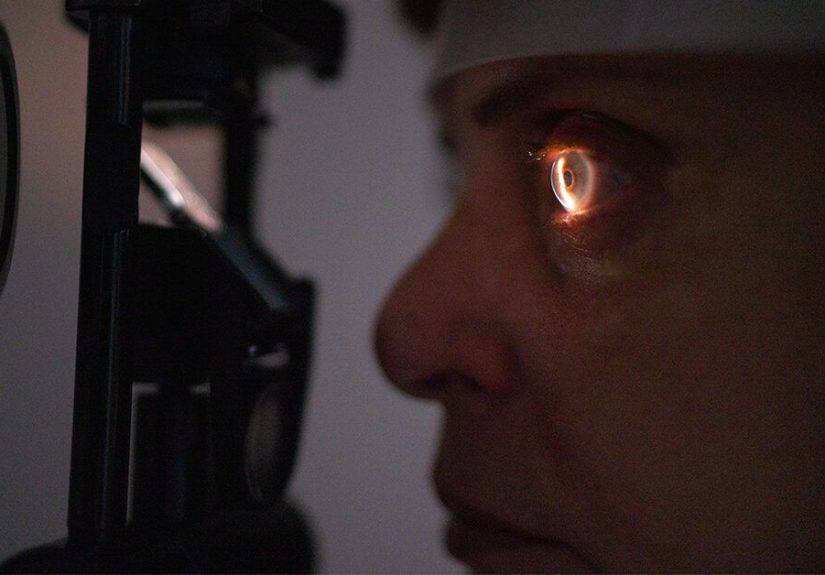
Diagnosis is usually straightforward. An ophthalmologist or eye care specialist will examine your eye, often with a slit lamp, and look at the capsule behind the intraocular lens. If it appears cloudy and matches your symptoms, PCO is often the answer.
This is one reason follow-up visits matter, even if cataract surgery felt easy and your recovery was smooth. Your eyes can be doing well overall while still developing a fixable issue later on.
How Do Doctors Treat It?
The standard treatment is a quick laser procedure called YAG laser capsulotomy. If that name sounds like a robot from a sci-fi movie, fair enough, but the procedure itself is usually simple and done in the office.
What happens during YAG laser capsulotomy?
- Your eye is examined and usually dilated
- The doctor uses a laser to create a small opening in the cloudy capsule
- Light can then pass through more clearly to the retina
- No large incision is needed
- The procedure is typically brief
Many people notice better vision within a day or two, though recovery timing can vary. For a lot of patients, it feels less like “another surgery” and more like a quick tune-up that clears the windshield.
Is YAG Laser Capsulotomy Safe?
In general, it is considered a safe and effective treatment. That is one reason eye doctors are so matter-of-fact about PCO: it can be annoying, but it is usually manageable.
Still, “routine” never means “ignore everything.” Like any eye procedure, it has risks and should be done for the right reason. Your ophthalmologist will decide whether the clouding is significant enough to treat and whether the benefits outweigh the risks in your specific case.
When Blurry Vision Is Not a Secondary Cataract
Not every post-surgery vision complaint is caused by PCO. Sometimes blurry vision after cataract surgery comes from something else entirely, such as:
- Dry eye
- Normal healing changes
- Swelling in the eye
- A glasses prescription that still needs updating
- Retinal conditions
- Glaucoma or macular disease
- Issues related to the new lens position
This is why self-diagnosing with “Yep, the cataract is back” is not the best game plan. It might be PCO. It might be something less dramatic. It might be something more urgent. An exam sorts that out fast.
When Should You Call the Eye Doctor Right Away?
Some symptoms should not wait for your next routine visit. Contact your eye doctor promptly if you have:
- Vision loss
- Pain that does not improve
- Increasing redness
- Eyelid swelling
- Flashes of light
- Many new floaters
- A shadow or curtain over part of your vision
Those symptoms can point to problems other than a simple secondary cataract, including retinal issues that may need urgent care. In eye health, “I’ll just wait and see” is sometimes a bad hobby.
Can You Prevent a Secondary Cataract?
There is no guaranteed way to prevent PCO entirely. Modern cataract surgery techniques and lens designs have helped reduce the problem, but they do not eliminate it for everyone. The best practical steps are not glamorous, but they work:
- Go to follow-up appointments
- Use prescribed eye drops as directed after surgery
- Report new symptoms instead of guessing
- Keep other eye conditions well managed
- Get regular eye exams even when things seem fine
Basically: do not ghost your ophthalmologist just because your new lens is behaving beautifully on week two.
What to Ask Your Ophthalmologist
If you think your vision is getting cloudy again, these questions can help:
- Do I have posterior capsule opacification?
- Is this normal healing, dry eye, or something else?
- Would YAG laser capsulotomy help me?
- What benefits should I expect after treatment?
- What warning signs would mean I need urgent evaluation?
- Do I have any retinal or glaucoma-related risks that change the plan?
A short appointment with the right questions can save you weeks of worrying and ten late-night search spirals.
The Bottom Line
Can cataracts come back after cataract surgery? No, not in the literal sense. Once the cloudy natural lens is removed, that cataract is gone. But if your vision becomes hazy again later, the most likely culprit is posterior capsule opacification, also called a secondary cataract.
The symptoms can look a lot like cataracts, which is why the term sticks around. Fortunately, this problem is usually treatable with a fast office-based laser procedure. So if your vision seems to be fogging up again, do not panic, but do get it checked. Your eye may not be reliving the past. It may just need a quick cleanup crew.
Common Patient Experiences Related to “Can Cataracts Come Back After Cataract Surgery?”
The experiences below are not individual medical records or dramatic movie monologues. They are realistic, common patterns people describe when dealing with blurry vision after cataract surgery. If any of these sound familiar, that does not confirm a diagnosis, but it may help you recognize when it is time to call your eye doctor.
1. “Everything looked amazing, then it slowly got foggy again.”
This is one of the most common stories. A person has cataract surgery, sees bright colors again, reads labels without squinting, and starts telling friends that life now looks like someone turned the resolution up to 4K. Then, months later, things start to soften. Not terrible. Just… duller. Street signs are less crisp. TV captions look a bit smeared. Reading under normal room lighting becomes more work. Because the change is gradual, many people wonder whether they are tired, overdue for new glasses, or just imagining it. Often, this is the exact kind of slow fade that leads to a diagnosis of posterior capsule opacification.
2. “Night driving got weird again.”
Another common experience involves headlights. A person may feel fine during the day but notice that driving at night becomes frustrating. Oncoming lights may seem too bright, halos may reappear, and contrast may feel worse in rain or low light. This can be especially confusing because many patients expected cataract surgery to fix night glare once and for all. When glare returns later, it is easy to think the original cataract is back. In many cases, the issue is not the implanted lens itself, but the cloudy capsule behind it affecting how light enters the eye.
3. “One eye seems clear and the other looks like it has a smudge on it.”
People often describe PCO as a mismatch between the eyes. One eye looks sharp and happy. The other looks like a camera lens someone lightly touched with a greasy fingertip. That unevenness makes daily tasks oddly annoying. Reading may feel tiring, depth perception may seem slightly off, and comparing one eye to the other becomes a hobby nobody asked for. This kind of one-sided “filmy” vision is another reason patients end up back in the clinic.
4. “I worried I needed another full surgery.”
Plenty of people hear the phrase “secondary cataract” and immediately assume they are headed for round two in the operating room. That fear is understandable. Cataract surgery sounds big, even when it goes smoothly. So learning that blurry vision has returned can feel discouraging. What many patients find reassuring is that treatment for PCO is typically a quick in-office laser procedure, not a repeat of the original cataract surgery. That difference matters emotionally as much as medically.
5. “The fix was much easier than I expected.”
Many people who undergo YAG laser capsulotomy say the anticipation was worse than the treatment itself. They imagine pain, a long recovery, or days of downtime, then discover the visit is fairly brief. Some notice improvement quickly. Others improve over several days. The common theme is relief: relief that the cataract was not actually back, relief that the solution was straightforward, and relief that the world stopped looking like it had a thin layer of bathroom steam over it.
6. “I learned not every blurry spell is ‘just healing.’”
One of the most useful experiences patients share is the lesson that follow-up symptoms deserve real attention. Some blur right after surgery is normal. But new flashes, lots of floaters, a curtain-like shadow, persistent pain, or worsening vision are not things to casually file under “probably fine.” People who call early when symptoms change often feel better for it, whether the answer turns out to be PCO, dry eye, or something more urgent. When it comes to vision, checking is almost always smarter than guessing.