Table of Contents >> Show >> Hide
- Why Home Stretching Equipment Matters
- What to Look for in Stretching Equipment
- Best Equipment for Stretching and Flexibility at Home
- How to Build the Best Home Flexibility Kit for Your Needs
- Common Mistakes When Using Stretching Equipment
- Real-World Experiences With Stretching Equipment at Home
- Conclusion
- Additional Experiences and Practical Insights
If your body currently moves like a rusty shopping cart, welcome. You are among friends. The good news is that improving flexibility at home does not require a boutique studio, a wall full of mysterious gadgets, or a personal trainer who says things like “embrace the burn” with suspicious enthusiasm. In most cases, the best equipment for stretching and increasing flexibility at home is simple, affordable, and easy to use consistently.
That last word matters most: consistently. A fancy tool collecting dust under your bed has roughly the same flexibility benefits as a decorative potato. What actually works is choosing a few smart pieces of stretching equipment that fit your body, your space, and the way you really live. A desk worker may need help opening the chest and hip flexors. A runner may want better calf, hamstring, and hip mobility. Someone easing back into exercise may need support, balance, and less strain on the joints.
So what should you buy first? And what is actually useful instead of just looking athletic on social media? Below is a practical, in-depth guide to the best home flexibility equipment, what each tool does, who it helps most, and how to build a setup that makes stretching easier, safer, and a lot more enjoyable.
Why Home Stretching Equipment Matters
Flexibility is not just about touching your toes and feeling morally superior at yoga class. Better flexibility supports smoother movement, healthier range of motion, less stiffness, improved posture, and more comfortable everyday activities. Reaching the top shelf, bending to tie your shoes, getting out of the car without making a weird sound, all of that counts.
The right stretching tools make a difference because they help you:
- Get into stretches with better alignment
- Hold positions more comfortably for longer
- Access muscles you cannot easily reach on your own
- Reduce strain if you are tight, older, sore, or recovering from inactivity
- Progress gradually instead of forcing range of motion
In other words, good flexibility equipment does not magically make you bendier overnight. It makes your stretching routine more effective, repeatable, and less likely to end with you muttering, “Well, that was a terrible idea.”
What to Look for in Stretching Equipment
Before we get into the best equipment for stretching, here is the quick shopping filter:
1. Comfort and support
If a tool helps you relax into a stretch, you are more likely to hold it properly and breathe through it. That matters more than looking hardcore.
2. Versatility
The best home fitness and flexibility gear can work for multiple body parts. A good strap can help your hamstrings, shoulders, calves, and hips. That is a better investment than a one-trick gadget with the personality of a coat hanger.
3. Easy storage
Home stretching equipment should fit your real life. If it is bulky, annoying to set up, or takes over your living room, you may stop using it.
4. Beginner-friendly design
Tools that support balance, reduce strain, and let you progress gradually are usually better than tools that try to catapult you into circus-level mobility.
Best Equipment for Stretching and Flexibility at Home
1. Yoga Mat
A yoga mat is the foundation of almost every home stretching routine. It is not glamorous, but it is essential. A good mat creates a non-slip surface, adds cushioning for knees, hips, and elbows, and makes floor work more comfortable. When stretching feels better, you are more likely to keep doing it. Revolutionary, I know.
Why it is worth it: A yoga mat improves grip and stability during seated stretches, lunging hip openers, hamstring work, and mobility drills. It also creates a clear “this is my movement space” zone, which sounds small but helps build a habit.
Best for: Everyone, especially beginners and people stretching on hard floors.
Shopping tip: Look for a mat with decent thickness for comfort, but not so soft that you wobble like a newborn deer during standing stretches.
2. Stretch Strap or Yoga Strap
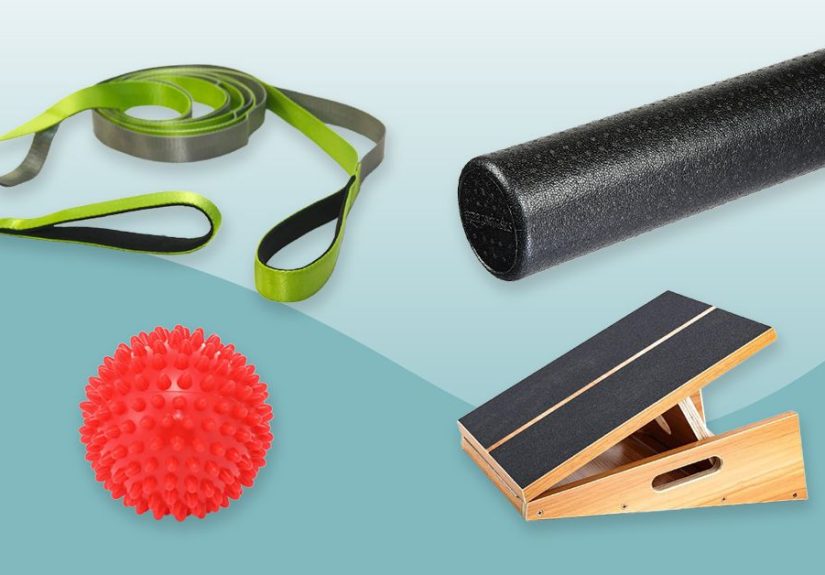
If there is one underrated MVP in flexibility training, it is the stretch strap. This simple piece of equipment helps you reach farther without rounding your back, yanking your joints, or pretending your hamstrings are more cooperative than they really are.
A strap is especially useful for passive stretching. It helps you gently deepen stretches for the hamstrings, calves, hips, shoulders, and quads while keeping better alignment. Instead of collapsing to grab your foot, you bring the foot to you with support. Your body says thank you. Your ego may need a minute.
Why it is worth it: It increases reach, reduces compensation, and makes stretches more accessible for tight bodies.
Best for: Tight hamstrings, limited mobility, shoulder stretches, seated forward folds, and recovery days.
Shopping tip: Choose a durable strap with loops or a buckle so you can adjust length easily.
3. Resistance Bands
Resistance bands are not only for strength training. They are also excellent tools for mobility and flexibility. Long loop bands and flat therapy-style bands can support dynamic stretching, assisted stretching, and activation work that helps your body move better before and after exercise.
For example, bands can assist calf stretches, hamstring stretches, shoulder openers, and ankle mobility drills. They also help strengthen the muscles that support improved range of motion. That is important because flexibility without control is basically your joints saying, “Cool, now what?”
Why it is worth it: Bands combine support and resistance, which makes them useful for both stretching and mobility training.
Best for: People who want to improve flexibility and control at the same time.
Shopping tip: Start with light to medium resistance. Going too heavy defeats the purpose and turns your stretch session into an argument.
4. Foam Roller
A foam roller deserves a place in most home flexibility setups because it helps reduce tension in tight muscles and fascia before stretching. Many people find that foam rolling first makes stretching feel more productive, especially in the calves, quads, glutes, upper back, and lats.
This is not magic, and it is not a medieval torture device, though it can briefly feel like both. Foam rolling can help tissues feel less stiff, improve movement quality, and prepare the body for deeper stretching. It is particularly helpful for people who sit all day, train often, or feel generally “stuck.”
Why it is worth it: It can improve short-term flexibility, help ease muscle tightness, and make stretching more comfortable afterward.
Best for: Desk workers, runners, gym-goers, and anyone with chronically tight hips, quads, calves, or upper back.
Shopping tip: Beginners usually do better with a medium-density roller rather than the hardest one on the shelf.
5. Massage Ball or Mobility Ball
Where a foam roller handles larger areas, a massage ball targets smaller, harder-to-reach spots. Think feet, glutes, pecs, shoulders, and the tiny troublemakers around the hips. A massage ball is one of the best tools for pinpoint tension that makes your body feel oddly uneven.
Rolling the bottom of the foot, for example, can be useful before calf stretches. Working into the chest can make shoulder-opening stretches feel less restricted. It is a tiny tool with major attitude.
Why it is worth it: It offers precise pressure and helps release tight spots that big rollers miss.
Best for: Foot tightness, shoulder tension, glutes, and travel-friendly mobility work.
Shopping tip: Start with a ball that has a little give instead of something rock hard.
6. Yoga Blocks
Yoga blocks are a game changer for people who think flexibility equipment is only for ultra-bendy humans in expensive leggings. Blocks bring the floor closer to you. That means better posture, less strain, and more confidence in positions that otherwise feel out of reach.
If your hands do not comfortably reach the floor in a forward fold, triangle pose, or lunge, blocks let you maintain alignment without collapsing your spine. They can also support seated stretches, gentle backbends, and chest-opening positions.
Why it is worth it: Blocks reduce the distance between you and the floor, making stretches more accessible and less stressful on the joints.
Best for: Beginners, older adults, people with limited mobility, and anyone working on form.
Shopping tip: A pair of lightweight foam blocks is plenty for most home users.
7. Bolster, Firm Pillow, or Folded Blanket
Sometimes the best stretch is the one you can actually relax into. That is where a bolster, firm pillow, or folded blanket shines. These props support the body during gentle hip openers, chest-opening stretches, reclined positions, and restorative sessions.
A bolster under the knees can take pressure off the lower back. One under the hips can make seated positions more comfortable. One under the front leg in a hip opener can reduce intensity while still giving you the benefit of the position. It is less “crush your limits” and more “let your body cooperate.” A much better vibe.
Why it is worth it: Supportive props help you stay in stretches longer with less bracing and less discomfort.
Best for: Gentle flexibility work, restorative stretching, joint sensitivity, and evening wind-down routines.
Shopping tip: You do not need a fancy studio bolster right away. A folded blanket or firm couch pillow can do the job.
8. Sturdy Chair
Yes, a chair counts. And frankly, it deserves more respect. A sturdy chair can support standing stretches, balance work, seated hamstring stretches, chest openers, and modified yoga poses. It is one of the best pieces of home stretching equipment for beginners, older adults, and anyone who does not want to wrestle with the floor every day.
Why it is worth it: It adds balance, safety, and accessibility without costing extra.
Best for: Chair stretching, gentle mobility, balance support, and low-impact routines.
Shopping tip: Use a stable chair that does not slide, wobble, or moonwalk across the room.
How to Build the Best Home Flexibility Kit for Your Needs
The minimalist starter kit
If you want the essentials, start with a yoga mat, a stretch strap, and a pair of blocks. That trio covers a huge percentage of home stretching needs and works well for most beginners.
The tight-muscle rescue kit
If you feel stiff from work, workouts, or life in general, go with a yoga mat, foam roller, massage ball, and strap. This setup helps you release tension first, then stretch more effectively.
The joint-friendly comfort kit
If you prefer gentle mobility work, choose a mat, bolster or folded blankets, blocks, and a sturdy chair. This setup reduces strain and makes flexibility work more approachable.
The athletic mobility kit
If you train regularly, a mat, resistance bands, foam roller, and massage ball create a strong mobility system for warm-ups, cool-downs, and recovery.
Common Mistakes When Using Stretching Equipment
- Using pain as a progress marker: Stretching should feel challenging, not sharp, electric, or alarming.
- Skipping the warm-up: A few minutes of light movement before deeper stretching helps the body respond better.
- Buying too much too soon: A small, useful kit beats a closet full of “someday” equipment.
- Forcing range of motion: Props should support your body, not bully it.
- Ignoring consistency: Ten minutes several times a week usually beats one heroic weekend session.
Real-World Experiences With Stretching Equipment at Home
One of the most common experiences people have when starting a home flexibility routine is realizing that they were not actually “bad at stretching.” They were just trying to do it without the right support. A yoga block under the hand can instantly change a forward fold from frustrating to manageable. A strap around the foot can turn a sloppy hamstring stretch into a controlled one. A bolster under the hips can make sitting on the floor feel less like punishment and more like a smart recovery choice.
Desk workers often notice the biggest difference in the chest, shoulders, and hips. After a few weeks of using a foam roller on the upper back and a strap for shoulder and hamstring stretches, many people say they feel less compressed. Standing taller becomes easier. Reaching overhead feels smoother. Even sitting through long work sessions can feel less miserable, which is a beautiful thing in the age of laptops and questionable posture.
People who run or lift weights often have a different experience. They are usually not looking to become human pretzels. They want to feel less tight, move better, and recover faster. For them, the foam roller and massage ball tend to become favorites. A few focused minutes on the calves, quads, glutes, or feet can make later stretches feel more productive. Resistance bands also become useful because they support ankle mobility, hip activation, and dynamic warm-ups before training.
Beginners and older adults frequently describe a confidence boost when using a chair, blocks, and blankets. These tools remove the fear of losing balance or straining to get up and down from the floor. Instead of feeling like exercise equipment is only for the ultra-fit, the routine starts to feel accessible. That matters. Comfort builds consistency, and consistency builds results.
Another common experience is emotional, not just physical. Stretching at home can become a quiet daily ritual. Some people use a bolster and mat in the evening to unwind. Others keep a strap near the couch for quick calf and hamstring work after walking. The routine does not have to be dramatic to be effective. In fact, the people who make the best progress are often the ones who stop chasing perfect sessions and start building repeatable ones.
And yes, there is usually an adjustment period. Foam rolling may feel awkward at first. Blocks may seem humbling. A strap may reveal exactly how tight your hamstrings really are, which can be emotionally thrilling in all the wrong ways. But that early awkwardness fades. Soon the equipment stops feeling like a workaround and starts feeling like a smart system.
That is the real beauty of the best equipment for stretching and increasing flexibility at home: it meets you where you are. Whether you are stiff from work, training, age, stress, or simply being a person with a body, the right tools help you move better without turning flexibility into a miserable chore.
Conclusion
The best stretching equipment for home use is not the flashiest or the most expensive. It is the gear that helps you stretch safely, comfortably, and often enough to make a real difference. For most people, that means starting with a yoga mat, stretch strap, blocks, and maybe a foam roller or resistance band depending on your needs.
If your goal is to improve mobility, reduce stiffness, and increase flexibility at home, keep it simple. Choose tools that support your body, use them consistently, and let progress be gradual. Your future self, the one who gets out of bed with less creaking and reaches for things without making a face, will appreciate it.
Additional Experiences and Practical Insights
When people stick with a home stretching routine for a month or two, they often report changes that go beyond the obvious “I can reach farther” milestone. They notice that their morning stiffness eases faster. Their hips feel less locked after driving. Their shoulders do not complain as much after working at a computer all day. Even small wins, like being able to sit cross-legged more comfortably or bend down to pick something up without bracing, start to add up.
One interesting pattern is how different equipment tends to fit different personalities. The person who likes structure often loves straps and bands because they create a sense of control and measurable progress. The person who wants relaxation usually gravitates toward bolsters, blankets, and gentle supported stretches. The person who wants to “feel something working” often becomes very loyal to the foam roller and massage ball, even after initially acting like those tools personally insulted them.
There is also a practical side to home flexibility training that people appreciate more over time: convenience wins. It is much easier to spend eight or ten minutes stretching when the mat is already in the corner, the strap is hanging nearby, and the blocks are stacked within reach. The fewer barriers you create, the more likely you are to use the equipment. That is why the best setup is often not the biggest one. It is the setup that blends into your home and your routine without becoming a production.
Parents, busy professionals, and people with packed schedules often find that stretching equipment helps them break movement into shorter chunks. A full hour is not required. A strap can come out for a quick hamstring stretch between meetings. A massage ball can roll under the foot while answering emails. A chair can support a few standing stretches after dinner. This “little and often” approach tends to feel more realistic, and realistic routines usually beat ambitious ones that vanish after four days.
Many people also discover that flexibility work improves body awareness. Once you start using blocks, bands, or props, you pay closer attention to which areas are actually tight, which movements feel uneven, and where you tend to compensate. Maybe one hip is noticeably stiffer. Maybe the chest is tight enough to affect posture. Maybe the calves are the hidden villains behind everything. Good stretching equipment helps reveal these patterns without forcing the body into extremes.
Over time, the experience becomes less about chasing a dramatic before-and-after and more about building a better relationship with movement. That may sound poetic for a conversation involving foam rollers and chairs, but it is true. Flexibility training at home works best when it becomes less of a punishment and more of a useful daily check-in. With the right tools, it can feel supportive, calming, and surprisingly satisfying.