Table of Contents >> Show >> Hide
- The Tattoo That Took Far Too Long To Happen
- Why This Story Hit A Nerve
- Autism, Sensory Differences, And The Tattoo Experience
- What Disability Inclusion Looks Like In A Tattoo Shop
- Why The Story Still Matters Now
- Related Experiences: What Stories Like Buzz’s Often Feel Like For Autistic Adults
- Conclusion
Some birthday gifts are forgettable. Socks? Useful. Cake? Delicious. A novelty mug that says “World’s Okayest Human”? Deeply committed to mediocrity. But for one autistic man in Washington, the dream gift was far more personal: a tattoo he had wanted for years. Not a vague “maybe someday” tattoo, either. A very specific one. He wanted Tommy Pickles from Rugrats. In underwear, not a diaper. Because if you are going permanent, you might as well be precise.
What should have been a simple rite-of-passage story turned into something more revealing. Multiple tattoo shops reportedly refused to work with him, not because he changed his mind, not because he was intoxicated, and not because the design was impossible, but because they were uneasy about tattooing an autistic customer. Then one artist listened, treated him like a person instead of a problem, and gave him the tattoo he had been asking for since childhood.
That is why this story resonates. On the surface, it is about a man finally getting his dream tattoo. Underneath, it is about autonomy, dignity, disability inclusion, and the kind of assumptions that quietly lock people out of ordinary life. The lesson is not that every tattoo appointment is easy. It is that autism should not automatically be treated like a stop sign.
The Tattoo That Took Far Too Long To Happen
According to local news reports, Buzz, a 23-year-old man with autism, had wanted a tattoo for years. His mother said he loved fake tattoos as a child and hated when they washed off. That detail matters because it shows this was not some random Tuesday impulse inspired by a bad playlist and a worse group chat. This was a long-standing wish.
For his birthday, Buzz wanted a tattoo of Tommy Pickles, the main character from the classic Nickelodeon series Rugrats. His family looked around for months, but shop after shop either declined or quoted sky-high prices. Some were reportedly worried about his “mindset” or how he might react during the tattoo process. In other words, the fear was not about the tattoo itself. It was about assumptions tied to his diagnosis.
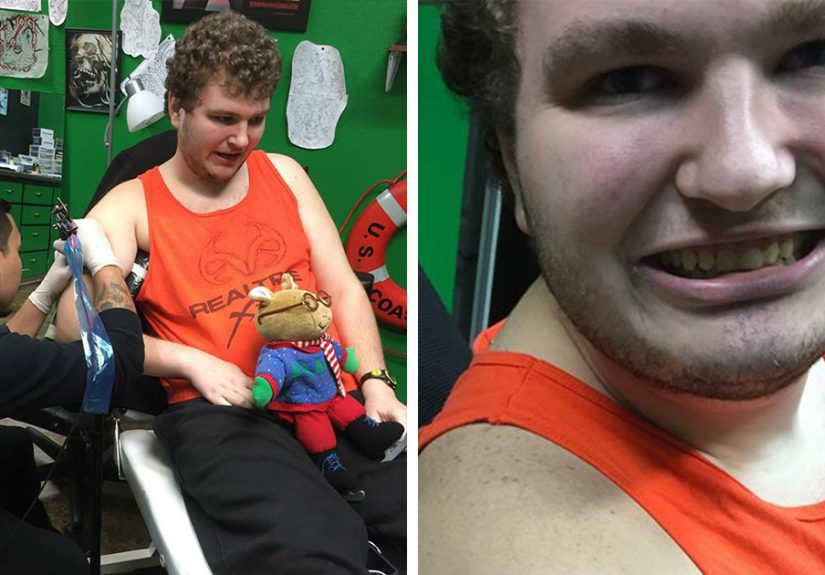
Eventually, Buzz and his family found Pat Masga of Northwest Inkorporated in Bremerton. Masga agreed to do the tattoo. Buzz reportedly sat through the appointment calmly, stayed positive, and walked away with the design he had wanted all along. The story spread widely because people recognized the emotional punch immediately: the problem was never that Buzz could not handle the tattoo. The problem was that too many people had decided that for him before giving him a real chance.
Why This Story Hit A Nerve
There are a lot of human-interest stories online that fade faster than a temporary tattoo in a hot shower. This one stuck because it exposed a familiar social reflex: disability gets mistaken for incapacity. Autism can affect communication, sensory processing, and behavior in ways that vary widely from person to person. But that does not mean every autistic adult is confused, incapable, or unable to make personal decisions about their own body.
That distinction is where the story becomes bigger than one tattoo chair in one Washington shop. Buzz’s experience mirrors a broader problem that autistic people and their families often describe in everyday life. They are talked around instead of talked to. They are judged before they are heard. And they are denied access to experiences that non-disabled adults are routinely trusted to manage for themselves.
It is also why this story feels more modern than its 2018 timestamp. Autism awareness has grown, but awareness and inclusion are not the same thing. Plenty of businesses can post a nice slogan about welcoming everyone. The real test comes when a customer needs patience, direct communication, a quieter time slot, or just the basic courtesy of not being underestimated.
Autism, Sensory Differences, And The Tattoo Experience
A tattoo shop can be a sensory obstacle course even for people who are not especially sensitive to their surroundings. The buzz of machines. The sharp smell of disinfectant. Bright lighting. Sudden touch. Music that is either weirdly relaxing or suspiciously committed to chaos. Add the anxiety of a permanent decision, and the environment can feel intense very quickly.
For many autistic people, sensory differences are part of the picture. Sounds, lights, smells, and touch can land harder than they do for other customers. That does not mean tattoos are off the table. It means the experience may need more thought and more communication. A client may want to know exactly what will happen, how long it will take, when breaks are possible, what the pain will feel like, or whether they can wear headphones. None of that is unreasonable. Frankly, a lot of non-autistic clients would benefit from the same information instead of white-knuckling their way through an appointment and pretending they are “totally chill.”
This is where good shop culture matters. An inclusive tattoo artist does not have to become an autism specialist overnight. But a little flexibility goes a long way: explain the process clearly, avoid vague language, allow sensory tools, reduce unnecessary stimulation where possible, and speak directly to the client instead of treating a parent, partner, or caregiver like the default decision-maker.
The Big Difference Between Caution And Bias
To be fair, tattoo artists do have legitimate responsibilities. Tattoos are permanent. Consent matters. Safety matters. Shops should absolutely make sure clients understand what they are requesting. But there is a major difference between responsibly checking for informed consent and reflexively saying no because someone is autistic.
That line matters ethically and practically. A respectful artist asks questions, confirms understanding, explains aftercare, and looks for a clear yes. A biased one sees a diagnosis and assumes the answer in advance. One approach protects the client. The other excludes the client.
Buzz’s story shows how often those two things get confused. The shops that turned him away may have thought they were being cautious. But the final outcome suggests something else: their caution was shaped by assumptions that did not hold up once an artist actually worked with him.
What Disability Inclusion Looks Like In A Tattoo Shop
Inclusion is often described in giant abstract terms, as if it requires a task force, a grant proposal, and a 40-slide deck with way too many circles. In reality, it usually starts small. It starts with asking, “What would make this easier for you?” and then listening to the answer.
For tattoo shops, that can include practical steps like booking a quieter appointment window, offering a walkthrough of the process ahead of time, using straightforward language, allowing breaks, limiting extra chatter, or letting a support person be present when appropriate. It can also mean posting a clear nondiscrimination policy and training staff not to confuse disability with danger, uncertainty, or incompetence.
None of this ruins the edgy mystique of the tattoo world. Tattoo shops will survive if they occasionally turn the music down and explain things with fewer riddles. In fact, clearer communication is usually good business. Clients who feel respected are more likely to follow instructions, trust the artist, come back, and recommend the shop.
Body Autonomy Matters Here, Too
At its core, this story is about body autonomy. Tattoos are personal. They can be funny, sentimental, rebellious, memorial, beautifully pointless, or deeply symbolic. People get them to mark change, grief, joy, fandom, survival, identity, and love. Denying someone that experience because of broad assumptions about disability sends a message that their choices are less valid than everyone else’s.
That is why the emotional center of Buzz’s story is so powerful. The tattoo was not just ink. It was recognition. It was proof that someone finally treated him as the main character in his own life instead of a risk management scenario wearing a birthday grin.
Why The Story Still Matters Now
Autism is more visible in public conversation than it used to be, but many autistic adults still run into barriers that are less about their actual needs and more about other people’s discomfort. That discomfort can show up in schools, workplaces, medical settings, stores, service businesses, and, yes, tattoo shops. Sometimes it looks blunt, like a direct refusal. Sometimes it shows up as a colder kind of rejection: inflated prices, endless delays, vague excuses, or being spoken to like a child.
That is what makes this story worth revisiting. It reminds business owners that inclusion is not a slogan; it is a series of choices. It reminds families that persistence can pay off. And it reminds readers that a person’s diagnosis is not a complete biography.
It also offers a useful standard for anyone providing a service to the public. Start with the person. Ask clear questions. Explain the process. Respect preferences. Avoid assumptions. If extra support is needed, provide it when you reasonably can. That is not charity. That is what decent service looks like.
Related Experiences: What Stories Like Buzz’s Often Feel Like For Autistic Adults
Experiences like Buzz’s strike a chord because they are rarely just about one refusal. For many autistic adults, the hardest part of a tattoo appointment may begin long before the needle ever touches skin. First comes the research spiral: finding an artist, studying portfolios, rehearsing how to ask a question, worrying about whether the design idea will sound silly, and wondering if disclosing autism will help or backfire. That kind of mental preparation can be exhausting on its own.
Then there is the appointment itself. A waiting area can feel harmless to one person and overwhelming to another. Bright lights may feel harsh. Background music may be too loud. Strong smells may be distracting. The uncertainty can be just as stressful as the sensation. Some autistic clients want a step-by-step explanation before anything begins. Others want fewer surprises and fewer strangers talking at once. Some prefer direct language over casual small talk. None of these preferences are dramatic. They are simply ways of making a high-stimulation experience more manageable.
There is also the social pressure to “act normal,” which is one of the most tiring expectations many autistic people describe in public settings. A client may be trying to stay calm while also monitoring facial expressions, guessing what the artist expects, and deciding whether asking for a break will be seen as rude. If they stim, go quiet, ask for repetition, or need more processing time, they may worry that the shop will misread those behaviors as immaturity or indecision. That fear can turn an exciting appointment into a test they never agreed to take.
At the same time, many autistic adults are excellent at preparing for structured experiences when they know what to expect. Give them the layout. Explain the pain level honestly. Confirm the design clearly. Tell them when breaks can happen. Let them bring headphones, a fidget item, or a support person if needed. Suddenly the whole appointment can become more predictable and far less stressful. The person has not changed. The environment has.
That is one reason stories like Buzz’s matter beyond the headline. They show how quickly an experience can shift when even one professional chooses curiosity over bias. The right artist does not need to be perfect. They just need to be respectful, flexible, and willing to communicate. For an autistic client, that can mean the difference between walking out feeling humiliated and walking out with art they are proud to wear for life.
In that sense, Buzz’s tattoo is bigger than Tommy Pickles. It represents relief after dismissal, joy after frustration, and a small but meaningful victory over the exhausting idea that disabled people must continually prove they are “ready” for ordinary adult experiences. Sometimes inclusion is not flashy. Sometimes it looks like an artist setting up their station, listening carefully, and saying the words that should have come much earlier: “Yes, we can do that.”
Conclusion
Buzz’s story is memorable because it combines heart, humor, and a hard truth. A grown man wanted a cartoon tattoo he had loved for years. Several shops saw his autism first and his humanity second. One artist reversed that order, and everything changed.
That is the takeaway for readers and businesses alike. An autistic customer is not a stereotype, a risk category, or a mystery box with sneakers. They are a person. Sometimes they want extra information, fewer sensory triggers, clearer communication, or a little more patience. Sometimes they do not. The point is to ask, not assume.
And if the dream tattoo happens to be Tommy Pickles in underwear instead of a diaper? Honestly, that is not even the weirdest tattoo decision made on a birthday week. Not by a long shot.