Table of Contents >> Show >> Hide
- What Is the Ball Light Pendant Rod Collection?
- Why the Design Works So Well
- Best Places to Use Ball Light Pendant Rod Fixtures
- How to Style the Ball Light Pendant Rod Collection
- Small vs. Large: Choosing the Right Size
- What Makes Michael Anastassiades Lighting Distinctive?
- Buying Considerations Before You Install
- Design Experience: Living With the Ball Light Pendant Rod Collection
- Conclusion
The Ball Light, Pendant Rod Collection is what happens when a designer looks at the humble light bulb and says, “You deserve a better outfit.” Instead of hiding the bulb behind a shade, cage, cone, or decorative hat, this collection turns the idea of the bulb into the design itself: a glowing sphere, a slender rod, and a metal detail so clean it practically whispers, “I read architecture magazines.”
Designed by Michael Anastassiades, the Ball Light series is a favorite among people who love minimalist lighting but do not want their rooms to feel cold, empty, or like a museum where nobody is allowed to touch the chairs. The pendant rod version is especially appealing because it has structure. It does not dangle casually on a cord; it descends with intention. The result is a modern globe pendant light that feels architectural, sculptural, and surprisingly warm.
This is not a pendant light that shouts for attention. It does something much more dangerous: it quietly becomes the most elegant thing in the room. Whether installed above a kitchen island, beside a bed, over a small dining table, or grouped in a dramatic cluster, the Ball Light Pendant Rod Collection offers a rare blend of function, restraint, and visual poetry.
What Is the Ball Light Pendant Rod Collection?
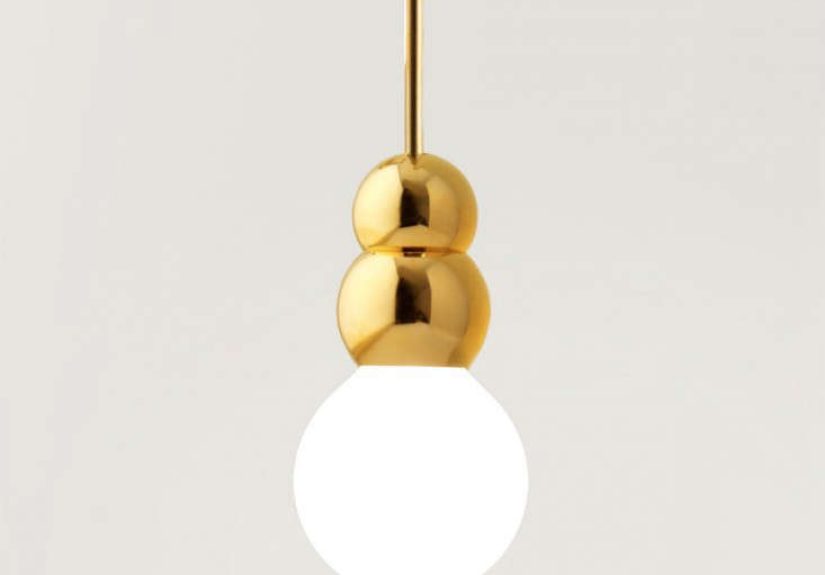
The Ball Light Pendant Rod Collection is part of Michael Anastassiades’s broader Ball Light family, a series that includes pendant lights, wall-mounted designs, ceiling fixtures, and wall brackets. The pendant rod version pairs a small luminous globe with a rigid metal rod, usually in polished brass or related metal finishes, depending on configuration and retailer availability.
At its heart, the design is simple: a spherical opal glass shade, a slim rod, and a refined metal body. But simple does not mean basic. In lighting design, simplicity is often the hardest trick to pull off. Remove too much and the object feels unfinished. Add too much and it loses its elegance. The Ball Light walks that tiny tightrope in very good shoes.
The collection was originally conceived around the familiar form of the incandescent bulb. Instead of treating the bulb as a technical necessity to be disguised, Anastassiades abstracted it into a perfect ball of light. That idea gives the piece its charm. It feels familiar because we recognize the glowing orb, but it also feels refined because every visible element has been edited down to its cleanest expression.
Why the Design Works So Well
1. It Celebrates the Globe, Not the Gadget
Many pendant lights try to impress with complexity: layered shades, oversized frames, decorative chains, or dramatic silhouettes. The Ball Light Pendant Rod Collection takes the opposite route. Its magic is in reduction. A glowing sphere is easy to understand, easy to love, and easy to place in a wide range of interiors.
The globe shape also has a universal softness. Sharp-edged fixtures can feel assertive, while a sphere feels calm and balanced. In a kitchen full of cabinetry, stone countertops, metal hardware, and hard-working appliances, the round form provides visual relief. In a bedroom, it feels gentle. In a hallway, it becomes a small punctuation mark of light.
2. The Rod Adds Architectural Discipline
The rod is what separates this design from ordinary globe pendants. A cord pendant can feel relaxed, which is great in the right room. But a rod pendant feels deliberate. It gives the fixture a sense of line, proportion, and permanence. The light appears placed, not merely hung.
This makes the Ball Light Pendant Rod especially effective in modern interiors, high-end apartments, boutique hospitality spaces, and minimalist homes where every visible element needs to earn its keep. The rod also helps maintain a clean vertical profile, which is useful when placing several pendants in a row.
3. Brass Brings Warmth Without Visual Noise
A polished brass pendant light can easily become flashy if the design is too decorative. Here, the brass works differently. Because the form is so minimal, the metal adds warmth, reflection, and quiet luxury without becoming loud. Over time, unlacquered brass may develop patina, giving the fixture a living finish rather than a frozen showroom look.
That subtle aging can be part of the appeal. A Ball Light pendant does not need to look brand new forever. In fact, a slightly mellowed brass finish can make it feel more integrated into the home, like a favorite leather chair or a marble countertop that has learned a few stories.
Best Places to Use Ball Light Pendant Rod Fixtures
Above a Kitchen Island
The kitchen island is probably the most popular location for a globe pendant light, and for good reason. Islands need task lighting, but they also deserve a little drama. The Ball Light Pendant Rod works beautifully here because it provides a refined focal point without blocking sightlines or overwhelming the room.
For most kitchens, pendants are commonly positioned around 30 to 36 inches above the countertop. This range keeps the light close enough to be useful while allowing people to see across the island without ducking around a fixture like they are avoiding a low-flying chandelier.
Two pendants may be enough for a smaller island, while three can create a strong rhythm over a longer surface. The Ball Light is particularly attractive in multiples because the repeated spheres create a sense of order. Three glowing orbs over an island can look almost musical, like notes suspended in air.
Over a Dining Table
Used over a dining table, the Ball Light Pendant Rod Collection offers intimacy without heaviness. A large chandelier can dominate a dining room, which is wonderful if that is the goal. But sometimes the goal is conversation, candlelight, and letting the food look better than your last attempt at homemade pasta.
A single Ball Light can work over a small round table or breakfast nook. For a long rectangular dining table, multiple pendants installed in a line can feel more balanced. The opal glass diffuses the light, helping create a softer mood than a bare exposed bulb.
Beside the Bed
One of the most stylish uses for a pendant rod light is as a bedside fixture. Instead of using table lamps, a pair of Ball Light pendants can hang on either side of the bed, freeing up nightstand space for books, water, glasses, or the phone you promised yourself you would not scroll at midnight.
The rod version works especially well beside a bed because it looks tidy and intentional. It gives the wall area vertical emphasis, and the small globe adds a calming glow that suits a bedroom environment. The result is boutique-hotel polish without the tiny shampoo bottles.
In Hallways and Transitional Spaces
Hallways are often neglected in lighting plans. They get the leftover flush mount, the emergency sconce, or the mysterious fixture that came with the house and appears to have been chosen during a power outage. A small Ball Light pendant can transform these areas without requiring a large decorative statement.
In a hallway, entry, or landing, the fixture acts as a visual marker. It gives the eye something beautiful to pause on while maintaining a clean footprint. This is where the collection’s compact size becomes a strength. It delivers style without demanding a ballroom.
How to Style the Ball Light Pendant Rod Collection
Pair It With Natural Materials
The Ball Light works beautifully with natural materials such as oak, walnut, marble, limestone, travertine, plaster, linen, and wool. Because the fixture is visually simple, it does not compete with texture. Instead, it sharpens the room. Place it above a marble island and it highlights the stone. Hang it near warm wood cabinetry and the brass echoes the warmth. Install it in a plastered room and the glowing sphere feels almost celestial.
Use Repetition for Impact
One Ball Light is elegant. Three Ball Lights are a statement. Repetition is one of the easiest ways to turn a simple fixture into a design feature. A row of pendants over a counter, a staggered group in a stairwell, or a symmetrical pair beside a bed can create rhythm without clutter.
The key is spacing. Keep the arrangement intentional, and do not crowd the fixtures so closely that they look like they are waiting in line for coffee. Give each globe enough visual breathing room so the design can be appreciated as both an individual object and part of a larger composition.
Let the Light Be Warm
Warm light is essential for this collection. A color temperature around 2700K is often ideal for residential interiors because it feels soft, flattering, and comfortable. Cooler light can make a globe pendant feel clinical, which is rarely the desired mood unless your dining room doubles as a dental office.
Dimming is also worth considering. A dimmable pendant lets the same fixture support task lighting during meal prep and a quieter glow during dinner. With a design this simple, the quality of light matters as much as the object itself.
Small vs. Large: Choosing the Right Size
The Ball Light Pendant Rod Collection is commonly available in small and large versions, with the larger size offering more visual presence and the smaller size lending itself well to tight spaces or grouped arrangements. The right choice depends on where the fixture will live and how strongly you want it to register in the room.
Choose the smaller version for bedside use, narrow counters, compact breakfast nooks, or installations where several pendants will be grouped together. Choose the larger version when the fixture needs to hold its own over a dining table, kitchen island, or entry area.
Scale is not only about dimensions. It is about context. A small pendant in a tall, open space may look timid. A large pendant in a low-ceilinged corner may feel bossy. The best lighting choices consider ceiling height, furniture size, viewing angles, and how the room is used day to day.
What Makes Michael Anastassiades Lighting Distinctive?
Michael Anastassiades is known for lighting that sits somewhere between product design, sculpture, and architectural gesture. His work often explores balance, proportion, material honesty, and the emotional effect of light. The Ball Light Pendant Rod Collection is a perfect example of that philosophy because it takes something ordinarythe bulband turns it into something quietly extraordinary.
There is no unnecessary decoration here. No ornamental flourish has been added just because a catalog page looked lonely. The beauty comes from the relationship between sphere and line, glow and metal, softness and structure. It is minimalist, but not sterile. It is refined, but not uptight. It has the rare confidence to be simple.
Buying Considerations Before You Install
Check Drop Length Carefully
Because the pendant rod version relies on a fixed or specified drop, measuring matters. Before ordering, confirm the distance from the ceiling to the bottom of the fixture. Think about countertop height, table height, ceiling height, and the people who will pass beneath or sit near the light.
A pendant that hangs too high may feel disconnected from the surface below. A pendant that hangs too low may become a daily obstacle, especially for tall family members. Lighting should improve your life, not start a forehead-based conflict.
Review Electrical Compatibility
Always confirm voltage, bulb type, dimmer compatibility, and certification requirements with the retailer or installer. Some versions may be configured for specific markets, and professional installation is strongly recommended for hardwired fixtures.
It is also wise to think about maintenance. Opal glass diffuses light beautifully, but like all glass, it appreciates occasional cleaning. Brass finishes may change over time, especially if unlacquered. That natural aging is part of the charm for many owners, but it should be expected rather than treated as a surprise plot twist.
Design Experience: Living With the Ball Light Pendant Rod Collection
Using the Ball Light Pendant Rod Collection in a real home is less about chasing a trend and more about improving the atmosphere of a room. The first thing people usually notice is not the fixture itself, but the feeling it creates. The light is calm, rounded, and composed. It does not spray brightness everywhere like a nervous flashlight. Instead, it settles into the space.
In a kitchen, the experience is especially satisfying. During the day, the brass rod and globe act like small sculptural objects. They add polish even when the lights are off. At night, the opal glass turns the island into a warmer gathering place. Suddenly, chopping vegetables feels slightly more cinematic. Making coffee feels like a ritual. Even eating cereal over the sink gains a tiny bit of dignity, though the fixture cannot solve everything.
In a dining room, the pendant changes the mood by lowering the visual center of the space. A good dining light should make people want to stay at the table, and the Ball Light does that with restraint. It does not interrupt conversation. It does not create harsh shadows on faces. It simply marks the table as the heart of the room. Pair it with dimming controls and the effect becomes even better: bright enough for serving, soft enough for lingering.
In bedrooms, the pendant rod version feels more custom than a typical lamp. Hanging one on each side of the bed gives the room symmetry, frees up surface space, and creates a tailored look. The glow feels gentle, which is exactly what a bedroom needs. Nobody wants to end the day under lighting that feels like a supermarket checkout lane.
The most important lesson from living with a fixture like this is that minimalist design still needs warmth. The Ball Light succeeds because it combines pure geometry with human-friendly materials and light quality. The sphere is precise, but the glow is soft. The rod is straight, but the brass is warm. The composition is disciplined, but the effect is welcoming.
Another practical experience is that placement matters more than people expect. A beautiful pendant installed at the wrong height can feel awkward, while a modest fixture placed correctly can look expensive. With the Ball Light, careful measurement is essential. Over an island or table, test the height visually before final installation. Use painter’s tape, a paper mockup, or even a dangling string to understand the drop. It may look silly for ten minutes, but it is better than living for ten years with a pendant that feels slightly wrong.
Grouping also changes the experience. A single Ball Light is quiet and jewel-like. A row of three feels architectural. A cluster can become dramatic, especially in a stairwell or double-height space. The collection is flexible because its form is so pure. It can be the supporting actor in a serene room or the main character in a more restrained interior.
Finally, the Ball Light Pendant Rod Collection teaches a valuable design principle: luxury is not always loud. Sometimes it is a perfect sphere, a slim brass line, and the confidence to stop there. In a world full of oversized fixtures trying very hard to be unforgettable, this pendant proves that restraint can be memorable too.
Conclusion
The Ball Light, Pendant Rod Collection is a masterclass in modern lighting design. It is minimal without being boring, elegant without being fussy, and functional without looking technical. Its opal glass globe softens the light, its rod creates architectural order, and its brass or metal detailing adds warmth and refinement.
For homeowners, designers, and anyone trying to make a room feel more intentional, this collection is a strong choice. It works above kitchen islands, dining tables, bedside areas, hallways, and transitional spaces. It can stand alone or shine in multiples. Most importantly, it proves that great lighting does not need to perform acrobatics. Sometimes, all it needs is a perfect ball of light and the discipline to let it glow.