Table of Contents >> Show >> Hide
- Can Endometriosis Cause Hair Loss?
- Why Hair Loss May Happen When You Have Endometriosis
- What Hair Loss Can Look Like
- How Doctors Usually Figure It Out
- What Can Help
- Finding Support When You Are Tired of “Powering Through”
- When to Reach Out Promptly
- Experiences People Often Describe With Endometriosis and Hair Loss
- Conclusion
Endometriosis already has a talent for being an uninvited houseguest. It can bring pelvic pain, heavy periods, fatigue, bloating, fertility worries, and enough disruption to make your calendar cry. So when you start noticing more hair in the shower drain, on your pillow, or wrapped around your hairbrush like it pays rent, it is understandable to ask one big question: Is endometriosis causing my hair loss?
The answer is a little sneaky. Endometriosis is not usually treated as a classic hair-loss disorder on its own. But the condition can travel with a whole crew of issues that may trigger shedding or thinning. Heavy bleeding can set the stage for low iron. Chronic pain and stress can push hair into a temporary shedding phase. Hormonal treatments may change the way your body behaves. And sometimes the real culprit is a second condition, such as thyroid disease or polycystic ovary syndrome, hiding in plain sight.
That means hair loss with endometriosis is worth taking seriously, not shrugging off as “just one more weird thing.” In this guide, we will break down the possible causes, what kinds of hair changes to watch for, how doctors usually sort through the possibilities, and where to find real support when your body feels like it is freelancing.
Can Endometriosis Cause Hair Loss?
It can be connected, yes. But in many cases, the connection is indirect.
Endometriosis happens when tissue similar to the uterine lining grows outside the uterus. It is commonly linked with pelvic pain, heavy or abnormal bleeding, fatigue, and infertility. Hair loss is not usually listed as a headline symptom in the same way pain or heavy periods are. That is why many clinicians look for related triggers rather than blaming endometriosis alone.
Think of it this way: endometriosis may not be the person holding the scissors, but it can absolutely invite the chaos to the party.
If you have endometriosis and notice thinning hair, excessive shedding, widening at the part, or fragile hair that seems to have lost its will to thrive, there may be several possible explanations. Sometimes more than one is happening at the same time.
Why Hair Loss May Happen When You Have Endometriosis
1. Heavy periods can lead to low iron
One of the most practical explanations is also one of the most overlooked. Endometriosis can cause heavy periods or bleeding between periods. Over time, heavy bleeding may lower iron stores and contribute to iron-deficiency anemia. And when iron runs low, hair follicles can get the memo that conditions are not ideal for business as usual.
Hair may start shedding more than normal, often in a diffuse pattern across the scalp. Instead of seeing one obvious bald patch, you might notice your ponytail feels smaller, your part looks wider, or your hair just seems less dense overall. Some people also feel wiped out, lightheaded, or short of breath, which can be clues that iron levels deserve a closer look.
If your endometriosis comes with long, heavy, or frequent bleeding, it is reasonable to ask your clinician whether iron deficiency could be part of the story.
2. Chronic stress and pain can trigger shedding
Living with endometriosis is stressful in a very specific way. It is not just ordinary stress, like losing your charger again or opening a group text at the wrong moment. It can be body-level stress: pain flares, poor sleep, repeated inflammation, canceled plans, work disruption, and the emotional wear and tear of managing a condition that is often misunderstood.
That kind of strain may contribute to telogen effluvium, a temporary form of hair shedding that often shows up a few months after a physical or emotional stressor. Hair shifts early into the shedding phase, and suddenly your brush starts collecting enough strands to suggest it has developed a side hustle.
The good news is that this type of hair loss is often reversible once the trigger improves. The annoying news is that hair does not always hurry. It likes a slow comeback tour.
3. Hormonal shifts may affect hair growth
Hormones play a major role in endometriosis treatment and in hair behavior. Hormonal birth control, progestin therapy, and gonadotropin-releasing hormone medications may be used to help manage endometriosis pain and bleeding. These treatments can be very helpful, but any significant change in hormone levels can affect the hair cycle in some people.
In some cases, starting, stopping, or switching hormonal medication may be followed by temporary hair shedding. Certain endometriosis treatments may also list hair thinning or hair loss among potential side effects. That does not mean a medication is “bad” or that it never helps. It means the pros and cons may need to be weighed carefully, especially if hair changes are distressing.
If the timing lines up suspiciously well, like your hair started shedding after a new treatment or a medication change, bring that timeline to your doctor. It is useful information, not nitpicking.
4. Another condition may be overlapping with endometriosis
Sometimes hair loss in a person with endometriosis is not really about endometriosis at all. Or at least, not entirely.
Doctors often rule out other common causes of hair loss in women, including thyroid disease, iron deficiency, nutritional problems, hormonal imbalance, and conditions such as PCOS. For example, hypothyroidism can cause dry, thinning hair along with fatigue, constipation, and heavy or irregular periods. PCOS can also be associated with hormonal imbalance and scalp hair thinning.
That overlap matters because symptoms can blur together. Fatigue might come from endometriosis, thyroid disease, anemia, poor sleep, or all of the above. Irregular bleeding might point in more than one direction. Hair loss can be the clue that pushes the investigation in a useful direction.
5. Nutrition, appetite changes, and chronic illness can take a toll
Endometriosis can affect daily life in ways that ripple into nutrition. During bad pain weeks, some people eat less, skip meals, rely on bland foods, or deal with nausea and digestive symptoms that make balanced eating harder. Rapid weight changes and poor nutrition can also contribute to hair shedding.
This does not mean you have to eat a perfect rainbow bowl while curled up with a heating pad and trying to survive Tuesday. It just means that when hair loss shows up, your care team may need to look at the whole picture, including ferritin, protein intake, vitamin deficiencies, appetite, and overall health.
What Hair Loss Can Look Like
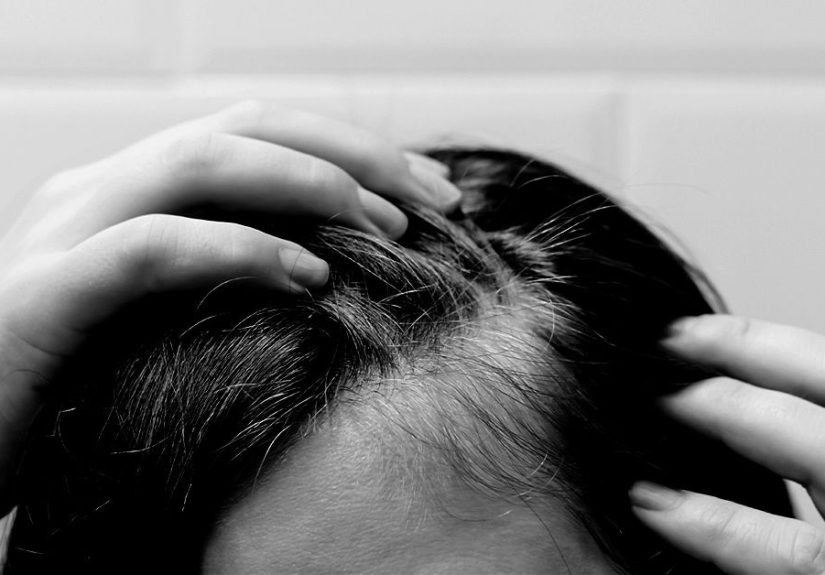
Hair loss is not one-size-fits-all. The pattern may offer clues.
Diffuse shedding
This is common with stress, illness, low iron, or hormone changes. Hair seems thinner all over rather than in one specific spot.
Widening part or gradual thinning on top
This may suggest female pattern hair loss, which can overlap with hormonal issues or genetics.
Patchy bald spots
This pattern can point toward other conditions, such as alopecia areata, and deserves medical evaluation.
Breakage rather than true shedding
Sometimes the issue is not hair falling from the root but hair snapping from heat, chemical processing, tight hairstyles, or fragile strands made worse by poor scalp and hair health.
If you are not sure what you are seeing, photos can help. A few scalp pictures taken over several weeks in consistent lighting can make patterns easier to spot and easier to show a clinician.
How Doctors Usually Figure It Out
If you have endometriosis and hair loss, the best approach is usually not guessing harder in the bathroom mirror. It is looking for patterns, triggers, and treatable causes.
A clinician may ask:
- When did the hair loss start?
- Was there a flare, surgery, medication change, or stressful event in the past two to three months?
- Have your periods been especially heavy?
- Do you have symptoms of anemia, thyroid problems, or hormonal imbalance?
- Is the loss diffuse, patchy, or concentrated at the crown?
- Are you also noticing acne, excess facial hair, weight changes, or brittle nails?
Depending on the situation, testing may include iron studies, a complete blood count, thyroid labs, vitamin levels, or a review of medications. Some people also benefit from seeing a dermatologist, especially when the diagnosis is unclear or the hair loss is progressing.
In other words, the plan is usually detective work, not magic. Sadly, no one gets a dramatic soundtrack while this is happening.
What Can Help
Treat the root cause, not just the symptom
If the problem is iron deficiency, treatment may involve iron replacement and better control of heavy bleeding. If a medication seems to be triggering shedding, your doctor may be able to adjust the treatment plan. If stress-related shedding is the culprit, better pain control, improved sleep, and time may do more than any miracle shampoo ever promised on the internet at 1 a.m.
Review your endometriosis treatment plan
There is no single cure for endometriosis, but treatment options may include pain relievers, hormonal therapies, and surgery. If hair loss started after a treatment change, do not stop medication on your own. Ask whether the timing suggests a side effect, whether another option exists, and whether the current treatment is still the best fit for your goals.
Be gentle with your hair while you figure it out
While you are working on the medical side, it helps to reduce extra stress on the hair itself:
- Avoid tight hairstyles that pull at the scalp
- Limit harsh bleaching, high heat, and aggressive brushing
- Use gentle cleansing and conditioning products
- Do not start random supplements without checking what you actually need
More is not always more. Throwing six mystery gummies and a horse-sized biotin bottle at the problem is not a treatment plan. It is a cry for help with packaging.
Consider a dermatologist if shedding is significant
A dermatologist can help determine whether you are dealing with telogen effluvium, female pattern hair loss, breakage, alopecia areata, or something else entirely. That distinction matters because treatment differs by cause. What helps one type of hair loss may do exactly nothing for another.
Finding Support When You Are Tired of “Powering Through”
Support matters because endometriosis can affect far more than the pelvis. It can shape work, sleep, intimacy, energy, confidence, finances, and mental health. Add hair loss on top, and many people feel like their body has become both high-maintenance and deeply uncooperative.
Real support can come from several places:
1. A care team that actually listens
You deserve clinicians who take your pain seriously and do not treat heavy bleeding, hair loss, or fatigue like character development. An OB-GYN, primary care clinician, dermatologist, pelvic pain specialist, or fertility specialist may all play a role depending on your symptoms.
2. Mental health support
Hair loss can hit self-image hard. Endometriosis can also wear down mood over time, especially when symptoms are chronic or diagnosis has been delayed. A therapist who understands chronic illness can help with body image, anxiety, grief, burnout, relationship strain, and the emotional whiplash of good weeks followed by miserable ones.
3. Peer communities
Organizations such as the Endometriosis Association and the Endometriosis Foundation of America offer education, advocacy, and support resources. Sometimes the most healing sentence is not a fancy medical explanation. It is, “Me too. I thought I was the only one.”
4. Practical tracking
Keep notes on bleeding, pain flares, fatigue, hair shedding, medications, and cycle timing. This can help you and your clinicians connect dots faster. It also makes appointments more useful, because “everything is a mess” is emotionally true but medically difficult to chart.
When to Reach Out Promptly
Make an appointment sooner rather than later if:
- Your hair loss is sudden, severe, or patchy
- You have signs of heavy bleeding or anemia, such as dizziness, unusual fatigue, shortness of breath, or paleness
- Your periods are becoming heavier or more painful
- You have symptoms that suggest a thyroid issue or hormonal imbalance
- Your hair loss is seriously affecting your mental health or quality of life
You do not need to wait until your drain looks like it grew a wig.
Experiences People Often Describe With Endometriosis and Hair Loss
For many people, the experience does not begin with hair. It begins with pain, long before anyone talks about the scalp. Maybe it is brutal periods in high school that get dismissed as “normal.” Maybe it is a drawer full of heating pads, canceled plans, and the quiet math of figuring out whether this month’s pain will cost you work, sleep, or both. Then one day, in the middle of trying to manage the endometriosis itself, you notice your hair has changed too.
Some people describe it as death by a thousand little indignities. The pain is one thing. The bloating is another. The fatigue is a third. But seeing your hair thin can feel strangely personal, because it is visible in a way that pelvic pain is not. Friends may not understand why it hurts so much. To them, it may seem cosmetic. To you, it can feel like your body has taken yet another piece of normalcy and walked off with it.
A common experience is confusion about timing. Hair loss often does not happen on the exact day stress peaks. It may show up two or three months after a brutal flare, surgery, medication change, or season of heavy bleeding. That delay makes people wonder whether they are imagining things. They are not. Hair cycles move slowly, and the body does not always leave neat breadcrumbs.
Others talk about the frustration of being bounced between explanations. One clinician focuses on endometriosis. Another points to stress. Another mentions iron. Then someone else raises the possibility of thyroid disease or a medication side effect. It can feel like a scavenger hunt designed by people who hate maps. But sometimes that layered answer is the real one. Endometriosis may be part of the picture without being the only cause.
There is also the emotional side. People with endometriosis often become highly skilled at functioning while feeling awful. They go to work, answer emails, show up for family, and pretend they are fine while mentally ranking the nearest place to sit down. Hair loss can be the tipping point that makes the invisible burden feel impossible to hide. It can stir up grief, embarrassment, anger, or plain old exhaustion.
At the same time, many people describe relief when they finally feel heard. Relief when someone checks ferritin instead of saying “just reduce stress.” Relief when a doctor acknowledges that pain, bleeding, fatigue, and hair changes can interact. Relief when a support group treats hair loss as a valid quality-of-life issue instead of a vanity problem.
Another experience people share is learning to redefine progress. Progress may not mean that every symptom disappears in a month. Sometimes it means getting the right diagnosis after years of confusion. Sometimes it means finding a treatment that reduces pain enough to sleep. Sometimes it means the shedding slows down, baby hairs start appearing near the hairline, and you stop dreading every shower. Sometimes it simply means you no longer feel alone in your own body.
If that is where you are right now, wondering whether endometriosis and hair loss are somehow connected, your question is reasonable. Your frustration is reasonable. And support is not a luxury add-on. It is part of care.
Conclusion
Endometriosis and hair loss can be connected, but usually not in the most obvious way. In many cases, the real drivers are heavy bleeding, low iron, stress-related shedding, hormone shifts, medication effects, or another health condition that deserves attention. The key is not to panic and not to dismiss it. Hair changes are information.
With the right evaluation, many causes of hair loss are treatable or reversible. And with the right support, managing endometriosis does not have to feel like doing crisis control in a body that refuses to send meeting notes. Start by tracking your symptoms, bringing the timeline to a trusted clinician, and asking for a full-picture review. Your hair, your pain, and your quality of life all count.